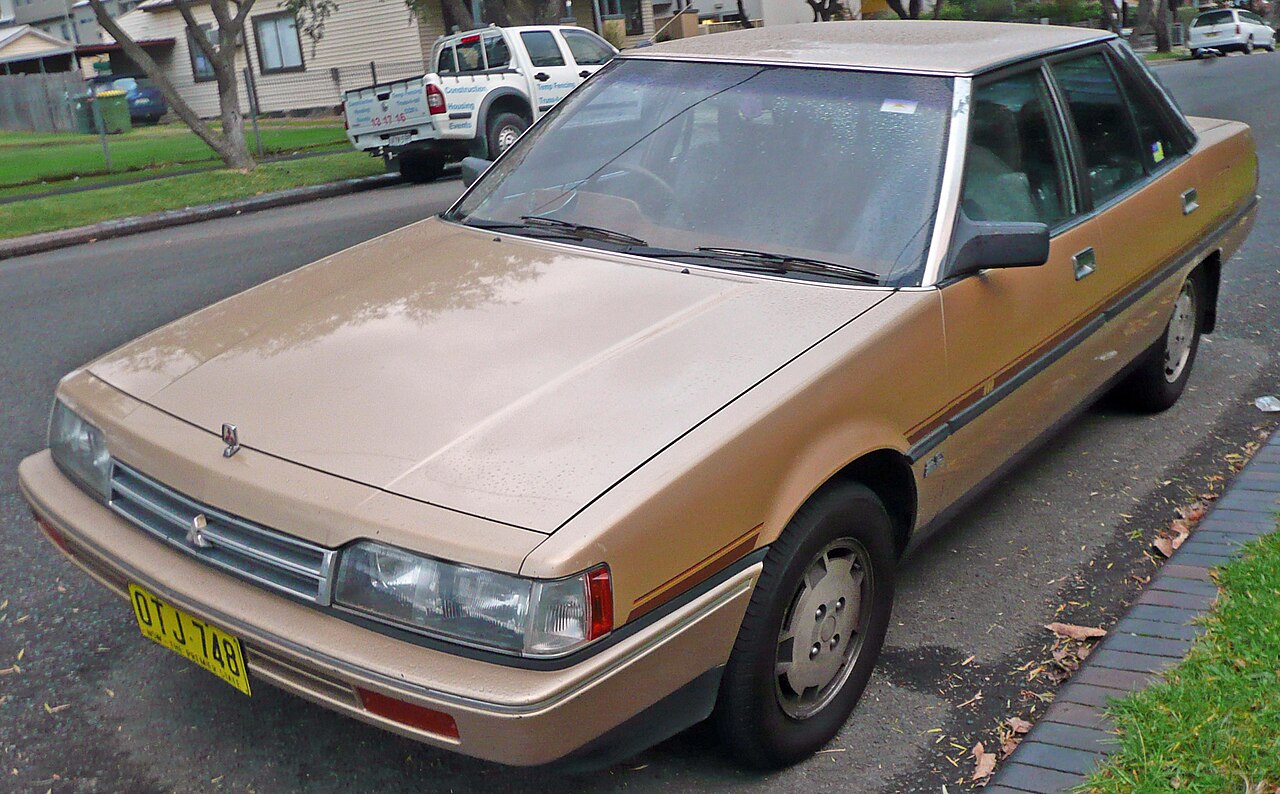
To satisfy Australians' taste for bigger cars, Mitsubishi literally sliced open the Japanese Galant and spliced in an extra 65mm of width to create the Magna.
Lead trim: Magna 2.6 Astron II 4G54 carbureted (114 hp)
Mitsubishi Magna TM1985–1987
- 0spots by members
- Unclaimednobody has spotted one yet
- 0sets it belongs to
Nobody in Burbles has spotted a Mitsubishi Magna TM yet. See one on the street, point the app at it, and the first card is yours — with your @handle permanently credited on this page.
FactTo satisfy Australians' taste for bigger cars, Mitsubishi literally sliced open the Japanese Galant and spliced in an extra 65mm of width to create the Magna.
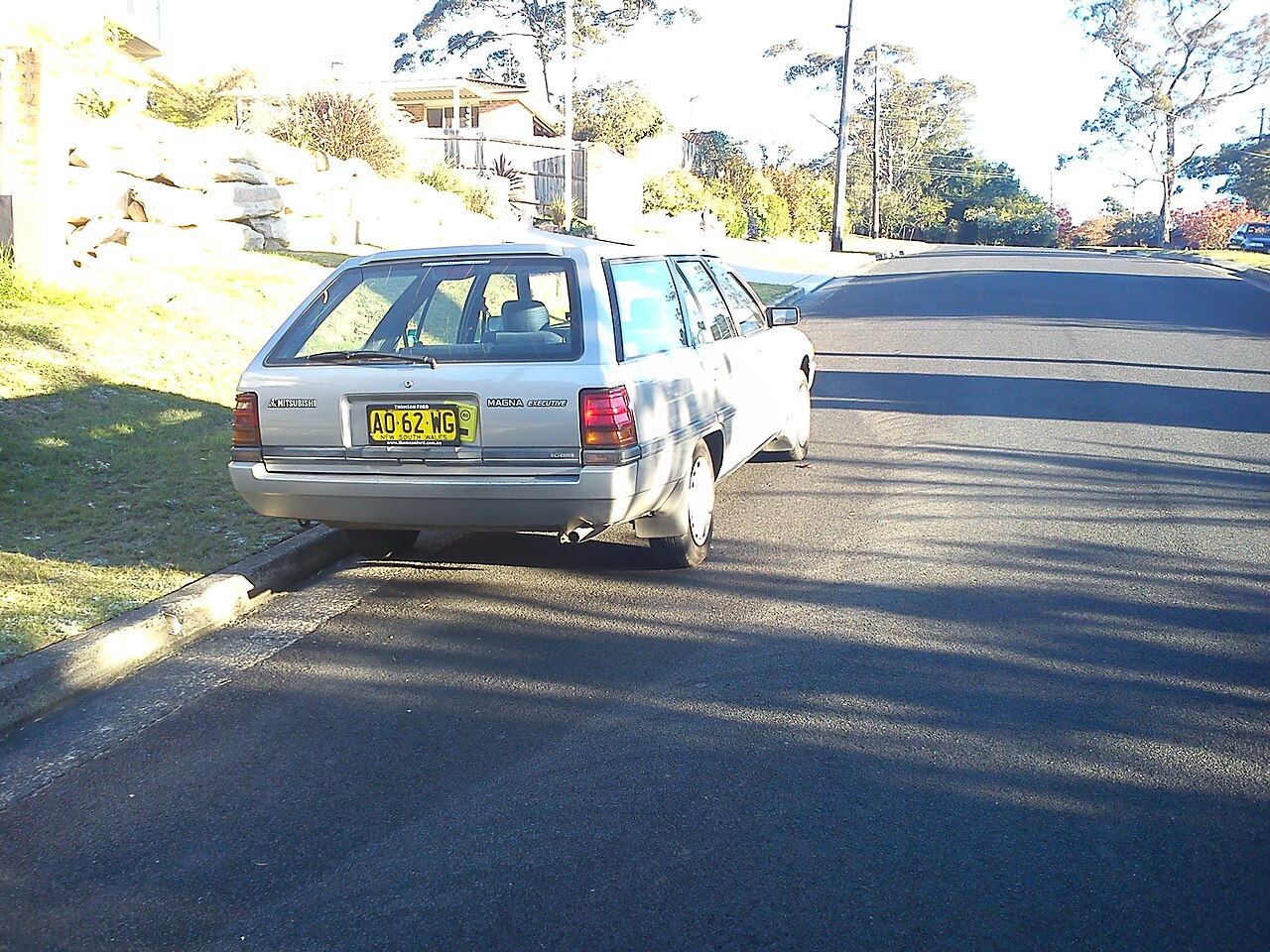
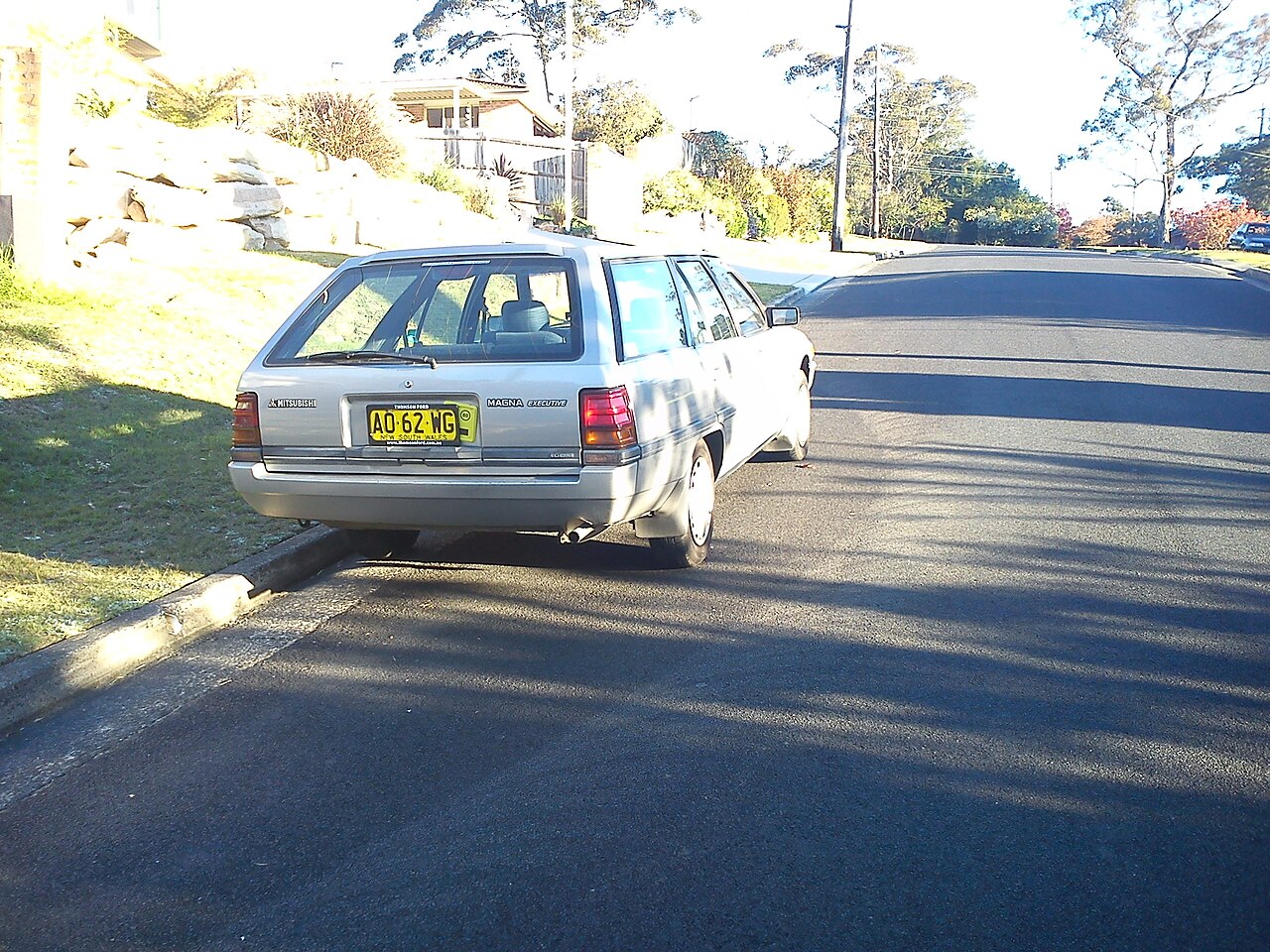
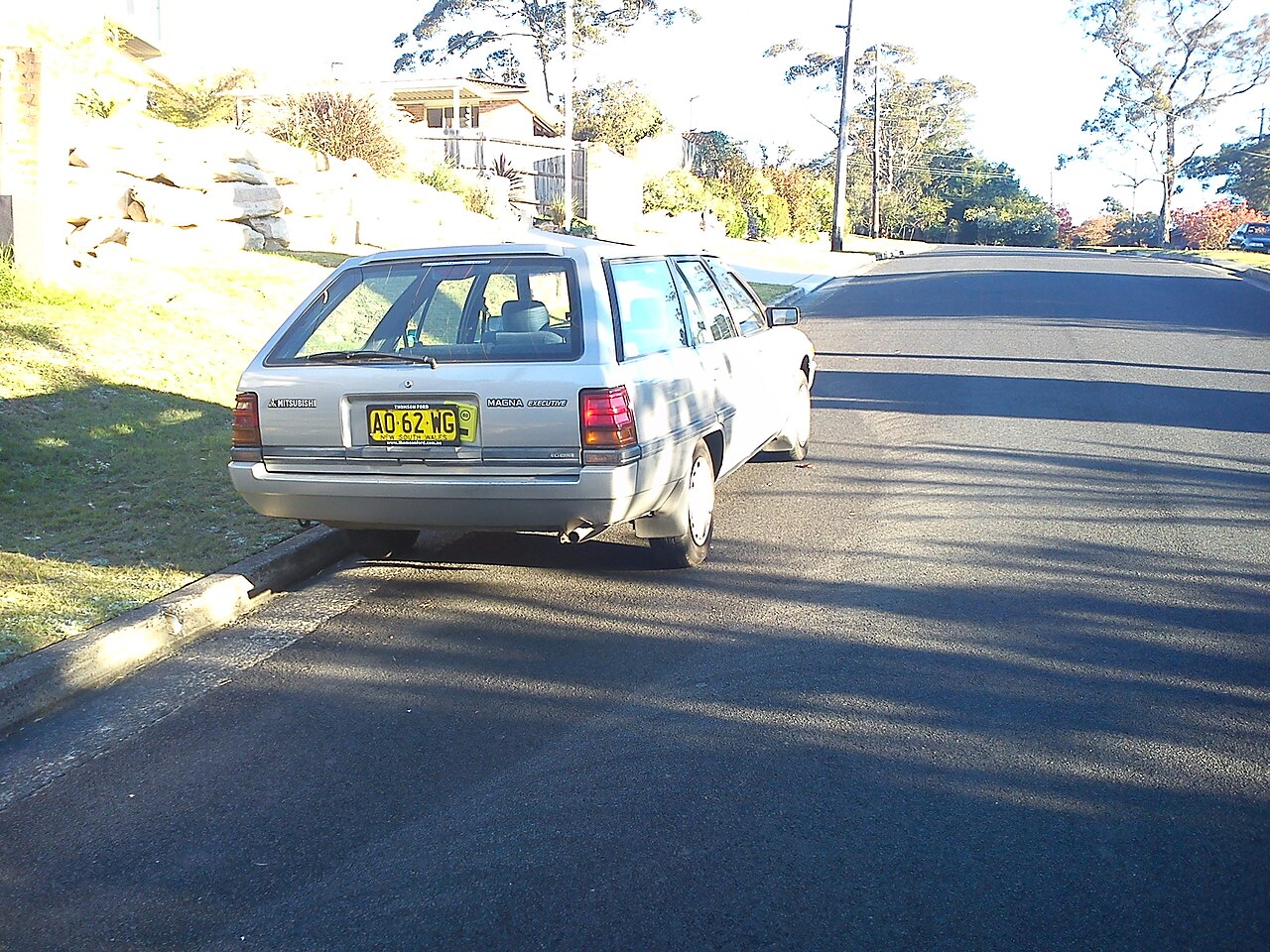
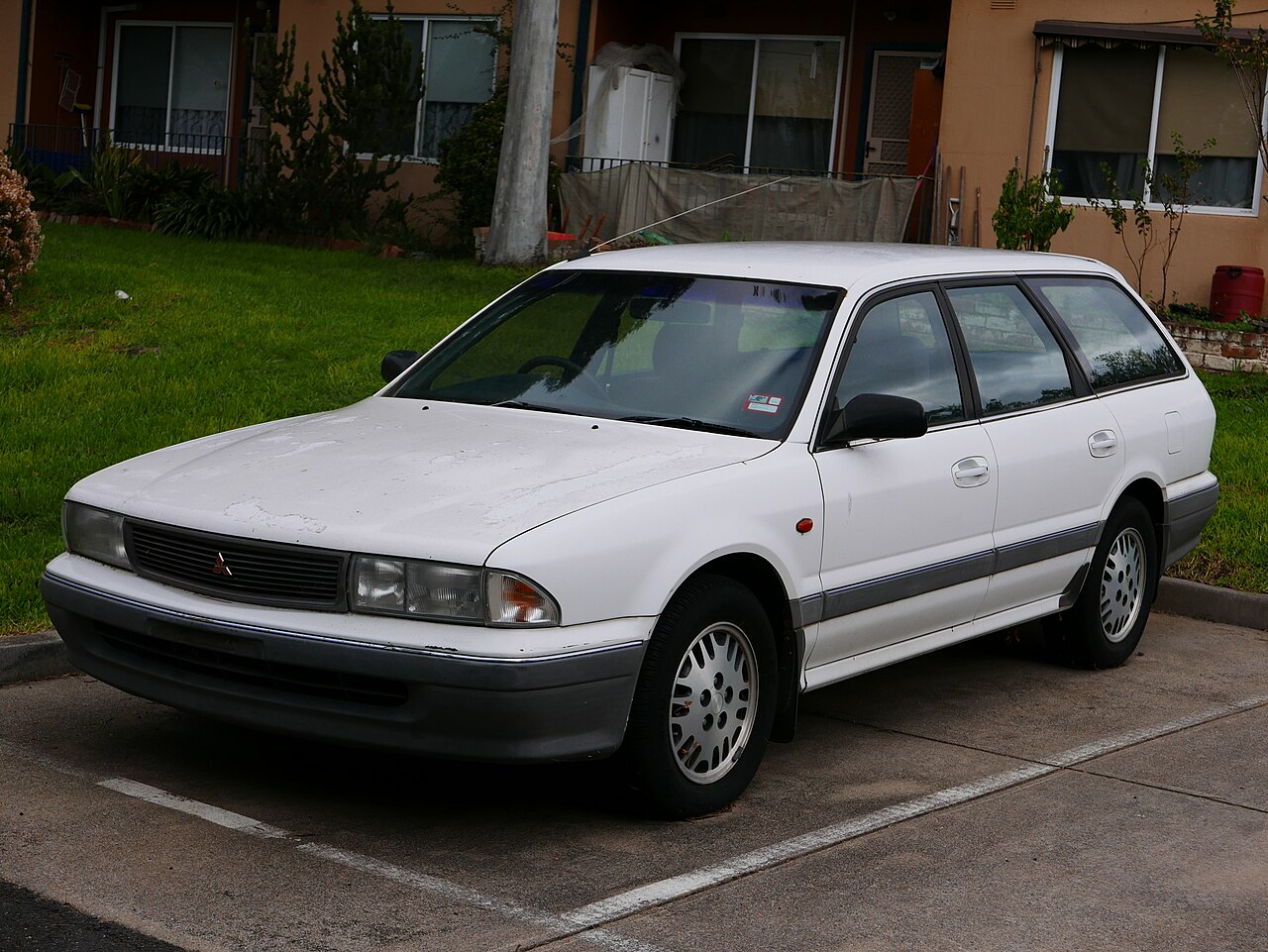
The Mitsubishi Magna is a mid-size car produced over three generations between 1985 and 2005 by Mitsubishi Motors Australia Limited (MMAL) at Clovelly Park / Tonsley Park, South Australia, to replace the Sigma, with most engines built at Lonsdale. Following a claimed A$50 million development cost it was introduced to Australia in April 1985 as a sedan (a station wagon followed in June 1987), designated the TM series: the fifth-generation Japanese Mitsubishi Galant Σ (Sigma) with an extra 65 mm spliced through the body (the wide "YFW" body) and strengthened for Australian roads, named Magna from the Latin "big". It packaged more interior space than the rear-wheel-drive Commodore and Falcon and could use a big-bore four-cylinder rather than a six: the Australian-made 2.6-litre Astron II (4G54), a single-overhead-cam eight-valve four with hydraulic mounts and "Silent Shaft" balance shafts, initially carbureted at 85 kW (114 hp) and 198 N·m, with a five-speed manual or four-speed ELC automatic (the Elite automatic only), MacPherson-strut front and three-link torsion-beam rear suspension and a drag coefficient of 0.36. The TM launched with the GLX, SE and Elite (the Executive added in August 1986) and won the 1985 Wheels Car of the Year for value for money; almost 209,000 Magnas were sold between 1985 and 1990, though the TM was marred by fragile engine heads and automatic transmissions. The wide-body approach influenced Honda, Mazda, Nissan and Toyota, as in the wide-bodied XV10 Camry of 1991.
Collectors Spotted in the Mitsubishi Magna Lineage
No member has published a public street spot of the Mitsubishi Magna yet — the First · Worldwide stamp is wide open.
Trims & Figures
One published trim in the catalogue. A blank is a figure not recorded, not zero.
| Trim | Years | Engine | Power | Torque | 0–60 | Drive | Gearbox | MSRP |
|---|---|---|---|---|---|---|---|---|
| Magna 2.6 Astron II 4G54 carbureted (114 hp) | 1985–1987 | 2.6 L Inline-4 | 114 hp | 146 lb-ft | — | FWD | — | — |
Owning one
We don’t estimate running costs for a car like this. What it costs depends on its condition, its specialist and how it is driven, and an average would mislead.
Owners’ builds
Nobody has claimed one yet.
Photographs
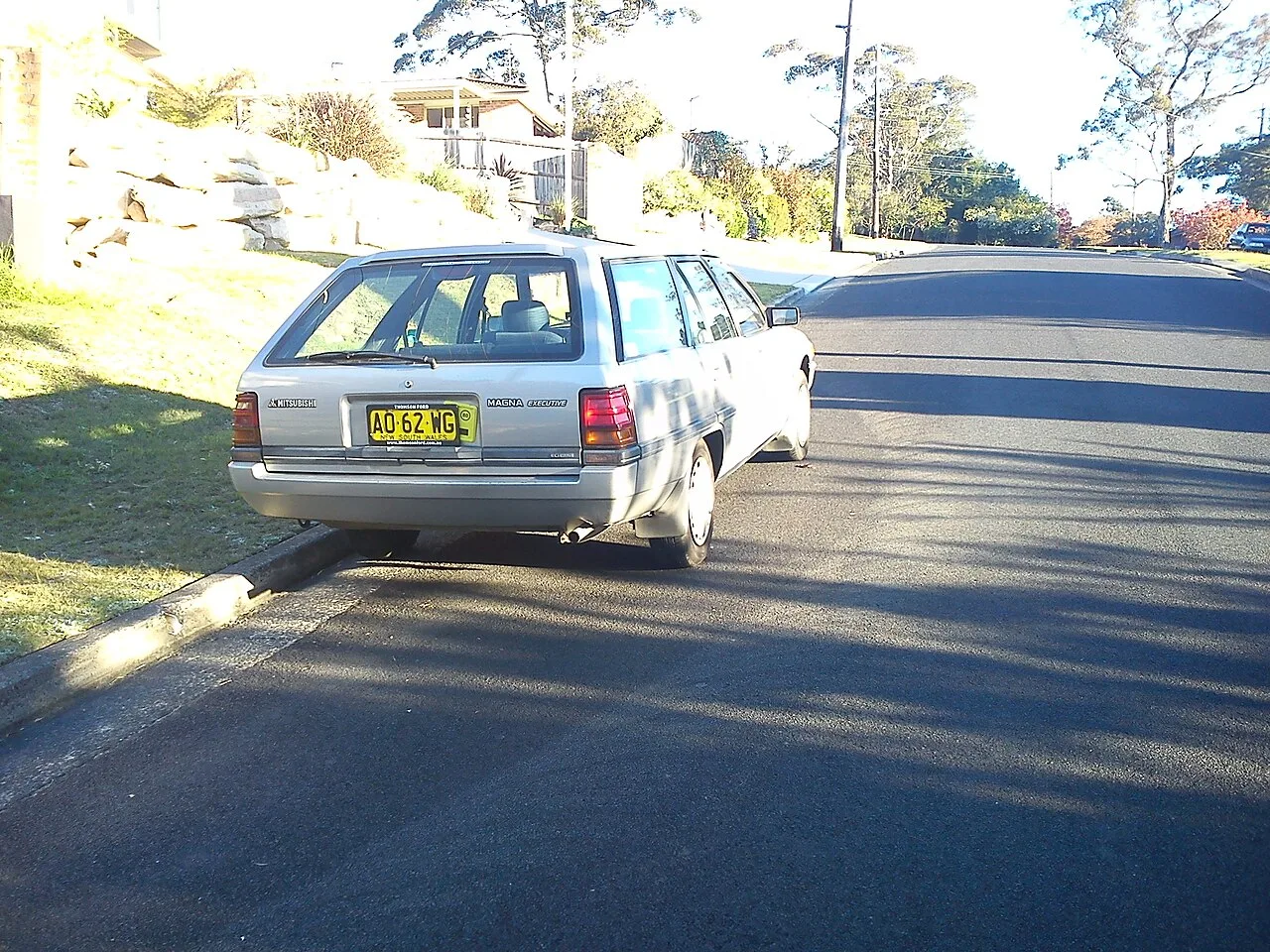
The 2004 facelift quietly gave Australia's Verada larger "US-spec" bumpers — a transpacific engineering footnote on a car most Australians assumed was built purely for their own roads.
The 2003 Magna TL's redesign cost over A$70 million — and A$2 million of that went to its new headlights alone.
The Magna Ralliart's steering wheel was the standard Magna item underneath — but it was sent to Italy to be leather-wrapped in black and red by MOMO.
This Quadtec-badged Magna made local history — it was the first mass-built all-wheel-drive passenger car ever built in Australia, after a AU$10 million development program.
A humble family Magna went racing: in 2001 a Magna TJ Sports won its class at Bathurst, while a V8-powered rear-drive Magna separately ran in Australia's Super Touring championship.
Mitsubishi's VR-X made its extra power with barely any engine changes — just valve timing tweaks and a free-flowing exhaust, enough for class-leading pace among Australian sport sedans.
The TH Magna quietly set an Australian first: the first locally-built car with four-channel ABS and electronic brake-force distribution.
The TF Magna Sports was the first Australian-built car ever to offer a manual-shifting Tiptronic automatic — push forward to upshift, pull back to downshift.
A mid-90s family sedan still holds the record: the TE Magna's 0.28 drag coefficient beats every Commodore and Falcon Australia ever built, decades later included.
Every Magna/Verada wagon sold anywhere in the world under the Diamante or Sigma badge was built in Australia — for years, Australia was the only source on the planet.
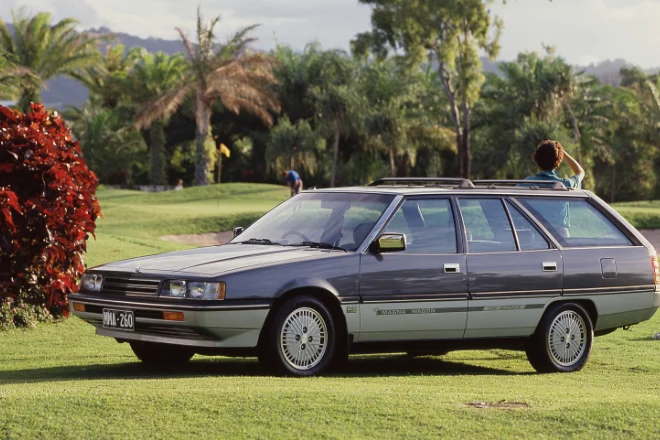
Mitsubishi built exactly 1,000 Magna TP Grand Tourers in 1990 — split with almost comic precision into 500 white, 250 burgundy and 250 "Riviera Blue."
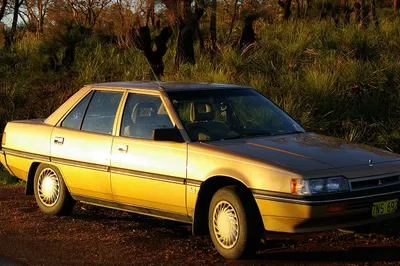
The TN wagon wasn't a global platform afterthought — Mitsubishi's Australian arm engineered and built it entirely Down Under, broadening the Magna's appeal from day one.
To satisfy Australians' taste for bigger cars, Mitsubishi literally sliced open the Japanese Galant and spliced in an extra 65mm of width to create the Magna.
Rivals
Same body, same money, other badges — tap any card to flip.

It briefly served as senior sibling to Marquette, a GM companion brand cancelled after just one year.

Nissan hired former BMW engineers to help develop the 510's suspension, which is why period reviewers frequently compared its handling to the BMW 1600/2002.

A Trabant 601 won its class at the 1970 Monte Carlo Rally, with a second 601 right behind it in second.

The 600 was a stopgap: the P50's body over the 601's mechanicals, and for a while its estate was built alongside the new 601 saloon.

The G80 Sport brought a 370 PS twin-turbo 3.3 V6, a mesh grille and copper-tinted chrome with copper stitching to match.

The Vigor was sold only with a five-cylinder engine, an unusual configuration Honda used to fit a longer engine transversely under a short hood.

The GS/E coupe earned the nickname "German Charger" for its long hood, short deck stance borrowed from Detroit muscle cars.

This DeVille/Fleetwood was the first production car anywhere to mount its V8 sideways, Cadillac's front-drive gamble on the new C-body.