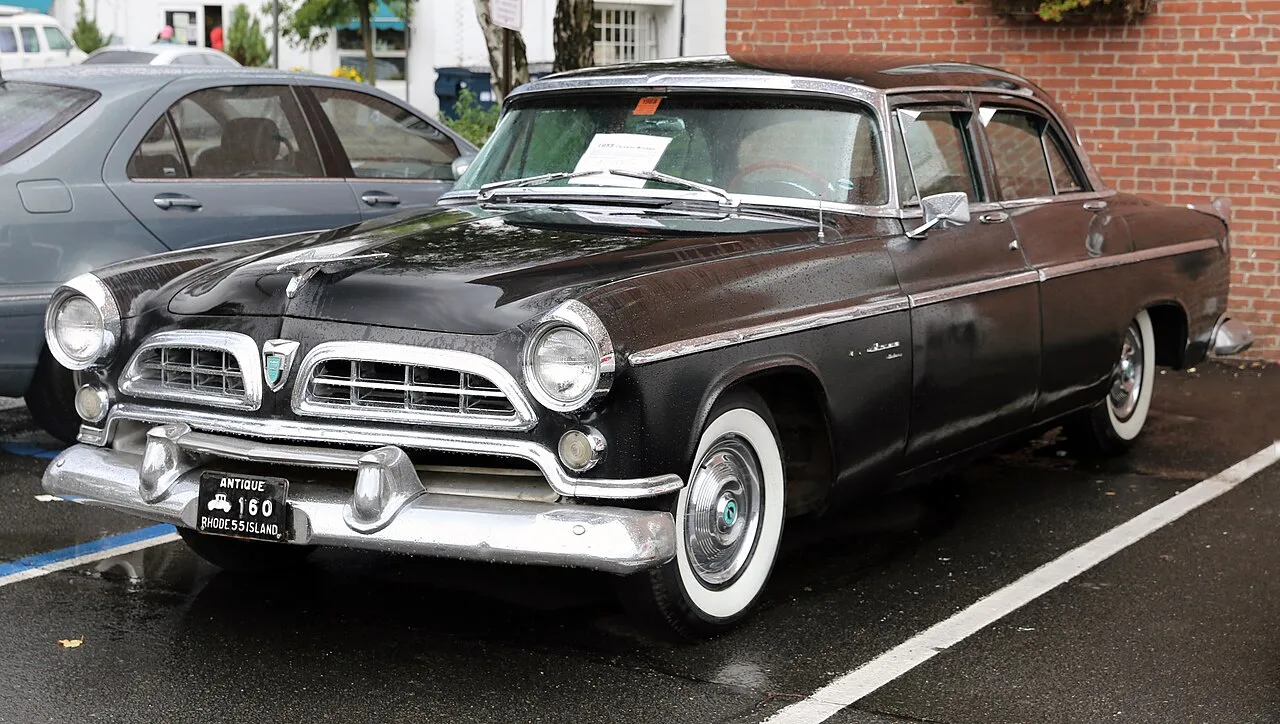
This Windsor could be ordered with a Highway Hi-Fi record player built into the dash, Chrysler's answer to in-car entertainment before radio ruled.
Lead trim: Windsor 300.5 Poly V8 (1955)
Chrysler WindsorWINDSOR-1955 · 1955–1956
- 0spots by members
- Unclaimednobody has spotted one yet
- 0sets it belongs to
Nobody in Burbles has spotted a Chrysler Windsor yet. See one on the street, point the app at it, and the first card is yours — with your @handle permanently credited on this page.
FactThis Windsor could be ordered with a Highway Hi-Fi record player built into the dash, Chrysler's answer to in-car entertainment before radio ruled.
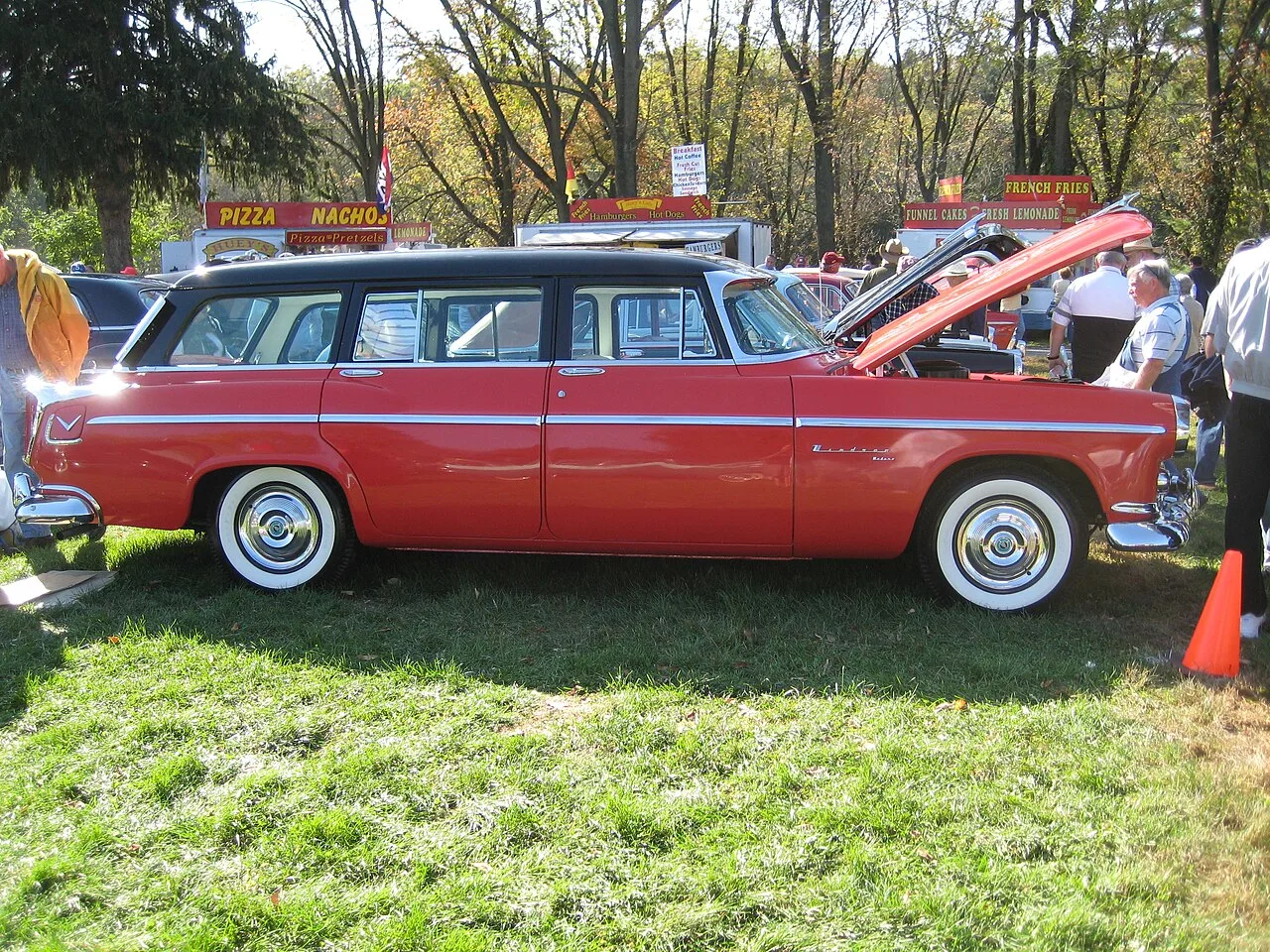
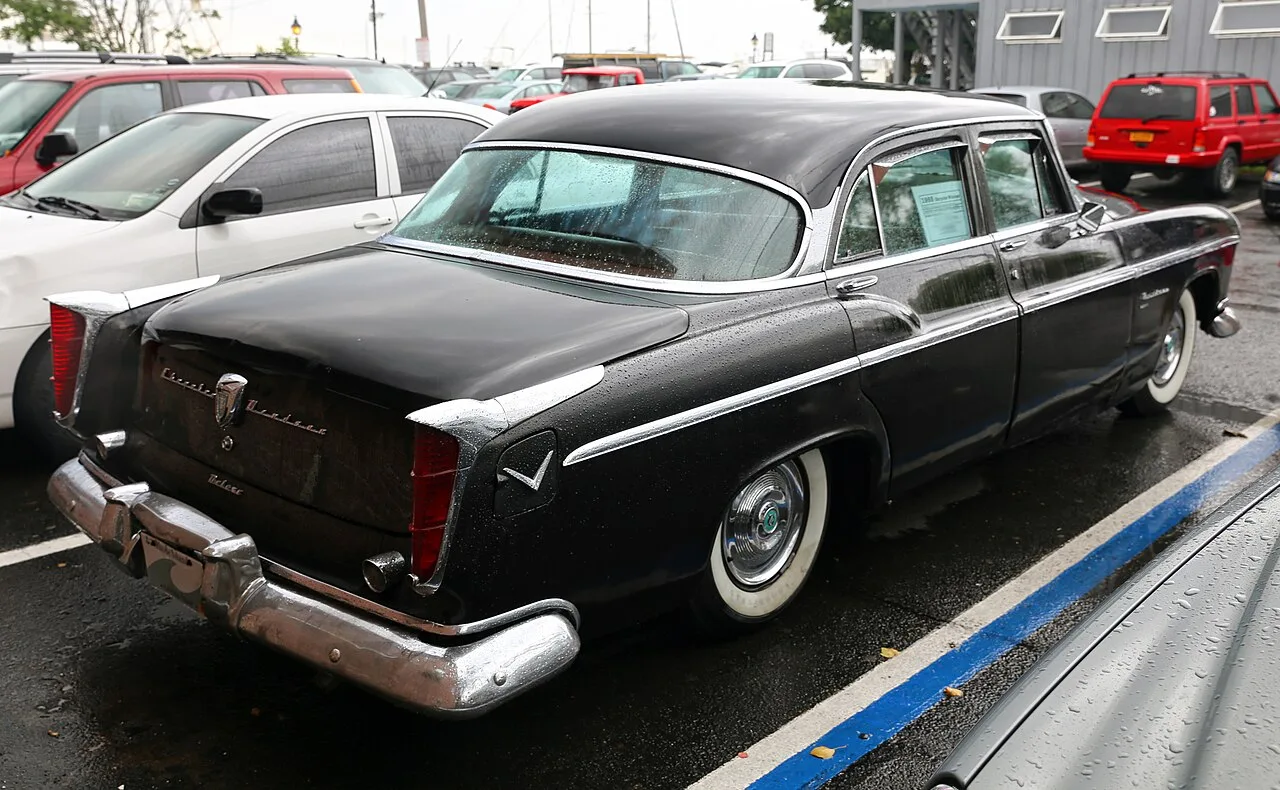
In 1955 all Chrysler cars were completely restyled by Virgil Exner (the first year of the "Forward Look"), sharing visual similarities with the all-new Imperial, which became its own division; the Newport suffix tradition continued and a four-door hardtop was added, the styling was more rounded with wrap-around windshields and the word DeLuxe was added again; the Windsor made up 64.72% of Chrysler's sales. For 1956 the "Forward Look" restyling introduced the first tail fins on a Chrysler, with a Highway Hi-Fi phonograph a new Windsor option. Engines: 300.5 cu in (4.9 L) Poly V8 (1955) and 331 cu in (5.4 L) Poly V8, with a 3-speed manual or PowerFlite automatic; wheelbase 126 in, length 218.6 in (1955) and 220.4 in (1956), width 79.0/78.8 in, height 60.6 in.
Collectors Spotted in the Chrysler Windsor Lineage
No member has published a public street spot of the Chrysler Windsor yet — the First · Worldwide stamp is wide open.
Trims & Figures
2 published trims in the catalogue. A blank is a figure not recorded, not zero.
| Trim | Years | Engine | Power | Torque | 0–60 | Drive | Gearbox | MSRP |
|---|---|---|---|---|---|---|---|---|
| Windsor 300.5 Poly V8 (1955) | 1955–1955 | 4.9 L V8 | 188 hp | 275 lb-ft | — | RWD | — | — |
| Windsor 331 Poly V8 | 1955–1956 | 5.4 L V8 | — | — | — | RWD | — | — |
Owning one
We don’t estimate running costs for a car like this. What it costs depends on its condition, its specialist and how it is driven, and an average would mislead.
Owners’ builds
Nobody has claimed one yet.
Photographs
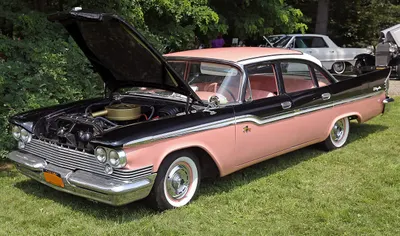
The same 1959 Windsor wore completely different badges depending which side of the border it was built on — American cars got fierce 'Golden Lion' emblems and a bigger V8; Canadian-built cars got a smaller engine and three golden crests instead.
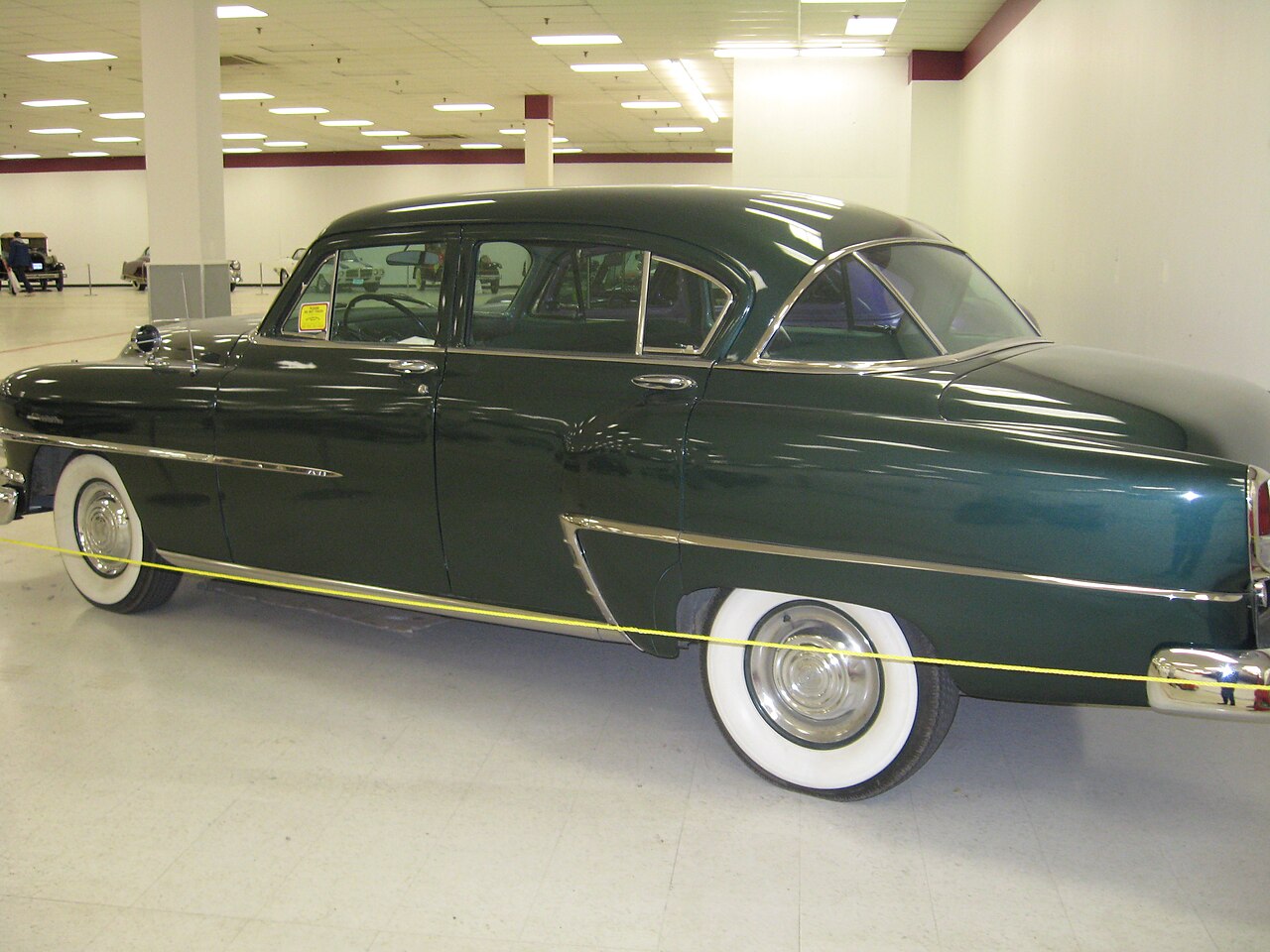
For 1958 Chrysler quietly shrank the Windsor onto the shorter Dodge/DeSoto Firesweep chassis — America's full-size Windsor was, for one year, riding on a mid-size platform.
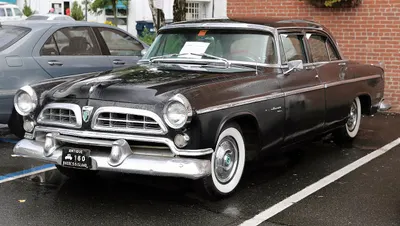
This Windsor could be ordered with a Highway Hi-Fi record player built into the dash, Chrysler's answer to in-car entertainment before radio ruled.
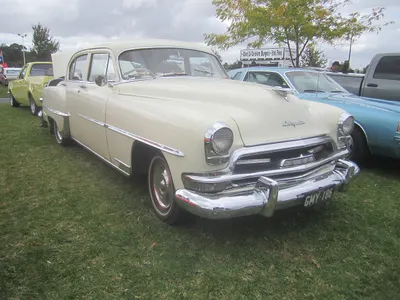
Chrysler owners surveyed by Popular Mechanics in the 1950s named ride comfort their favorite Windsor trait, ahead of power or styling.
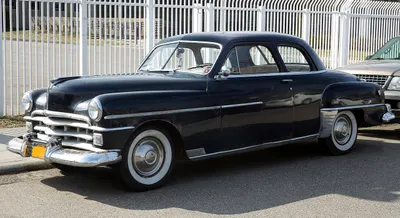
The 1950 Windsor Traveler Sedan came with a roof rack as standard equipment, a feature dropped once the Town & Country wagon joined the line.
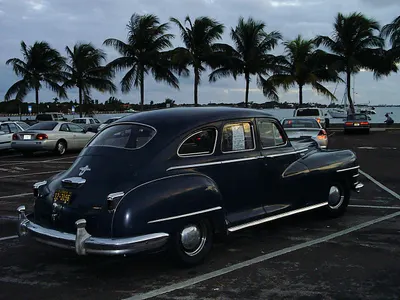
Postwar Chrysler simply reused its 1942 engineering under new fenders, and the cheaper six-cylinder Windsor still made up 62.9 percent of company sales.
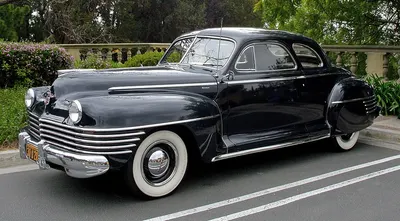
Through 1939 and 1940 the Windsor wasn't even its own model, sold instead as the Royal Windsor until the names split apart in 1941.
Rivals
Same body, same money, other badges — tap any card to flip.

It briefly served as senior sibling to Marquette, a GM companion brand cancelled after just one year.

Nissan hired former BMW engineers to help develop the 510's suspension, which is why period reviewers frequently compared its handling to the BMW 1600/2002.

A Trabant 601 won its class at the 1970 Monte Carlo Rally, with a second 601 right behind it in second.

The 600 was a stopgap: the P50's body over the 601's mechanicals, and for a while its estate was built alongside the new 601 saloon.

The G80 Sport brought a 370 PS twin-turbo 3.3 V6, a mesh grille and copper-tinted chrome with copper stitching to match.

The Vigor was sold only with a five-cylinder engine, an unusual configuration Honda used to fit a longer engine transversely under a short hood.

The GS/E coupe earned the nickname "German Charger" for its long hood, short deck stance borrowed from Detroit muscle cars.

This DeVille/Fleetwood was the first production car anywhere to mount its V8 sideways, Cadillac's front-drive gamble on the new C-body.