Chrysler's PR chief drove a Belvedere with a turbine jet engine bolted in across the country to prove the idea worked.
Median 85 hp across 110 similar cars
Lead trim: Belvedere 217.8 flathead I6 (100 hp, early 1955) · up to 200 hp
Plymouth BelvedereBELVEDERE-1955 · 1955–1956
- 0spots by members
- Unclaimednobody has spotted one yet
- 0sets it belongs to
Nobody in Burbles has spotted a Plymouth Belvedere yet. See one on the street, point the app at it, and the first card is yours — with your @handle permanently credited on this page.
FactChrysler's PR chief drove a Belvedere with a turbine jet engine bolted in across the country to prove the idea worked.
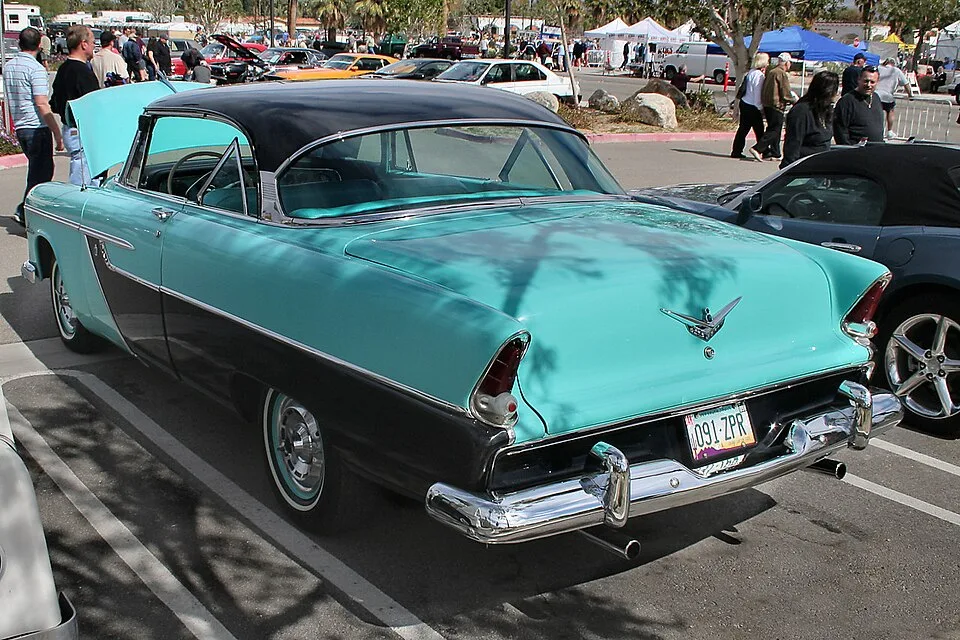
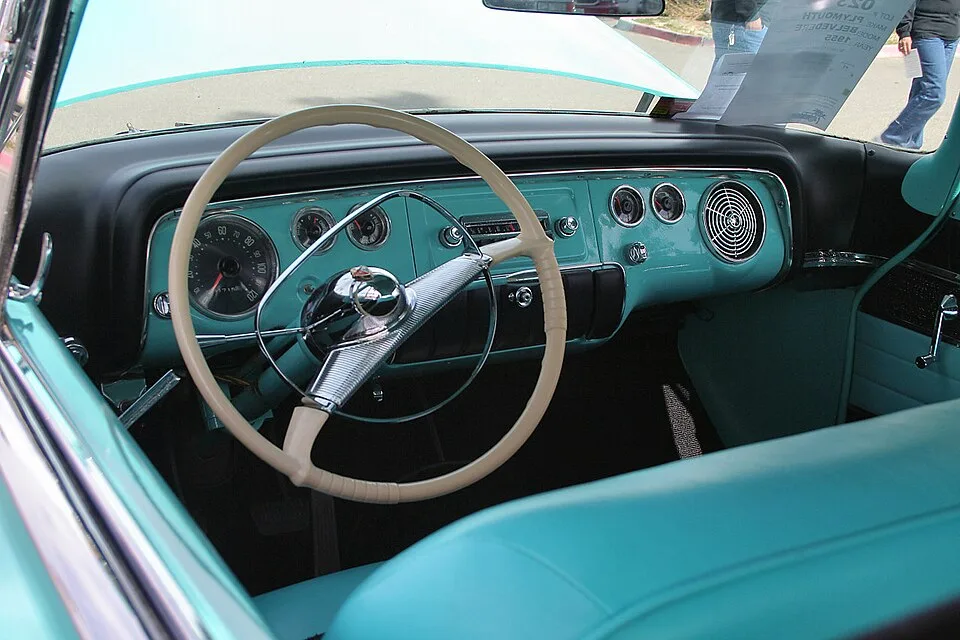
All Plymouths underwent a major overhaul for 1955, the first year of Virgil Exner's "Forward Look"; the Belvedere returned as top-of-the-line (also sold as the Dodge Mayfair in Canada) with the Plaza as the entry-level model. Midway through the model year (26 February) the engine's stroke was increased by a quarter inch, taking displacement from 217.8 to 230.2 cu in (3.6 to 3.8 L) and power from 100 to 110 hp (75 to 82 kW). For 1956 the styling evolved with a more dramatic rear end with a pair of rakish tail fins and the first push-button automatic transmission in an American automobile; seat belts were added, and in early 1956 the Fury joined the Belvedere line as a special-edition high-performance coupé (catalogued under the Fury). Chrysler's chief engineer George Huebner took a Belvedere fitted with a Chrysler turbine engine across the US in a public-relations campaign. The 1956 V8 options were the 180 bhp 270 cu in (4.4 L) V8, 187 bhp and 200 bhp 277 cu in (4.5 L) V8s, and for the Fury a 240 bhp 303 cu in (5.0 L) V8. Wheelbase 115.0 in (2,921 mm); the infobox lists 241, 260, 277 and 303 cu in V8s while the text names a 270.
Collectors Spotted in the Plymouth Belvedere Lineage
No member has published a public street spot of the Plymouth Belvedere yet — the First · Worldwide stamp is wide open.
Trims & Figures
5 published trims in the catalogue. A blank is a figure not recorded, not zero.
| Trim | Years | Engine | Power | Torque | 0–60 | Drive | Gearbox | MSRP |
|---|---|---|---|---|---|---|---|---|
| Belvedere 217.8 flathead I6 (100 hp, early 1955) | 1955–1955 | 3.6 L Inline-6 | 100 hp | — | — | RWD | — | — |
| Belvedere 230 flathead I6 (110 hp) | 1955–1956 | 3.8 L Inline-6 | 110 hp | — | — | RWD | — | — |
| Belvedere 270 V8 (180 bhp, 1956) | 1956–1956 | 4.4 L V8 | 180 hp | 260 lb-ft | — | RWD | — | — |
| Belvedere 277 V8 (187 bhp, 1956) | 1956–1956 | 4.5 L V8 | 187 hp | 265 lb-ft | — | RWD | — | — |
| Belvedere 277 V8 (200 bhp, 1956) | 1956–1956 | 4.5 L V8 | 200 hp | 272 lb-ft | — | RWD | — | — |
Owning one
We don’t estimate running costs for a car like this. What it costs depends on its condition, its specialist and how it is driven, and an average would mislead.
Owners’ builds
Nobody has claimed one yet.
Photographs
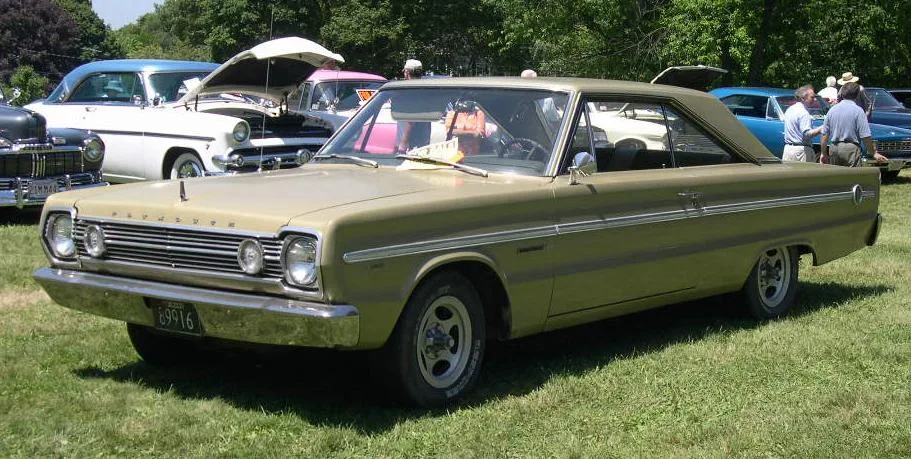
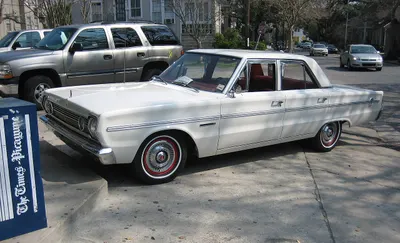
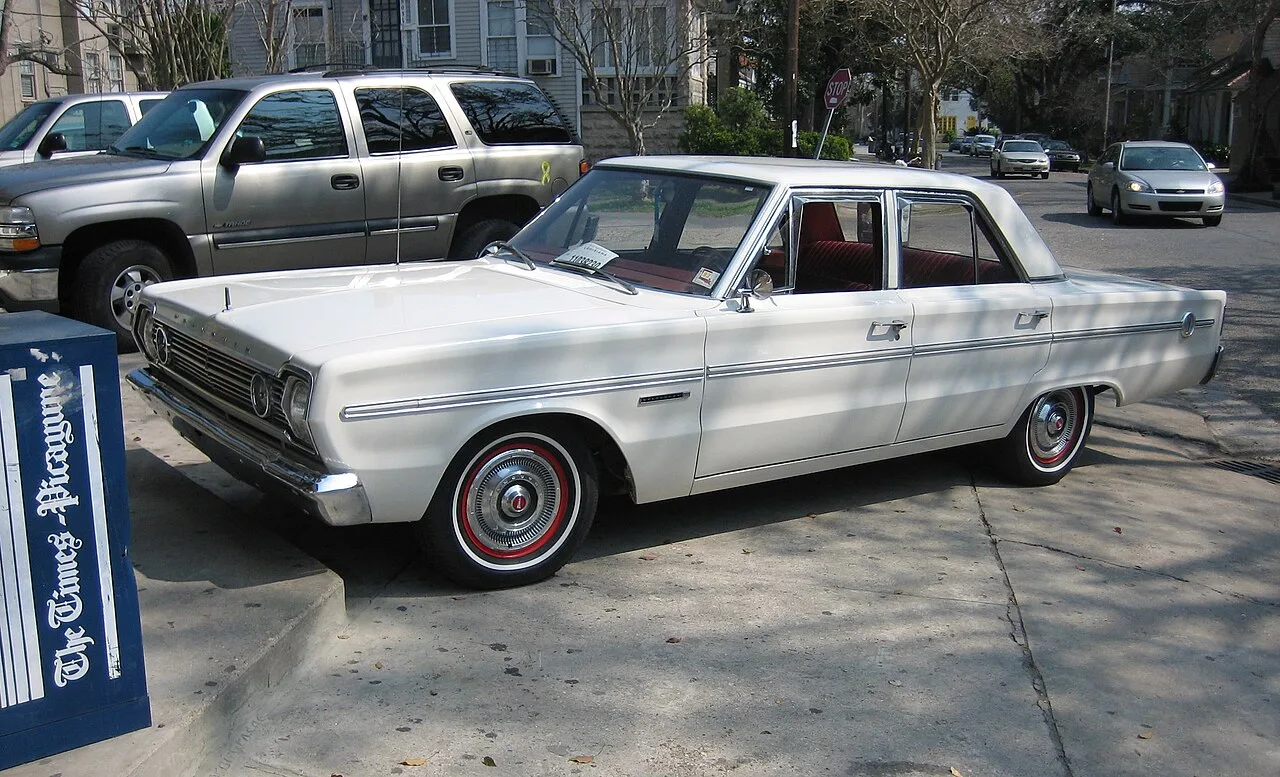
Richard Petty won the NASCAR Grand National title in this Belvedere generation, the last before the nameplate was dropped for Satellite.
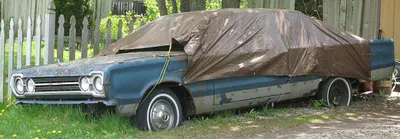
A 1967 Belvedere played the LAPD's standard cruiser in the pilot episode of Adam-12.
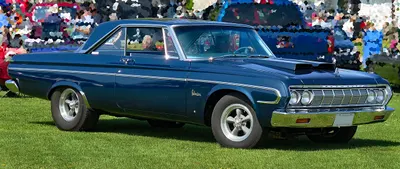
This Belvedere introduced the 426 Hemi and swept the top three spots at the 1964 Daytona 500, Richard Petty among the winners.
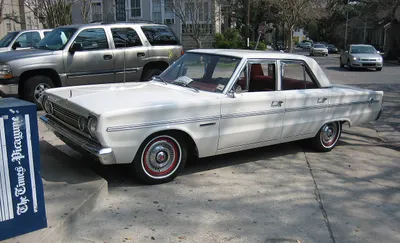
Chrysler shrank the Belvedere for 1960 and buyers punished it for being smaller, even though a magazine test called the six-cylinder version pleasant transportation.
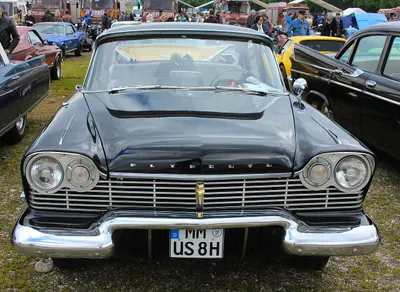
This 1957-58 Belvedere hardtop is the car Stephen King made the villain in Christine.
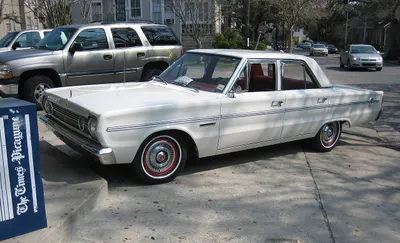
Chrysler's PR chief drove a Belvedere with a turbine jet engine bolted in across the country to prove the idea worked.
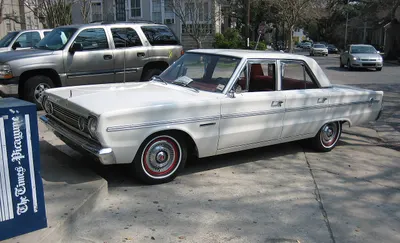
Plymouth buyers waited until March 1954 for their first real automatic — the two-speed PowerFlite, arriving right in the middle of the Belvedere's debut model year.
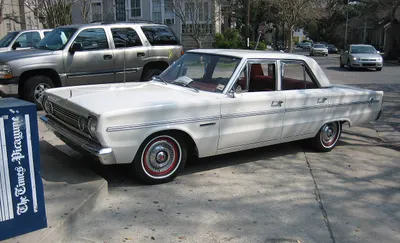
The 1953 restyle moved this car's gas cap under the trunk lid — and promptly caused a full tank to spill gasoline straight into the trunk until Plymouth added baffles mid-year to fix it.
Rivals
Same body, same money, other badges — tap any card to flip.

It briefly served as senior sibling to Marquette, a GM companion brand cancelled after just one year.

Nissan hired former BMW engineers to help develop the 510's suspension, which is why period reviewers frequently compared its handling to the BMW 1600/2002.

A Trabant 601 won its class at the 1970 Monte Carlo Rally, with a second 601 right behind it in second.

The 600 was a stopgap: the P50's body over the 601's mechanicals, and for a while its estate was built alongside the new 601 saloon.

The G80 Sport brought a 370 PS twin-turbo 3.3 V6, a mesh grille and copper-tinted chrome with copper stitching to match.

The Vigor was sold only with a five-cylinder engine, an unusual configuration Honda used to fit a longer engine transversely under a short hood.

The GS/E coupe earned the nickname "German Charger" for its long hood, short deck stance borrowed from Detroit muscle cars.

This DeVille/Fleetwood was the first production car anywhere to mount its V8 sideways, Cadillac's front-drive gamble on the new C-body.