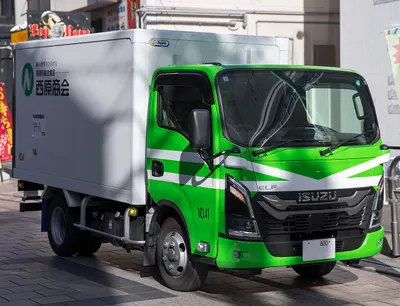
VerifiedFIRST · WORLDWIDEFIRST PRINTONLY ONE IN VANCOUVERThe sixth-gen Elf's headlight-and-turnsignal cluster is shaped to echo Isuzu's old 'twin bar' logo — a company emblem the brand had already retired back in 1991.

Three years into this generation, Isuzu sold its millionth Elf — proof the little truck had become a workhorse staple well beyond Japan.
Median 64 hp across 39 similar cars
Lead trim: Elf 150 G161 petrol 1,584 cc (84 PS) · up to 108 hp
Nobody in Burbles has spotted a Isuzu Elf third generation "Tora-san" yet. See one on the street, point the app at it, and the first card is yours — with your @handle permanently credited on this page.
FactThree years into this generation, Isuzu sold its millionth Elf — proof the little truck had become a workhorse staple well beyond Japan.
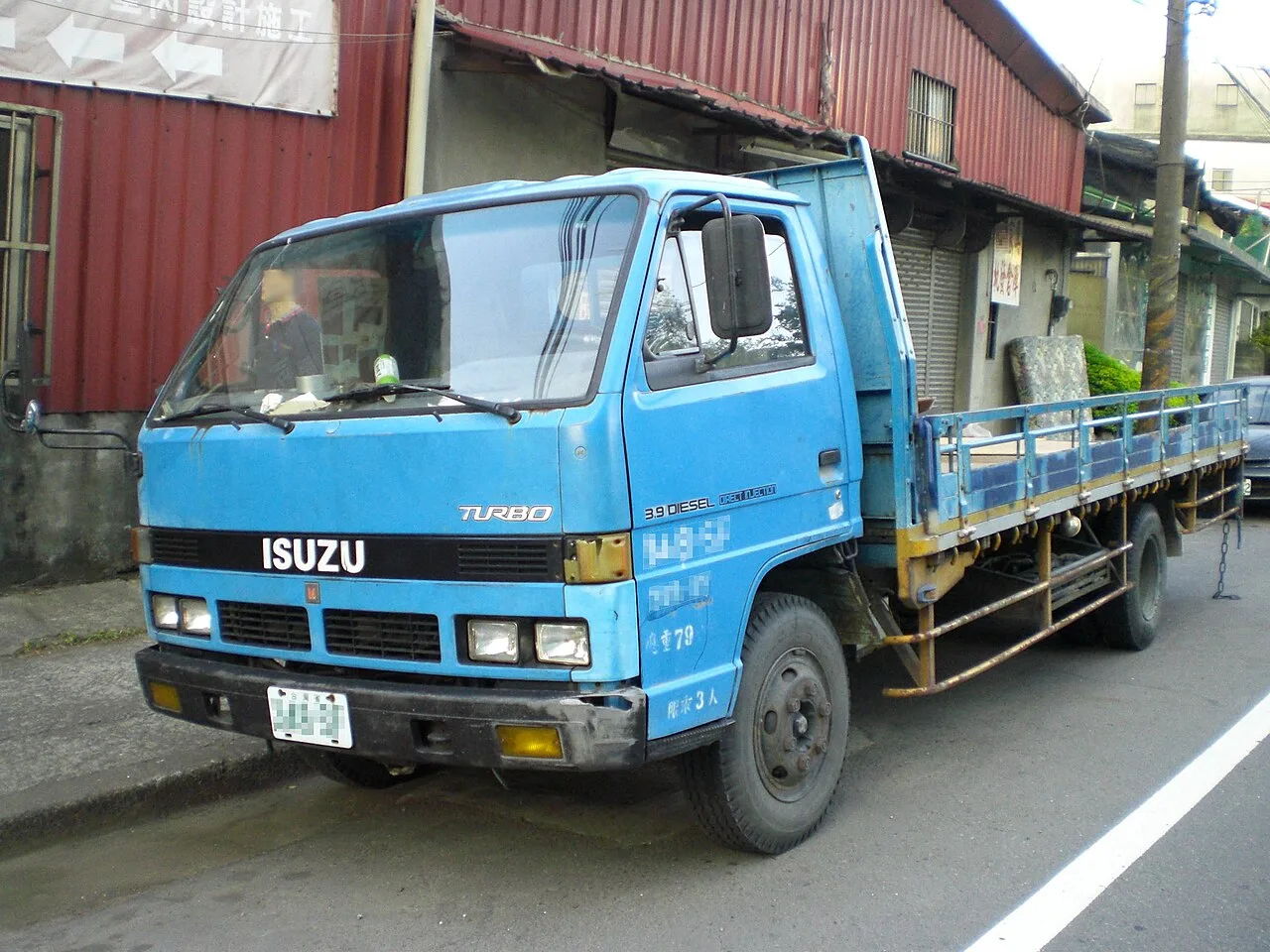
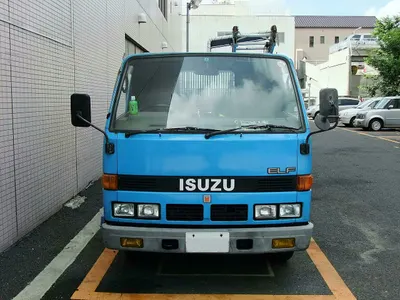
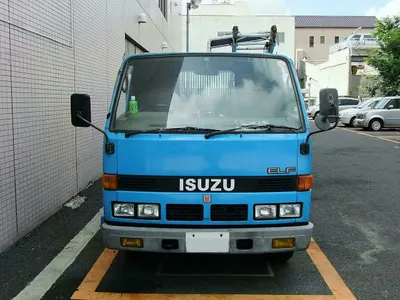
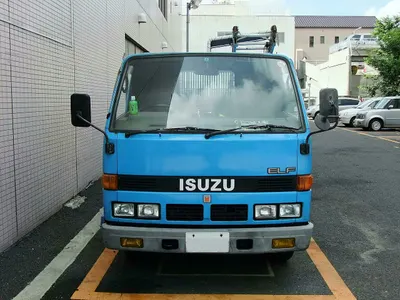
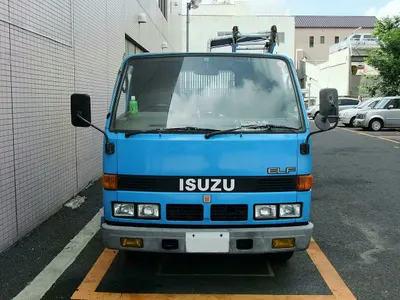
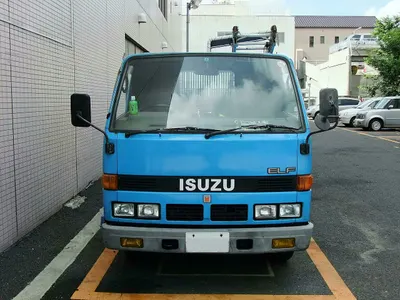
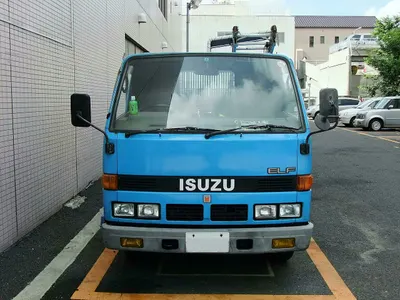
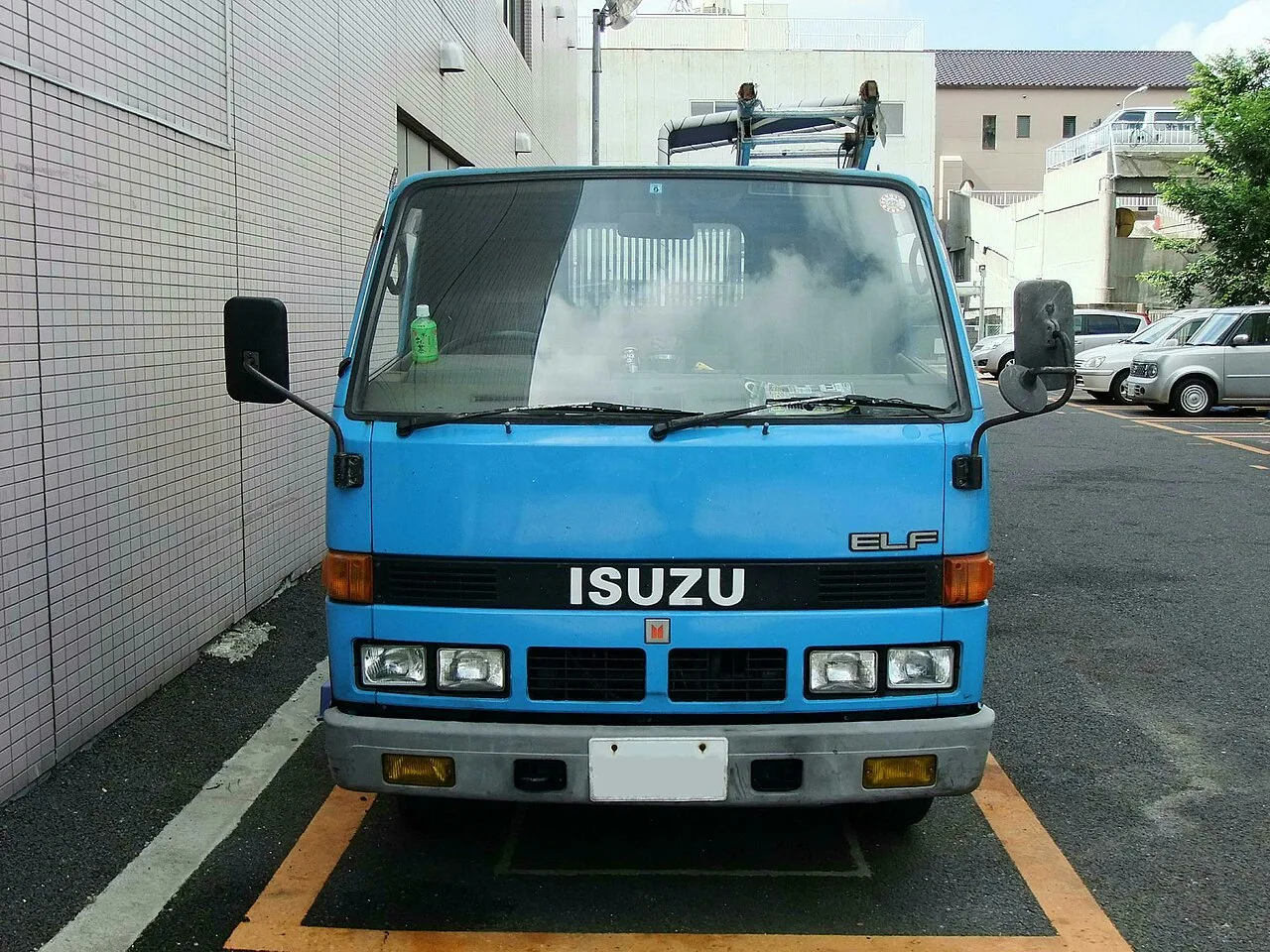
The third generation Elf arrived in June 1975, nicknamed "Tora-san" after Kiyoshi Atsumi's most beloved film character, which it supposedly resembled; initial models were the Elf 150 and 250, with a 250 Low-Flat added in January 1977 and a facelift and altered front grille in 1978. In 1979 a bigger 3.3-litre version of the 2-tonne Elf 250 was introduced as the "Elf 250 Super", and the Elf 150 Super has the larger 2.4-litre C240 diesel usually installed in the 250. In January 1980 the Elf was updated to meet Japan's 1979 emissions standards and redesigned to accommodate a tilting cab, adding the Elf 250 Wide and 350 Wide (KT and KS chassis codes) with a 1,910 mm (75 in) cabin width against the 1,690 mm (67 in) of the TL and KA series; a 1981 facelift brought a new dashboard, and the 3.3-litre 4BC2 (the world's then smallest direct injection diesel) arrived in 1982 replacing the 4BC1 of 1979. The engine table (PS / kW / rpm): G161 petrol 1,584 cc 84 PS at 5,200; C190 diesel 1,951 cc 62 PS at 4,400; C240 diesel 2,369 cc 74 PS at 3,800; 4BA1 diesel 2,775 cc 85 PS at 4,000; 4BC1 3,268 cc 95 PS at 3,500; 4BC2 100 PS at 3,500; 4BD1 3,856 cc 110 PS for the Elf 350 Wide. Isuzu sold its millionth Elf in 1978; the Route Van (three- or six-seat van) continued into the early 1990s, and the bus version was the Isuzu Journey S.
Real Isuzu Elf cards spotted on the street by Burbles collectors. Tap any card to flip it over, inspect the collector’s binder, or follow them.
VerifiedFIRST · WORLDWIDEFIRST PRINTONLY ONE IN VANCOUVERThe sixth-gen Elf's headlight-and-turnsignal cluster is shaped to echo Isuzu's old 'twin bar' logo — a company emblem the brand had already retired back in 1991.
7 published trims in the catalogue. A blank is a figure not recorded, not zero.
| Trim | Years | Engine | Power | Torque | 0–60 | Drive | Gearbox | MSRP |
|---|---|---|---|---|---|---|---|---|
| Elf 150 C190 diesel 1,951 cc (62 PS) | 1975–1984 | 2.0 L Inline-4 | 61 hp | — | — | RWD | — | — |
| Elf 150 G161 petrol 1,584 cc (84 PS) | 1975–1984 | 1.6 L Inline-4 | 83 hp | — | — | RWD | — | — |
| Elf 150 Super / 250 C240 diesel 2,369 cc (74 PS) | 1975–1984 | 2.4 L Inline-4 | 73 hp | — | — | RWD | — | — |
| Elf 250 4BA1 diesel 2,775 cc (85 PS) | 1975–1984 | 2.8 L Inline-4 | 84 hp | — | — | RWD | — | — |
| Elf 250 Super / Wide 4BC2 DI diesel 3.3 (100 PS) | 1982–1984 | 3.3 L Inline-4 | 99 hp | — | — | RWD | — | — |
| Elf 250 Super 4BC1 diesel 3,268 cc (95 PS) | 1979–1982 | 3.3 L Inline-4 | 94 hp | — | — | RWD | — | — |
| Elf 350 Wide 4BD1 diesel 3,856 cc (110 PS) | 1980–1984 | 3.9 L Inline-4 | 108 hp | 199 lb-ft | — | RWD | — | — |
We don’t estimate running costs for a car like this. What it costs depends on its condition, its specialist and how it is driven, and an average would mislead.
Nobody has claimed one yet.

The 2024 Elf Mio is sized so small it legally counts as a compact car in Japan -- meaning you can drive this truck on an ordinary license, no commercial endorsement required.

The sixth-gen Elf's headlight-and-turnsignal cluster is shaped to echo Isuzu's old 'twin bar' logo — a company emblem the brand had already retired back in 1991.

This generation of Elf lived a double life: an OEM deal had Nissan selling the identical truck as the Atlas and Diesel Condor.

This Elf generation launched a name still used today: it's the truck that first wore the Isuzu N-Series badge.

Three years into this generation, Isuzu sold its millionth Elf — proof the little truck had become a workhorse staple well beyond Japan.

The second-gen Elf's 'Hi-Roof' walk-through van let drivers move through the cargo box without stepping outside — a first for Japan's commercial trucks.

The Elf's 1960 diesel option was a first for its truck class in Japan, arriving just seven months after the gasoline-only launch.
Same body, same money, other badges — tap any card to flip.

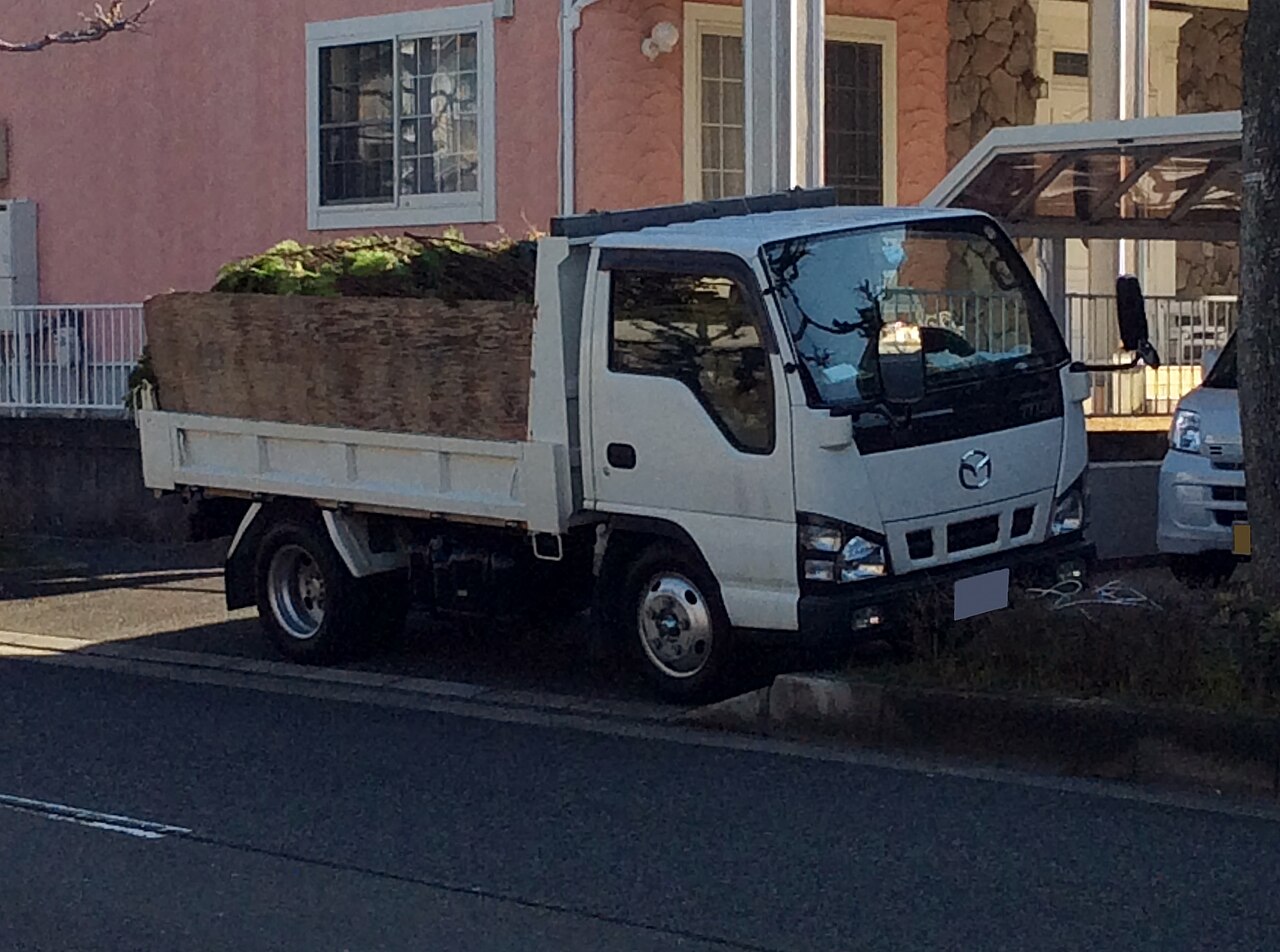
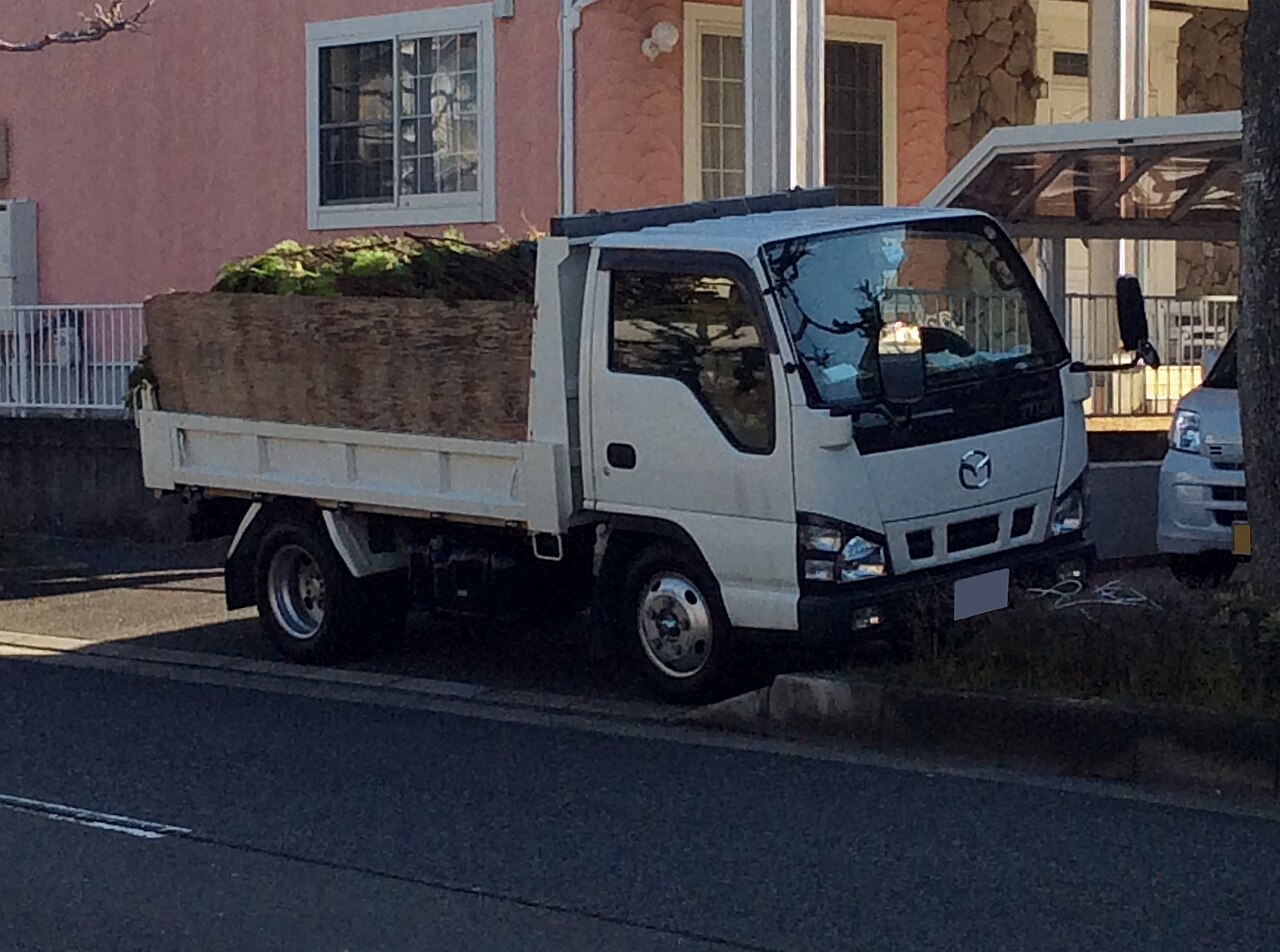
When Mazda's E2000 — the truck that became the Titan — launched in January 1964, the factory was tasked with building 1,900 of them a month.

Swaraj Mazda built this truck under license in India from 1985, and the plant survived name changes all the way to SML Isuzu.

Indonesia built this pickup for 28 years with no successor, the last one leaving the Jakarta line in January 2019 after 324,960 units.

Suzuki's first-ever diesel engine, fitted to the Super Carry, is so small that it isn't able to power an air-conditioning system at all.

A right-hand-drive DJ-3A was built so postal drivers could reach roadside mailboxes without leaving the seat.

The Power Wagon name and civilian pickup design were derived directly from the WC-series military trucks Dodge built for World War II.

Suzuki kept the L20 Carry at the exact same 21 hp as its predecessor but still called it progress — the gain was a patented Cylinder Crank Injection lubrication system, not more power.

This generation of Titan quietly became the ancestor of two other trucks entirely: it was license-built by Kia as the Kia Titan in South Korea, and formed the basis of the Australian Ford Trader.