VerifiedFIRST PRINTONLY ONE IN VANCOUVERPROEvery Accord coupe sold anywhere in the world during this generation came from one single factory: Honda's plant in Marysville, Ohio.

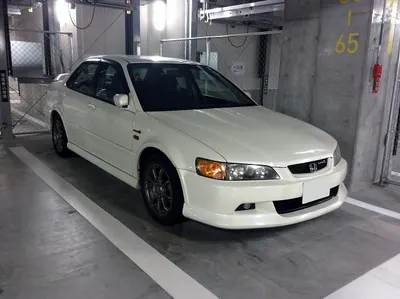
The SiR-T's smaller F20B engine could out-rev the bigger H22A fitted to other Accords of this generation — a shorter stroke let it spin higher and match power through revs instead of displacement.
Median 170 hp across 379 similar cars
Lead trim: SiR 2.0 L four, S-Matic automatic (180 PS) · up to 197 hp
Nobody in Burbles has spotted a Honda Accord SiR-T / SiR yet. See one on the street, point the app at it, and the first card is yours — with your @handle permanently credited on this page.
FactThe SiR-T's smaller F20B engine could out-rev the bigger H22A fitted to other Accords of this generation — a shorter stroke let it spin higher and match power through revs instead of displacement.
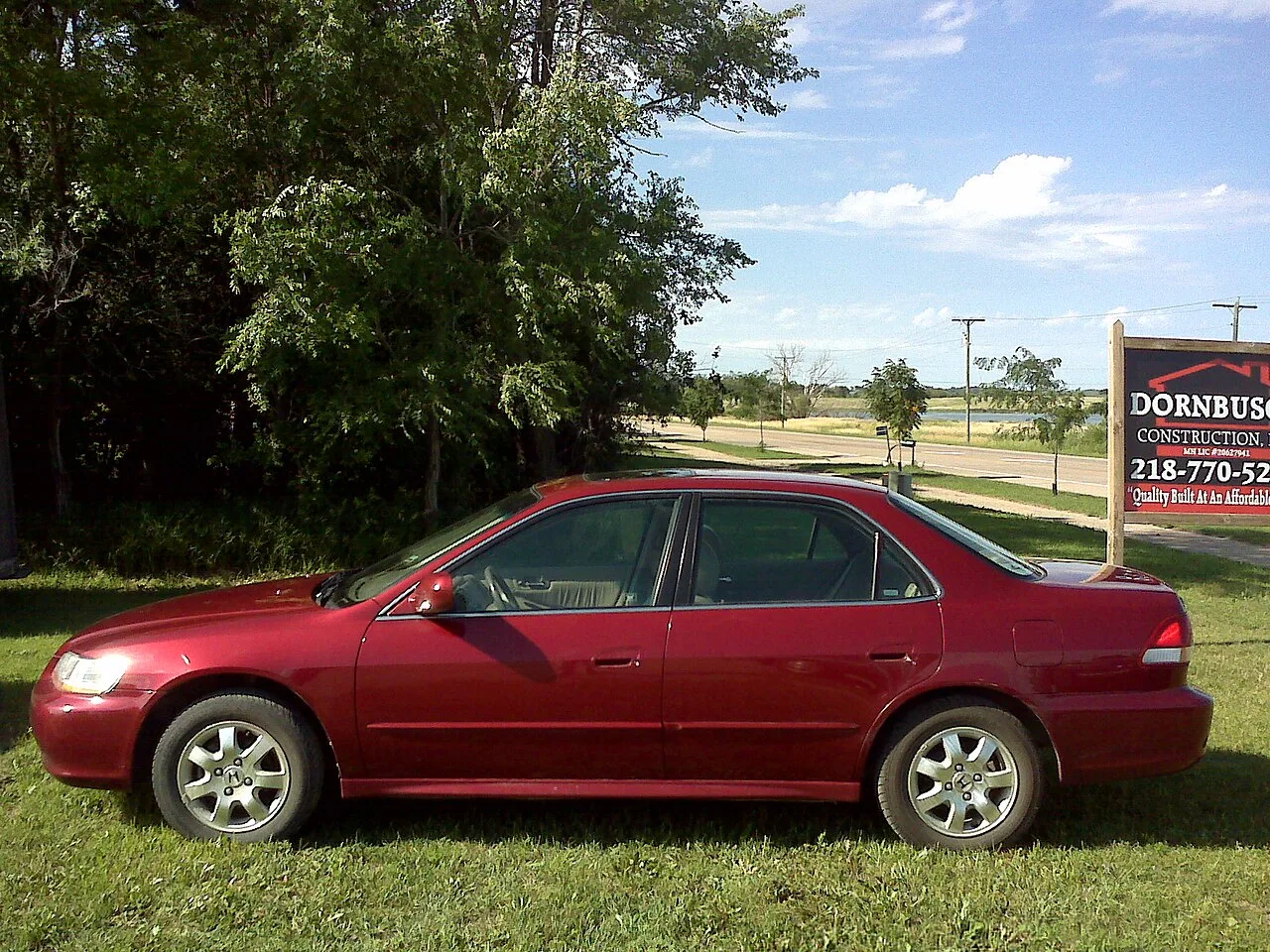
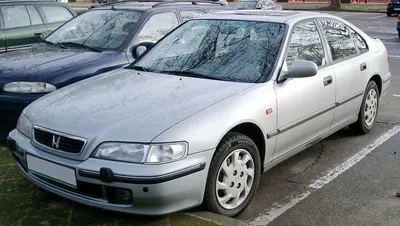
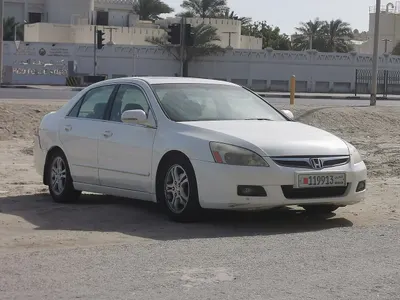
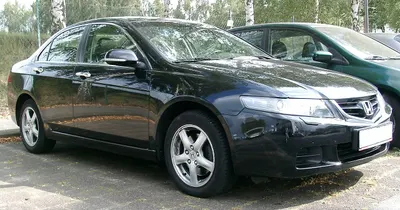
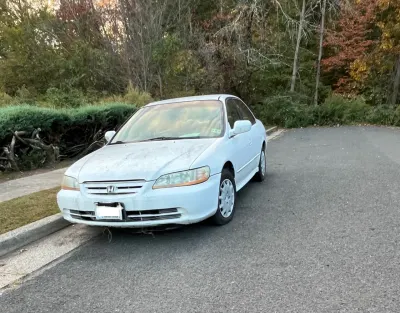
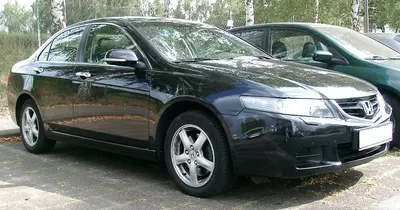
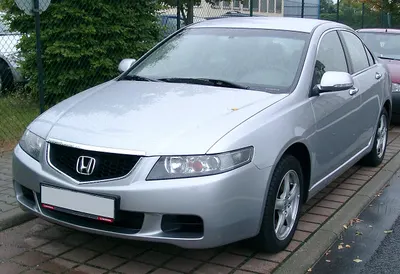
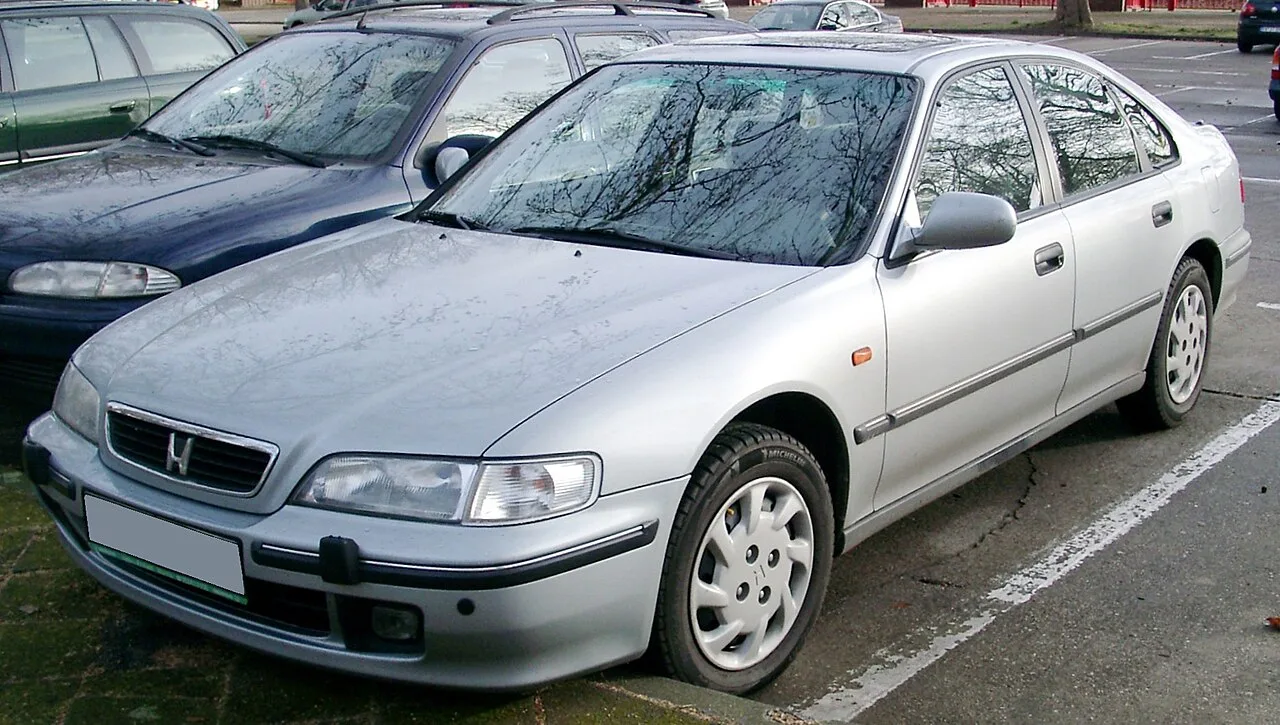
The Accord SiR-T was introduced in 1997 in the Japanese sixth generation (built at Sayama, Saitama) and was only available with a five-speed manual transmission and the 2.0-litre F20B engine, rated 200 PS (197 hp) at 7,200 rpm and 196 N·m (145 lb-ft) at 6,600 rpm, with an 85 mm x 88 mm bore and stroke and a 7400 rpm redline (the H-series DOHC VTEC engines were limited to 7,800 rpm). The F20B had a unique blue valve cover, was mounted with a tilt towards the driver and could rev higher than the H22A because of its shorter stroke (the H22A being 87 mm x 90.7 mm); it was also classified as a low-emissions engine. The SiR-T was replaced by the even more uncompromising Euro R variant in 2000, whereas the automatic-equipped SiR continued until the generation was replaced in 2002. The Accord SiR was based on the SiR-T but used the S-Matic automatic transmission with a sequential manual shift mode, with the maximum output reduced to 180 PS (178 hp) at 7000 rpm and 192 N·m (142 lb-ft) at 5,500 rpm; moving the gear-stick to the right allowed manual selection of first to fourth gears, the gear staying in position at all rpm, though the ratios were the same as in the normal mode. The page's compression figure for the F20B is garbled ("11.0.1"), so none is entered. Japanese sixth-generation dimensions: wheelbase 2,665 mm (104.9 in), length 4,635 mm (182.5 in), width 1,695 mm (66.7 in) and height 1,420 mm (55.9 in) for the sedan.
Real Honda Accord cards spotted on the street by Burbles collectors. Tap any card to flip it over, inspect the collector’s binder, or follow them.
VerifiedFIRST PRINTONLY ONE IN VANCOUVERPROEvery Accord coupe sold anywhere in the world during this generation came from one single factory: Honda's plant in Marysville, Ohio.
2 published trims in the catalogue. A blank is a figure not recorded, not zero.
| Trim | Years | Engine | Power | Torque | 0–60 | Drive | Gearbox | MSRP |
|---|---|---|---|---|---|---|---|---|
| SiR 2.0 L four, S-Matic automatic (180 PS) | 1997–2002 | 2.0 L Inline-4 | 178 hp | 142 lb-ft | — | — | — | — |
| SiR-T 2.0 L F20B four, 5-speed manual (200 PS) | 1997–2000 | 2.0 L Inline-4 | 197 hp | 145 lb-ft | — | — | — | — |
We don’t estimate running costs for a car like this. What it costs depends on its condition, its specialist and how it is driven, and an average would mislead.
Nobody has claimed one yet.


One of the world's best-selling mid-size sedans skipped a market entirely for this generation: the 11th-gen Accord was never sold in Malaysia, after sales of the previous generation there kept declining.

The tenth-generation Accord actually grew into "full-size car" territory under EPA rules — not by getting longer outside, but by packing more cabin volume than its own predecessor.

Before CarPlay showed up in luxury cars, Honda beat everyone to it: the 2016 Accord was the very first mass-market car fitted with Apple CarPlay.

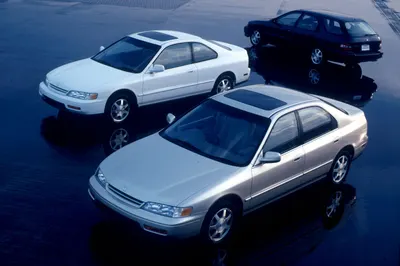
Every Accord coupe sold anywhere in the world during this generation came from one single factory: Honda's plant in Marysville, Ohio.

This Accord's Japan/Europe version won the Car of the Year Japan award for a record third time at its 2003 launch.

Japan's Accord Euro R wasn't badged a Type R, but Honda gave it one anyway: a special aluminum gear knob otherwise found only on Honda's actual Type R models.

The Euro R’s "red top" H22A engine came loaded: Recaro seats, a leather MOMO wheel, a Torsen limited-slip diff and 220 PS — more than the European Accord Type R that shared its name.

Honda's biggest H-series VTEC engine, the 2.3-litre H23A, went into exactly one car ever: not a sedan, not a coupe — the Accord Wagon SiR.

Honda's home-market take on this Accord actually got narrower than the car it replaced, purely to slide back under Japan's compact-car tax bracket.

Confusingly named: the Accord "Type R" was sold only in Europe, while its sibling the Accord "Euro-R" was Japan-only.

The SiR-T's smaller F20B engine could out-rev the bigger H22A fitted to other Accords of this generation — a shorter stroke let it spin higher and match power through revs instead of displacement.

This generation Accord led a strange double life in Japan — sold there as the Isuzu Aska, while Honda simultaneously sold some Isuzu models under its own badge.

1990-91 US Accords had shoulder belts that automatically raced around the window frame when you shut the door, to meet federal passive-restraint rules.

Honda built this Accord coupe only in Ohio, then shipped it back across the Pacific to sell in Japan as the imported 'US-coupe'.

In 1982 the second-gen Accord became the first car from a Japanese manufacturer ever built on US soil, at Honda's new Marysville, Ohio plant.

The original Accord broke a size barrier: before it (and its Prelude sibling), no car under two litres had ever offered power steering.
Same body, same money, other badges — tap any card to flip.

It briefly served as senior sibling to Marquette, a GM companion brand cancelled after just one year.

Nissan hired former BMW engineers to help develop the 510's suspension, which is why period reviewers frequently compared its handling to the BMW 1600/2002.

A Trabant 601 won its class at the 1970 Monte Carlo Rally, with a second 601 right behind it in second.

The 600 was a stopgap: the P50's body over the 601's mechanicals, and for a while its estate was built alongside the new 601 saloon.

The G80 Sport brought a 370 PS twin-turbo 3.3 V6, a mesh grille and copper-tinted chrome with copper stitching to match.

The Vigor was sold only with a five-cylinder engine, an unusual configuration Honda used to fit a longer engine transversely under a short hood.

The GS/E coupe earned the nickname "German Charger" for its long hood, short deck stance borrowed from Detroit muscle cars.

This DeVille/Fleetwood was the first production car anywhere to mount its V8 sideways, Cadillac's front-drive gamble on the new C-body.