The 1930 Chrysler Series CJ dropped the old high stance for hydraulic brakes, a fuel pump and hydraulic shocks — real engineering upgrades rushed out just as the Depression hit.
Lead trim: Six 268.4 cu in I6 (1930)
Chrysler Six Series CJ, CM, CI, COCJ/CM/CI/CO · 1930–1933
- 0spots by members
- Unclaimednobody has spotted one yet
- 0sets it belongs to
Nobody in Burbles has spotted a Chrysler Six Series CJ, CM, CI, CO yet. See one on the street, point the app at it, and the first card is yours — with your @handle permanently credited on this page.
FactThe 1930 Chrysler Series CJ dropped the old high stance for hydraulic brakes, a fuel pump and hydraulic shocks — real engineering upgrades rushed out just as the Depression hit.
The new decade brought updated styling and engineering, introducing the Chrysler Six Series CJ, a downsized version of the Series 66, Series 70 and Series 77, launched just as the Wall Street crash of 1929 and the Great Depression began. Chrysler introduced Pennon-type hood louvers on all Sixes, replaced mid-year with more functional vertical louvers, and the front headlight tie-bar became curved with the model number attached as a pendant. The Series CJ had a different chassis from the previous Series 60 and 70, closer to the ground, with hydraulic internal brakes, a fuel pump, rubber spring shackles and hydraulic shock absorbers, and a narrow-profile, slightly rearward-angled radiator used by the Chrysler Eight and Imperial; it was offered as a Roadster, Business Coupe or Convertible Coupe (listed at US$925) and a Touring Sedan or closed-body Royal Sedan (listed at US$845). The 1931 Series CM was essentially the CJ with cowl lights added, introducing the Cord L-29-influenced Chrysler corporate appearance shared with DeSoto, Dodge and Plymouth. For 1932 the Series CI was the sole straight-six product, replacing the original Series 60 and 70 and ending the tradition of naming series after the top miles per hour attainable, with the engineering advances first seen on the 1931 Imperial Eight now standard. The 1933 Series CO was largely a carryover with front fenders extending forward and a deeper fender crown, the doors on both two- and four-door cars hinged in the center so that the front doors opened "suicide"-style, and individual ventilation doors on the sides of the engine compartment instead of vertical louvers. The engine listed for 1930 was a 268.4 cu in (4.4 L) Chrysler I6.
Collectors Spotted in the Chrysler Six Lineage
No member has published a public street spot of the Chrysler Six yet — the First · Worldwide stamp is wide open.
Trims & Figures
One published trim in the catalogue. A blank is a figure not recorded, not zero.
| Trim | Years | Engine | Power | Torque | 0–60 | Drive | Gearbox | MSRP |
|---|---|---|---|---|---|---|---|---|
| Six 268.4 cu in I6 (1930) | 1930–1930 | 4.4 L Inline-6 | — | — | — | — | — | — |
Owning one
We don’t estimate running costs for a car like this. What it costs depends on its condition, its specialist and how it is driven, and an average would mislead.
Owners’ builds
Nobody has claimed one yet.
In 1934 Chrysler's radical new Airflow couldn't be sold as a bare chassis — its unibody construction ruled that out — but the old-fashioned Six Series CA and CB still could, for coachbuilders who wanted to build their own bodies.
The 1930 Chrysler Series CJ dropped the old high stance for hydraulic brakes, a fuel pump and hydraulic shocks — real engineering upgrades rushed out just as the Depression hit.
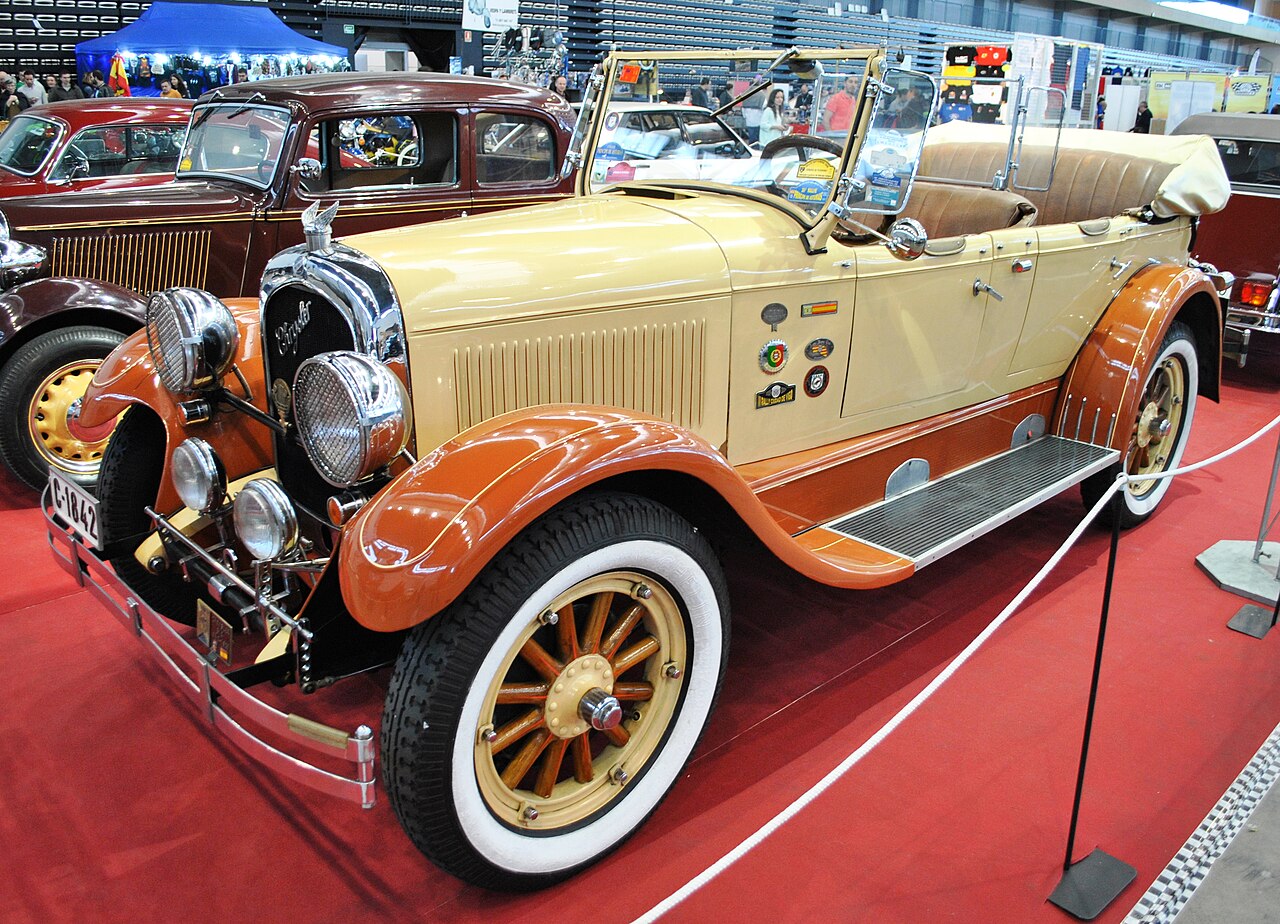
This car's own model number was a promise: Chrysler's Series badges in the 1920s stated the top speed the car could actually sustain, so a Series 70 meant 70 mph, continuously.
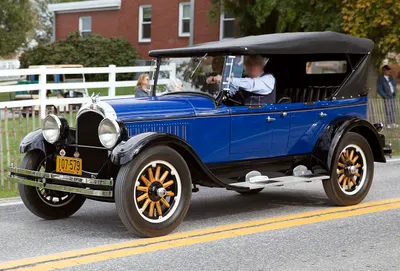
Two trim packages introduced on the 1926 Chrysler Six, Royal Coupe and Crown Sedan, were popular enough that Chrysler later spun each one off into its own standalone model.
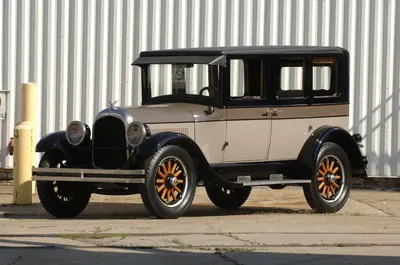
Chrysler's very first car, the B-70, sold 32,000 units in its debut year alone — a record for any new model's introduction at the time.
Rivals
Same body, same money, other badges — tap any card to flip.

It briefly served as senior sibling to Marquette, a GM companion brand cancelled after just one year.

Nissan hired former BMW engineers to help develop the 510's suspension, which is why period reviewers frequently compared its handling to the BMW 1600/2002.

A Trabant 601 won its class at the 1970 Monte Carlo Rally, with a second 601 right behind it in second.

The 600 was a stopgap: the P50's body over the 601's mechanicals, and for a while its estate was built alongside the new 601 saloon.

The G80 Sport brought a 370 PS twin-turbo 3.3 V6, a mesh grille and copper-tinted chrome with copper stitching to match.

The Vigor was sold only with a five-cylinder engine, an unusual configuration Honda used to fit a longer engine transversely under a short hood.

The GS/E coupe earned the nickname "German Charger" for its long hood, short deck stance borrowed from Detroit muscle cars.

This DeVille/Fleetwood was the first production car anywhere to mount its V8 sideways, Cadillac's front-drive gamble on the new C-body.