In 1934 Chrysler's radical new Airflow couldn't be sold as a bare chassis — its unibody construction ruled that out — but the old-fashioned Six Series CA and CB still could, for coachbuilders who wanted to build their own bodies.
Lead trim: Six Series CA (1934)
Chrysler Six Series CA, CBCA/CB · 1934–1934
- 0spots by members
- Unclaimednobody has spotted one yet
- 0sets it belongs to
Nobody in Burbles has spotted a Chrysler Six Series CA, CB yet. See one on the street, point the app at it, and the first card is yours — with your @handle permanently credited on this page.
FactIn 1934 Chrysler's radical new Airflow couldn't be sold as a bare chassis — its unibody construction ruled that out — but the old-fashioned Six Series CA and CB still could, for coachbuilders who wanted to build their own bodies.
For 1934 the Chrysler Airflow was introduced to replace the eight-cylinder Chrysler Royal, and the Series CA and CB were intended to be the final version of the Six platform. Minor changes included valanced front and rear fenders that hung from behind the wheels, horizontal hood louvers and body-colored radiator shells that concealed the radiator; an independent front suspension was introduced, vent windows were added and steel spoked wheels permanently replaced wood spokes. The Series CA offered a 117 in wheelbase while the Series CB offered a 121 in wheelbase and was used for sedans only, in two body styles, one being a convertible four-door with the centrally located door hinges continued from the previous year; both could still be had as a chassis only for customized coachwork, which the Series CU Airflow could not because of its unibody construction. The Series CA roadster convertible was US$865 and the four-door sedan US$845, while the longer Series CB Convertible Sedan was US$970.
Collectors Spotted in the Chrysler Six Lineage
No member has published a public street spot of the Chrysler Six yet — the First · Worldwide stamp is wide open.
Trims & Figures
2 published trims in the catalogue. A blank is a figure not recorded, not zero.
| Trim | Years | Engine | Power | Torque | 0–60 | Drive | Gearbox | MSRP |
|---|---|---|---|---|---|---|---|---|
| Six Series CA (1934) | 1934–1934 | Inline-6 | 93 hp | — | — | — | — | — |
| Six Series CB (1934) | 1934–1934 | Inline-6 | 93 hp | — | — | — | — | — |
Owning one
We don’t estimate running costs for a car like this. What it costs depends on its condition, its specialist and how it is driven, and an average would mislead.
Owners’ builds
Nobody has claimed one yet.
In 1934 Chrysler's radical new Airflow couldn't be sold as a bare chassis — its unibody construction ruled that out — but the old-fashioned Six Series CA and CB still could, for coachbuilders who wanted to build their own bodies.
The 1930 Chrysler Series CJ dropped the old high stance for hydraulic brakes, a fuel pump and hydraulic shocks — real engineering upgrades rushed out just as the Depression hit.
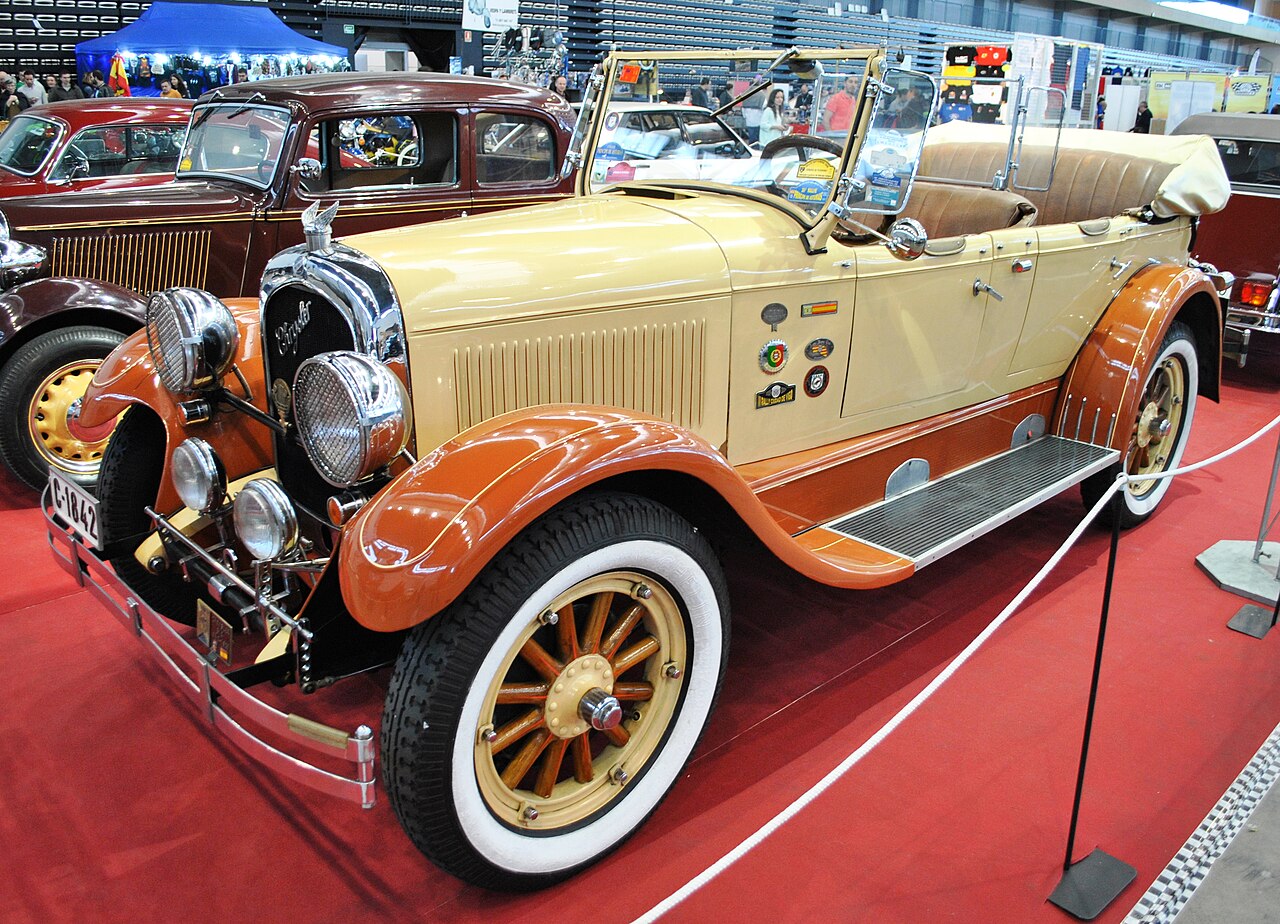
This car's own model number was a promise: Chrysler's Series badges in the 1920s stated the top speed the car could actually sustain, so a Series 70 meant 70 mph, continuously.
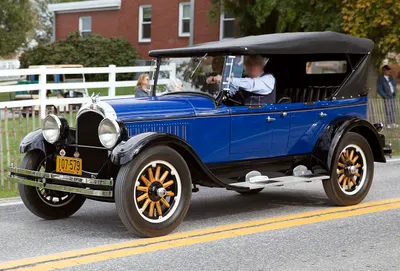
Two trim packages introduced on the 1926 Chrysler Six, Royal Coupe and Crown Sedan, were popular enough that Chrysler later spun each one off into its own standalone model.
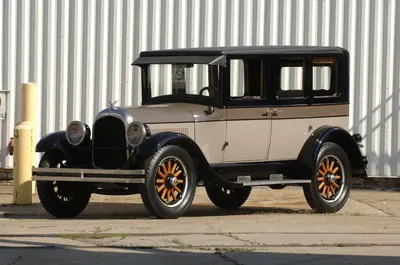
Chrysler's very first car, the B-70, sold 32,000 units in its debut year alone — a record for any new model's introduction at the time.
Rivals
Same body, same money, other badges — tap any card to flip.

It briefly served as senior sibling to Marquette, a GM companion brand cancelled after just one year.

Nissan hired former BMW engineers to help develop the 510's suspension, which is why period reviewers frequently compared its handling to the BMW 1600/2002.

A Trabant 601 won its class at the 1970 Monte Carlo Rally, with a second 601 right behind it in second.

The 600 was a stopgap: the P50's body over the 601's mechanicals, and for a while its estate was built alongside the new 601 saloon.

The G80 Sport brought a 370 PS twin-turbo 3.3 V6, a mesh grille and copper-tinted chrome with copper stitching to match.

The Vigor was sold only with a five-cylinder engine, an unusual configuration Honda used to fit a longer engine transversely under a short hood.

The GS/E coupe earned the nickname "German Charger" for its long hood, short deck stance borrowed from Detroit muscle cars.

This DeVille/Fleetwood was the first production car anywhere to mount its V8 sideways, Cadillac's front-drive gamble on the new C-body.