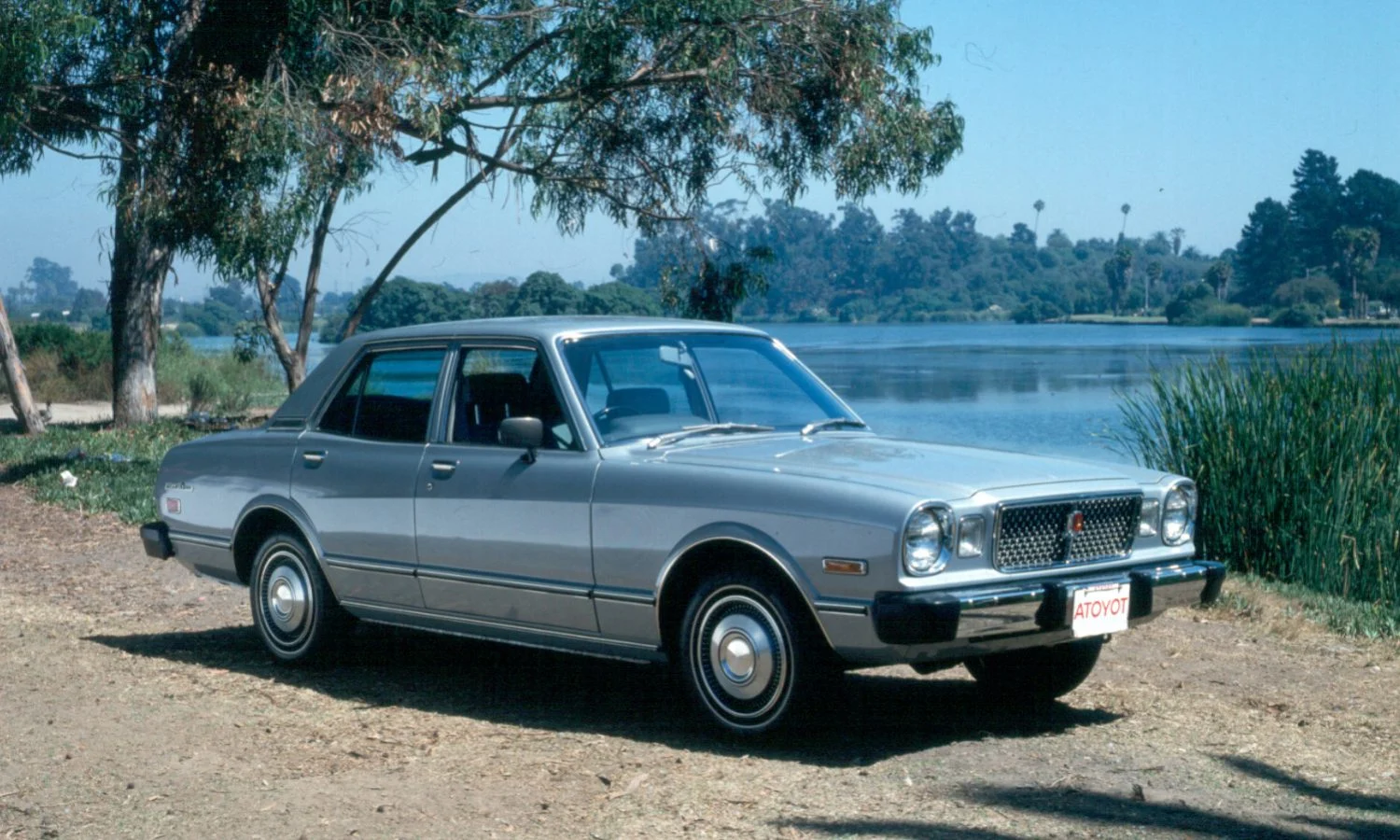
This Mark II spun off a sportier twin in 1977, the first Toyota Chaser.
Lead trim: 1.8 3T-U
Toyota Mark II / Cressida X30 / X40 third generationX30/X40 · 1976–1980
- 0spots by members
- Unclaimednobody has spotted one yet
- 0sets it belongs to
Nobody in Burbles has spotted a Toyota Mark II / Cressida X30 / X40 third generation yet. See one on the street, point the app at it, and the first card is yours — with your @handle permanently credited on this page.
FactThis Mark II spun off a sportier twin in 1977, the first Toyota Chaser.
The third-generation Corona Mark II, exported as the Toyota Cressida, was built from December 1976 to August 1980 as a coupé, sedan and wagon with a more upscale, European-type design. It moved to unitary construction with crumple zones and MacPherson struts all round, and X40 codes marked engines meeting the 1978 emissions rules. Engines ran from 1.8 and 2.0-litre fours to 2.0 and 2.6-litre sixes, the 2.6 only in the top Grande in Japan, and a diesel arrived in October 1979. The Chaser was launched as its sportier sibling in 1977.
Collectors Spotted in the Toyota Mark II Lineage
No member has published a public street spot of the Toyota Mark II yet — the First · Worldwide stamp is wide open.
Trims & Figures
5 published trims in the catalogue. A blank is a figure not recorded, not zero.
| Trim | Years | Engine | Power | Torque | 0–60 | Drive | Gearbox | MSRP |
|---|---|---|---|---|---|---|---|---|
| 1.8 3T-U | 1976–1980 | 1.8 L Inline-4 | — | — | — | RWD | — | — |
| 2.0 18R-U | 1976–1980 | 2.0 L Inline-4 | — | — | — | RWD | — | — |
| 2.0 M / M-EU I6 | 1976–1980 | 2.0 L Inline-6 | — | — | — | RWD | — | — |
| 2.2 L diesel | 1979–1980 | 2.2 L Inline-4 | — | — | — | RWD | — | — |
| 2.6 4M / 4M-E I6 (Grande, Cressida) | 1976–1980 | 2.6 L Inline-6 | — | — | — | RWD | — | — |
Owning one
We don’t estimate running costs for a car like this. What it costs depends on its condition, its specialist and how it is driven, and an average would mislead.
Owners’ builds
Nobody has claimed one yet.
In the Community
Open CommunityNo notes tagged with the Toyota Mark II / Cressida X30 / X40 third generation yet.
Photographs
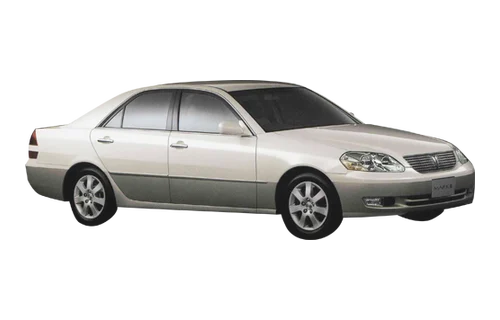
The last Mark II offered Navi AI-shift, which used GPS signals to put the automatic gearbox in the appropriate gear.
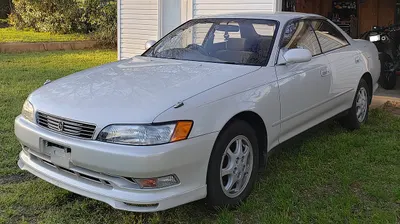
One Mark II trim level dropped on the JZX100 was called 'Groire' — named, oddly, after a small village in central France.
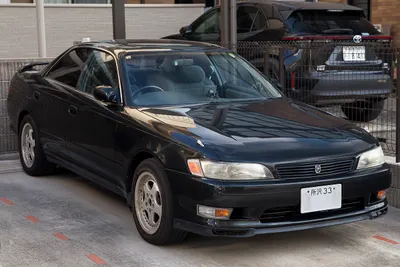
The JZX90 earned the nickname "Samurai" in Russia's Far East — not for its drift cred, but for tail lights shaped like a katana blade, the same region that nicknamed the R32 GT-R "Godzilla."
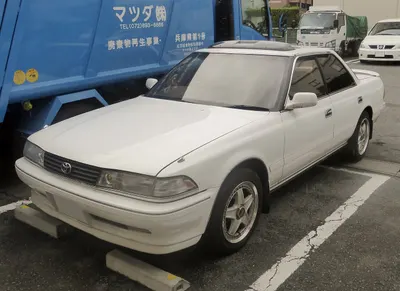
The X80 Mark II's supercharged six had a trick up its sleeve: an electromagnetic clutch disengaged the belt-driven blower whenever boost wasn't needed, saving fuel.
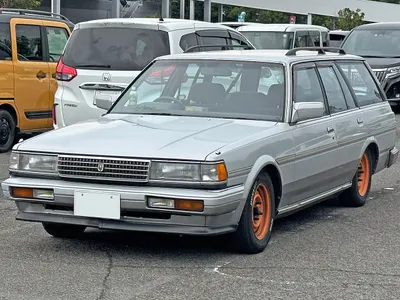
This Mark II is the one that dropped the Corona name Toyota had used on it since the 1960s.
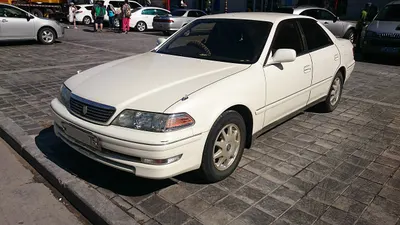
It introduced the world's first voice warning system, then spent its days working as a Japanese taxi.
This Mark II spun off a sportier twin in 1977, the first Toyota Chaser.
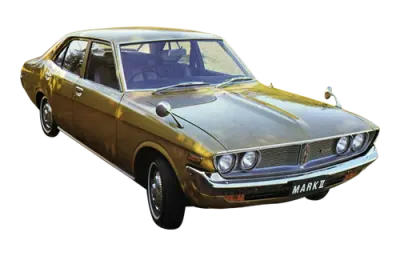
Toyota dropped the Corona name at home while export markets kept it, splitting one car into two identities.
Rivals
Same body, same money, other badges — tap any card to flip.

It briefly served as senior sibling to Marquette, a GM companion brand cancelled after just one year.

Nissan hired former BMW engineers to help develop the 510's suspension, which is why period reviewers frequently compared its handling to the BMW 1600/2002.

A Trabant 601 won its class at the 1970 Monte Carlo Rally, with a second 601 right behind it in second.

The 600 was a stopgap: the P50's body over the 601's mechanicals, and for a while its estate was built alongside the new 601 saloon.

The G80 Sport brought a 370 PS twin-turbo 3.3 V6, a mesh grille and copper-tinted chrome with copper stitching to match.

The Vigor was sold only with a five-cylinder engine, an unusual configuration Honda used to fit a longer engine transversely under a short hood.

The GS/E coupe earned the nickname "German Charger" for its long hood, short deck stance borrowed from Detroit muscle cars.

This DeVille/Fleetwood was the first production car anywhere to mount its V8 sideways, Cadillac's front-drive gamble on the new C-body.