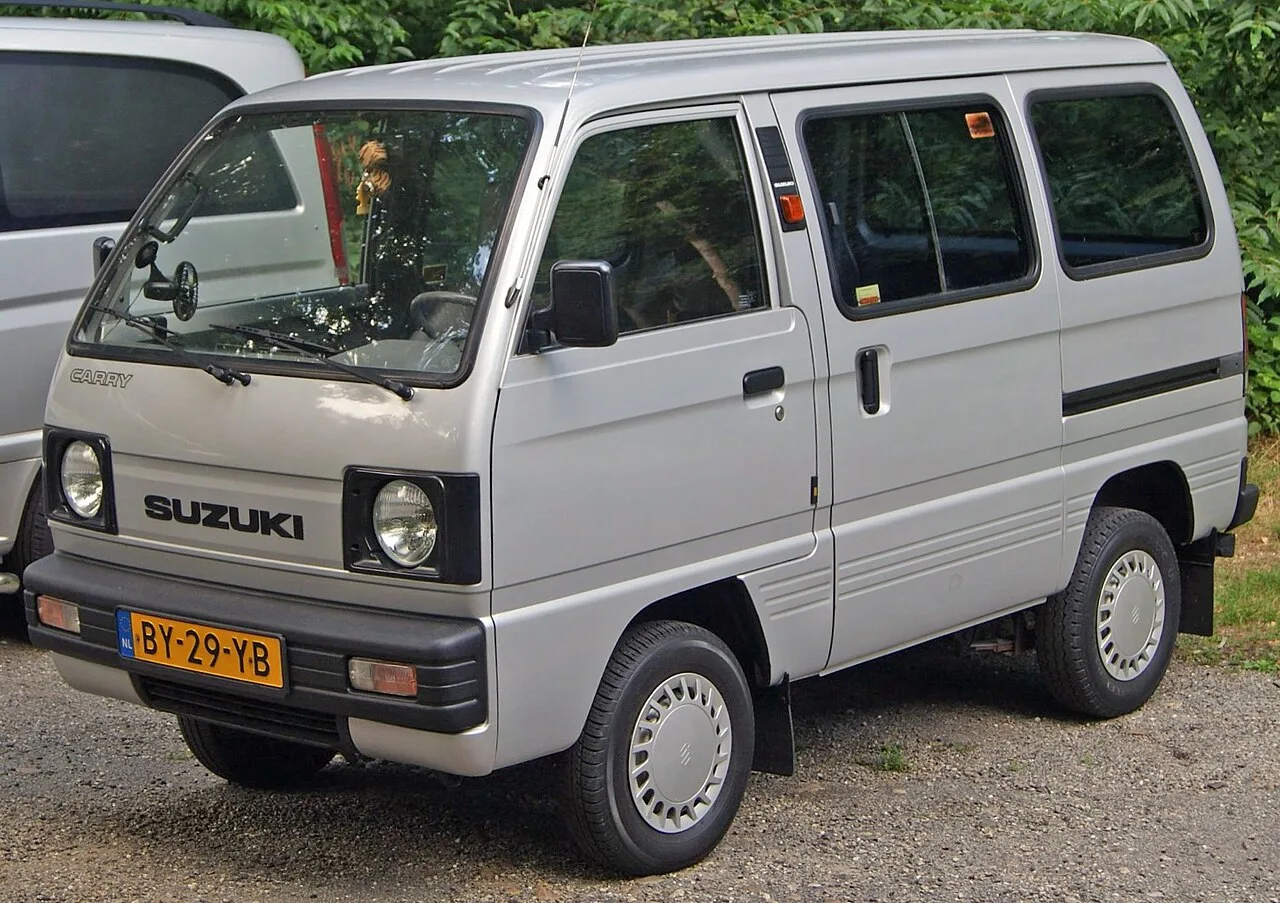
To dodge Japan's voluntary export limits, GM built this Carry generation under three different badges — Bedford, Vauxhall, and GME Rascal — all assembled at GM's own plant in Luton, England.
Median 74 hp across 28 similar cars
Lead trim: Carry DA81 539 cc LJ50 two-stroke three (to July 1986) · up to 47 hp
Suzuki Carry DA71 / DB71 / DA81 / DA41 / DA51 / SK410DA71-DB51 · 1985–1991
- 0spots by members
- Unclaimednobody has spotted one yet
- 0sets it belongs to
Nobody in Burbles has spotted a Suzuki Carry DA71 / DB71 / DA81 / DA41 / DA51 / SK410 yet. See one on the street, point the app at it, and the first card is yours — with your @handle permanently credited on this page.
FactTo dodge Japan's voluntary export limits, GM built this Carry generation under three different badges — Bedford, Vauxhall, and GME Rascal — all assembled at GM's own plant in Luton, England.
The eighth generation Carry appeared in March 1985, modernised with the range again expanded and a more powerful fuel-injected engine on top. The confusing chassis codes used DA/DB71 for the F5A-engined model (DB signifying four-wheel drive) and DA81 for the two-stroke truck which stayed available until the facelift of July 1986; T, B and V suffixes denoted trucks, tip-deck trucks and vans. From late 1987 a 52 PS (38 kW) turbocharged engine was available in the Every while the Carry truck received a three-valve supercharged F5A of 48 PS (35 kW); the multi-valve F5B (DA/DB41 chassis code) arrived in May 1989 and also powered the badge-engineered Autozam Scrum. With the kei rules altered for March 1990 the Carry and Every became DA/DB51 with the larger 657 cc F6A (38 to 58 PS) and rounder bodywork, replaced by the ninth generation in September 1991. Export models began in July 1985: the SK408 with the 797 cc four-cylinder F8A (37 PS, discontinued October 1989) and the Super Carry SK410 with the 970 cc F10A four (45 PS), in Europe also sold as the Bedford, Vauxhall or GME Rascal, in Australia as the Super Carry and the Holden Scurry (NB series), and as the Ford Pronto in Taiwan, Chevrolet CMV/CMP in Central America, and the Daewoo Damas/Labo in South Korea. The Super Carry continues in production in Vietnam.
Collectors Spotted in the Suzuki Carry Lineage
No member has published a public street spot of the Suzuki Carry yet — the First · Worldwide stamp is wide open.
Trims & Figures
7 published trims in the catalogue. A blank is a figure not recorded, not zero.
| Trim | Years | Engine | Power | Torque | 0–60 | Drive | Gearbox | MSRP |
|---|---|---|---|---|---|---|---|---|
| Carry DA/DB41 547 cc F5B multi-valve (from May 1989) | 1989–1991 | 0.5 L Inline-3 | — | — | — | — | — | — |
| Carry DA/DB51 657 cc F6A (from March 1990) | 1990–1991 | 0.7 L Inline-3 | — | — | — | — | — | — |
| Carry DA/DB71 543 cc F5A four-stroke three | 1985–1989 | 0.5 L Inline-3 | — | — | — | — | — | — |
| Carry DA81 539 cc LJ50 two-stroke three (to July 1986) | 1985–1986 | 0.5 L Inline-3 | 26 hp | 38 lb-ft | — | — | — | — |
| Carry SK408 797 cc F8A four (export, 37 PS) | 1985–1989 | 0.8 L Inline-4 | 36 hp | — | — | — | — | — |
| Carry truck supercharged three-valve F5A (48 PS) | 1987–1991 | 0.5 L Inline-3 | 47 hp | — | — | — | — | — |
| Super Carry SK410 970 cc F10A four (export, 45 PS) | 1985–1991 | 1.0 L Inline-4 | 44 hp | — | — | — | — | — |
Owning one
We don’t estimate running costs for a car like this. What it costs depends on its condition, its specialist and how it is driven, and an average would mislead.
Owners’ builds
Nobody has claimed one yet.
In the Community
Open CommunityNo notes tagged with the Suzuki Carry DA71 / DB71 / DA81 / DA41 / DA51 / SK410 yet.
Photographs
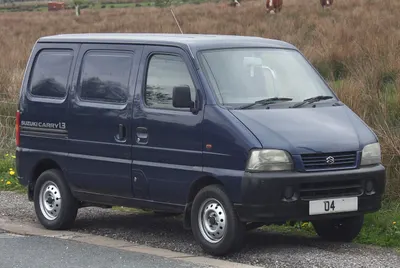
Built in Indonesia, this unassuming little Suzuki Carry pickup quietly reaches nearly 100 countries worldwide.
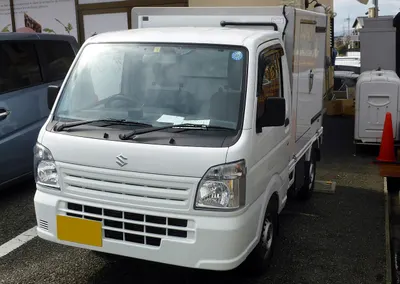
One tiny kei truck, four brands: the DA16T-generation Carry is sold wearing Suzuki, Mazda Scrum, Mitsubishi Minicab and Nissan Clipper badges — all the same vehicle underneath.
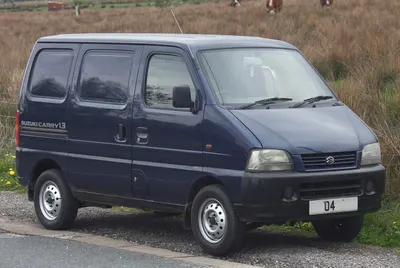
This Suzuki kei truck lived a double life in Central America — sold there as the Chevrolet CMV van and CMP pickup, badge-engineered straight through to the end of its run in 2013.
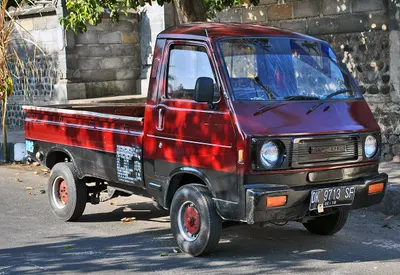
This generation split architecture by body style — the truck kept a conventional layout, but the van version buried its engine midships, just ahead of the rear axle.
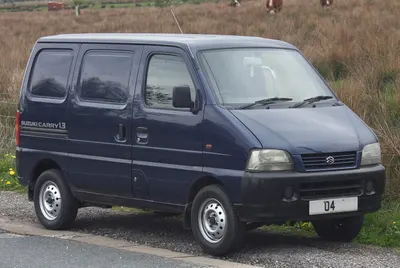
In Indonesia, bare-chassis Futura trucks went straight to local bodybuilders, who turned them into angkot — share-taxi minibuses, the same trick used on the Carry it replaced.
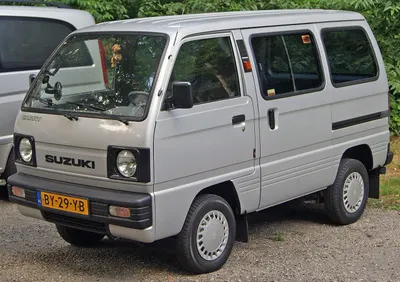
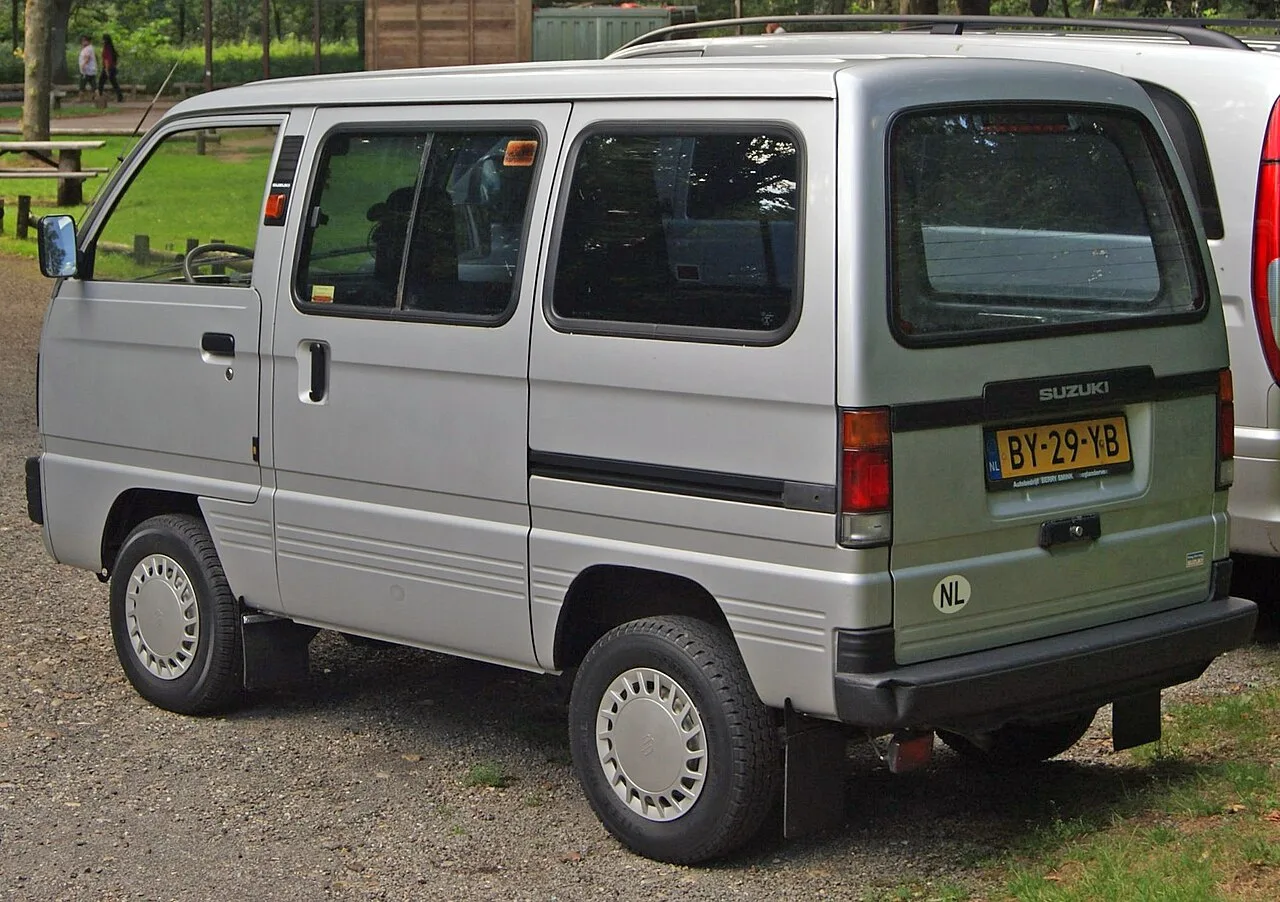
To dodge Japan's voluntary export limits, GM built this Carry generation under three different badges — Bedford, Vauxhall, and GME Rascal — all assembled at GM's own plant in Luton, England.
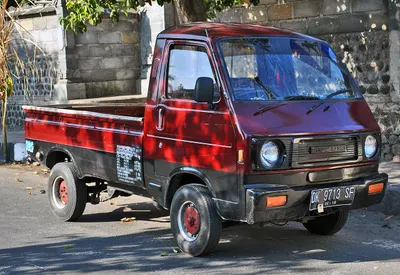
This generation of Carry stopped selling in Japan back in 1985 — but in Pakistan, built as the Suzuki Bolan, the same platform stayed in production until 2024.
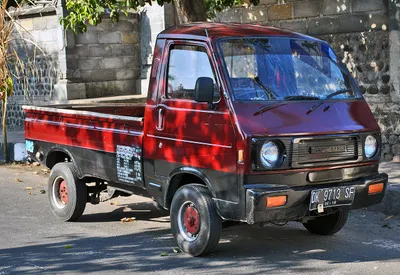
In Indonesia, locals nicknamed this little truck 'Turungtung' — an onomatopoeia for the exact sound its two-stroke engine made.
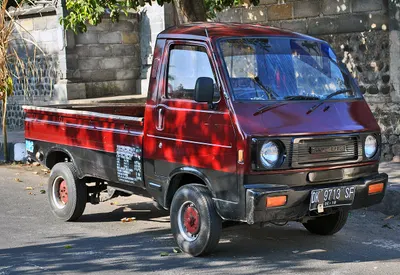
This Carry generation briefly made Suzuki the kei-truck king of Japan — outselling every other manufacturer's mini-trucks combined in both 1973 and 1974.
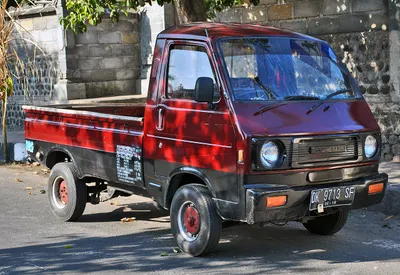
This kei truck wore a Giorgetto Giugiaro design, so much sportier-looking than the usual workhorse that Suzuki marketed it in Japan as "Fast Carry."
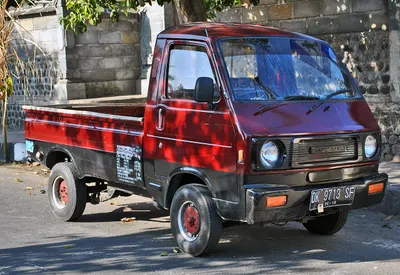
On this cabover Carry, the starter and generator weren't separate parts — they were combined into one unit and mounted right on the front of the crankshaft.
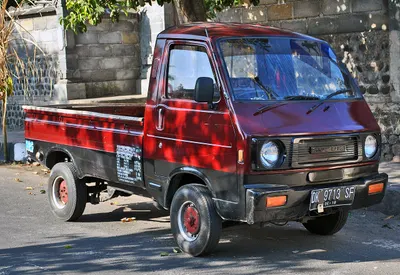
Suzuki kept the L20 Carry at the exact same 21 hp as its predecessor but still called it progress — the gain was a patented Cylinder Crank Injection lubrication system, not more power.
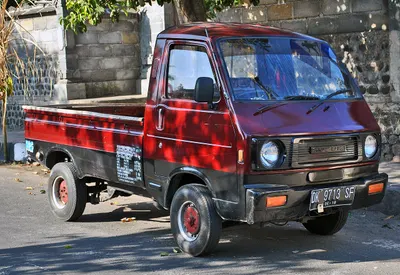
The tiny two-stroke engine in the original Carry mini-truck was so tough it lived on for 25 more years — evolved into a three-cylinder, it kept powering the Suzuki Jimny (as the LJ50) until 1987.
Rivals
Same body, same money, other badges — tap any card to flip.
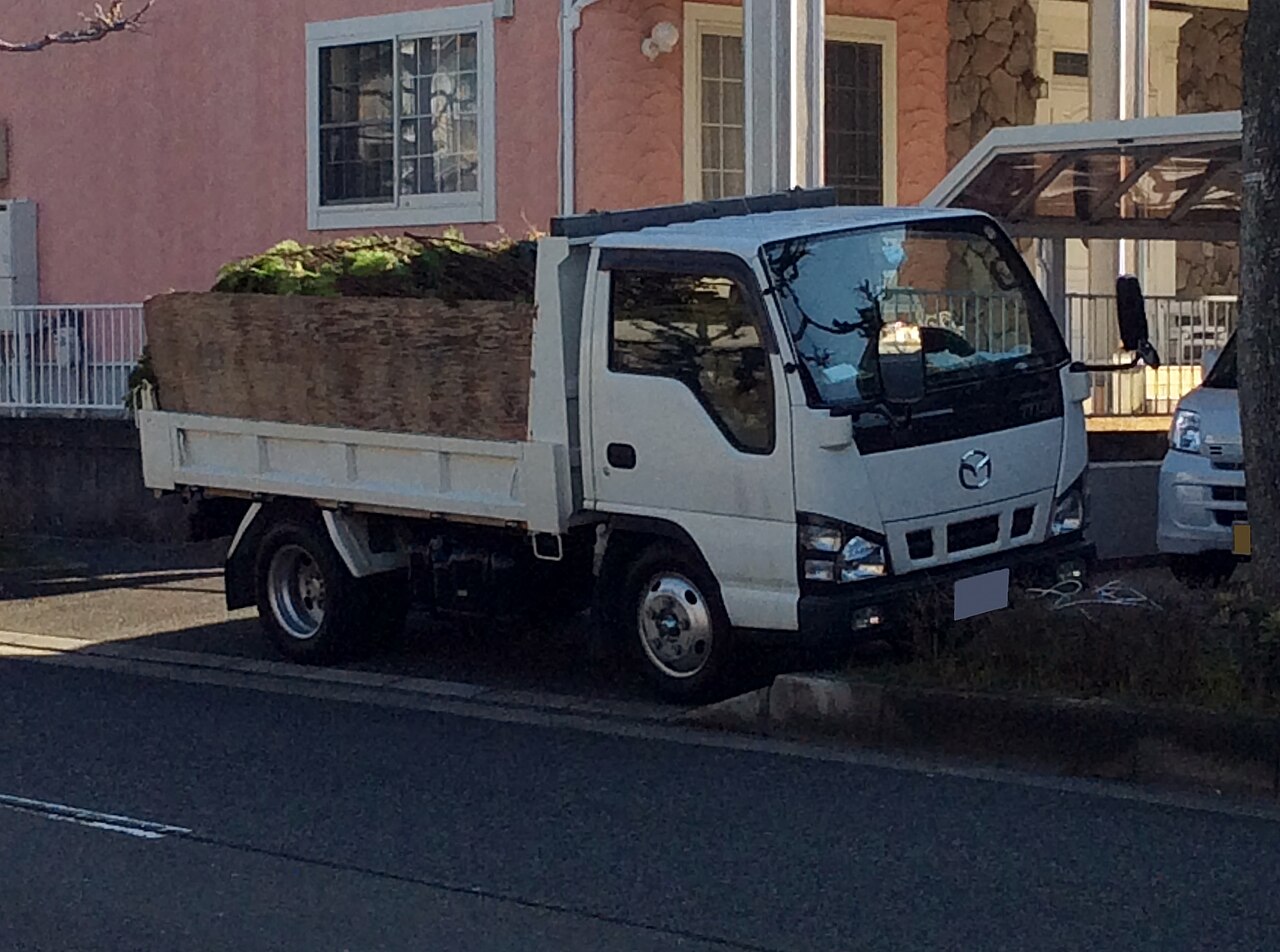
When Mazda's E2000 — the truck that became the Titan — launched in January 1964, the factory was tasked with building 1,900 of them a month.
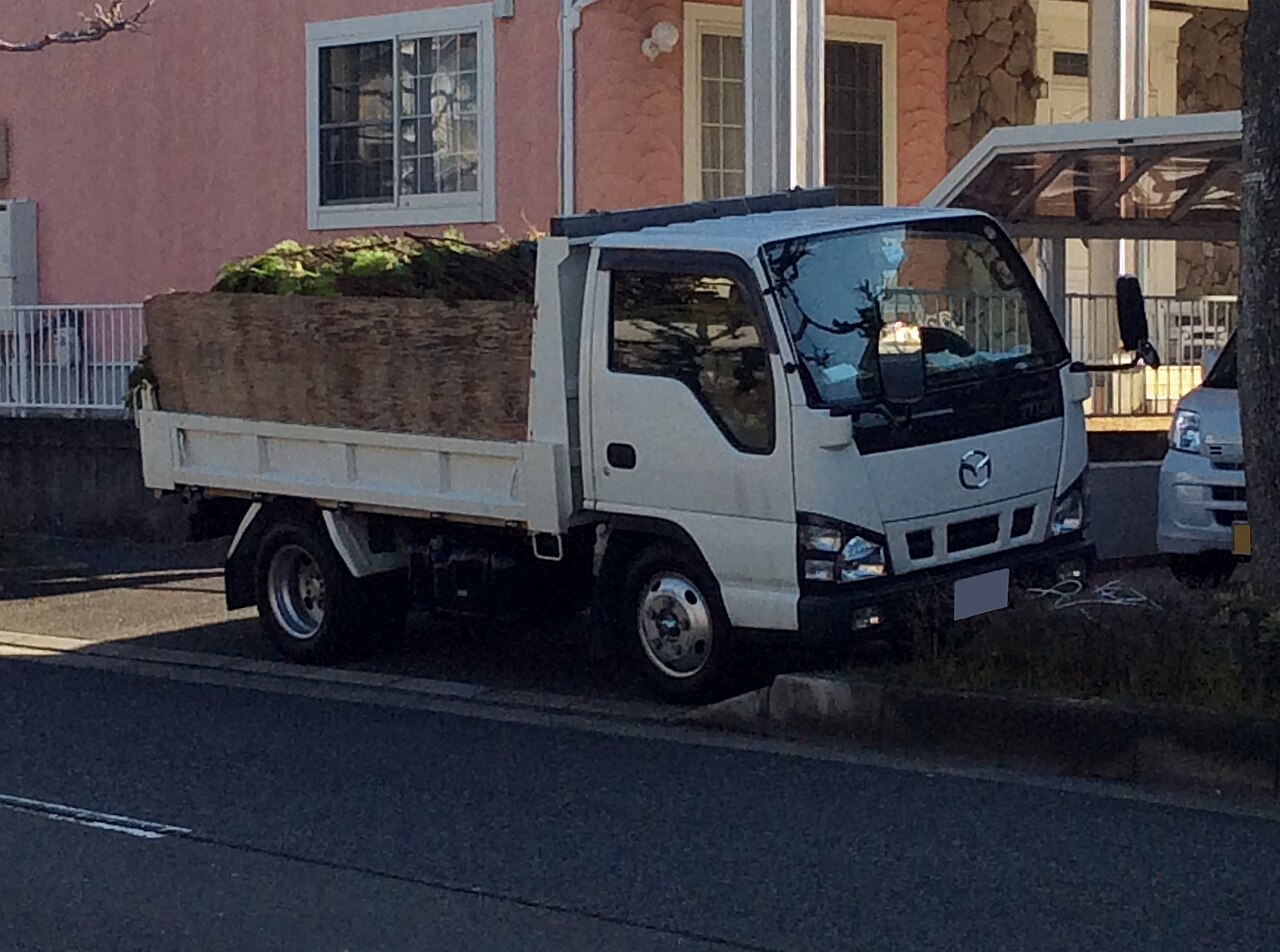
Swaraj Mazda built this truck under license in India from 1985, and the plant survived name changes all the way to SML Isuzu.
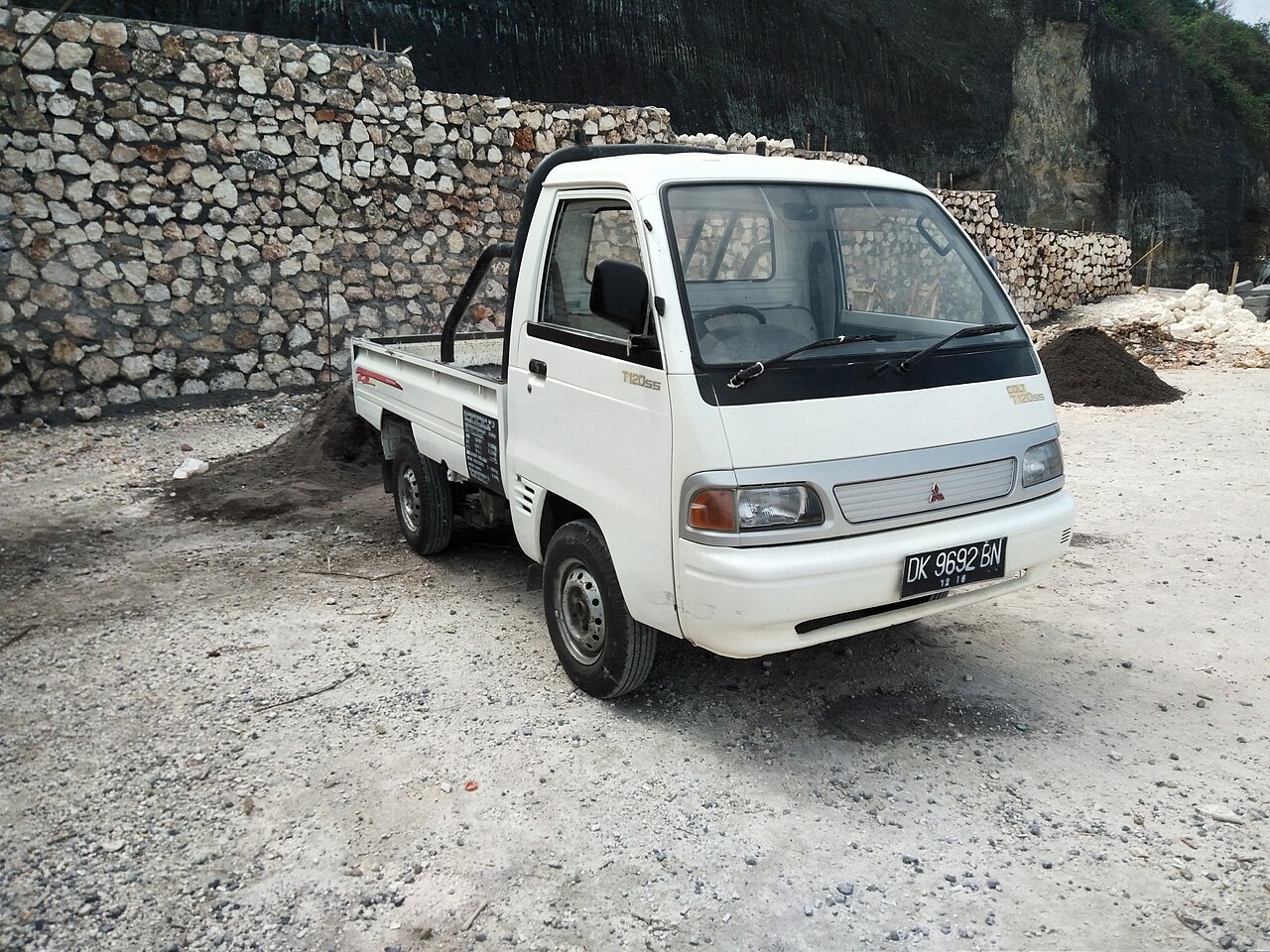
Indonesia built this pickup for 28 years with no successor, the last one leaving the Jakarta line in January 2019 after 324,960 units.
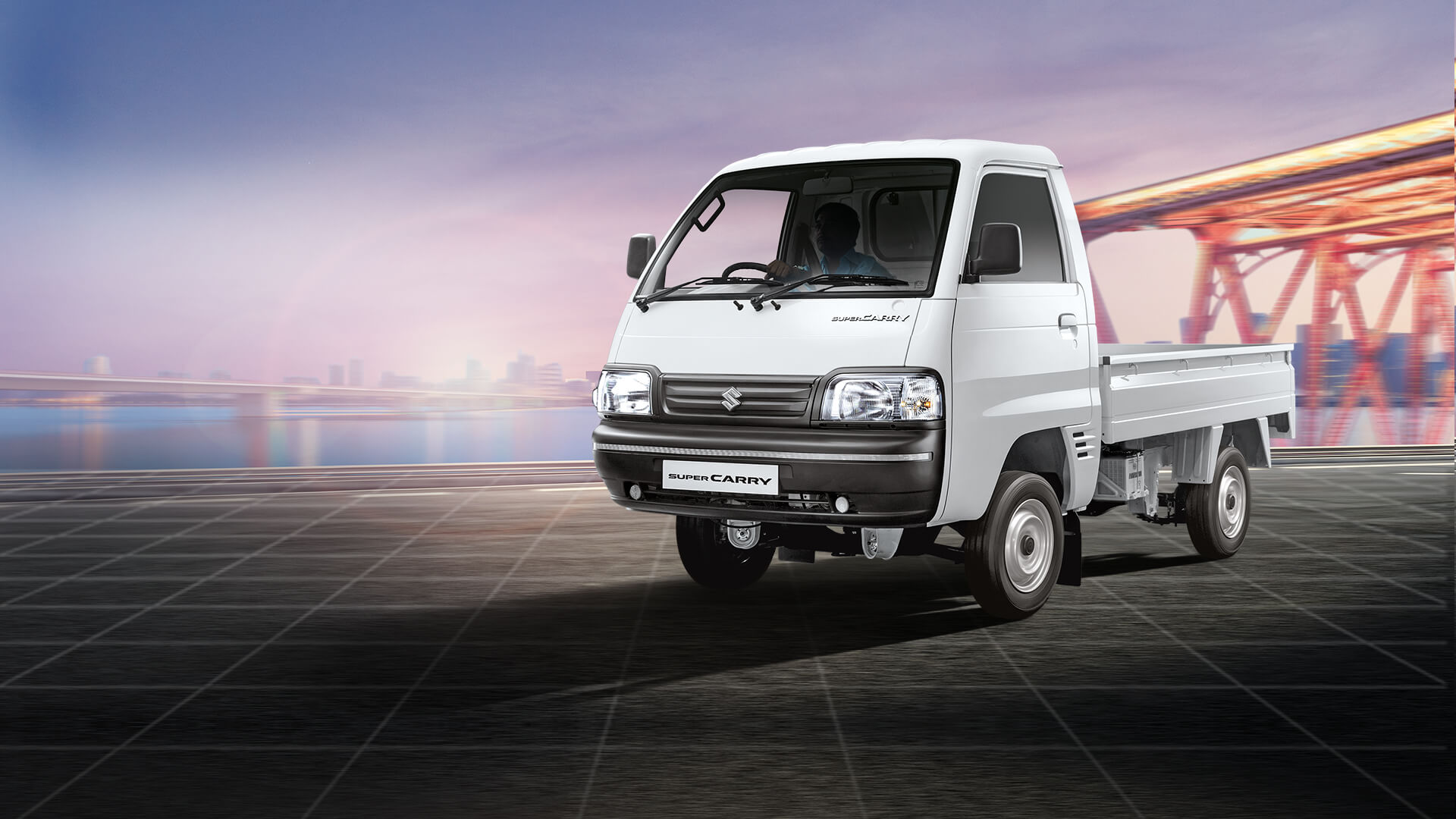
Suzuki's first-ever diesel engine, fitted to the Super Carry, is so small that it isn't able to power an air-conditioning system at all.
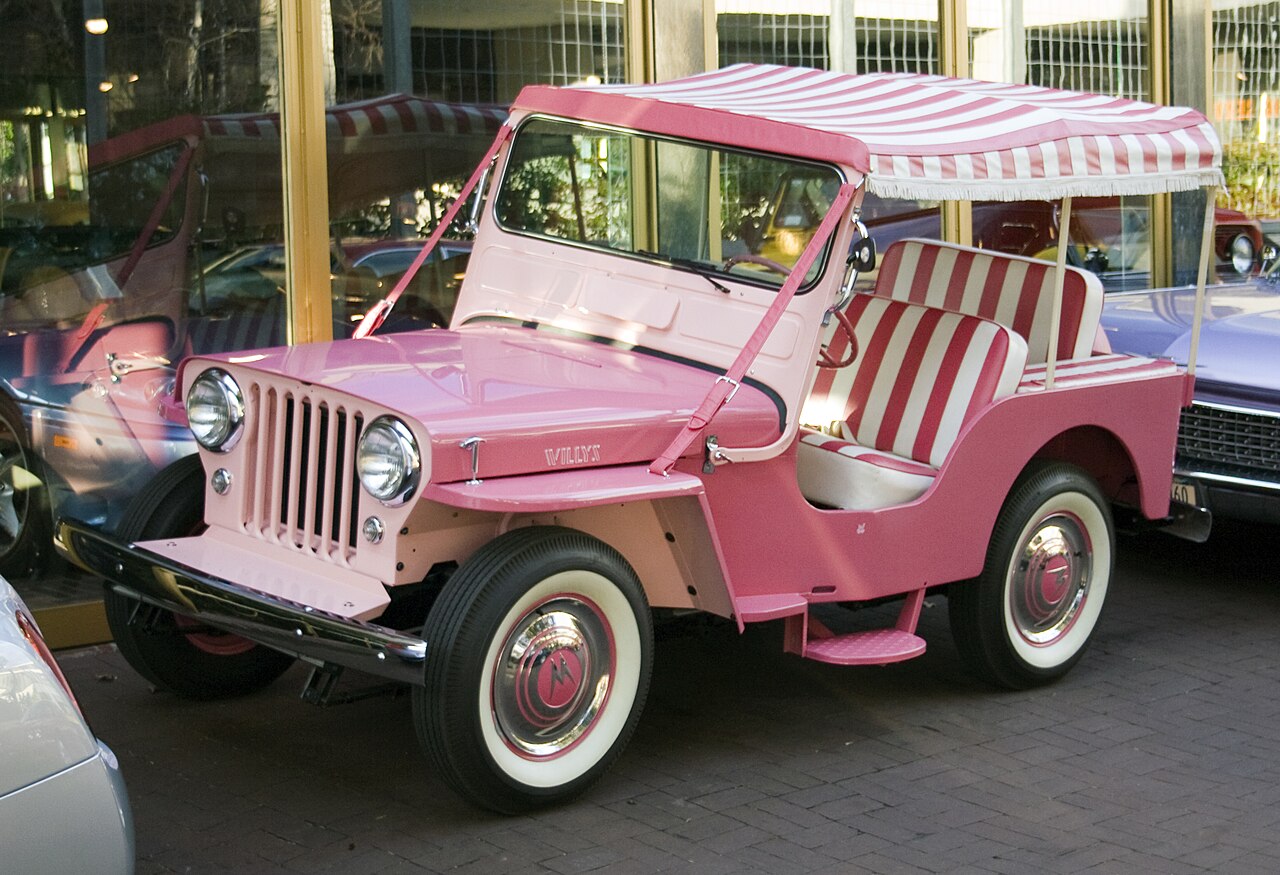
A right-hand-drive DJ-3A was built so postal drivers could reach roadside mailboxes without leaving the seat.
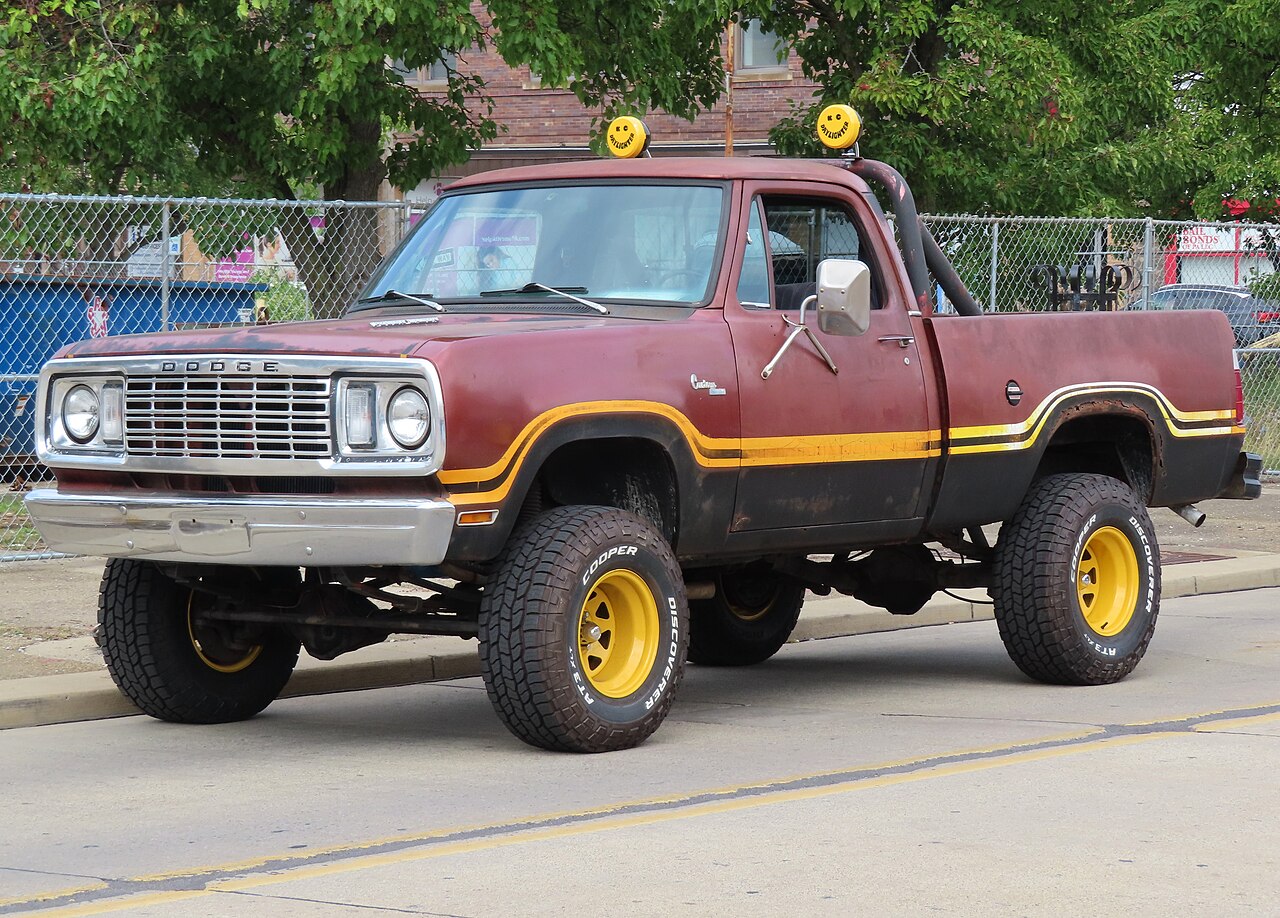
The Power Wagon name and civilian pickup design were derived directly from the WC-series military trucks Dodge built for World War II.
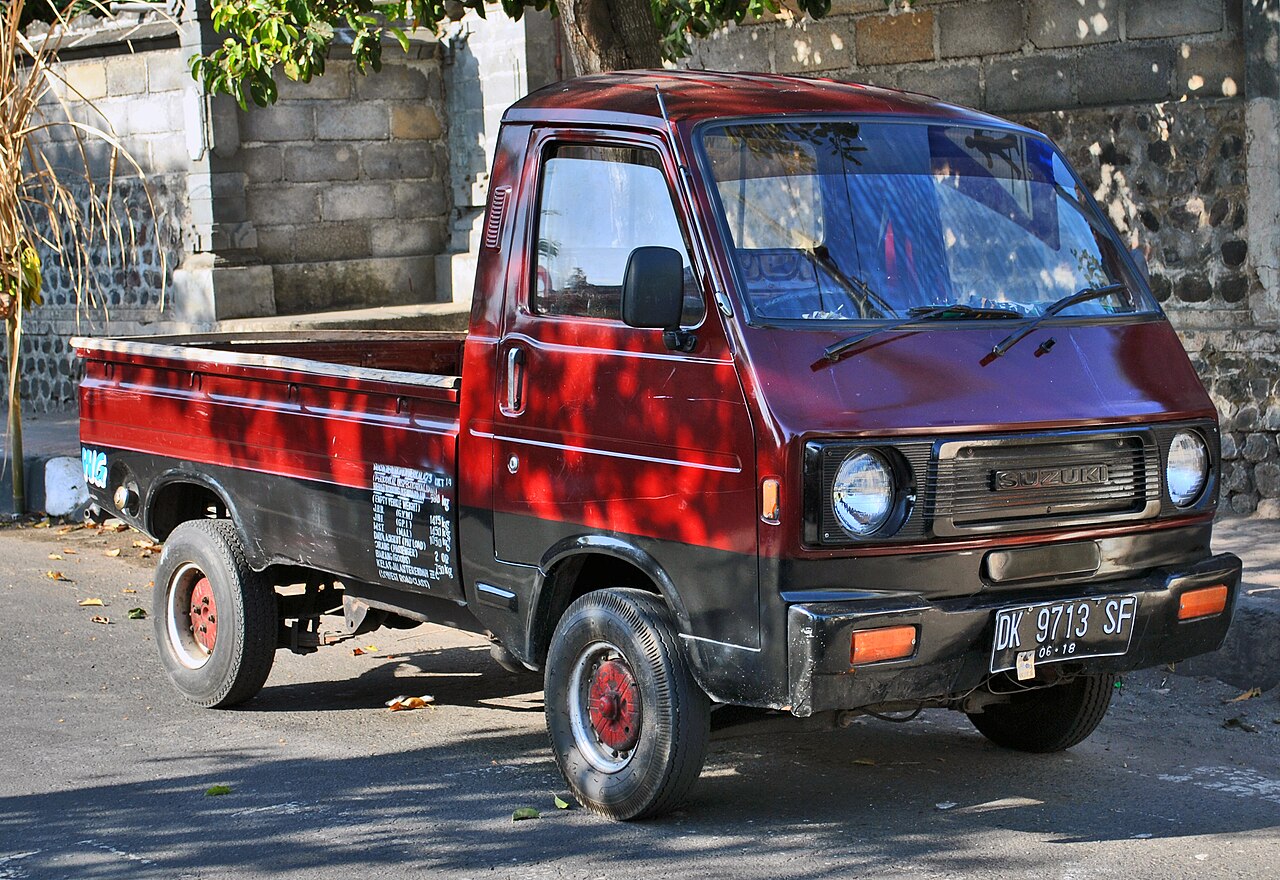
Suzuki kept the L20 Carry at the exact same 21 hp as its predecessor but still called it progress — the gain was a patented Cylinder Crank Injection lubrication system, not more power.
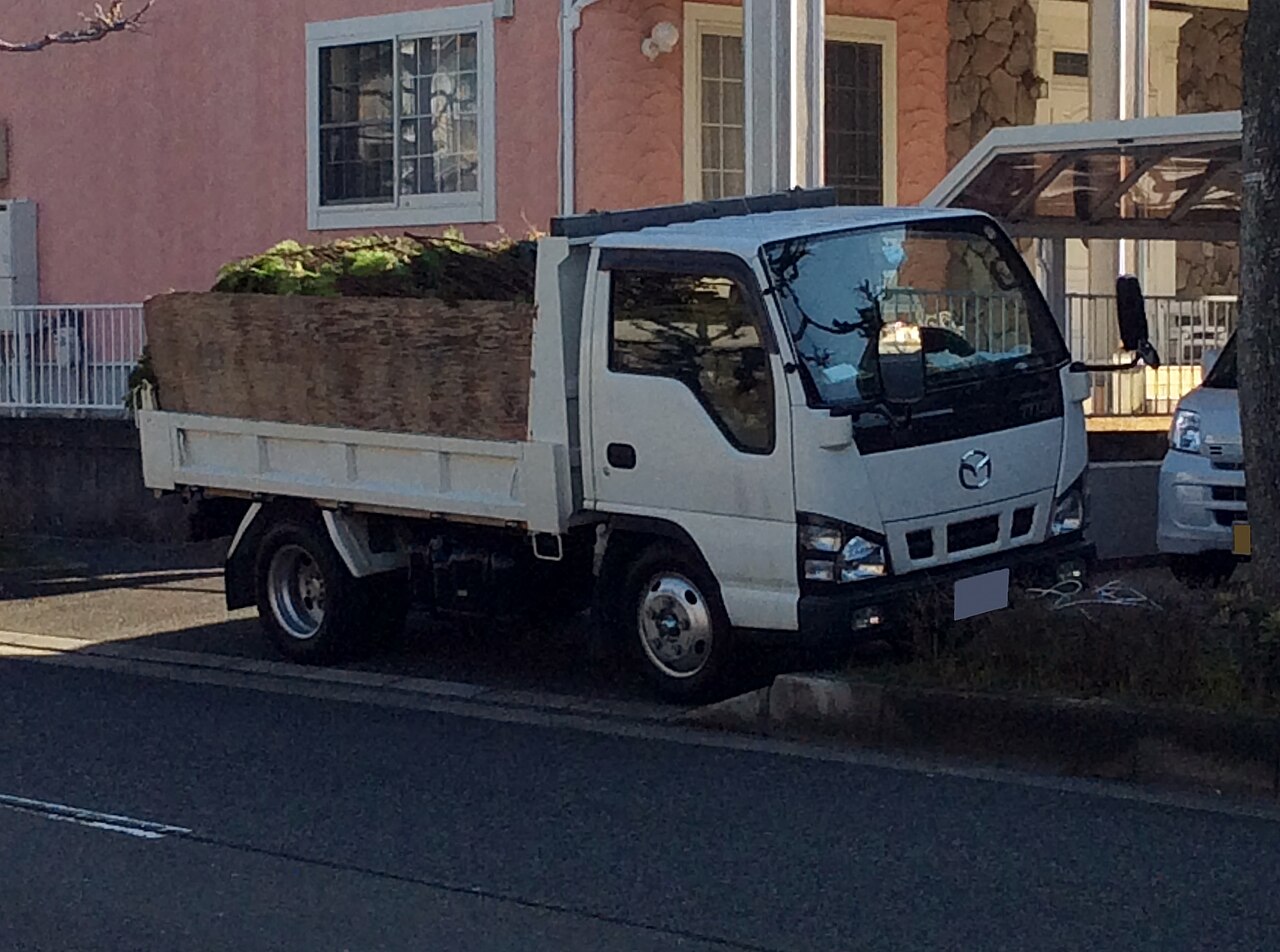
This generation of Titan quietly became the ancestor of two other trucks entirely: it was license-built by Kia as the Kia Titan in South Korea, and formed the basis of the Australian Ford Trader.