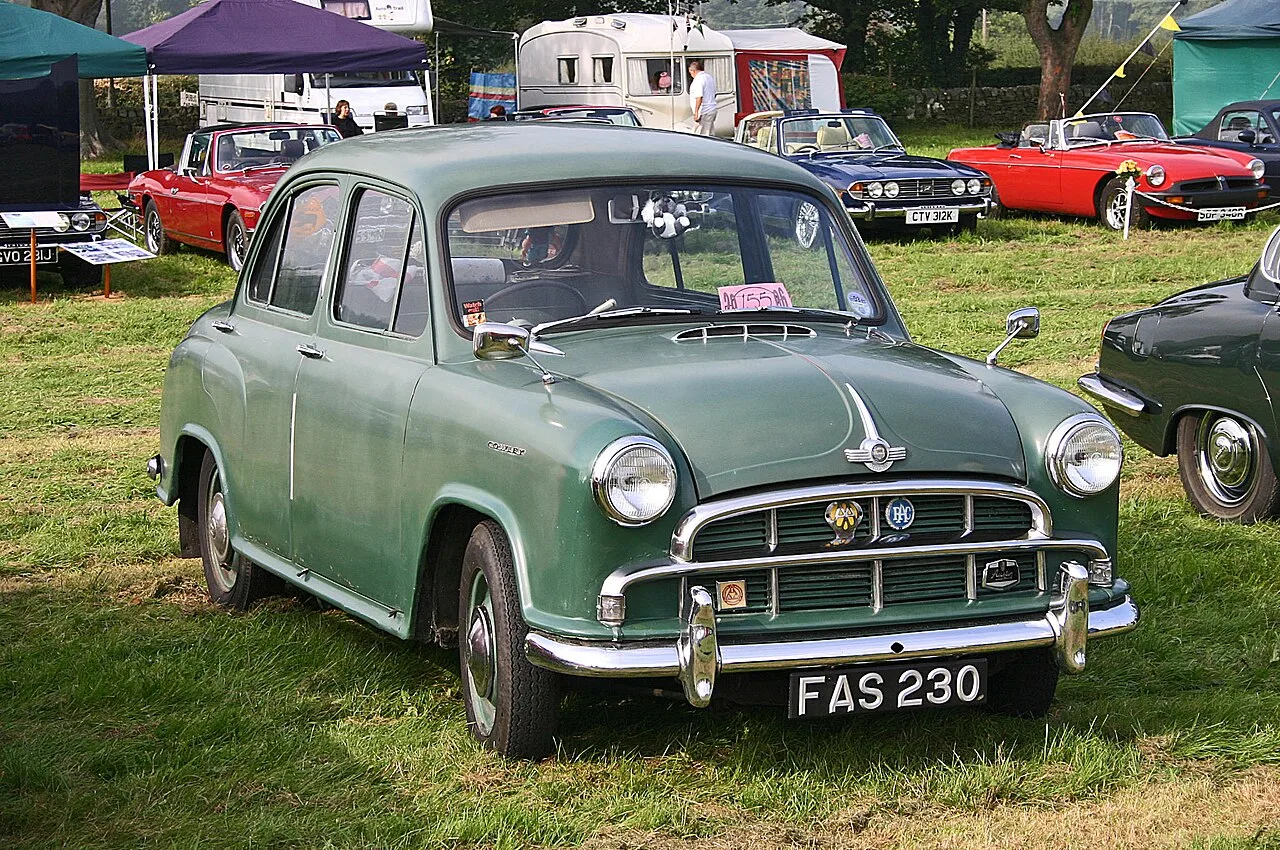
Morris cut costs on the budget Cowley by swapping in plastic-covered felt where the posher Oxford had actual carpet.
Median 100 hp across 245 similar cars
Lead trim: Cowley 1200 1.2 B-Series ohv four (42 bhp) · up to 52 hp
Morris Cowley 1200 / 15001954–1959
- 0spots by members
- Unclaimednobody has spotted one yet
- 0sets it belongs to
Nobody in Burbles has spotted a Morris Cowley 1200 / 1500 yet. See one on the street, point the app at it, and the first card is yours — with your @handle permanently credited on this page.
FactMorris cut costs on the budget Cowley by swapping in plastic-covered felt where the posher Oxford had actual carpet.
The 1954 Morris Cowley was a four-cylinder mid-size car produced from 1954 to 1959, essentially a budget version of the Morris Oxford Series III with less chrome, no heater, fixed front quarter lights and a simplified dashboard; wheelbase 97 in (2,464 mm), length 169 in (4,293 mm), width 65 in (1,651 mm), height 63 in (1,600 mm), kerb weight 2,352 pounds. The Cowley 1200 (17,413 produced) was launched on 14 July 1954 as a smaller-engined, more simply furnished supplement to the Oxford Series II two months earlier, with the 1.2 L (1200 cc) B-Series ohv four (a new design also used in the Austin A40 and Nash Metropolitan) producing 42 bhp at 4,500 rpm, on the Oxford's monocoque four-door body shell with torsion bar front suspension, a live rear axle, rack-and-pinion steering and smaller 8 in (203 mm) brake drums on early cars. It had a top speed of just over 70 mph; The Motor tested a saloon in 1955 at 71.9 mph (115.7 km/h) with 0–60 mph in 31.5 seconds and 28.0 miles per imperial gallon, the test car costing £702 including taxes. On 12 October 1956 the 1200 engine was replaced by the Oxford's larger 1.5 L (1489 cc) unit and the styling amended in line with the Oxford Series III (Cowley 1500, 4,623 produced, 1956–1958). The commercial Cowley MCV (1950–1956) and Morris ½-ton Series III (1956–1962) are not filed here.
Collectors Spotted in the Morris Cowley Lineage
No member has published a public street spot of the Morris Cowley yet — the First · Worldwide stamp is wide open.
Trims & Figures
2 published trims in the catalogue. A blank is a figure not recorded, not zero.
| Trim | Years | Engine | Power | Torque | 0–60 | Drive | Gearbox | MSRP |
|---|---|---|---|---|---|---|---|---|
| Cowley 1200 1.2 B-Series ohv four (42 bhp) | 1954–1956 | 1.2 L Inline-4 | 42 hp | — | — | RWD | — | — |
| Cowley 1500 1.5 (1489 cc) B-Series four | 1956–1958 | 1.5 L Inline-4 | 52 hp | — | — | RWD | — | — |
Owning one
We don’t estimate running costs for a car like this. What it costs depends on its condition, its specialist and how it is driven, and an average would mislead.
Owners’ builds
Nobody has claimed one yet.
Photographs
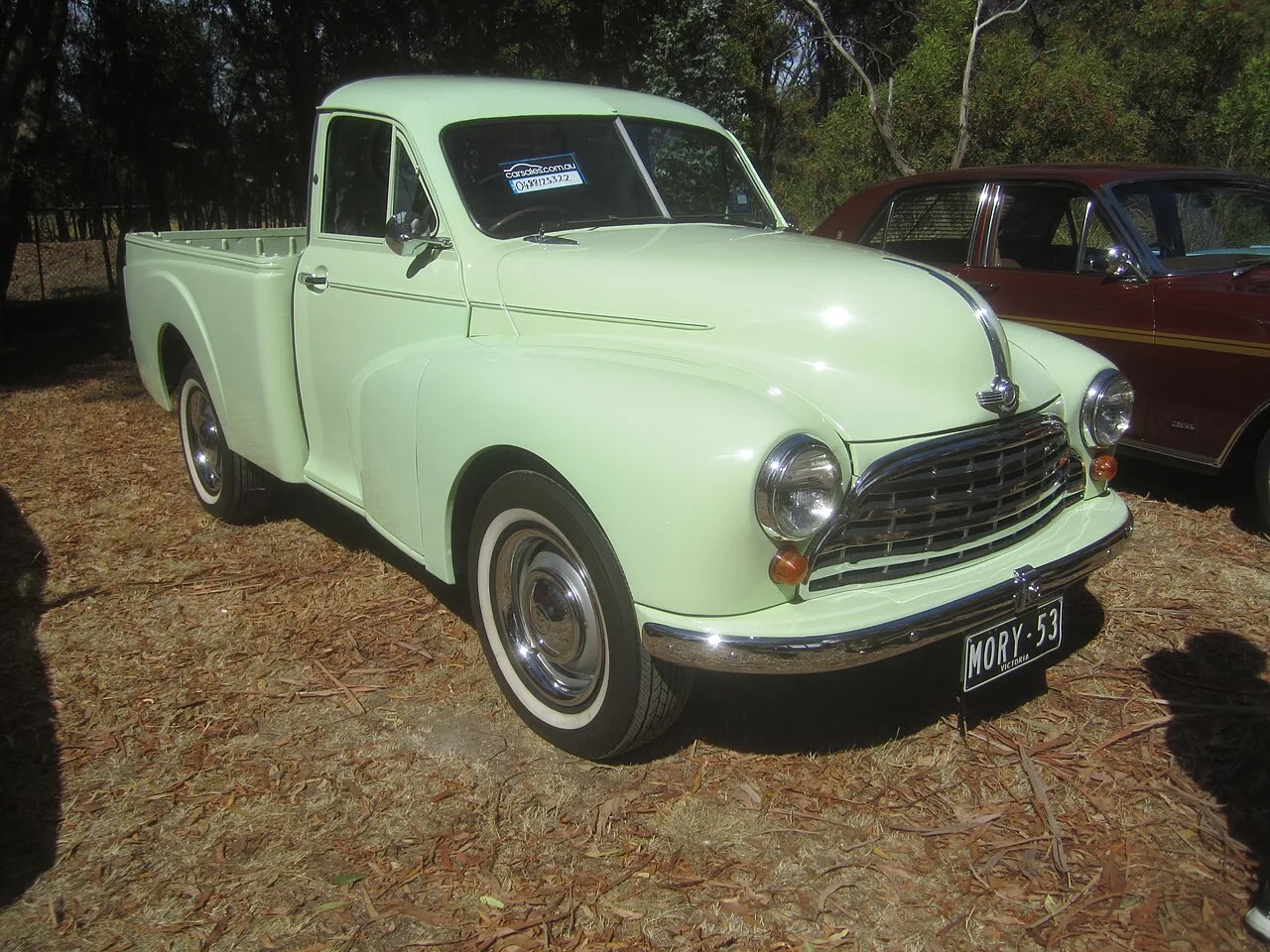
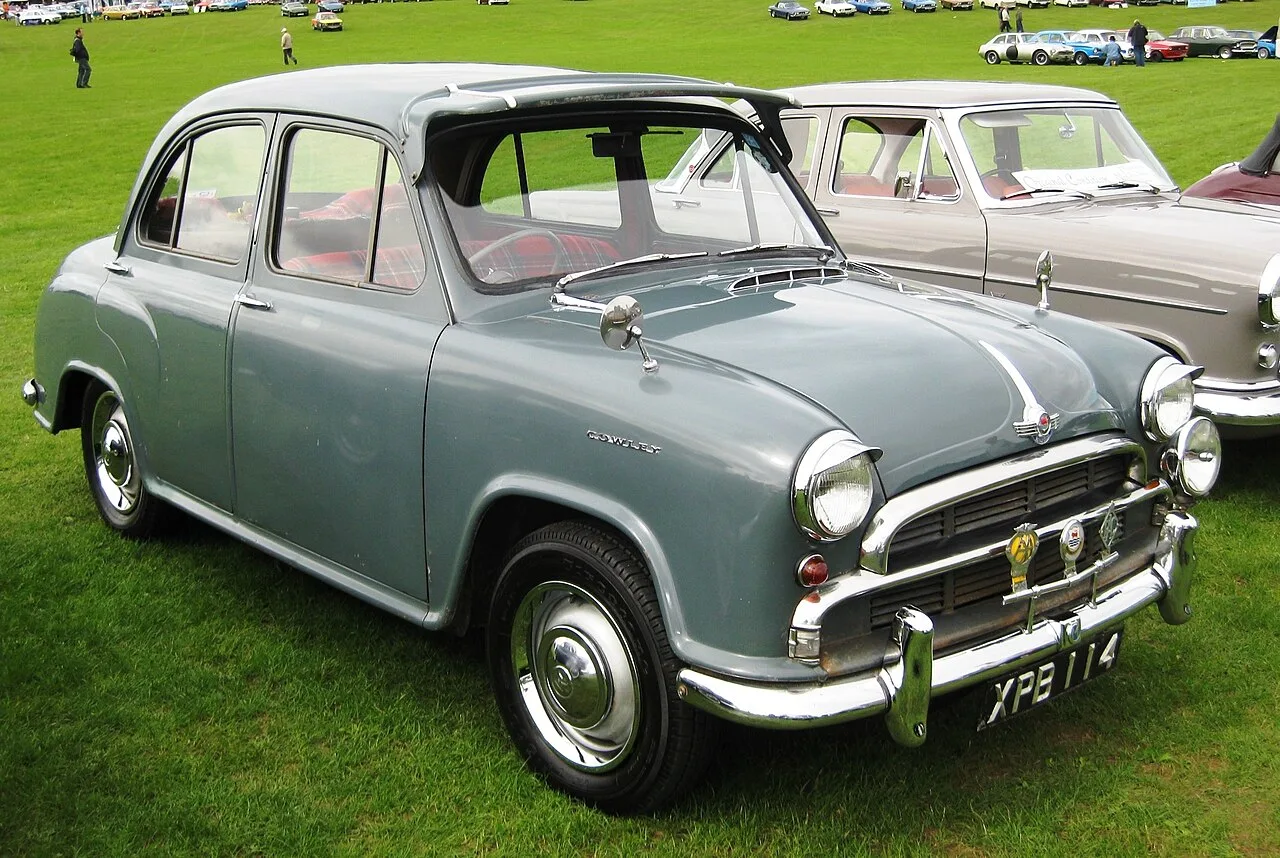
Morris cut costs on the budget Cowley by swapping in plastic-covered felt where the posher Oxford had actual carpet.
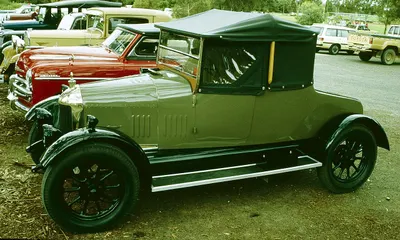
Despite replacing the Morris Major as an all-new model in 1934, the Cowley Six kept its predecessor's exact 1938cc six-cylinder side-valve engine unchanged — only the chassis underneath was new.
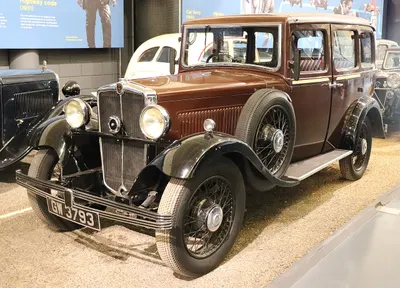
The 1931 Cowley revamp used aircraft-grade Duralumin alloy for its connecting rods, an unusually exotic material to find inside an affordable family saloon.
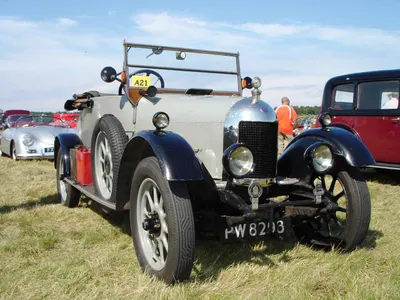
The 1926-31 Flatnose Cowley shipped with brakes on the rear wheels only as standard — four-wheel brakes were already common elsewhere, but Morris charged extra for the front pair.
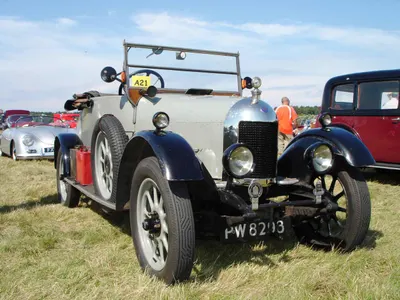
The Bullnose Cowley's centrally-mounted handbrake and gear lever gave away its American-sourced gearbox — and as a side effect, let the driver climb in without dragging a leg past cold exposed steel.
On the Continental-engined Cowley, just the electric lighting components cost 59% of the price of the imported engine itself — electric lights were a genuine luxury in 1915.
Rivals
Same body, same money, other badges — tap any card to flip.

It briefly served as senior sibling to Marquette, a GM companion brand cancelled after just one year.

Nissan hired former BMW engineers to help develop the 510's suspension, which is why period reviewers frequently compared its handling to the BMW 1600/2002.

A Trabant 601 won its class at the 1970 Monte Carlo Rally, with a second 601 right behind it in second.

The 600 was a stopgap: the P50's body over the 601's mechanicals, and for a while its estate was built alongside the new 601 saloon.

The G80 Sport brought a 370 PS twin-turbo 3.3 V6, a mesh grille and copper-tinted chrome with copper stitching to match.

The Vigor was sold only with a five-cylinder engine, an unusual configuration Honda used to fit a longer engine transversely under a short hood.

The GS/E coupe earned the nickname "German Charger" for its long hood, short deck stance borrowed from Detroit muscle cars.

This DeVille/Fleetwood was the first production car anywhere to mount its V8 sideways, Cadillac's front-drive gamble on the new C-body.