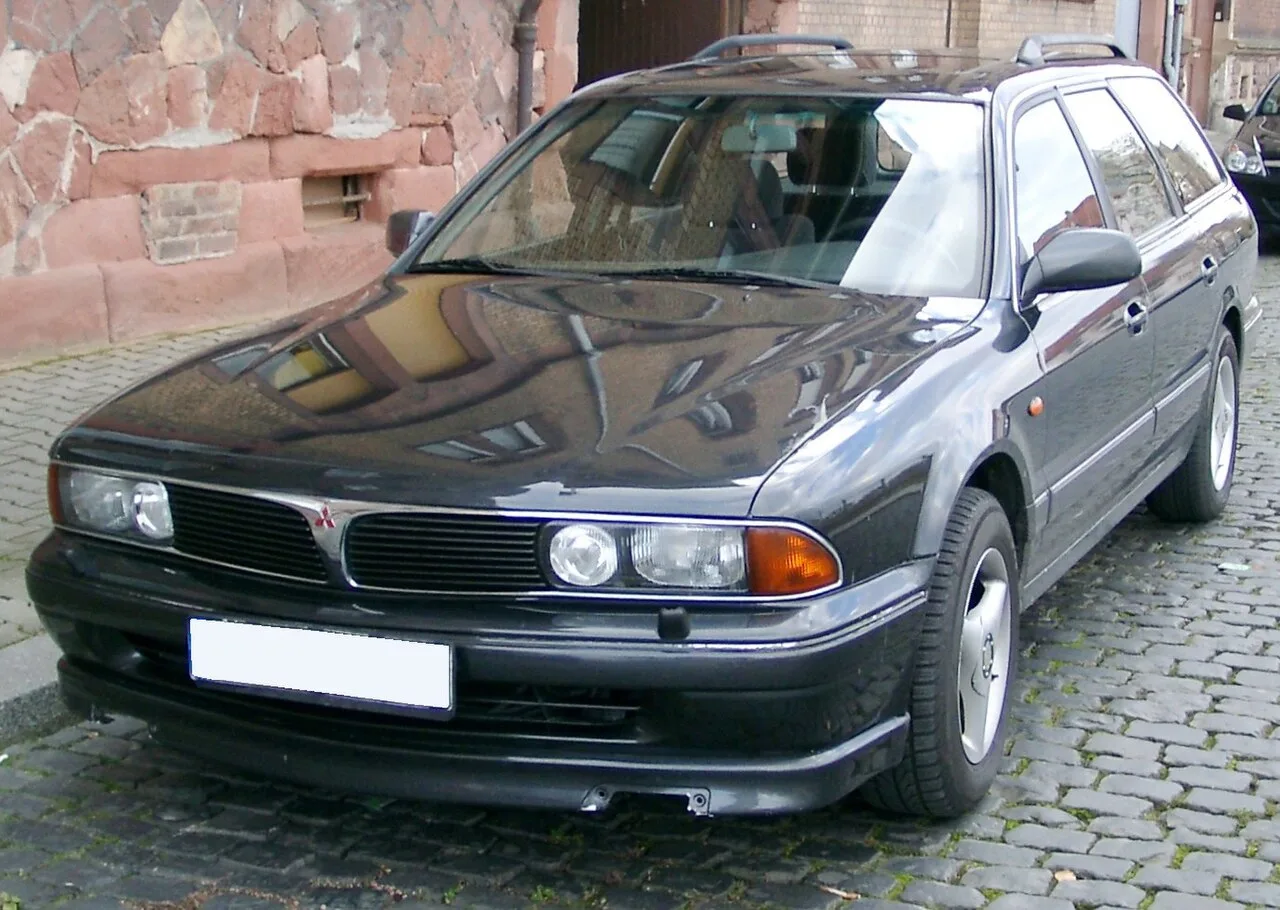
The Australian-built GJ Sigma was the only Australian car exported to Europe in the 1980s — sold in the UK, sedan and wagon both, under a marque invented for the job: Lonsdale.
Lead trim: Sigma 2.0 Astron 4G52 (94 hp) · up to 102 hp
Mitsubishi Sigma GJ1982–1984
- 0spots by members
- Unclaimednobody has spotted one yet
- 0sets it belongs to
Nobody in Burbles has spotted a Mitsubishi Sigma GJ yet. See one on the street, point the app at it, and the first card is yours — with your @handle permanently credited on this page.
FactThe Australian-built GJ Sigma was the only Australian car exported to Europe in the 1980s — sold in the UK, sedan and wagon both, under a marque invented for the job: Lonsdale.
The redesigned GJ Sigma was released in March 1982, based on the 1980 Japanese-market Mitsubishi Galant; the sedans were completely redeveloped, while the wagons were new only forward of the firewall (the rest of the shell was still GH). Engines and transmissions were as before but with power and torque boosts: the 2.0-litre produced 70 kW (94 hp) and 152 N·m (112 lb·ft), the 2.6-litre 76 kW (102 hp) and 192 N·m (142 lb·ft). The GL Satellite special edition ($1,000 below the GL) came in February 1983; the sporting Sigma GSR (2.0 or 2.6, manual or automatic) had alloy wheels, four-wheel discs, a sports steering wheel and blackouts; the entry-level Sigma became the XL in June 1983; and in October 1983 the limited-edition Sigma Super Saloon (500 cars, above the SE, 2.6 only with five-speed manual or three-speed automatic; the five-speed was of Japanese origin, with retuned suspension, two-tone metallic paint, crushed velour, standard power steering, windows and central locking, air conditioning, alloys and four-wheel discs). The GJ was the only Australian car of the 1980s exported to Europe (the UK sold sedan and wagon as the Lonsdale).
Collectors Spotted in the Mitsubishi Sigma Lineage
No member has published a public street spot of the Mitsubishi Sigma yet — the First · Worldwide stamp is wide open.
Trims & Figures
2 published trims in the catalogue. A blank is a figure not recorded, not zero.
| Trim | Years | Engine | Power | Torque | 0–60 | Drive | Gearbox | MSRP |
|---|---|---|---|---|---|---|---|---|
| Sigma 2.0 Astron 4G52 (94 hp) | 1982–1984 | 2.0 L Inline-4 | 94 hp | 112 lb-ft | — | RWD | — | — |
| Sigma 2.6 Astron 4G54 (102 hp) | 1982–1984 | 2.6 L Inline-4 | 102 hp | 142 lb-ft | — | RWD | — | — |
Owning one
We don’t estimate running costs for a car like this. What it costs depends on its condition, its specialist and how it is driven, and an average would mislead.
Owners’ builds
Nobody has claimed one yet.
Photographs
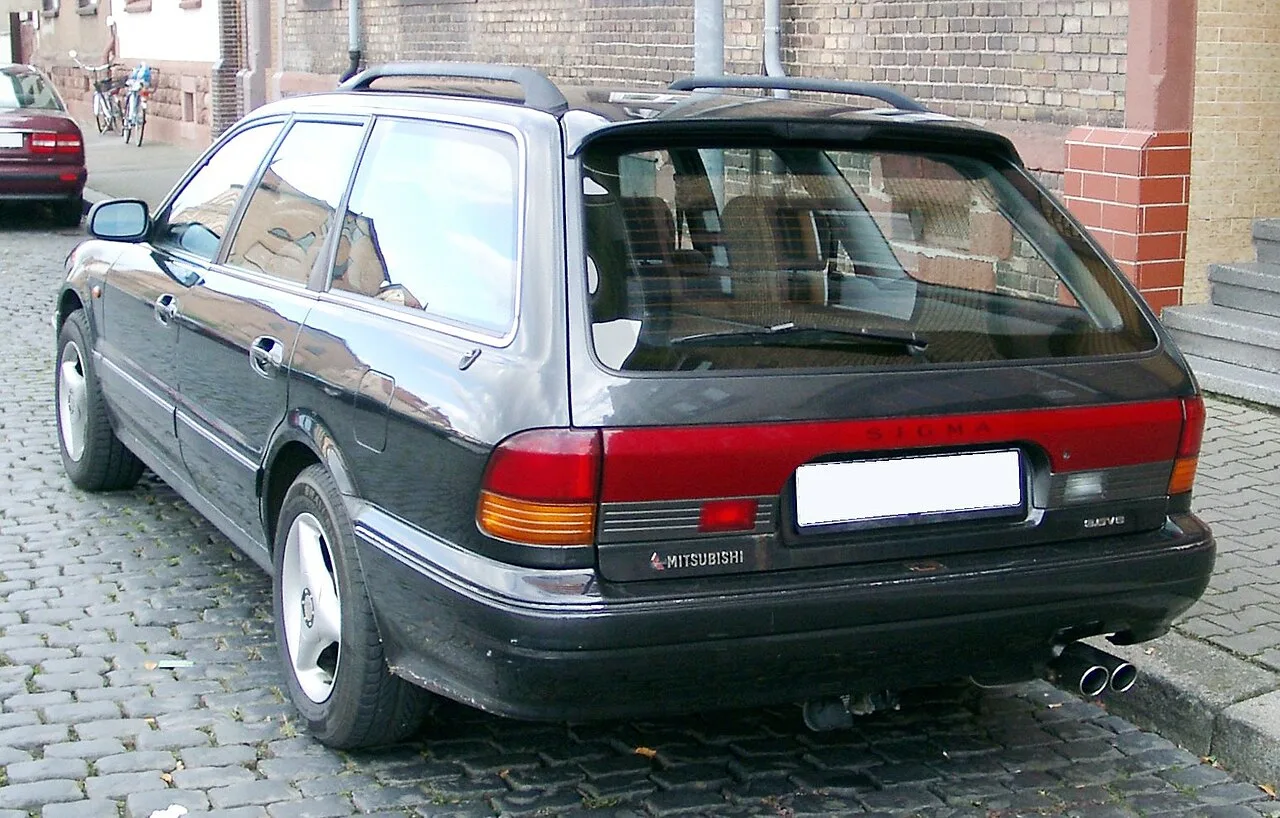
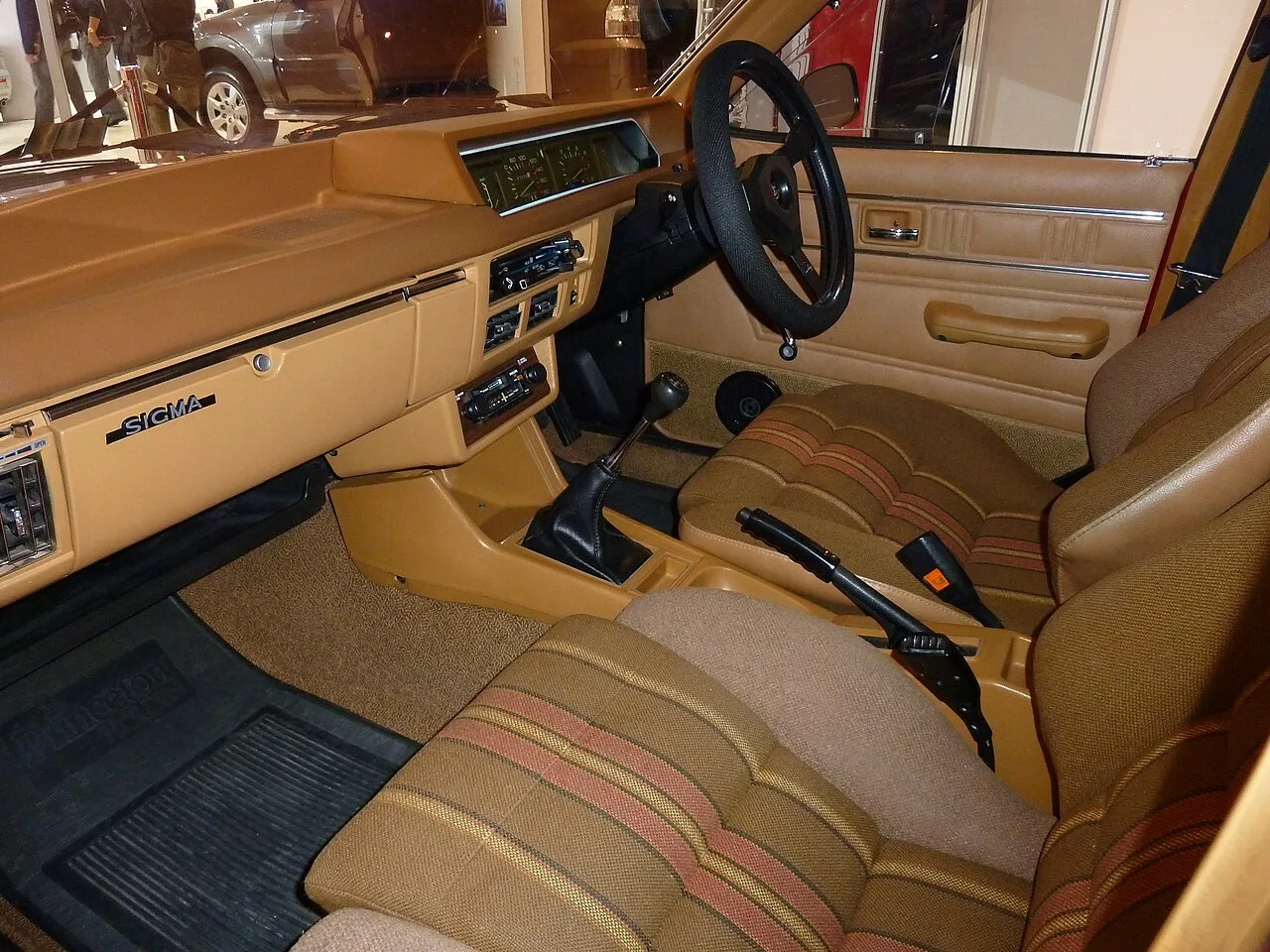
This car wore three different badges inside of five years in North America — the Galant Sigma for 1986, then simply the Sigma for 1989 and 1990.
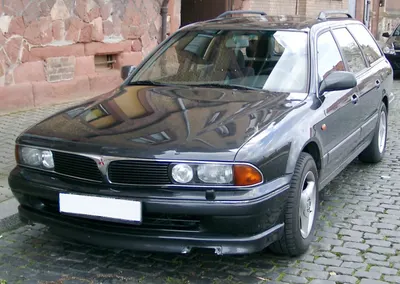
This facelifted Sigma got its own cheeky limited run late in 1984 — the GK Sigma Satellite, with a 2.6-litre engine, five-speed manual, side stripes and its own badge, aimed squarely at Christmas buyers.
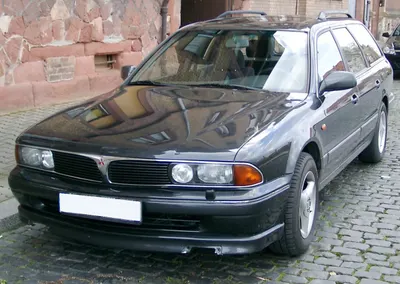
The Australian-built GJ Sigma was the only Australian car exported to Europe in the 1980s — sold in the UK, sedan and wagon both, under a marque invented for the job: Lonsdale.
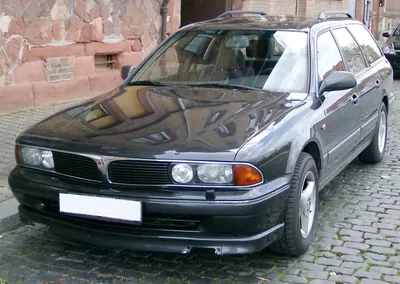
This Sigma Turbo was a genuine first: a limited run of 500, built with Normalair-Garrett, became the first Australian-built turbocharged production car.
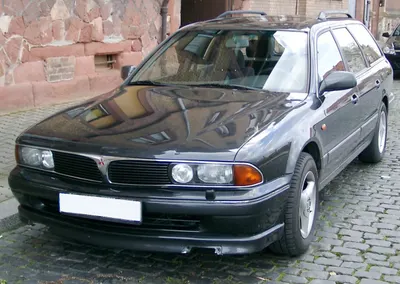
In September 1981 Mitsubishi built 500 Sigma Turbos with Normalair-Garrett -- the first turbocharged production car ever built in Australia.
Rivals
Same body, same money, other badges — tap any card to flip.

It briefly served as senior sibling to Marquette, a GM companion brand cancelled after just one year.

Nissan hired former BMW engineers to help develop the 510's suspension, which is why period reviewers frequently compared its handling to the BMW 1600/2002.

A Trabant 601 won its class at the 1970 Monte Carlo Rally, with a second 601 right behind it in second.

The 600 was a stopgap: the P50's body over the 601's mechanicals, and for a while its estate was built alongside the new 601 saloon.

The G80 Sport brought a 370 PS twin-turbo 3.3 V6, a mesh grille and copper-tinted chrome with copper stitching to match.

The Vigor was sold only with a five-cylinder engine, an unusual configuration Honda used to fit a longer engine transversely under a short hood.

The GS/E coupe earned the nickname "German Charger" for its long hood, short deck stance borrowed from Detroit muscle cars.

This DeVille/Fleetwood was the first production car anywhere to mount its V8 sideways, Cadillac's front-drive gamble on the new C-body.