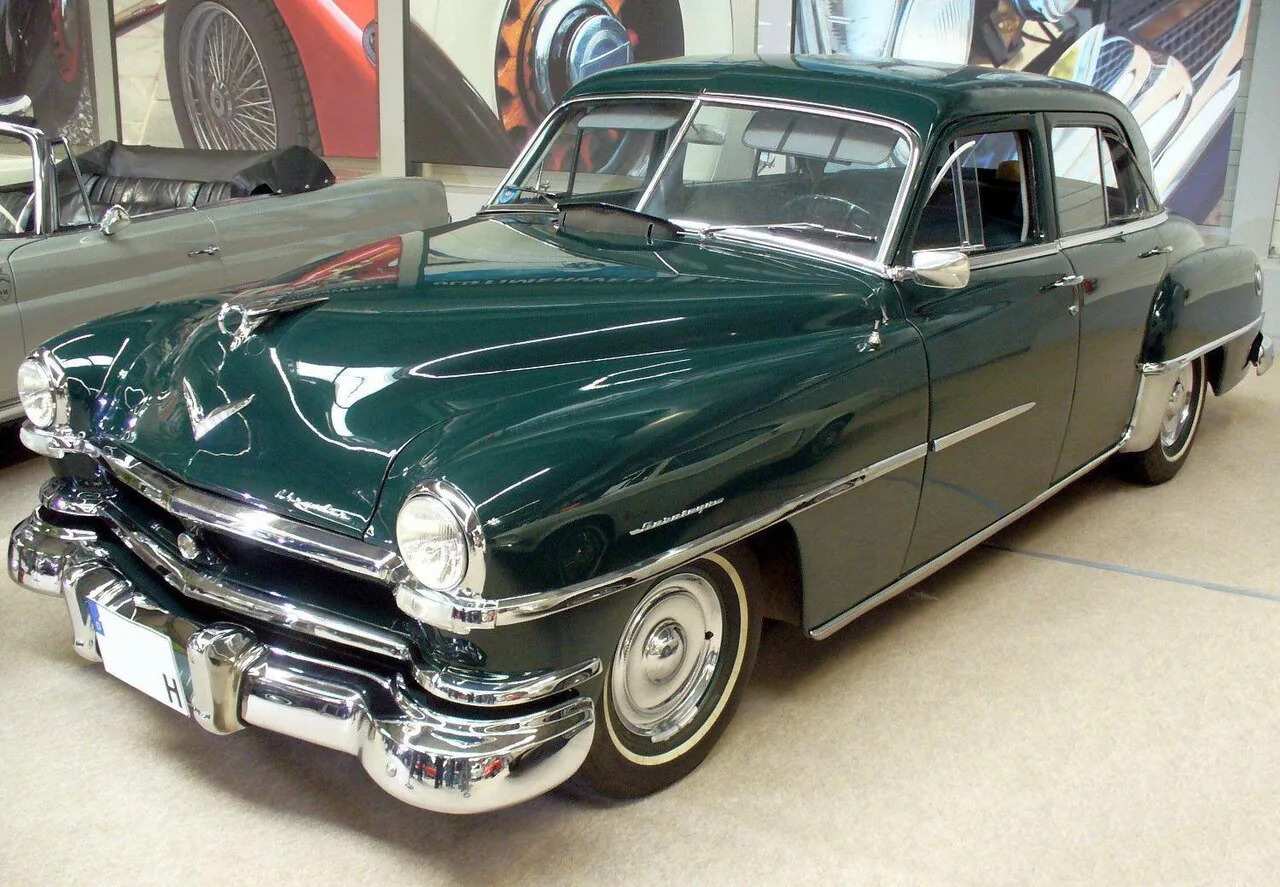
Postwar material shortages meant Chrysler couldn't get real whitewall tires for the Saratoga, so it faked the look with chrome 'beauty rings' on the wheels instead.
Median 83 hp across 78 similar cars
Lead trim: Saratoga 323.5 Straight Eight
Chrysler Saratoga Series C-39C-39 · 1946–1948
- 0spots by members
- Unclaimednobody has spotted one yet
- 0sets it belongs to
Nobody in Burbles has spotted a Chrysler Saratoga Series C-39 yet. See one on the street, point the app at it, and the first card is yours — with your @handle permanently credited on this page.
FactPostwar material shortages meant Chrysler couldn't get real whitewall tires for the Saratoga, so it faked the look with chrome 'beauty rings' on the wheels instead.
The Saratoga returned for 1946 as Chrysler's second most expensive eight-cylinder model below the New Yorker, in a full array of body styles (two-door three-passenger coupé, two-door six-passenger Brougham Sedan and Club Coupe, four-door sedan) on the New Yorker's wheelbase and related to the six-cylinder Windsor, with the same die-cast grille as all Chryslers; prices averaged US$1,826 (1,544 built in 1946) and US$2,244 in 1948 (2,121 built). Annual styling changes were almost non-existent between 1946 and 1948; during the post-war shortage white steel "beauty rings" gave the appearance of white walls, which returned as an option in 1947, and Fluid Drive continued with the four-speed semi-automatic Presto-Matic offered. Engine: 323.5 cu in (5.3 L) Straight Eight with a 3-speed manual; wheelbase 127.5 in (3,238 mm), length 214.3 in, width 77.8 in. The Maywood, California factory began production in 1948.
Collectors Spotted in the Chrysler Saratoga Lineage
No member has published a public street spot of the Chrysler Saratoga yet — the First · Worldwide stamp is wide open.
Trims & Figures
One published trim in the catalogue. A blank is a figure not recorded, not zero.
| Trim | Years | Engine | Power | Torque | 0–60 | Drive | Gearbox | MSRP |
|---|---|---|---|---|---|---|---|---|
| Saratoga 323.5 Straight Eight | 1946–1948 | 5.3 L Inline-8 | 133 hp | — | — | RWD | — | — |
Owning one
We don’t estimate running costs for a car like this. What it costs depends on its condition, its specialist and how it is driven, and an average would mislead.
Owners’ builds
Nobody has claimed one yet.
Photographs
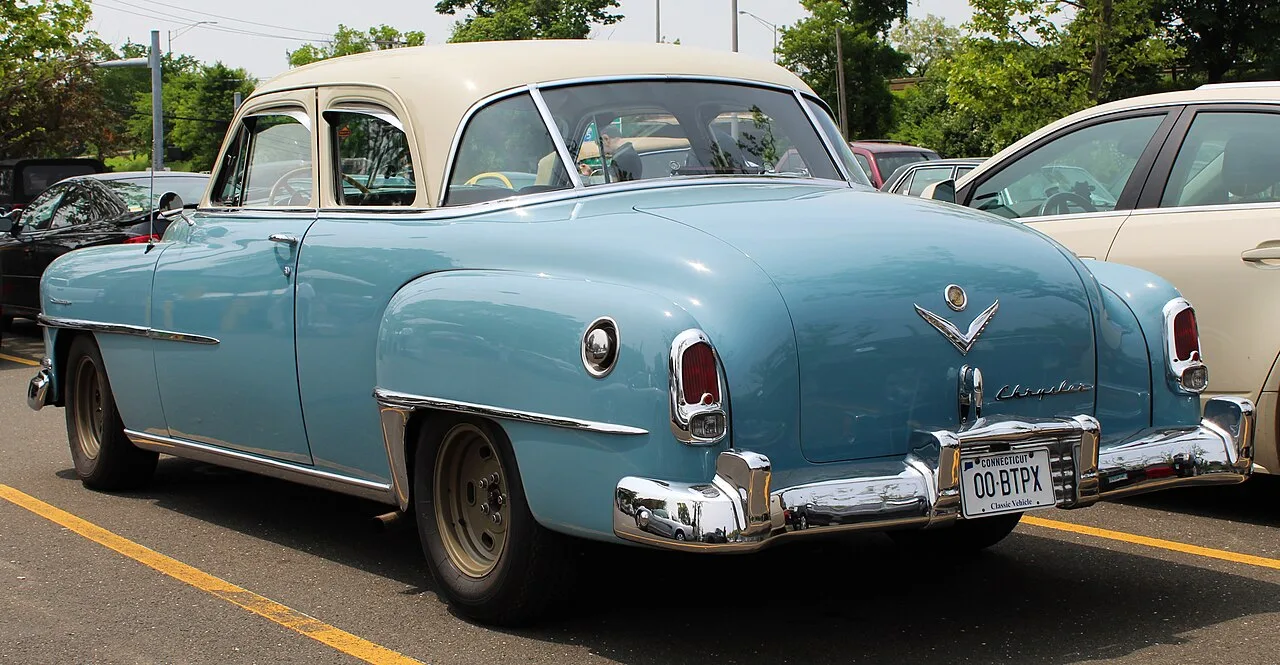
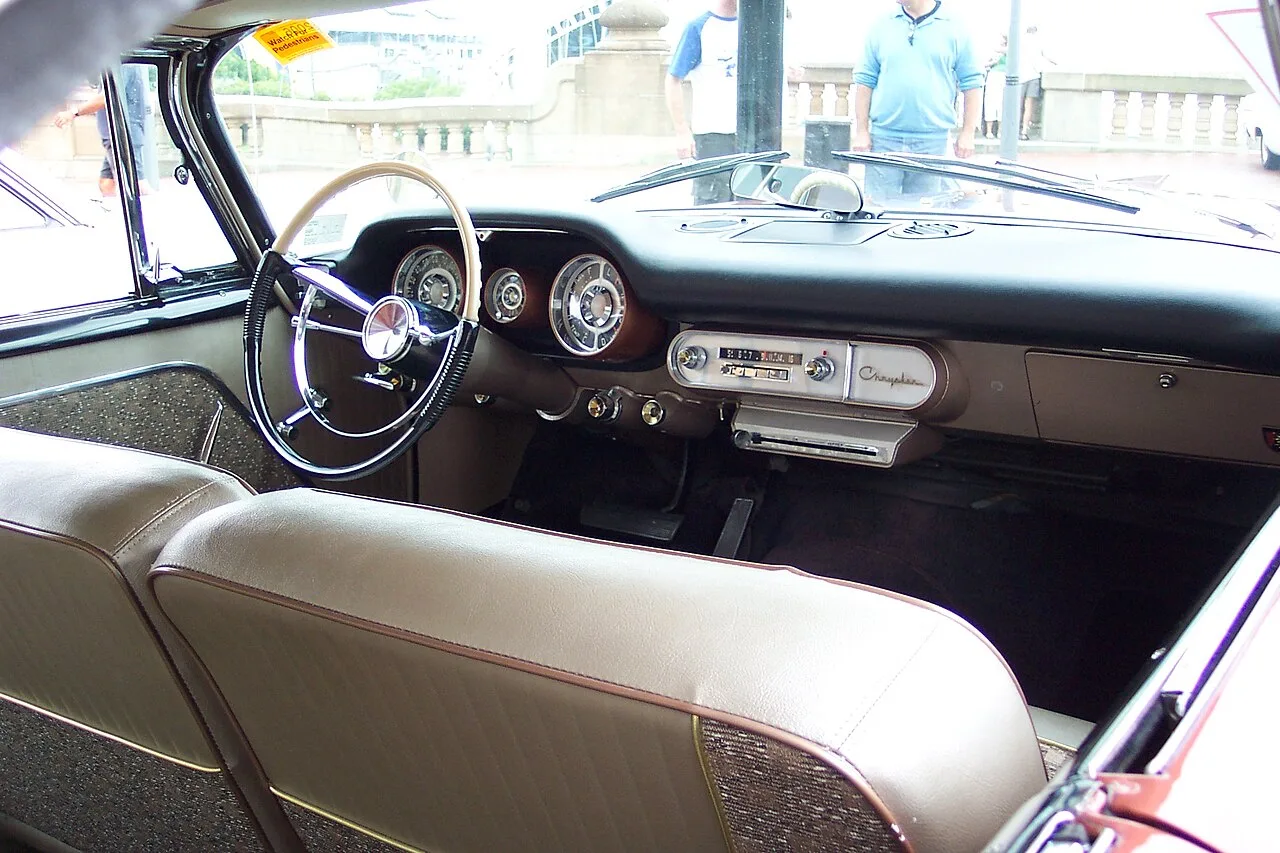
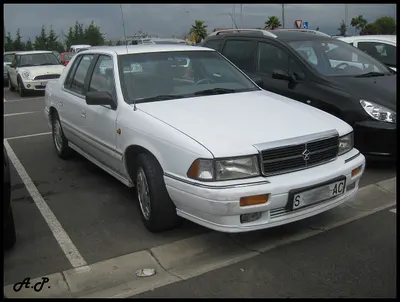
Europe's Saratoga was no simple badge job: global safety rules forced Chrysler to redesign its headlamps, lights, glass, mirrors, seat belts and even the instrument cluster for export.
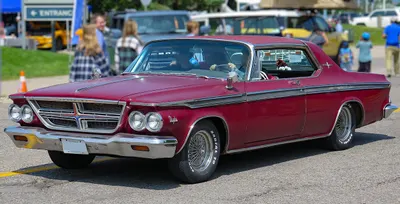
After Chrysler killed the Saratoga name in the US, Canada kept it alive — the '61 Canadian Saratoga was really just a US Windsor wearing Saratoga badges.
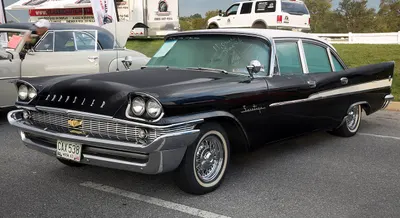
For 1957-58, what Americans bought as the Saratoga, Canadians bought as the Windsor — while the actual American Windsor wasn't sold in Canada at all.
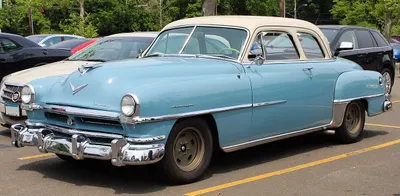
Paired with Chrysler's new Hemi V8, the 1951 Saratoga's shorter, lighter body made it quicker than the Oldsmobile Rocket 88 — the performance benchmark of its day.
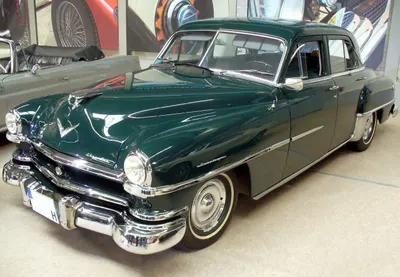
Postwar material shortages meant Chrysler couldn't get real whitewall tires for the Saratoga, so it faked the look with chrome 'beauty rings' on the wheels instead.
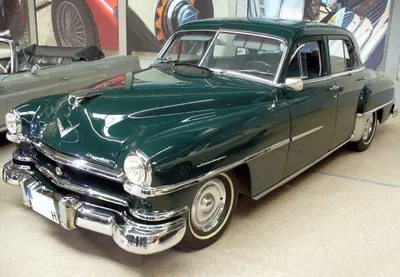
Despite the humbler name, the original Saratoga actually launched priced above both the Imperial and the New Yorker in Chrysler's own lineup.
Rivals
Same body, same money, other badges — tap any card to flip.

It briefly served as senior sibling to Marquette, a GM companion brand cancelled after just one year.

Nissan hired former BMW engineers to help develop the 510's suspension, which is why period reviewers frequently compared its handling to the BMW 1600/2002.

A Trabant 601 won its class at the 1970 Monte Carlo Rally, with a second 601 right behind it in second.

The 600 was a stopgap: the P50's body over the 601's mechanicals, and for a while its estate was built alongside the new 601 saloon.

The G80 Sport brought a 370 PS twin-turbo 3.3 V6, a mesh grille and copper-tinted chrome with copper stitching to match.

The Vigor was sold only with a five-cylinder engine, an unusual configuration Honda used to fit a longer engine transversely under a short hood.

The GS/E coupe earned the nickname "German Charger" for its long hood, short deck stance borrowed from Detroit muscle cars.

This DeVille/Fleetwood was the first production car anywhere to mount its V8 sideways, Cadillac's front-drive gamble on the new C-body.