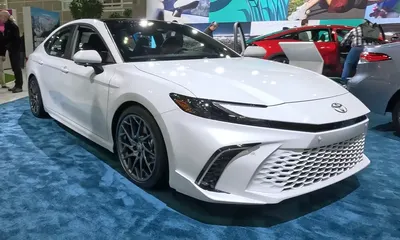
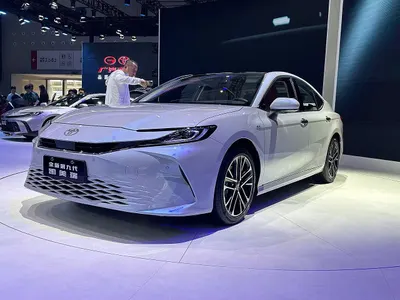
VerifiedFIRST PRINTPROThe XV70 Camry was the first Toyota of any kind to run Entune 3.0 — an infotainment system built on an open-source Linux OS, rather than Toyota's usual closed software.

This Camry's exact footprint wasn't a styling call — Japanese-market V40 stuck to the legacy 4,700 x 1,700 mm bracket to stay inside the era's vehicle size tax law.
Median 158 hp across 351 similar cars
Lead trim: V40 1.8 L 4S-FE four · up to 128 hp
Nobody in Burbles has spotted a Toyota Camry V40 yet. See one on the street, point the app at it, and the first card is yours — with your @handle permanently credited on this page.
FactThis Camry's exact footprint wasn't a styling call — Japanese-market V40 stuck to the legacy 4,700 x 1,700 mm bracket to stay inside the era's vehicle size tax law.
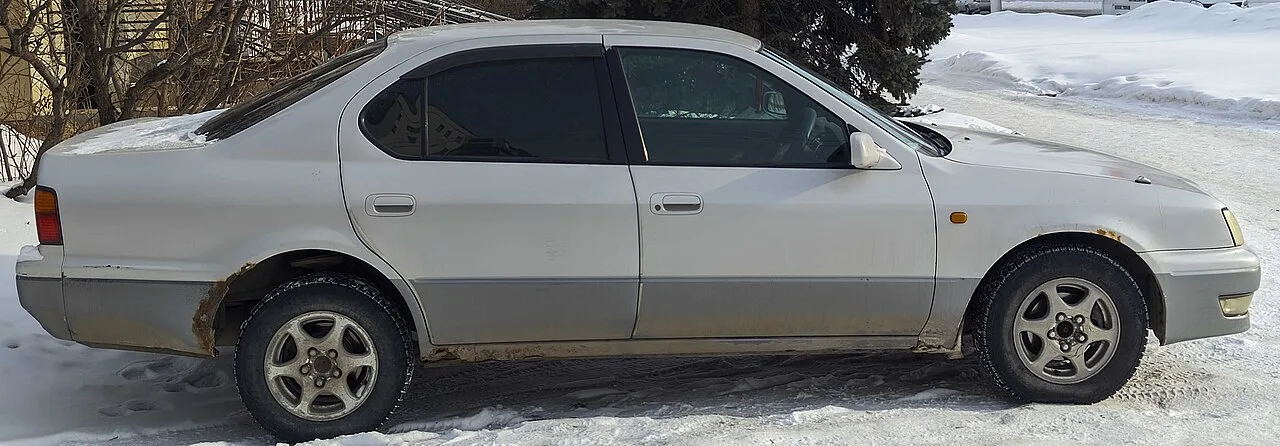
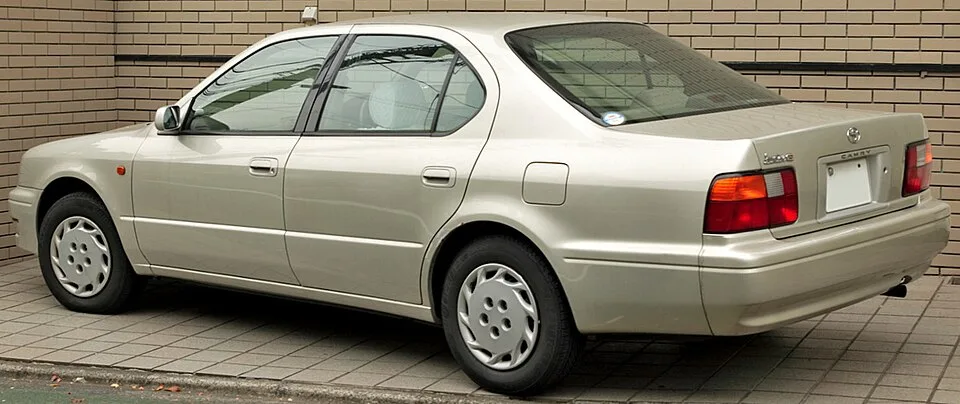
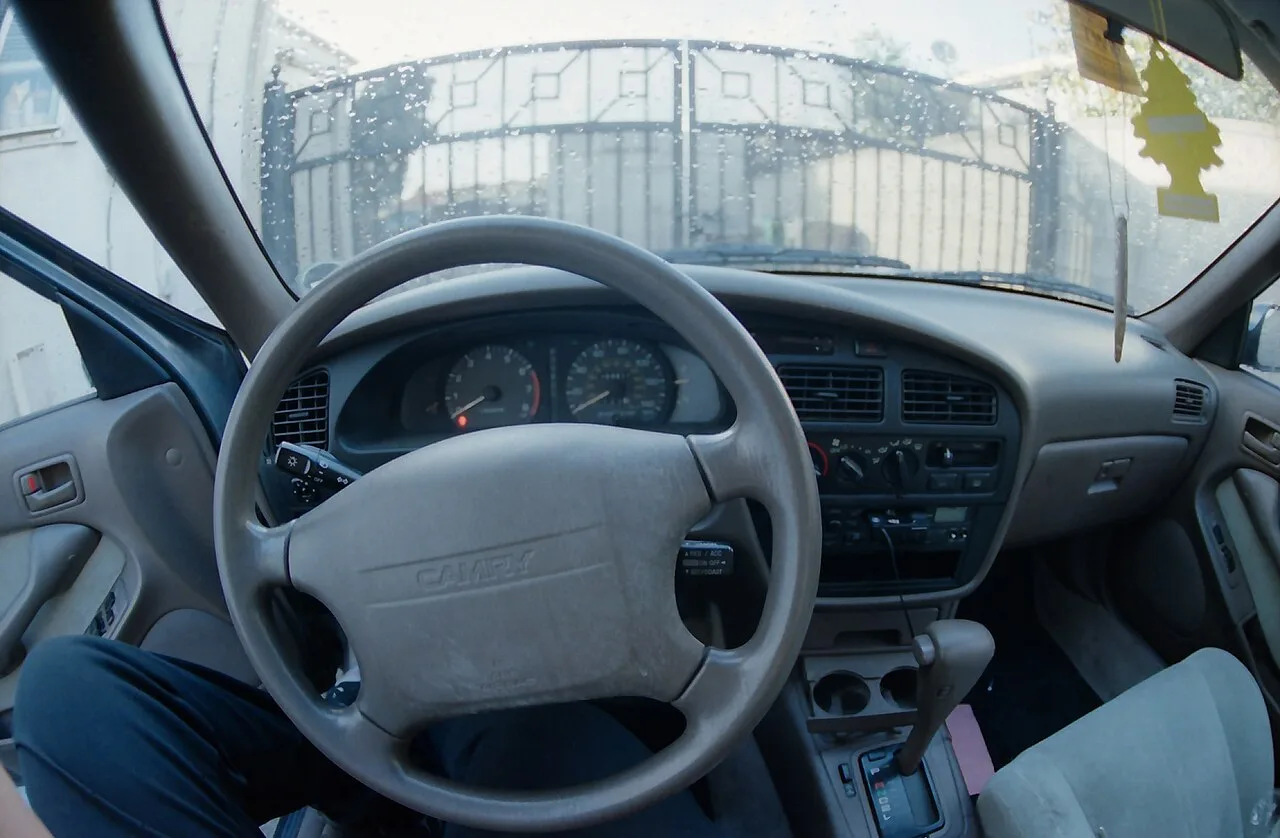
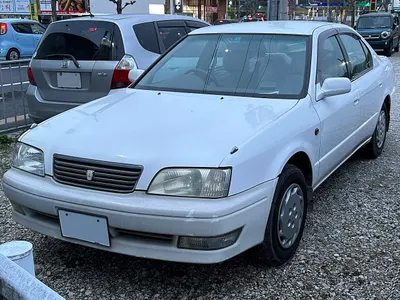
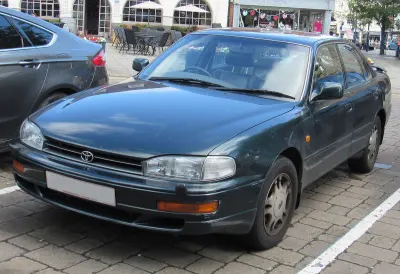
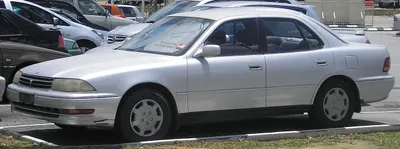
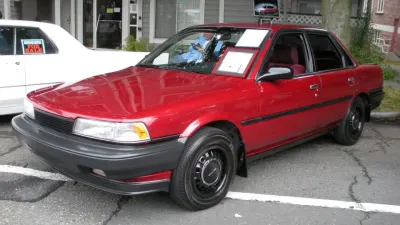
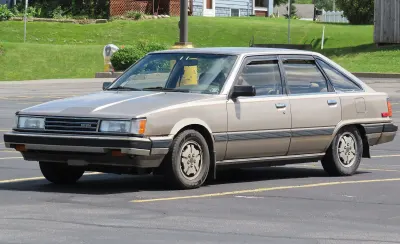
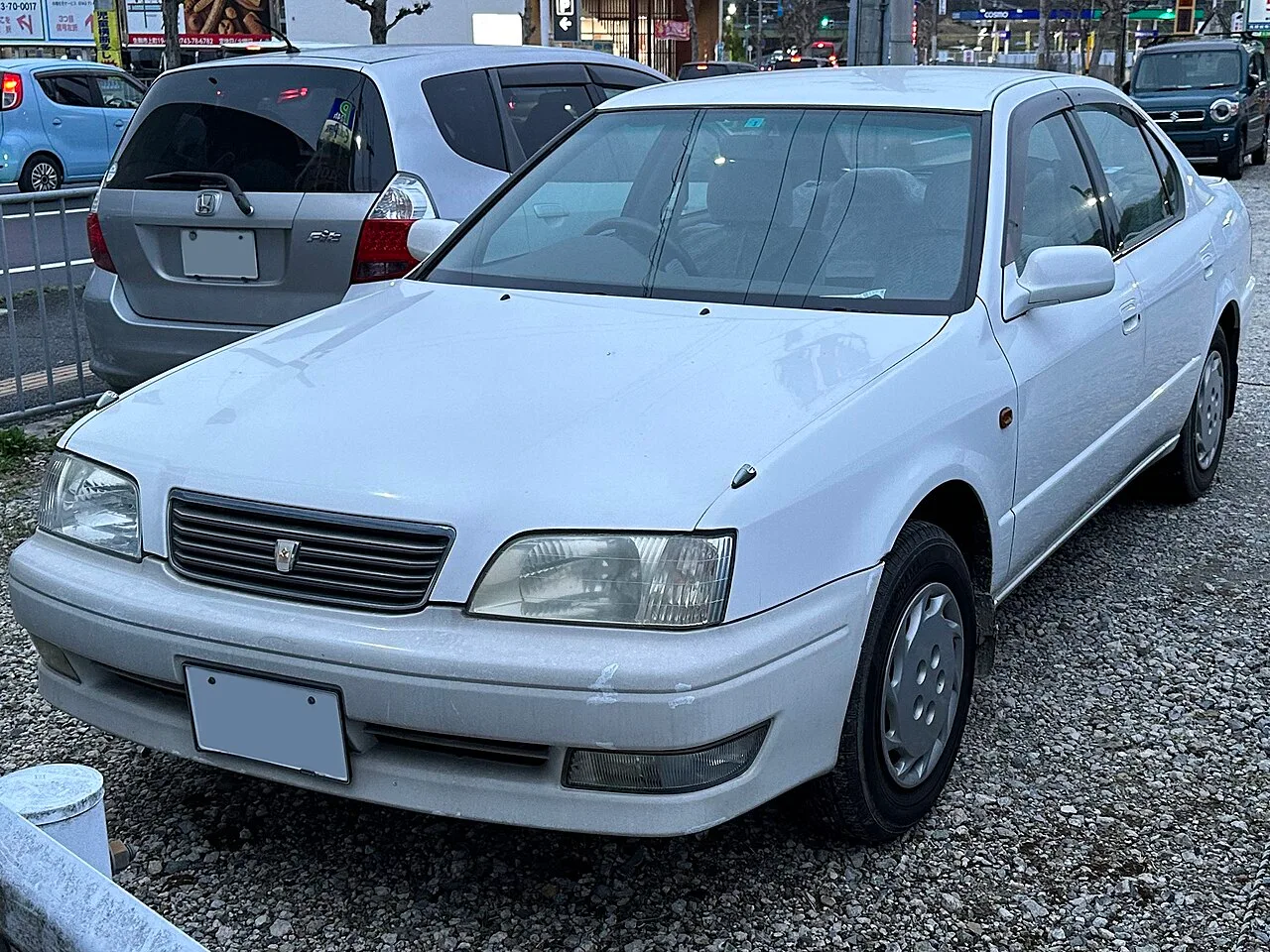
The Camry V40 appeared in July 1994 exclusively for the Japanese market and was built until July 1998 at the Tsutsumi plant; the Toyota Vista twin continued, but the Camry Prominent hardtop was no longer offered and only the Vista was available as a hardtop. It continued to be built around the 4,700 mm (185.0 in) x 1,700 mm (66.9 in) length-width bracket that is the legacy of a Japanese taxation law, and was 15 mm (0.6 in) taller than its predecessor. Engines were a 1.8-liter (4S-FE type) and 2.0-liter (3S-FE type) gasoline four and a 2.2-liter (3C-T type) turbo-diesel, in front-wheel-drive and four-wheel-drive layouts, on a 2,650 mm (104.3 in) wheelbase, 4,625 mm (182.1 in) long, 1,695 mm (66.7 in) wide and 1,410-1,435 mm (55.5-56.5 in) high. Toyota updated the V40 in June 1996, when anti-lock brakes and dual air bags became standard equipment.
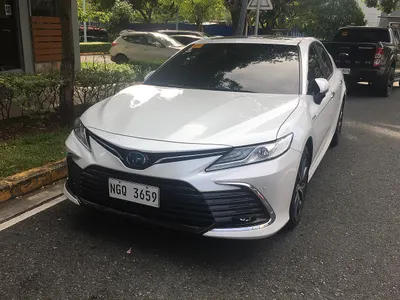
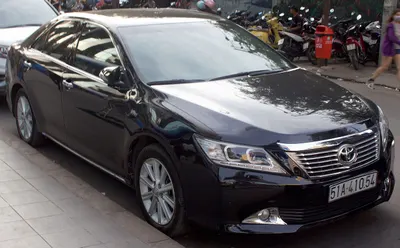
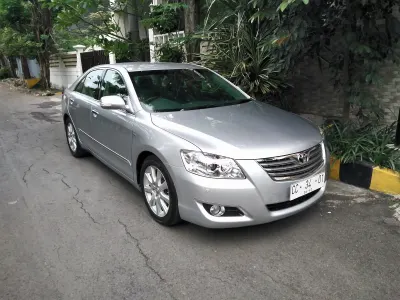
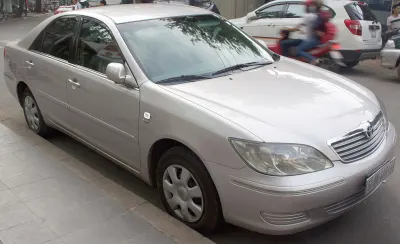
Real Toyota Camry cards spotted on the street by Burbles collectors. Tap any card to flip it over, inspect the collector’s binder, or follow them.
VerifiedFIRST PRINTPROThe XV70 Camry was the first Toyota of any kind to run Entune 3.0 — an infotainment system built on an open-source Linux OS, rather than Toyota's usual closed software.
VerifiedFIRST · WORLDWIDEFIRST PRINT×2This Camry generation spawned a wagon twin sold as the Toyota Mark II Qualis — and in doing so broke a rule that had held for every Mark II before it: it's the only front-wheel-drive Mark II nameplate ever made.
3 published trims in the catalogue. A blank is a figure not recorded, not zero.
| Trim | Years | Engine | Power | Torque | 0–60 | Drive | Gearbox | MSRP |
|---|---|---|---|---|---|---|---|---|
| V40 1.8 L 4S-FE four | 1994–1998 | 1.8 L Inline-4 | 113 hp | 116 lb-ft | — | — | — | — |
| V40 2.0 L 3S-FE four | 1994–1998 | 2.0 L Inline-4 | 128 hp | 131 lb-ft | — | — | — | — |
| V40 2.2 L 3C-T turbo-diesel four | 1994–1998 | 2.2 L Inline-4 | 90 hp | 142 lb-ft | — | — | — | — |
We don’t estimate running costs for a car like this. What it costs depends on its condition, its specialist and how it is driven, and an average would mislead.
Nobody has claimed one yet.


After nine generations sold at home, Toyota finally built a Camry that Japan itself can't buy — the XV80 is assembled there purely for export.

The XV70 Camry was the first Toyota of any kind to run Entune 3.0 — an infotainment system built on an open-source Linux OS, rather than Toyota's usual closed software.

This Camry's shape was slippery enough to make it the most aerodynamic car built in Australia at the time — matching the record set by the Camry it replaced.

The XV40 Camry Hybrid's drag coefficient of 0.27 made it, at the time, the most aerodynamic car ever built in Australia.

This Camry had an unlikely second life as a Saudi drift car: enthusiasts there use it for "tafheet" (Arab drifting), a practice so hard on the chassis that rear suspension components have failed and thrown a wheel entirely.

This Camry generation spawned a wagon twin sold as the Toyota Mark II Qualis — and in doing so broke a rule that had held for every Mark II before it: it's the only front-wheel-drive Mark II nameplate ever made.

This Camry's exact footprint wasn't a styling call — Japanese-market V40 stuck to the legacy 4,700 x 1,700 mm bracket to stay inside the era's vehicle size tax law.

This Camry's rounded shape wasn't the Japanese design team's idea — American Toyota executives fought for it, arguing US roads and lawns demanded a different look.

This Camry stayed narrow on purpose: Japan's size-based car tax punished wide bodies, so while the rest of the world got the broader XV10 Camry, Japan kept the slim V30 just to dodge the bracket.

This V20 made history as the first Camry ever built outside Japan — and Toyota Australia got it on the line just six months after Japan started, the fastest localization yet.

"Camry" comes from the Japanese word for "crown" -- the same naming tradition behind the Toyota Crown, Corona, and Corolla.

The badge said Camry, but the face said something pricier — Toyota gave this Carina-based Celica Camry a front end styled after the Celica XX, sold abroad as the Celica Supra.
Same body, same money, other badges — tap any card to flip.

It briefly served as senior sibling to Marquette, a GM companion brand cancelled after just one year.

Nissan hired former BMW engineers to help develop the 510's suspension, which is why period reviewers frequently compared its handling to the BMW 1600/2002.

A Trabant 601 won its class at the 1970 Monte Carlo Rally, with a second 601 right behind it in second.

The 600 was a stopgap: the P50's body over the 601's mechanicals, and for a while its estate was built alongside the new 601 saloon.

The G80 Sport brought a 370 PS twin-turbo 3.3 V6, a mesh grille and copper-tinted chrome with copper stitching to match.

The Vigor was sold only with a five-cylinder engine, an unusual configuration Honda used to fit a longer engine transversely under a short hood.

The GS/E coupe earned the nickname "German Charger" for its long hood, short deck stance borrowed from Detroit muscle cars.

This DeVille/Fleetwood was the first production car anywhere to mount its V8 sideways, Cadillac's front-drive gamble on the new C-body.