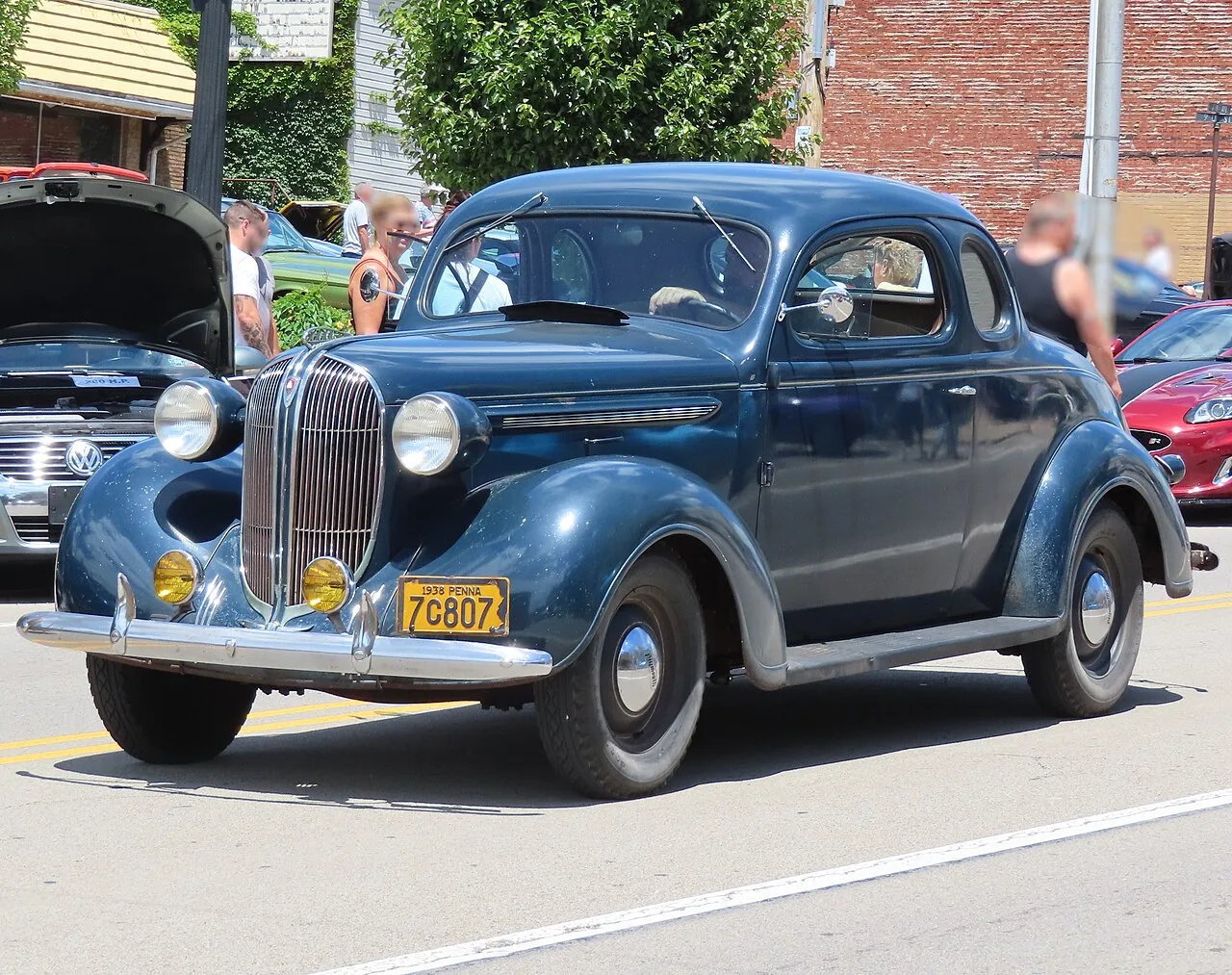
Chrysler boss K.T. Keller had it styled tall for easy entry and headroom, and its bolted-on rear wings were sold as easier to repair.
Median 74 hp across 70 similar cars
Lead trim: De Luxe short wheelbase, P17 (1949)
Plymouth De Luxe and Special De LuxeP17/P18/P19/P20 · 1949–1950
- 0spots by members
- Unclaimednobody has spotted one yet
- 0sets it belongs to
Nobody in Burbles has spotted a Plymouth De Luxe and Special De Luxe yet. See one on the street, point the app at it, and the first card is yours — with your @handle permanently credited on this page.
FactChrysler boss K.T. Keller had it styled tall for easy entry and headroom, and its bolted-on rear wings were sold as easier to repair.
The American Chrysler Corporation introduced its first entirely new postwar designs in 1949; the new Plymouth debuted in March 1949, the last of the "Big Three" nine months after the 1949 Ford and three months after Chevrolet. The range included two main models, the base De Luxe and the better-finished Special De Luxe, built on the same structure and body and available in several body styles; in May 1949 De Luxe variants with a shorter wheelbase (P17, 111 in) were introduced alongside the standard-wheelbase models (P18, 118.5 in), a novelty for Chrysler. Body variants included the De Luxe coupe, two-door sedan and three-door six-seat steel Suburban wagon (short wheelbase), the De Luxe Club Coupe and four-door sedan, and, in Special De Luxe trim, the Club Coupe, electrically-roofed convertible, four-door sedan and five-door eight-seat wooden "woodie" station wagon. The only available engine was an improved unit from previous years, a flathead straight-six of 217.8 cu in (3.6 L) producing 97 hp (gross), with a three-speed manual transmission driving the rear wheels. 519,400 Plymouths of the second 1949 series were produced, giving Plymouth third place in the U.S. market; the Special De Luxe four-door sedan was the most popular model (252,878 units), the steel Suburban wagon sold 19,220 and the expensive wooden wagon only 3,443. In January 1950 the models received a minor facelift with a simplified grille, a rear window enlarged by 32% and a lowered ride; short-wheelbase models were coded P19 and long-wheelbase models P20, and 608,862 Plymouths were produced for the 1950 model year. The 1949 De Luxe and Special De Luxe were also built for Canada as the Dodge Kingsway and Dodge Regent and for export as the DeSoto Diplomat.
Collectors Spotted in the Plymouth De Luxe Lineage
No member has published a public street spot of the Plymouth De Luxe yet — the First · Worldwide stamp is wide open.
Trims & Figures
3 published trims in the catalogue. A blank is a figure not recorded, not zero.
| Trim | Years | Engine | Power | Torque | 0–60 | Drive | Gearbox | MSRP |
|---|---|---|---|---|---|---|---|---|
| 217.8 cu in flathead six (97 hp) | 1949–1950 | 3.6 L Inline-6 | 97 hp | — | — | RWD | — | — |
| De Luxe and Special De Luxe long wheelbase, P18 (1949) | 1949–1949 | — | 97 hp | — | — | RWD | — | — |
| De Luxe short wheelbase, P17 (1949) | 1949–1949 | — | 97 hp | — | — | RWD | — | — |
Owning one
We don’t estimate running costs for a car like this. What it costs depends on its condition, its specialist and how it is driven, and an average would mislead.
Owners’ builds
Nobody has claimed one yet.
Photographs
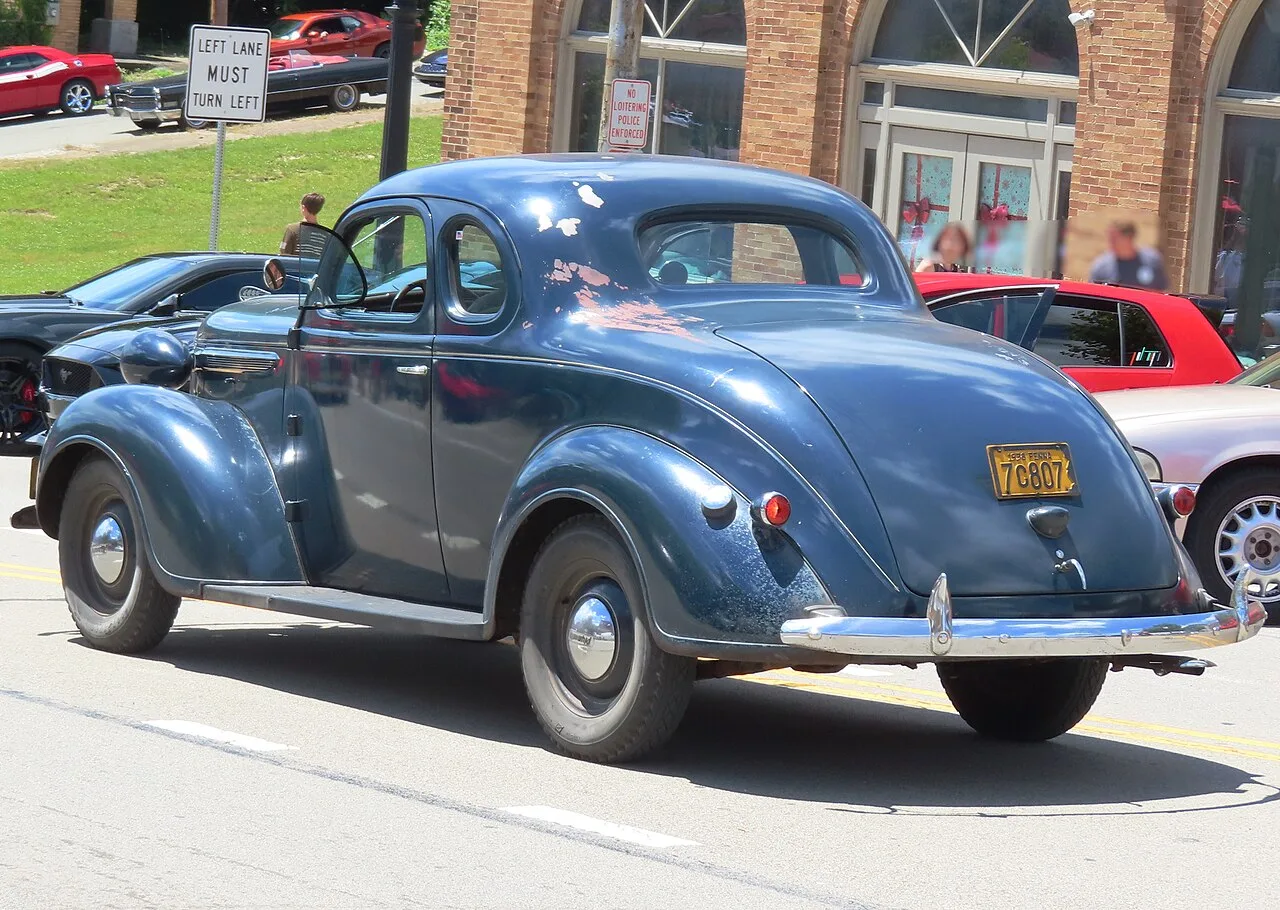
Chrysler boss K.T. Keller had it styled tall for easy entry and headroom, and its bolted-on rear wings were sold as easier to repair.
Plymouth restarted after the war with its 1942 design barely changed, and the only change for 1948 was a switch from 16-inch to 15-inch wheels.
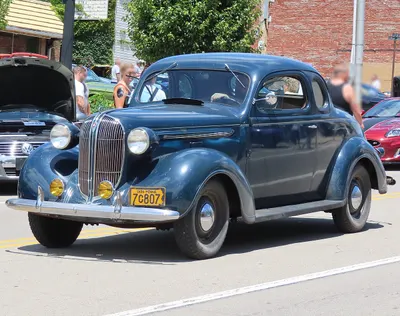
Plymouth's six-cylinder debutante actually got the shorter end of the deal: the Six rode a 107-inch wheelbase while its De Luxe sibling stretched to 112.
Rivals
Same body, same money, other badges — tap any card to flip.

It briefly served as senior sibling to Marquette, a GM companion brand cancelled after just one year.

Nissan hired former BMW engineers to help develop the 510's suspension, which is why period reviewers frequently compared its handling to the BMW 1600/2002.

A Trabant 601 won its class at the 1970 Monte Carlo Rally, with a second 601 right behind it in second.

The 600 was a stopgap: the P50's body over the 601's mechanicals, and for a while its estate was built alongside the new 601 saloon.

The G80 Sport brought a 370 PS twin-turbo 3.3 V6, a mesh grille and copper-tinted chrome with copper stitching to match.

The Vigor was sold only with a five-cylinder engine, an unusual configuration Honda used to fit a longer engine transversely under a short hood.

The GS/E coupe earned the nickname "German Charger" for its long hood, short deck stance borrowed from Detroit muscle cars.

This DeVille/Fleetwood was the first production car anywhere to mount its V8 sideways, Cadillac's front-drive gamble on the new C-body.