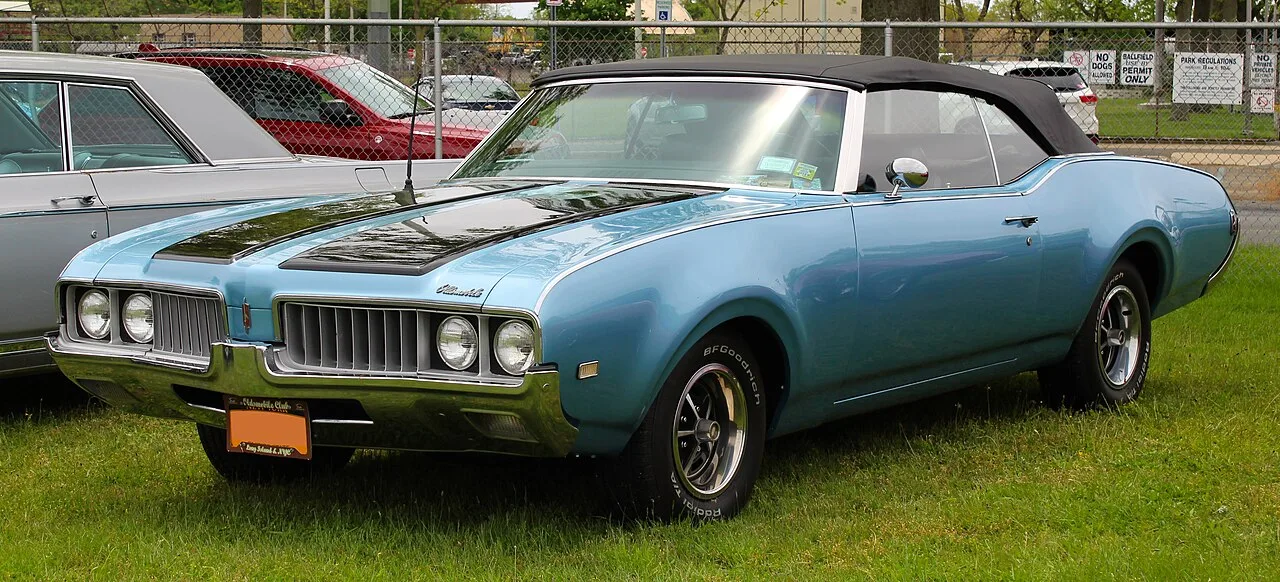
Every single 1968 and 1969 Hurst/Olds rolled out with pinstripes hand-applied by just one person.
Median 92 hp across 167 similar cars
Lead trim: Hurst/Olds 455 cu in Rocket V8 W46 (380 hp)
Oldsmobile Cutlass Hurst/Olds1969–1969
- 0spots by members
- Unclaimednobody has spotted one yet
- 0sets it belongs to
Nobody in Burbles has spotted a Oldsmobile Cutlass Hurst/Olds yet. See one on the street, point the app at it, and the first card is yours — with your @handle permanently credited on this page.
FactEvery single 1968 and 1969 Hurst/Olds rolled out with pinstripes hand-applied by just one person.
The Hurst/Olds returned for 1969 with a Firefrost gold on white paint scheme (the primary scheme of later years), a functional "mailbox" fiberglass hood scoop with H/O 455 on each side, a trunk spoiler and unique 15x7 chrome SSII rims with Goodyear F60x15 Polyglas tires; the non-drivetrain modifications were again done at Demmer Engineering. Approximately 913 cars were built (the production table gives 906), including two convertibles for Hurst promotional use. The 455 cubic-inch Rocket V8 (W46) was rated at 380 horsepower and 500 lb-ft, the same engine as the air-conditioned 1968 cars, with a unique intake manifold, chrome steel valve covers and a special vacuum-operated air cleaner lid, backed by a specially calibrated Turbo 400 (3.42 gears without A/C or 3.08 with). The Hurst/Olds was then temporarily dropped after 1969 because GM dropped the 400 cubic-inch engine limit for 1970.
Collectors Spotted in the Oldsmobile Cutlass Lineage
No member has published a public street spot of the Oldsmobile Cutlass yet — the First · Worldwide stamp is wide open.
Trims & Figures
One published trim in the catalogue. A blank is a figure not recorded, not zero.
| Trim | Years | Engine | Power | Torque | 0–60 | Drive | Gearbox | MSRP |
|---|---|---|---|---|---|---|---|---|
| Hurst/Olds 455 cu in Rocket V8 W46 (380 hp) | 1969–1969 | V8 | 380 hp | 500 lb-ft | — | — | — | — |
Owning one
We don’t estimate running costs for a car like this. What it costs depends on its condition, its specialist and how it is driven, and an average would mislead.
Owners’ builds
Nobody has claimed one yet.
Photographs
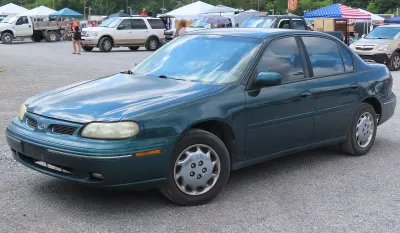
The last-ever Cutlass was a Chevy Malibu wearing an Oldsmobile badge, down to one single engine choice -- Oldsmobile didn't even offer the Malibu's other options.
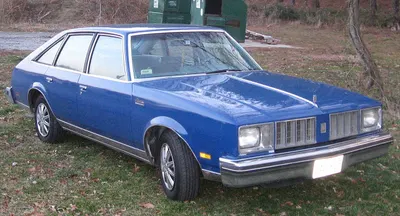
Oldsmobile planned just 2,500 of this 15th-anniversary Hurst/Olds revival — demand ran so hot they built 3,001 instead.
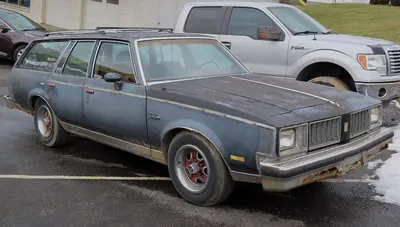
The 1979 Hurst/Olds was the only GM G-body car sold that year with a 350 V8 under the hood — and only 2,499 were built.
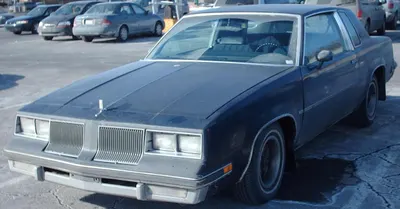
Only 2,499 of these Cutlass Calais coupes got the Hurst/Olds W-30 package — gold-trimmed wheels, a Hurst Dual Gate shifter, and a 350 V8 you couldn't get any other way.
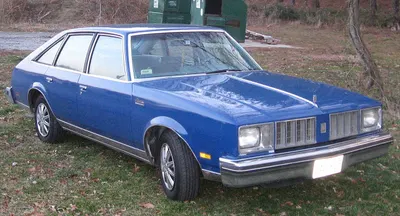
The removable T-top roof that became a muscle-car cliché started here: the 1975 Hurst/Olds was the first GM car ever fitted with the "Hurst/Hatch" T-top.
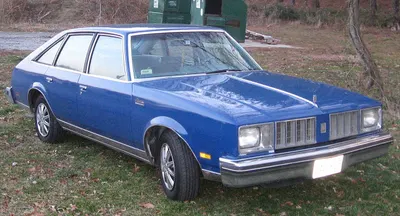
The '74 Hurst/Olds was supposed to pace the Indy 500 — but the track needed a convertible for the parade lap, so a Delta 88 got the job instead.
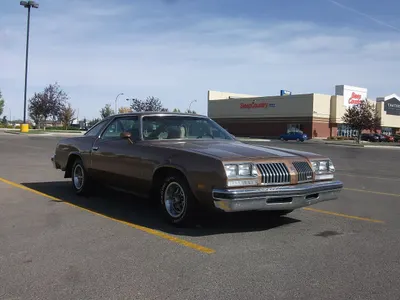
1977 was this generation's best year by far — 632,742 Cutlasses built, the highest single-year production the model ever saw.
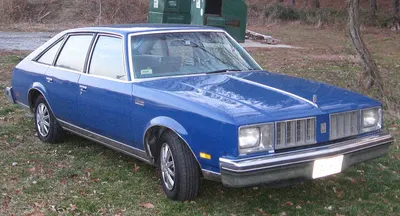
The '73 Hurst/Olds was the first offered in two color schemes — black/gold or white/gold — with just 1,097 built all year.
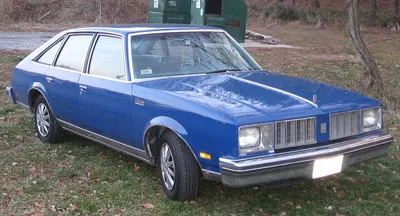
This Hurst/Olds paced the 1972 Indianapolis 500 — and Oldsmobile built about 630 replicas for customers afterward, a quarter of them convertibles.
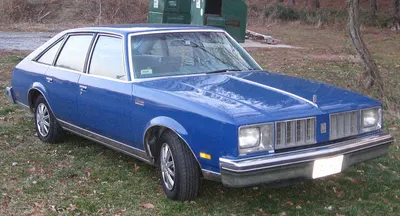
The Rallye 350 existed purely to dodge insurance rates: a 1970-only, Sebring-Yellow 310hp package built for buyers who wanted supercar looks without the premiums of a 455-engined 4-4-2.
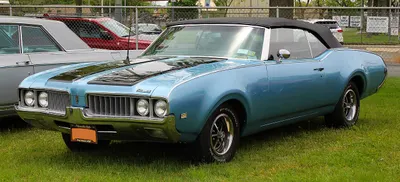
Every single 1968 and 1969 Hurst/Olds rolled out with pinstripes hand-applied by just one person.
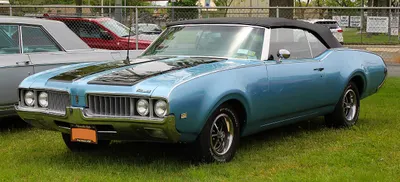
Oldsmobile's 1968 redesign gave two-doors and four-doors different wheelbases entirely — engineers admitted off the record it was really to kill the old chassis's uncomfortable 'freeway hop.'
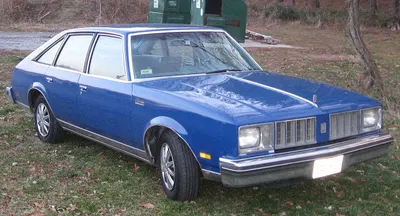
GM capped intermediate cars at 400 cubic inches — so Oldsmobile and Hurst built the Hurst/Olds with a 455 anyway, working around the company's own rulebook.
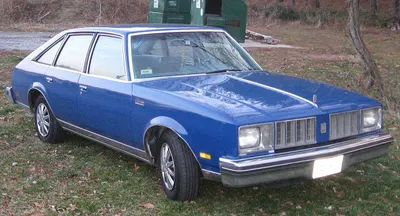
The redesigned '64 F-85/Cutlass shared its entire new A-body chassis with the Chevrolet Chevelle, Buick Special and Pontiac Tempest — four different GM badges riding on essentially one car.
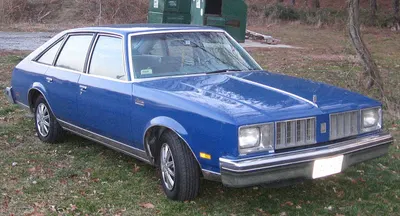
The 1962 Jetfire beat everyone to turbocharging a production car — but its engine knocked so badly that Oldsmobile required owners to keep topping up a tank of methanol and water just to keep it alive.
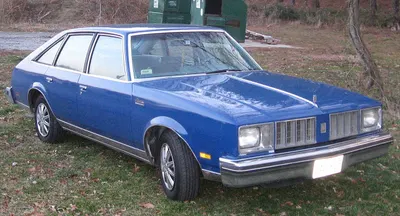
Buried inside this F-85 generation is the 1962 Jetfire — Oldsmobile's turbocharged oddball that beat the muscle-car era to forced induction by decades.
Rivals
Same body, same money, other badges — tap any card to flip.

It briefly served as senior sibling to Marquette, a GM companion brand cancelled after just one year.

Nissan hired former BMW engineers to help develop the 510's suspension, which is why period reviewers frequently compared its handling to the BMW 1600/2002.

A Trabant 601 won its class at the 1970 Monte Carlo Rally, with a second 601 right behind it in second.

The 600 was a stopgap: the P50's body over the 601's mechanicals, and for a while its estate was built alongside the new 601 saloon.

The G80 Sport brought a 370 PS twin-turbo 3.3 V6, a mesh grille and copper-tinted chrome with copper stitching to match.

The Vigor was sold only with a five-cylinder engine, an unusual configuration Honda used to fit a longer engine transversely under a short hood.

The GS/E coupe earned the nickname "German Charger" for its long hood, short deck stance borrowed from Detroit muscle cars.

This DeVille/Fleetwood was the first production car anywhere to mount its V8 sideways, Cadillac's front-drive gamble on the new C-body.