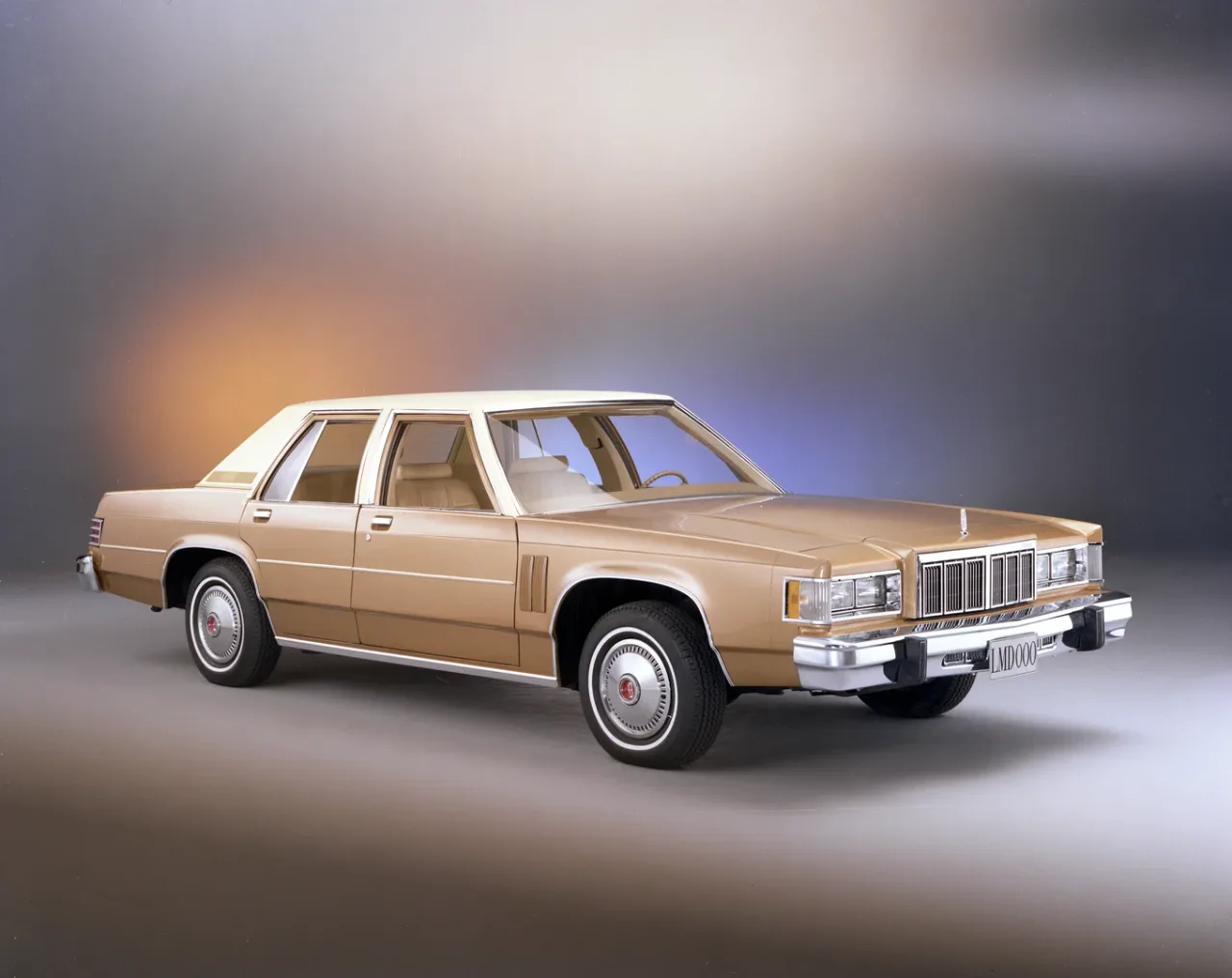
The 1979 Marquis hit a milestone no full-size Mercury wagon had managed since 1955: a curb weight under 4,000 pounds, trimmed way down from the car it replaced.
Lead trim: Marquis 4.2 L (255 cu in) Windsor V8 (120 hp, 1981) · up to 165 hp
Mercury Marquis1979–1982
- 0spots by members
- Unclaimednobody has spotted one yet
- 0sets it belongs to
Nobody in Burbles has spotted a Mercury Marquis yet. See one on the street, point the app at it, and the first card is yours — with your @handle permanently credited on this page.
FactThe 1979 Marquis hit a milestone no full-size Mercury wagon had managed since 1955: a curb weight under 4,000 pounds, trimmed way down from the car it replaced.
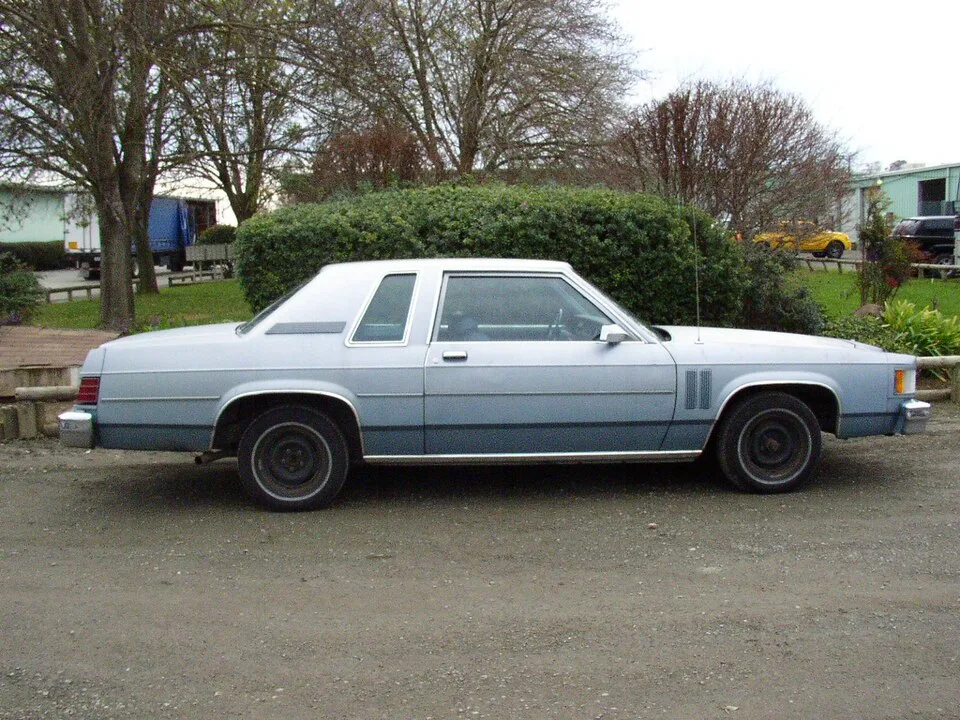
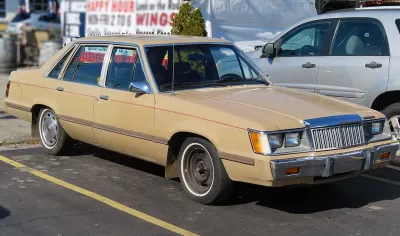
For 1979 Mercury introduced the third-generation Marquis, the first ground-up redesign of the full-size range since 1969, on the rear-wheel drive Ford Panther platform, an evolution of the 1969 chassis: for the first time the full-size Mercury shared a common wheelbase with Ford, 114.3 in (down 9.7 in from 124 in, or 6.7 in from 121 in for wagons). The Marquis shed 17 inches in length and over 1,000 pounds against its 1978 predecessor (212.3 in long for the sedan and 217.7 in for the wagon, 77.5 in and 79.3 in wide, 54.7 in and 56.8 in high, 3,635–3,918 lb), the full-size wagon under 4,000 lb for the first time since 1955, with more interior space from a taller roofline and a significant increase in glass area. The suspension kept double-wishbone independent front, changed the rear live axle from a 3-link to a 4-link layout and dropped the optional anti-lock and four-wheel disc brakes for upgraded front discs. In the interest of fuel economy the 351M, 400 and 460 were replaced by smaller engines shared with smaller Mercurys: a 302 (rebranded "5.0 L") standard, shared with the Cougar, Monarch and Zephyr, and the 351 (5.8 L) optional; for 1981 a 4.2 L (255) V8 became standard on the base-trim Marquis outside California, with the 5.0 L on Brougham-trim Marquis and Grand Marquis four-door sedans; for 1982 the 5.8 L was dropped from the US market (continuing in Canada). The 4-speed AOD overdrive automatic was introduced for 1980 (standard with the 4.2 L V8, optional with the 5.0 L and 5.8 L; the page's engine table dates the 4.2 L to 1981) and became the sole transmission for 1982. It was a two-door sedan (replacing the hardtop), four-door sedan and five-door wagon (the woodgrain Colony Park or body-color Marquis), with a vertically-oriented grille, quad rectangular headlamps and full-width taillamps bordering the license plate; trims were Marquis, Brougham and the top Grand Marquis. From 1981 to 1982 a police version of the base four-door had a 165-hp 5.8 L V8. For 1983 Mercury rebranded the full-size line as Grand Marquis, produced through 1991. Production was 91,391 in 1979, 34,899 in 1980, 33,590 in 1981 and 38,090 in 1982.
Collectors Spotted in the Mercury Marquis Lineage
No member has published a public street spot of the Mercury Marquis yet — the First · Worldwide stamp is wide open.
Trims & Figures
9 published trims in the catalogue. A blank is a figure not recorded, not zero.
| Trim | Years | Engine | Power | Torque | 0–60 | Drive | Gearbox | MSRP |
|---|---|---|---|---|---|---|---|---|
| Marquis 4.2 L (255 cu in) Windsor V8 (120 hp, 1981) | 1981–1981 | 4.2 L V8 | 120 hp | 205 lb-ft | — | RWD | — | — |
| Marquis 4.2 L (255 cu in) Windsor V8 (122 hp, 1982) | 1982–1982 | 4.2 L V8 | 122 hp | 209 lb-ft | — | RWD | — | — |
| Marquis 5.0 L (302 cu in) Windsor V8 (129 hp, 1979) | 1979–1979 | 4.9 L V8 | 129 hp | 223 lb-ft | — | RWD | — | — |
| Marquis 5.0 L (302 cu in) Windsor V8 (130 hp, 1980) | 1980–1980 | 4.9 L V8 | 130 hp | 230 lb-ft | — | RWD | — | — |
| Marquis 5.0 L (302 cu in) Windsor V8 (132 hp, 1982) | 1982–1982 | 4.9 L V8 | 132 hp | 236 lb-ft | — | RWD | — | — |
| Marquis 5.8 L (351 cu in) Windsor V8 (138 hp, 1979) | 1979–1979 | 5.8 L V8 | 138 hp | 260 lb-ft | — | RWD | — | — |
| Marquis 5.8 L (351 cu in) Windsor V8 (140 hp, 1980) | 1980–1980 | 5.8 L V8 | 140 hp | 265 lb-ft | — | RWD | — | — |
| Marquis 5.8 L (351 cu in) Windsor V8 (145 hp, 1981) | 1981–1981 | 5.8 L V8 | 145 hp | 270 lb-ft | — | RWD | — | — |
| Marquis 5.8 L Windsor HO V8 (165 hp, police use only, 1981–1982) | 1981–1982 | 5.8 L V8 | 165 hp | 285 lb-ft | — | RWD | — | — |
Owning one
We don’t estimate running costs for a car like this. What it costs depends on its condition, its specialist and how it is driven, and an average would mislead.
Owners’ builds
Nobody has claimed one yet.
Photographs
Canada got a Mercury the US never saw: the 1985 Marquis LTS packed a 165-hp Mustang V8 into a police-spec chassis, and only 134 were ever built.
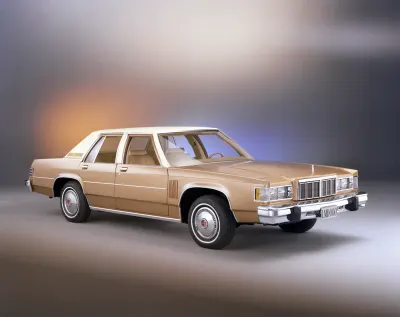
The 1979 Marquis hit a milestone no full-size Mercury wagon had managed since 1955: a curb weight under 4,000 pounds, trimmed way down from the car it replaced.
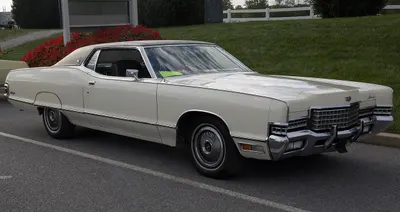
The 1978 Marquis was the end of an era: alongside the Chrysler New Yorker two-door, it was the last pillarless two-door hardtop any American automaker ever built.
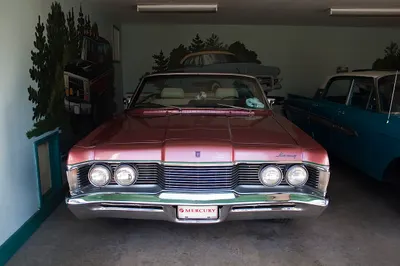
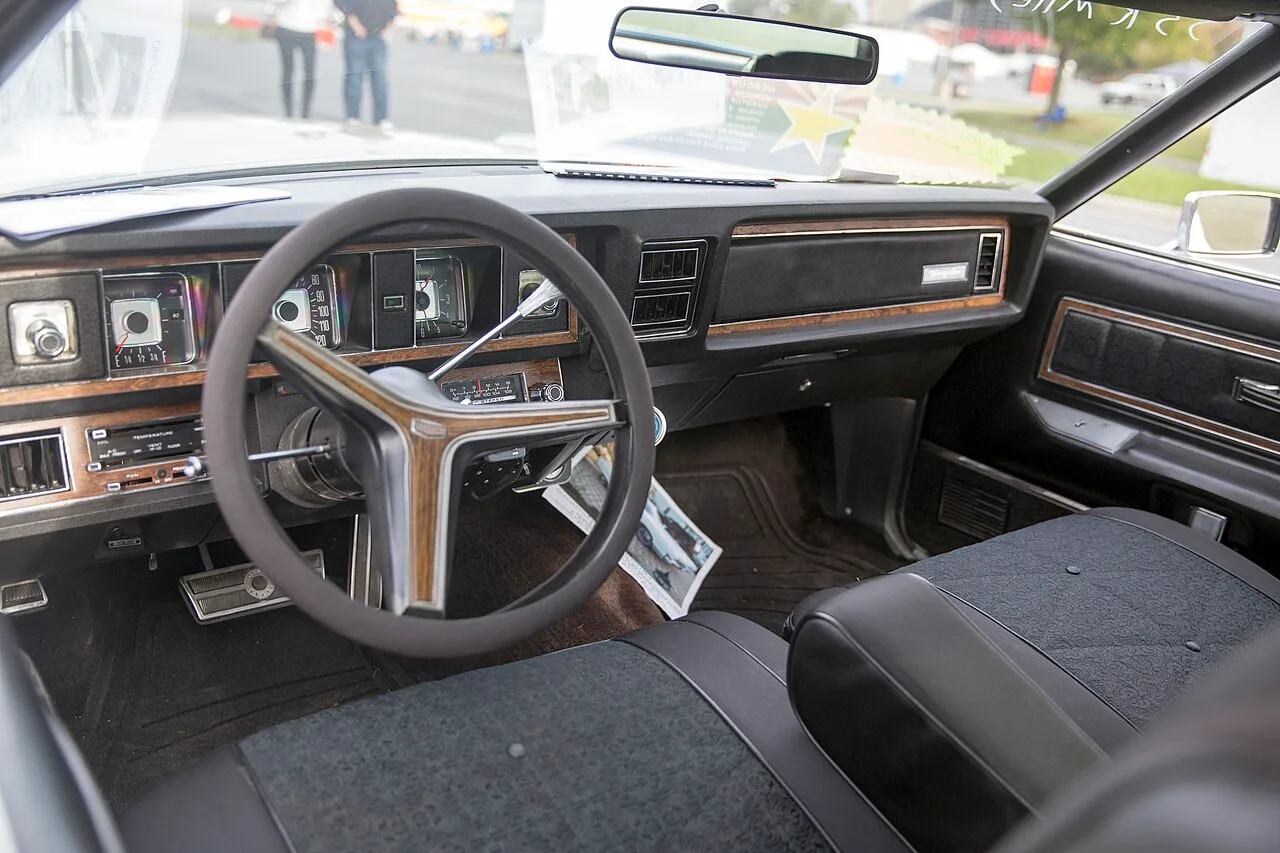
This Marquis previewed a seat design that took over American cars for two decades: its 50/50 split "Twin Comfort Lounge" bench mixed three-passenger capacity with the individual adjustment of bucket seats.
Rivals
Same body, same money, other badges — tap any card to flip.

It briefly served as senior sibling to Marquette, a GM companion brand cancelled after just one year.

Nissan hired former BMW engineers to help develop the 510's suspension, which is why period reviewers frequently compared its handling to the BMW 1600/2002.

A Trabant 601 won its class at the 1970 Monte Carlo Rally, with a second 601 right behind it in second.

The 600 was a stopgap: the P50's body over the 601's mechanicals, and for a while its estate was built alongside the new 601 saloon.

The G80 Sport brought a 370 PS twin-turbo 3.3 V6, a mesh grille and copper-tinted chrome with copper stitching to match.

The Vigor was sold only with a five-cylinder engine, an unusual configuration Honda used to fit a longer engine transversely under a short hood.

The GS/E coupe earned the nickname "German Charger" for its long hood, short deck stance borrowed from Detroit muscle cars.

This DeVille/Fleetwood was the first production car anywhere to mount its V8 sideways, Cadillac's front-drive gamble on the new C-body.