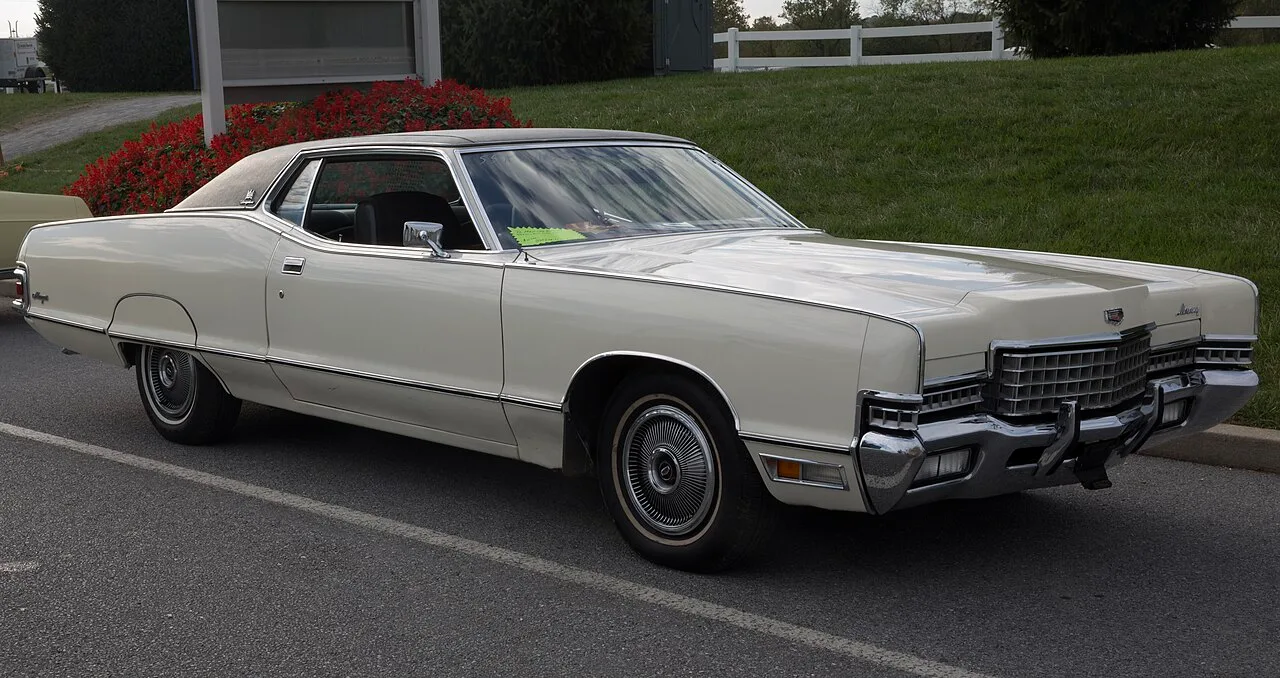
The 1978 Marquis was the end of an era: alongside the Chrysler New Yorker two-door, it was the last pillarless two-door hardtop any American automaker ever built.
Lead trim: Marquis 400 cu in V8 (144 hp, 1975) · up to 360 hp
Mercury Marquis1969–1978
- 0spots by members
- Unclaimednobody has spotted one yet
- 0sets it belongs to
Nobody in Burbles has spotted a Mercury Marquis yet. See one on the street, point the app at it, and the first card is yours — with your @handle permanently credited on this page.
FactThe 1978 Marquis was the end of an era: alongside the Chrysler New Yorker two-door, it was the last pillarless two-door hardtop any American automaker ever built.
For 1969 Mercury revised its full-size range: the second-generation Marquis succeeded the four-door Brougham and two-door Park Lane and was expanded to a full range of body styles above the Monterey (two- and four-door hardtops, a four-door pillared hardtop, a two-door convertible and, under the 1969 rebranding of Ford and Mercury wagons, a five-door station wagon as the woodgrained Colony Park; a plain Marquis wagon was added for 1970). It used a rear-wheel drive perimeter frame chassis shared with the full-size Ford range, with a 124 in wheelbase for two- and four-doors (Fords and wagons 121 in), 229.0 in long and 4,470 lb (2-door) or 4,508 lb (4-door); the 1969 four-door hardtop listed at US$3,973 and 29,389 were made, and in Canada the Meteor brand marketed it as the Meteor LeMoyne (1969–70), later the Marquis Meteor base trim (1977–78). The front fascia adopted Lincoln Continental elements, with hidden headlamps that became largely exclusive to Lincoln-Mercury flagships after 1970. The 1971 revision dropped the convertible and the Marauder fastback and introduced the "pillared hardtop"; 1973 brought a complete redesign for 5-mph bumpers, and for 1975 the full-size range was reduced solely to the Marquis (with Brougham and Grand Marquis trims) after the Monterey was discontinued. Mercury ended its Marauder engine branding and replaced the 390 and 428 with a 429-cubic-inch 385-series V8 (2-barrel 320 hp and 4-barrel 360 hp, gross, in 1969–71; net 208 hp in 1972 and 198 hp in 1973), with the Lincoln 460 optional from 1972 and standard in place of the 429 from 1974; smaller Ford 335-series engines followed (the 402 cu in 400 from 1975 and the 351M as standard for 1978, with the 400 remaining standard in California and at high altitude). The 1978 Marquis was, with the 1978 Chrysler New Yorker two-door, the final pillarless two-door hardtop with retractable rear side windows offered by an American automaker.
Collectors Spotted in the Mercury Marquis Lineage
No member has published a public street spot of the Mercury Marquis yet — the First · Worldwide stamp is wide open.
Trims & Figures
19 published trims in the catalogue. A blank is a figure not recorded, not zero.
| Trim | Years | Engine | Power | Torque | 0–60 | Drive | Gearbox | MSRP |
|---|---|---|---|---|---|---|---|---|
| Marquis / Colony Park station wagon | 1969–1978 | — | — | — | — | RWD | — | — |
| Marquis 351M V8 (145 hp, 1978) | 1978–1978 | 5.8 L V8 | 145 hp | 273 lb-ft | — | RWD | — | — |
| Marquis 400 cu in V8 (144 hp, 1975) | 1975–1975 | 6.6 L V8 | 144 hp | 255 lb-ft | — | RWD | — | — |
| Marquis 400 cu in V8 (160 hp, 1978) | 1978–1978 | 6.6 L V8 | 160 hp | 319 lb-ft | — | RWD | — | — |
| Marquis 400 cu in V8 (168 hp, 1977) | 1977–1977 | 6.6 L V8 | 168 hp | 324 lb-ft | — | RWD | — | — |
| Marquis 400 cu in V8 (180 hp, 1976) | 1976–1976 | 6.6 L V8 | 180 hp | 338 lb-ft | — | RWD | — | — |
| Marquis 429 cu in four-barrel V8 (198 hp net, 1973) | 1973–1973 | 7.0 L V8 | 198 hp | 320 lb-ft | — | RWD | — | — |
| Marquis 429 cu in four-barrel V8 (208 hp net, 1972) | 1972–1972 | 7.0 L V8 | 208 hp | 322 lb-ft | — | RWD | — | — |
| Marquis 429 cu in four-barrel V8 (360 hp gross, 1969–1971) | 1969–1971 | 7.0 L V8 | 360 hp | 480 lb-ft | — | RWD | — | — |
| Marquis 429 cu in two-barrel V8 (320 hp gross, 1969–1971) | 1969–1971 | 7.0 L V8 | 320 hp | 460 lb-ft | — | RWD | — | — |
| Marquis 460 cu in V8 (197 hp, 1977) | 1977–1977 | 7.5 L V8 | 197 hp | 353 lb-ft | — | RWD | — | — |
| Marquis 460 cu in V8 (198 hp, 1974) | 1974–1974 | 7.5 L V8 | 198 hp | 335 lb-ft | — | RWD | — | — |
| Marquis 460 cu in V8 (202 hp, 1973) | 1973–1973 | 7.5 L V8 | 202 hp | 330 lb-ft | — | RWD | — | — |
| Marquis 460 cu in V8 (202 hp, 1976) | 1976–1976 | 7.5 L V8 | 202 hp | 352 lb-ft | — | RWD | — | — |
| Marquis 460 cu in V8 (202 hp, 1978) | 1978–1978 | 7.5 L V8 | 202 hp | 348 lb-ft | — | RWD | — | — |
| Marquis 460 cu in V8 (218 hp, 1975) | 1975–1975 | 7.5 L V8 | 218 hp | 369 lb-ft | — | RWD | — | — |
| Marquis 460 cu in V8 (224 hp, 1972) | 1972–1972 | 7.5 L V8 | 224 hp | 342 lb-ft | — | RWD | — | — |
| Marquis four-door | 1969–1978 | — | — | — | — | RWD | — | — |
| Marquis two-door | 1969–1978 | — | — | — | — | RWD | — | — |
Owning one
We don’t estimate running costs for a car like this. What it costs depends on its condition, its specialist and how it is driven, and an average would mislead.
Owners’ builds
Nobody has claimed one yet.
Photographs
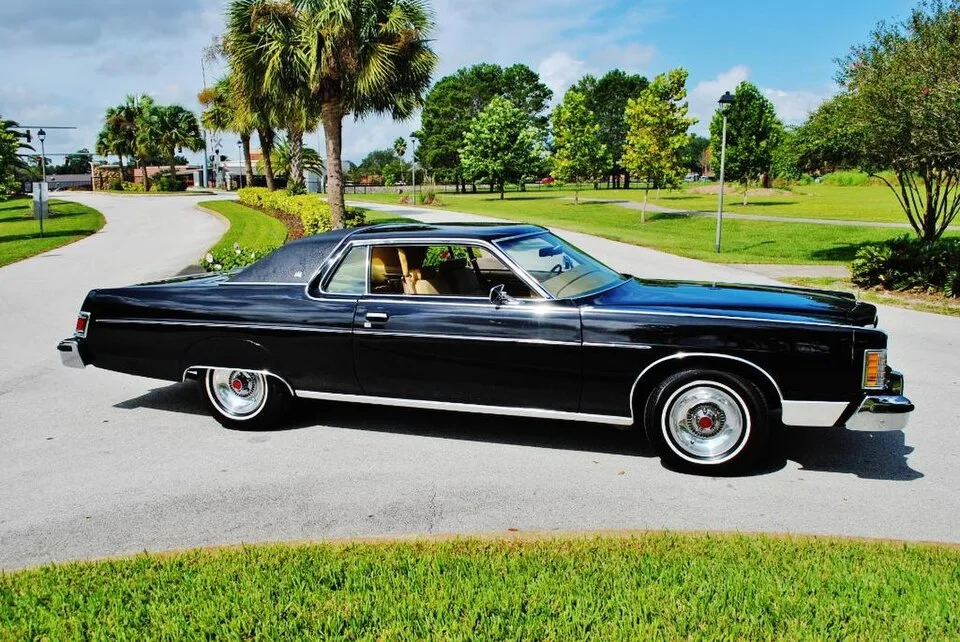
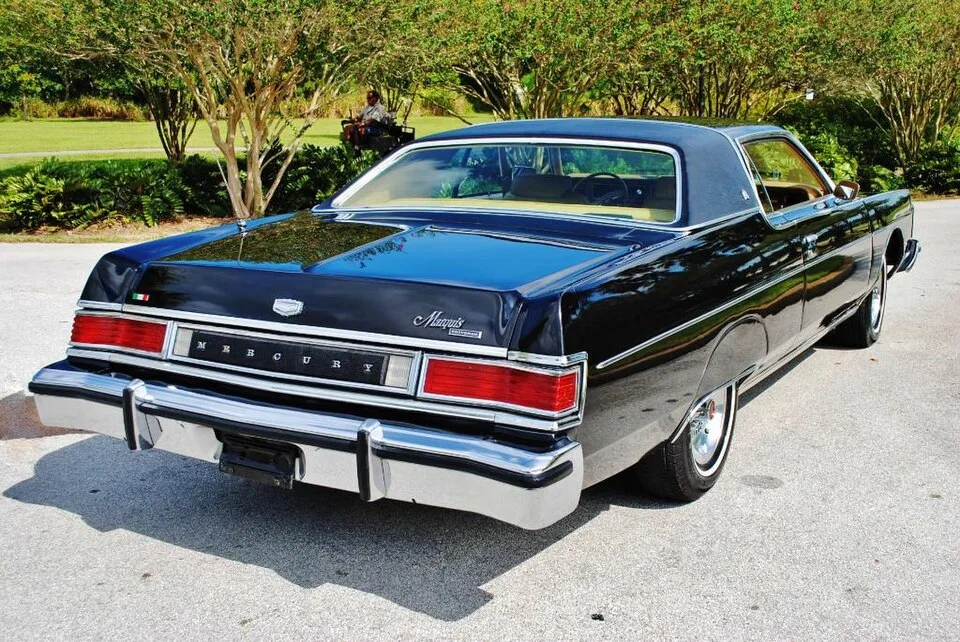
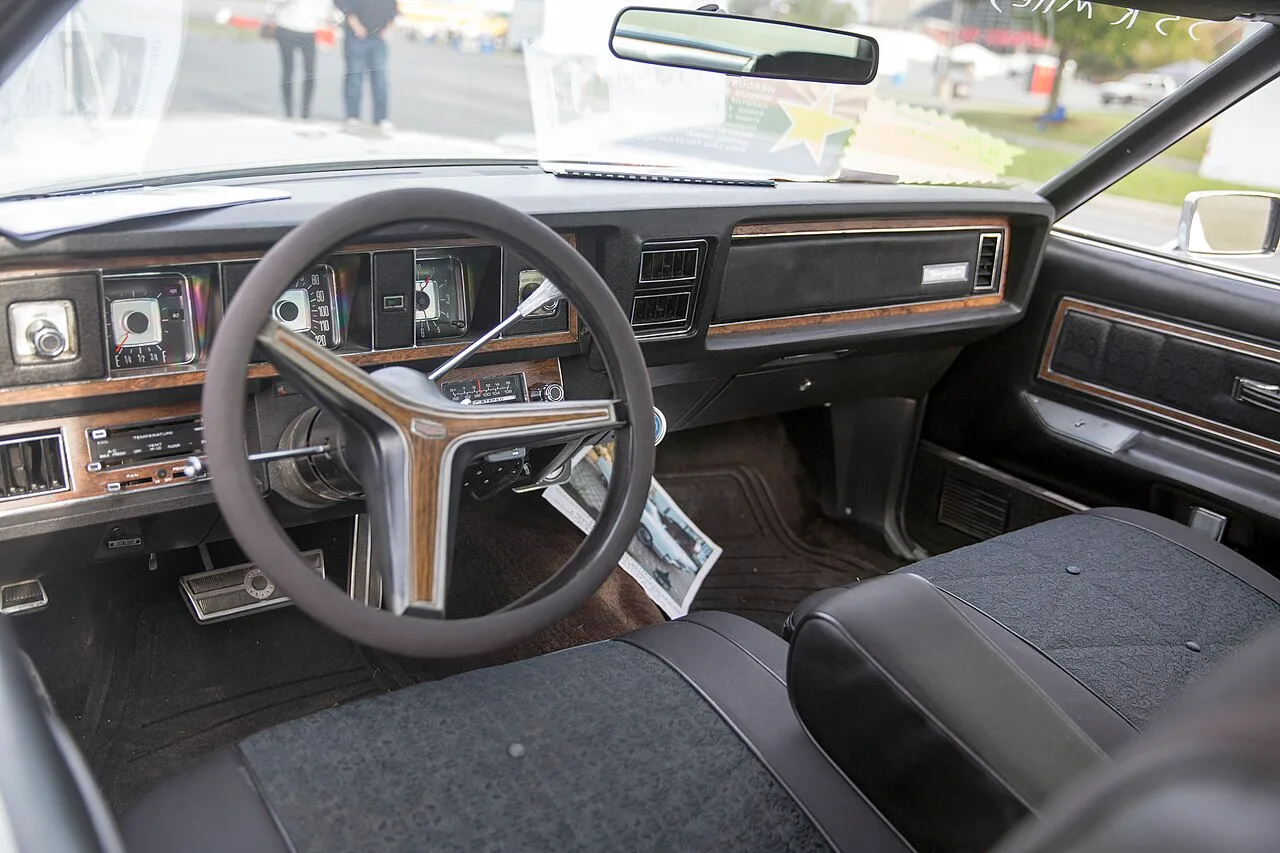
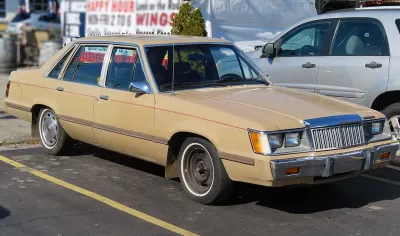
Canada got a Mercury the US never saw: the 1985 Marquis LTS packed a 165-hp Mustang V8 into a police-spec chassis, and only 134 were ever built.
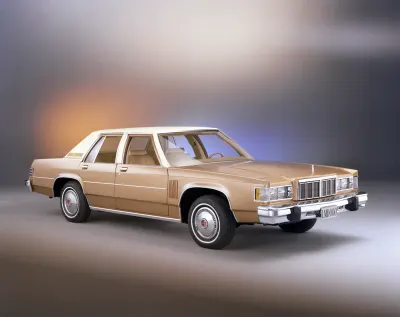
The 1979 Marquis hit a milestone no full-size Mercury wagon had managed since 1955: a curb weight under 4,000 pounds, trimmed way down from the car it replaced.
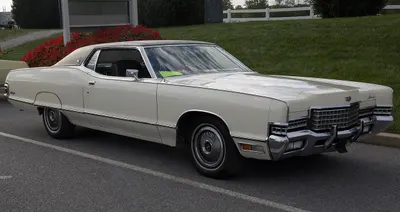
The 1978 Marquis was the end of an era: alongside the Chrysler New Yorker two-door, it was the last pillarless two-door hardtop any American automaker ever built.
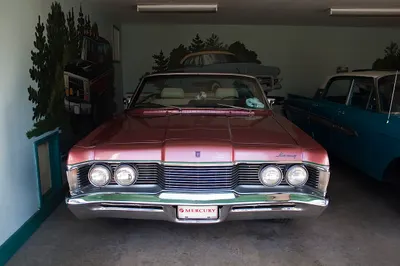
This Marquis previewed a seat design that took over American cars for two decades: its 50/50 split "Twin Comfort Lounge" bench mixed three-passenger capacity with the individual adjustment of bucket seats.
Rivals
Same body, same money, other badges — tap any card to flip.

It briefly served as senior sibling to Marquette, a GM companion brand cancelled after just one year.

Nissan hired former BMW engineers to help develop the 510's suspension, which is why period reviewers frequently compared its handling to the BMW 1600/2002.

A Trabant 601 won its class at the 1970 Monte Carlo Rally, with a second 601 right behind it in second.

The 600 was a stopgap: the P50's body over the 601's mechanicals, and for a while its estate was built alongside the new 601 saloon.

The G80 Sport brought a 370 PS twin-turbo 3.3 V6, a mesh grille and copper-tinted chrome with copper stitching to match.

The Vigor was sold only with a five-cylinder engine, an unusual configuration Honda used to fit a longer engine transversely under a short hood.

The GS/E coupe earned the nickname "German Charger" for its long hood, short deck stance borrowed from Detroit muscle cars.

This DeVille/Fleetwood was the first production car anywhere to mount its V8 sideways, Cadillac's front-drive gamble on the new C-body.