VerifiedFIRST · WORLDWIDEFIRST PRINTONLY ONE IN VANCOUVERMercedes called the 2013 W212 update a ‘facelift,’ but it poured close to €1 billion into the refresh — spending that rivaled launching an all-new model just to touch up a mid-cycle E-Class.

The Ponton nickname comes from pontoon-style bodywork that fused hood, fenders and running boards into one shape.
Lead trim: 180 (M136 1.8 petrol I4) · up to 75 hp
Nobody in Burbles has spotted a Mercedes-Benz E-Class yet. See one on the street, point the app at it, and the first card is yours — with your @handle permanently credited on this page.
FactThe Ponton nickname comes from pontoon-style bodywork that fused hood, fenders and running boards into one shape.
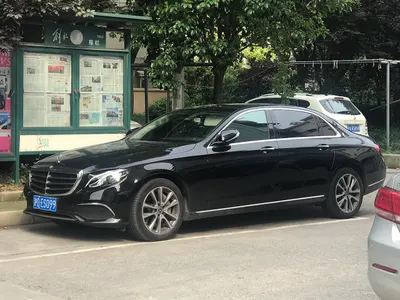
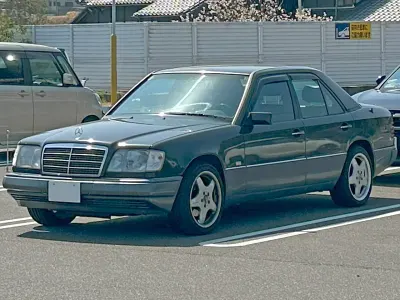
The Mercedes-Benz W120 and W121 are technically similar inline-four sedans of slightly different engine displacements, the 180 and 190, designed by Karl Wilfert: the W120 was introduced as the 180 in 1953 powered by the company's existing 1.8 litre M136 engine, and from 1954 was also offered with a diesel as the 180 D (the model table dates the 180D from 1953); the W121 debuted as the 190 in 1956 with a 1.9 litre M121 and from 1958 also had the OM621 diesel as the 190 D. The W120 was sold through 1962 and the W121 through 1961 (442,963 built), and each model's diesel received engine upgrades during its run; the 190 and 190 D were replaced by the W110 190c/190Dc in 1961. Together with the longer-wheelbase, more luxurious 2.2 litre six-cylinder W105 219, W180 220 and W128 220SE models, they constituted 80 percent of Mercedes-Benz' car production between 1953 and 1959, and the W120 was the first predecessor to the medium-size E-Class sedan line. The "Ponton" nickname comes from the pontoon-like styling that unified the hood, body, fenders and running boards into a single envelope. The cars have a self-supporting body, independent double-wishbone front suspension and a rear double-joint swing axle (until September 1955, single-joint afterwards), coil springs all round, recirculating ball steering and hydraulic drum brakes, with a synchronised four-speed constant-mesh gearbox whose small shift lever is on the steering column; most W120 and W121 cars were powered by the diesels, and rolling chassis with two or four doors were also available from the factory. The 180 and 190 were widely used as German taxis, and only these shorter Pontons had low-wattage parking clearance lights at the front bumper top and rear. In 1957 the 180's 56 PS (41 kW; 55 hp) M136 engine, originally designed for the 170 Sb, was replaced with a downtuned version of the 190's M121; at the 1959 Frankfurt Motor Show a slightly wider grille and slimmer taillights were introduced, the wider grille then carried onto the W110 "Fintail" successors. A related two-door roadster, the W121 B II 190SL, was produced from 1955 to 1963. Wheelbase is 2,650 mm (104.3 in) and length 4,460 mm (180) to 4,500 mm (180 b/c, 190 b). The page gives power for the M136 petrol only, so no power is entered for the others.
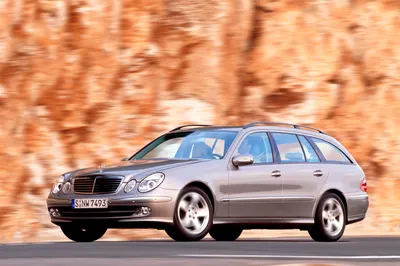
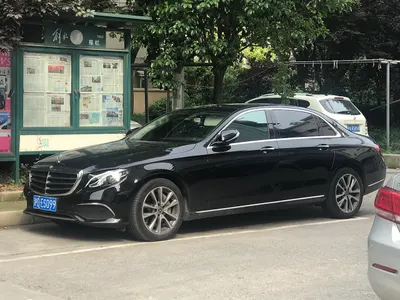
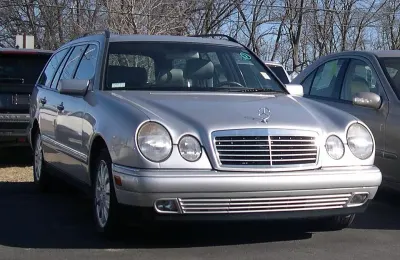
Real Mercedes-Benz E-Class cards spotted on the street by Burbles collectors. Tap any card to flip it over, inspect the collector’s binder, or follow them.
VerifiedFIRST · WORLDWIDEFIRST PRINTONLY ONE IN VANCOUVERMercedes called the 2013 W212 update a ‘facelift,’ but it poured close to €1 billion into the refresh — spending that rivaled launching an all-new model just to touch up a mid-cycle E-Class.
6 published trims in the catalogue. A blank is a figure not recorded, not zero.
| Trim | Years | Engine | Power | Torque | 0–60 | Drive | Gearbox | MSRP |
|---|---|---|---|---|---|---|---|---|
| 180 (M136 1.8 petrol I4) | 1953–1957 | 1.8 L Inline-4 | 55 hp | — | — | RWD | — | — |
| 180 D / 180 Db (OM636 1.8 diesel I4) | 1953–1961 | 1.8 L Inline-4 | 40 hp | — | — | RWD | — | — |
| 180 Dc (OM621 2.0 diesel I4) | 1961–1962 | 2.0 L Inline-4 | 52 hp | — | — | RWD | — | — |
| 180a / 180b / 180c (M121 1.9 petrol I4) | 1957–1962 | 1.9 L Inline-4 | — | — | — | RWD | — | — |
| 190 / 190 b (M121 1.9 petrol I4) | 1956–1961 | 1.9 L Inline-4 | 75 hp | — | — | RWD | — | — |
| 190 D / 190 Db (OM621 1.9 diesel I4) | 1958–1961 | 1.9 L Inline-4 | 50 hp | — | — | RWD | — | — |
We don’t estimate running costs for a car like this. What it costs depends on its condition, its specialist and how it is driven, and an average would mislead.
Nobody has claimed one yet.

With Race Start engaged, this straight-six plug-in hybrid makes 612 PS, the same as the outgoing E63.

This E-Class is the first Mercedes without an EQ badge to get the MBUX Superscreen — a tri-screen dash that streams TikTok, Zoom and Angry Birds and was previously reserved for the electric lineup.

The E53 is the AMG that breaks AMG's own myth: its inline-six isn't hand-assembled by one engineer. It's volume-built on a regular line, robots and all.

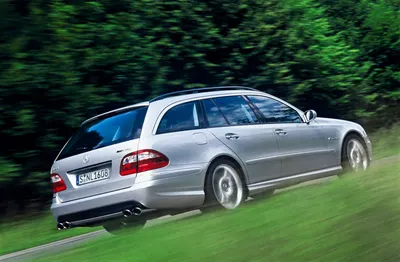
This high-performance E63 wagon has a second job — it's the official medical car that chases Formula 1 cars around the track.

The AMG E63 S wagon from this generation moonlights as motorsport's safety net — it's the official F1 medical car.

This E 43 was the first of a new AMG "43" tier, making more power than the badge it replaced — 401 PS versus the older line's 367 PS — before giving way to the E 53 in 2018.

The W212 E63 was the last E-Class AMG sedan sold with a naturally aspirated V8 before turbochargers took over for good.

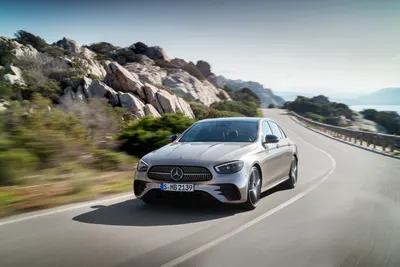
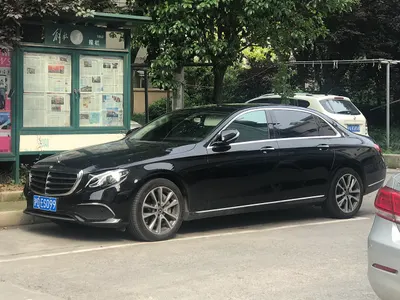
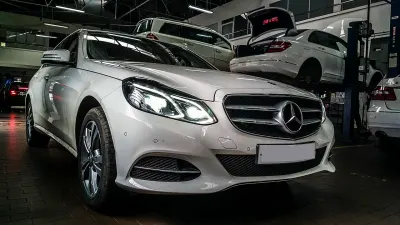
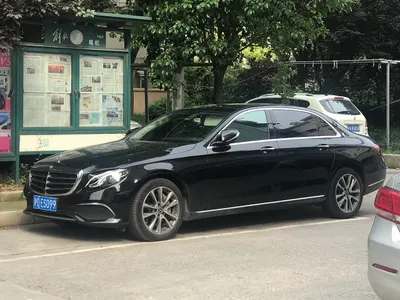
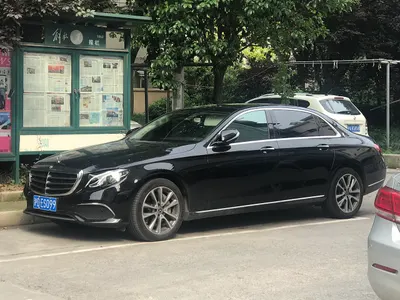
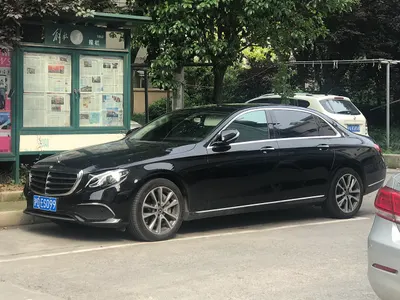
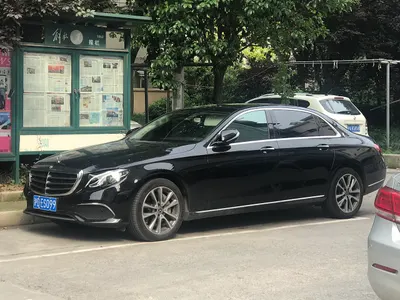
Mercedes called the 2013 W212 update a ‘facelift,’ but it poured close to €1 billion into the refresh — spending that rivaled launching an all-new model just to touch up a mid-cycle E-Class.

AMG actually dialed back torque for the E63 versus the old E55 — deliberately, so the engine could finally pair with the newer 7G-Tronic gearbox.

The E55 AMG shared its supercharged V8 with the SL55 AMG roadster but made less power from the exact same engine - a longer, narrower exhaust system was all that separated them.

The W211 was the first E-Class in nearly two decades to get dual windshield wipers — the previous one had made do with a single blade since 1985.

AMG quietly built a handful of all-wheel-drive E55 AMGs, based on the E430 4MATIC, for buyers who wanted the power without giving up grip.

Mercedes built the E55 AMG wagon for the rest of the world but deliberately kept it out of North America — even as the sedan sold there.

Mercedes built a stretched, long-wheelbase limousine version of the W210 E-Class specifically because Thailand's royal family asked for one.

Mercedes' own flagship S600 V12 got beaten off the line by one of its own mid-range sedans — the W124's E60 AMG hit 0-100 km/h in 5.2 seconds, quicker than the S-Class.

The W124 got by with just one windscreen wiper — an off-centre pivot let it sweep into the corners that a normal single arc would have missed.

German taxi fleets loved the W123 for one reason: drivers routinely passed 500,000 kilometres on the original engine with only minor repairs along the way.

US emissions rules and five-mph bumpers cut this car's six-cylinder from 160 hp in Europe to 122 hp in America by 1975.

The Ponton nickname comes from pontoon-style bodywork that fused hood, fenders and running boards into one shape.
Same body, same money, other badges — tap any card to flip.

It briefly served as senior sibling to Marquette, a GM companion brand cancelled after just one year.

Nissan hired former BMW engineers to help develop the 510's suspension, which is why period reviewers frequently compared its handling to the BMW 1600/2002.

A Trabant 601 won its class at the 1970 Monte Carlo Rally, with a second 601 right behind it in second.

The 600 was a stopgap: the P50's body over the 601's mechanicals, and for a while its estate was built alongside the new 601 saloon.

The G80 Sport brought a 370 PS twin-turbo 3.3 V6, a mesh grille and copper-tinted chrome with copper stitching to match.

The Vigor was sold only with a five-cylinder engine, an unusual configuration Honda used to fit a longer engine transversely under a short hood.

The GS/E coupe earned the nickname "German Charger" for its long hood, short deck stance borrowed from Detroit muscle cars.

This DeVille/Fleetwood was the first production car anywhere to mount its V8 sideways, Cadillac's front-drive gamble on the new C-body.