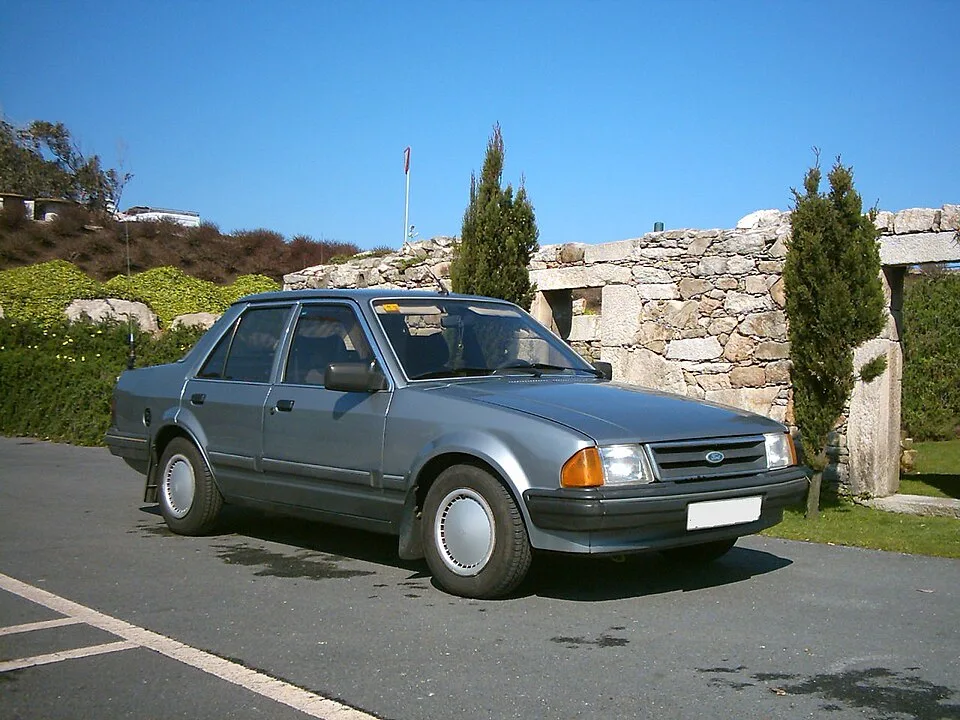
The fastest Orion Ford ever built arrived right at the end of the badge's life: the Mark III's Ghia Si hit 126 mph, quicker than any Orion in the model's ten-year run.
Median 134 hp across 312 similar cars
Lead trim: Orion 1.4 CVH · up to 130 hp
Ford Orion Mark III1990–1993
- 0spots by members
- Unclaimednobody has spotted one yet
- 0sets it belongs to
Nobody in Burbles has spotted a Ford Orion Mark III yet. See one on the street, point the app at it, and the first card is yours — with your @handle permanently credited on this page.
FactThe fastest Orion Ford ever built arrived right at the end of the badge's life: the Mark III's Ghia Si hit 126 mph, quicker than any Orion in the model's ten-year run.
The third and final version of the Orion, launched in September 1990, received the same criticism from the motoring media as the fifth-generation Escort for its lack of design flair and the disappointing refinement of some engines, particularly the 1.3 and 1.4-litre CVH petrol units. The arrival of the 1.6 and 1.8-litre Zetec 16-valve engines and suspension changes in late 1991 and late 1992 improved its dynamic qualities. The Mark III was identified at the front by clear indicator lenses and a chrome bar through the grille; the range-topping Orion Ghia Si (sports injection, 1992–1993) had 130 bhp from its 1.8-litre DOHC Zetec, the fastest production Orion in its ten-year life, with a top speed of 126 mph. A facelift in September 1992 for the 1993 model year added side-impact bars, front seatbelt pretensioners, a safety cage and body-colour door handles. Trim levels included L (1992–1993), LX, GLX (1990–1991), Ghia (1990–1993) and Ghia Si; it was considerably less popular than the pre-1990 cars, just missing the UK top 10 in 1991 and 1992. On 19 September 1993, ten years after its launch, Ford retired the Orion name and used Escort on all bodystyles (Vauxhall had dropped Belmont in September 1991); the Escort saloon was discontinued in October 1998.
Collectors Spotted in the Ford Orion Lineage
No member has published a public street spot of the Ford Orion yet — the First · Worldwide stamp is wide open.
Trims & Figures
5 published trims in the catalogue. A blank is a figure not recorded, not zero.
| Trim | Years | Engine | Power | Torque | 0–60 | Drive | Gearbox | MSRP |
|---|---|---|---|---|---|---|---|---|
| Orion 1.3 CVH (1296 cc) | 1990–1993 | 1.3 L Inline-4 | — | — | — | FWD | — | — |
| Orion 1.4 CVH | 1990–1993 | 1.4 L Inline-4 | 70 hp | 80 lb-ft | — | FWD | — | — |
| Orion 1.6 Zetec 16V (1597 cc) | 1991–1993 | 1.6 L Inline-4 | 128 hp | — | — | FWD | — | — |
| Orion 1.8 diesel (1753 cc) | 1990–1993 | 1.8 L Inline-4 | 59 hp | 81 lb-ft | — | FWD | — | — |
| Orion Ghia Si 1.8 Zetec 16V (130 bhp) | 1992–1993 | 1.8 L Inline-4 | 130 hp | 119 lb-ft | — | FWD | — | — |
Owning one
We don’t estimate running costs for a car like this. What it costs depends on its condition, its specialist and how it is driven, and an average would mislead.
Owners’ builds
Nobody has claimed one yet.
Photographs
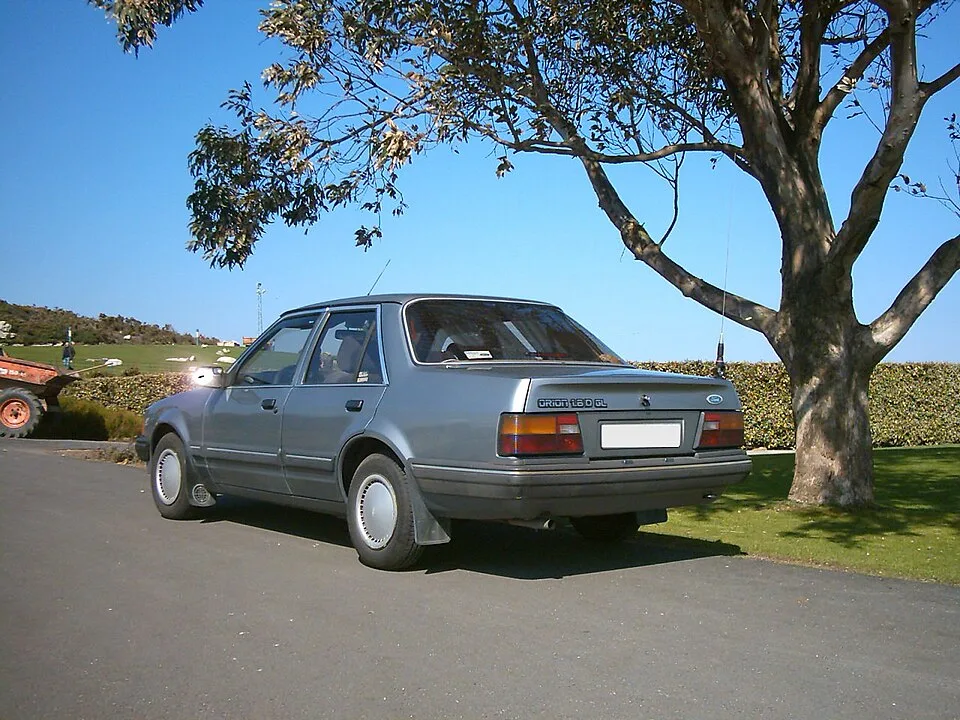
The fastest Orion Ford ever built arrived right at the end of the badge's life: the Mark III's Ghia Si hit 126 mph, quicker than any Orion in the model's ten-year run.
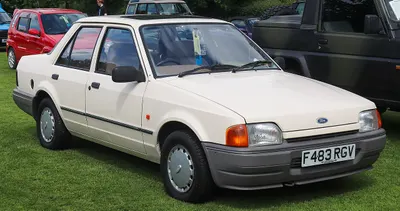
The Mark II facelift in 1986 gave this humble Ford a genuine luxury flex: optional anti-lock brakes and a heated windscreen, tech usually reserved for cars twice the price.
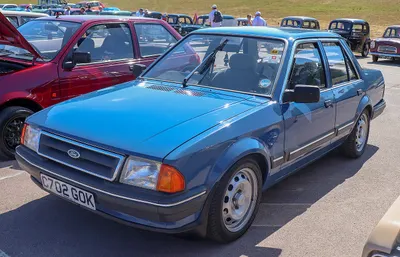
Ford held back the Orion's cheapest Escort-derived trims at launch, selling only GL and Ghia versions in 1983.
Rivals
Same body, same money, other badges — tap any card to flip.

It briefly served as senior sibling to Marquette, a GM companion brand cancelled after just one year.

Nissan hired former BMW engineers to help develop the 510's suspension, which is why period reviewers frequently compared its handling to the BMW 1600/2002.

A Trabant 601 won its class at the 1970 Monte Carlo Rally, with a second 601 right behind it in second.

The 600 was a stopgap: the P50's body over the 601's mechanicals, and for a while its estate was built alongside the new 601 saloon.

The G80 Sport brought a 370 PS twin-turbo 3.3 V6, a mesh grille and copper-tinted chrome with copper stitching to match.

The Vigor was sold only with a five-cylinder engine, an unusual configuration Honda used to fit a longer engine transversely under a short hood.

The GS/E coupe earned the nickname "German Charger" for its long hood, short deck stance borrowed from Detroit muscle cars.

This DeVille/Fleetwood was the first production car anywhere to mount its V8 sideways, Cadillac's front-drive gamble on the new C-body.