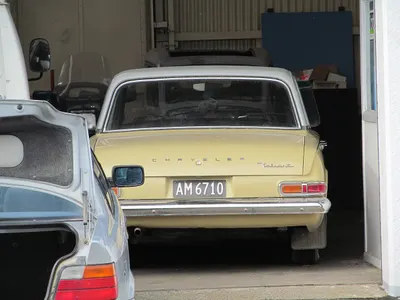
New Zealand held off launching the VJ for nearly a year after Australia, a 60 percent tax on big engines having killed the market's appetite.
Median 89 hp across 197 similar cars
Lead trim: VK Hemi-6 245 two-barrel · up to 255 hp
Chrysler Valiant VJ and VK1973–1976
- 0spots by members
- Unclaimednobody has spotted one yet
- 0sets it belongs to
Nobody in Burbles has spotted a Chrysler Valiant VJ and VK yet. See one on the street, point the app at it, and the first card is yours — with your @handle permanently credited on this page.
FactNew Zealand held off launching the VJ for nearly a year after Australia, a 60 percent tax on big engines having killed the market's appetite.
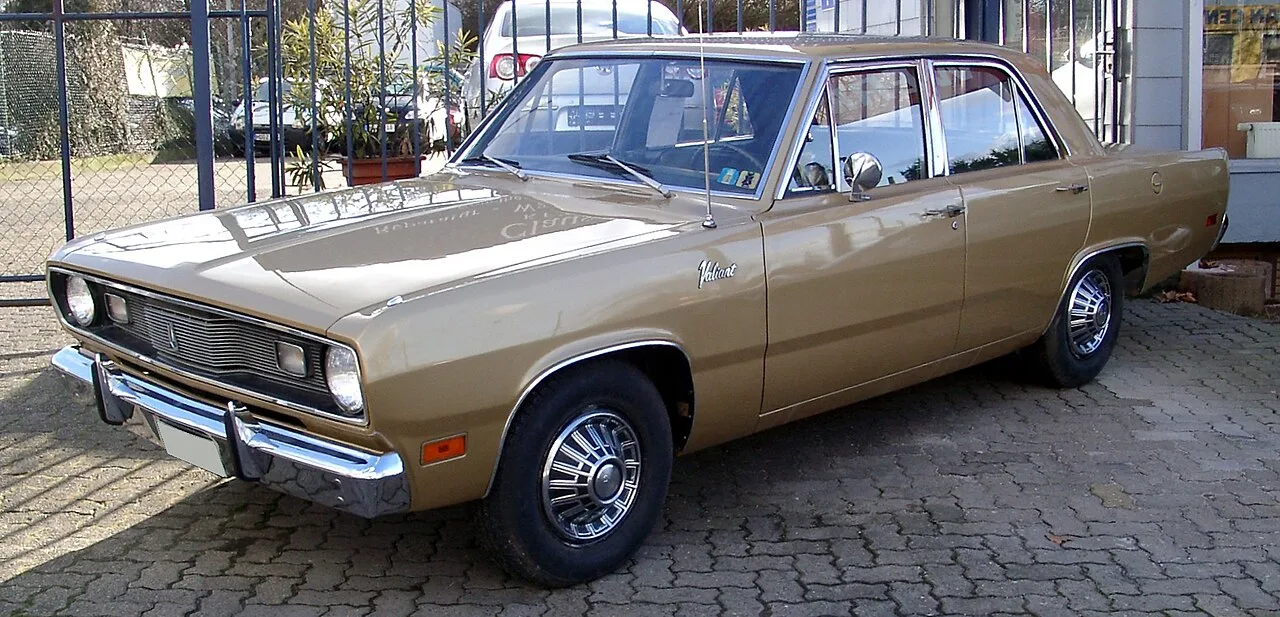
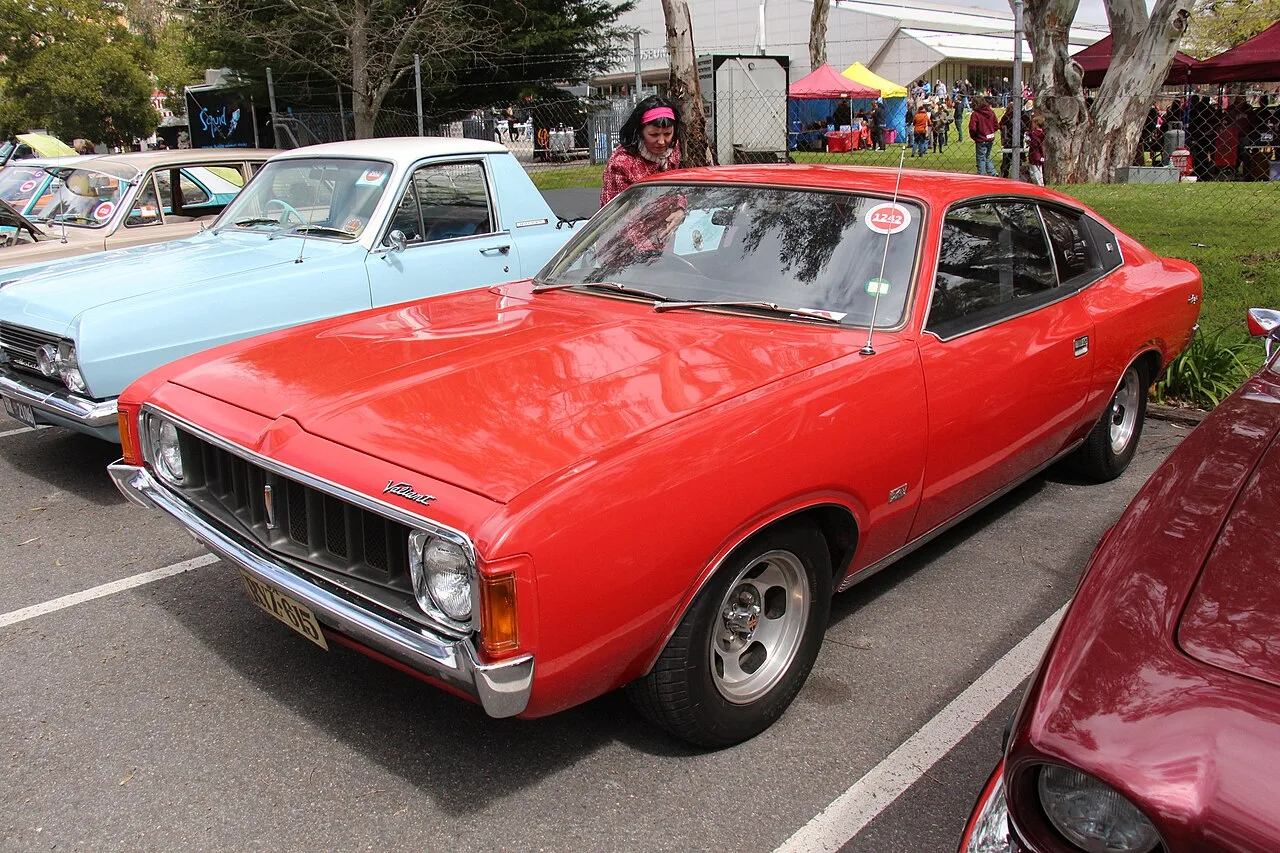
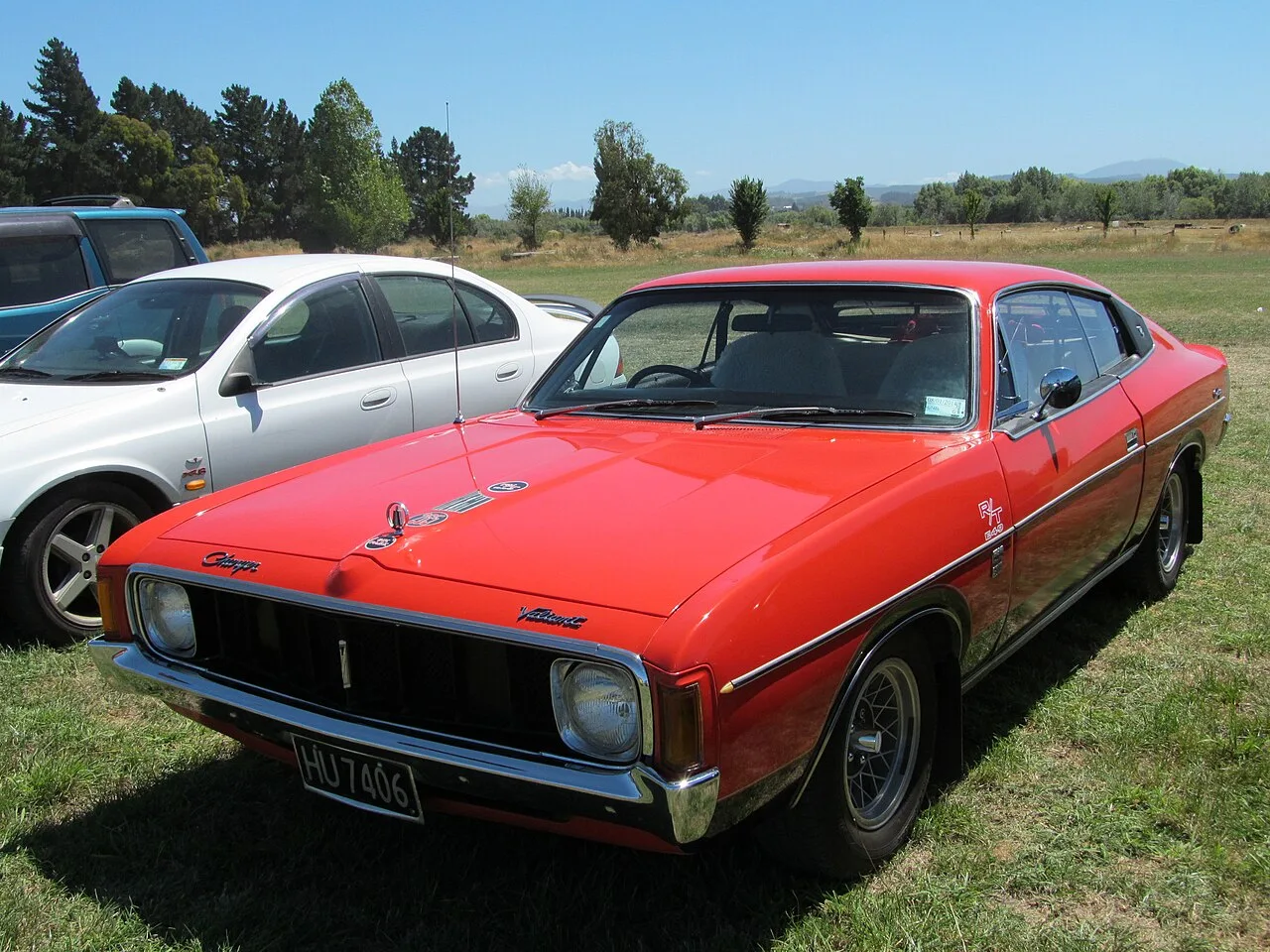
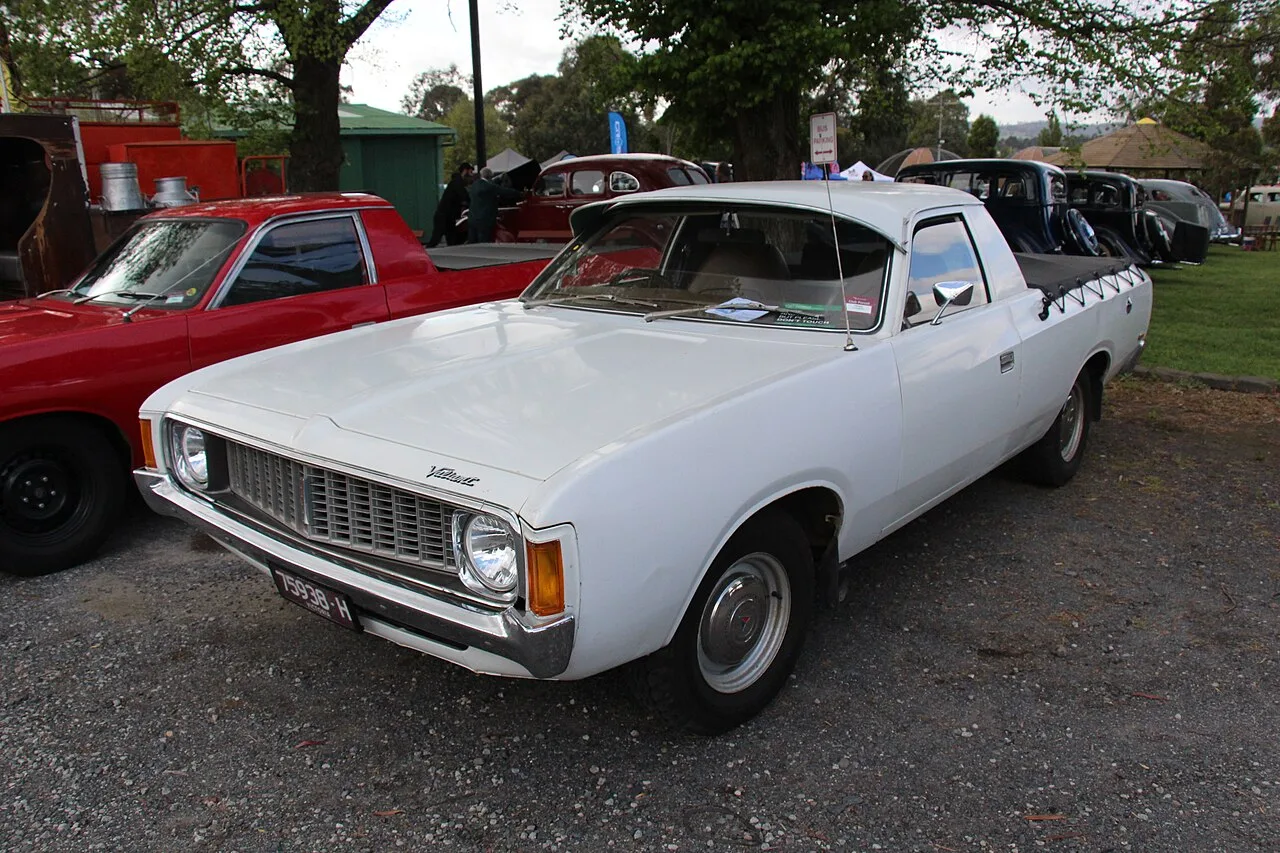
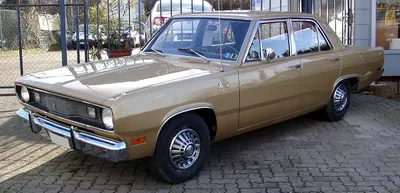
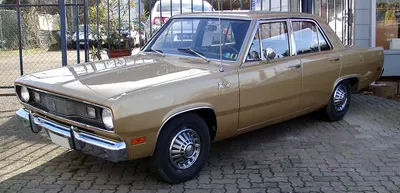
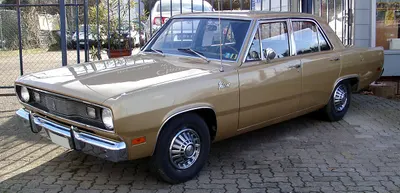
The VJ of May 1973 was essentially a facelifted VH (single 7-inch round headlamps and a new 8-segment grille) that became the biggest-selling Chrysler Valiant of all, with 90,865 sold; equipment was upgraded in July 1974 with front disc brakes, door reflectors, a lockable glovebox and retractable seat belts, a variation of the E37 Six Pack (now with a four-speed manual) was offered as option E48 (mostly on base VJ Charger coupés) and the 340 V8 E55 was restricted to the Charger 770 coupé. The VK (October 1975; 20,555 built, production ceasing in June 1976 because ADR 27A exhaust emission control became effective on 1 July 1976) had few external changes; its six-cylinder engines were the same as the VJ's and the 245 Hemi-6 now had a two-barrel carburettor like the 265, the V8s were mainly the 318 cu in (5.2 L) unit, with the 360 cu in (5.9 L) an option across the range. It was not very popular as the mid-1970s trend moved to smaller cars, and in New Zealand assembly began nearly a year after the Australian launch because a 60% sales tax on large-engine cars from the 1973–4 oil crisis slowed VJ sales. A Regal version was built for the South African Police as the SPP package (triple carburettors, uprated gearbox and differential, larger discs; about 2,000 built). The White Knight Special (A50, 200 made) is a Charger option.
Collectors Spotted in the Chrysler Valiant Lineage
No member has published a public street spot of the Chrysler Valiant yet — the First · Worldwide stamp is wide open.
Trims & Figures
3 published trims in the catalogue. A blank is a figure not recorded, not zero.
| Trim | Years | Engine | Power | Torque | 0–60 | Drive | Gearbox | MSRP |
|---|---|---|---|---|---|---|---|---|
| VK Hemi-6 245 two-barrel | 1975–1976 | 4.0 L | 111 hp | — | — | — | — | — |
| VK V8 318 | 1975–1976 | 5.2 L V8 | 230 hp | 340 lb-ft | — | — | — | — |
| VK V8 360 | 1975–1976 | 5.9 L V8 | 255 hp | 360 lb-ft | — | — | — | — |
Owning one
We don’t estimate running costs for a car like this. What it costs depends on its condition, its specialist and how it is driven, and an average would mislead.
Owners’ builds
Nobody has claimed one yet.
Photographs
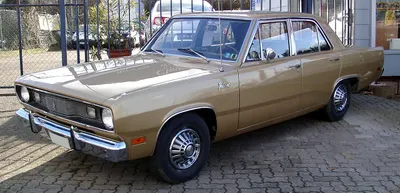
By 1979 a 4.0-litre Valiant with Electronic Lean Burn beat a 2.0-litre Ford Cortina on fuel in Wheels magazine's economy test.
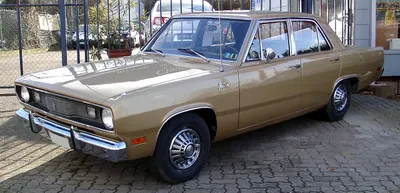
New Zealand held off launching the VJ for nearly a year after Australia, a 60 percent tax on big engines having killed the market's appetite.
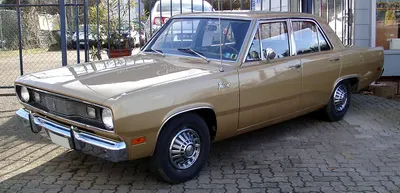
The VH was the first Valiant Chrysler Australia engineered entirely in-house, Charger included, ending reliance on Detroit.
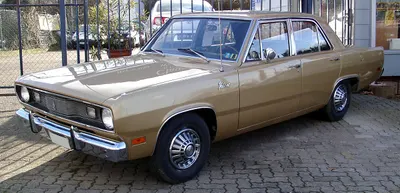
The VG Pacer's hardtop body lasted exactly six cars, three E31 and three E35, before Chrysler dropped the style for good.
The VF's new Hardtop grafted a Dodge Dart coupe body onto Valiant front sheetmetal — and at over 5,000mm, it's still the longest coupe ever built in Australia.
Though built on American bones, the locally-developed VE Valiant won something no US donor car ever did: Wheels magazine’s Car of the Year, Chrysler Australia’s first.
The Australian-built AP5 Valiant looked American but barely was one — Chrysler's local arm redesigned nearly everything, keeping just the doors, windscreen and front guards from its US counterpart.
Australia's first-ever Valiant quietly beat the rest of the local industry to a piece of modern electronics: it was the first Australian car built with an alternator instead of a generator.
Rivals
Same body, same money, other badges — tap any card to flip.

It briefly served as senior sibling to Marquette, a GM companion brand cancelled after just one year.

Nissan hired former BMW engineers to help develop the 510's suspension, which is why period reviewers frequently compared its handling to the BMW 1600/2002.

A Trabant 601 won its class at the 1970 Monte Carlo Rally, with a second 601 right behind it in second.

The 600 was a stopgap: the P50's body over the 601's mechanicals, and for a while its estate was built alongside the new 601 saloon.

The G80 Sport brought a 370 PS twin-turbo 3.3 V6, a mesh grille and copper-tinted chrome with copper stitching to match.

The Vigor was sold only with a five-cylinder engine, an unusual configuration Honda used to fit a longer engine transversely under a short hood.

The GS/E coupe earned the nickname "German Charger" for its long hood, short deck stance borrowed from Detroit muscle cars.

This DeVille/Fleetwood was the first production car anywhere to mount its V8 sideways, Cadillac's front-drive gamble on the new C-body.