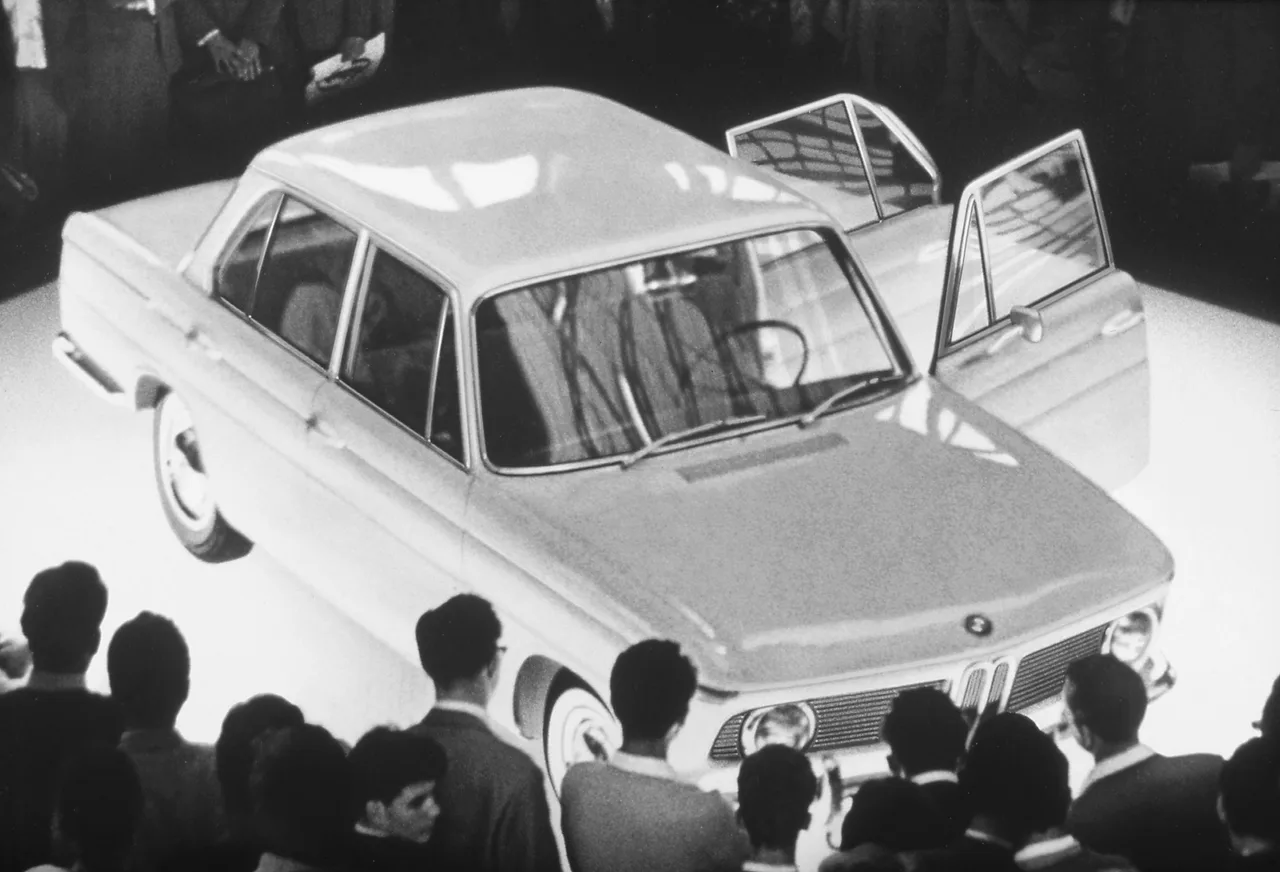
The New Class sedans that saved BMW from near-bankruptcy hid an odd trick under the hood: the engine was tilted 30 degrees sideways just to get the low, sleek bonnet line the stylists wanted.
Median 104 hp across 433 similar cars
Lead trim: 1500 (M10 1.5 I4) · up to 101 hp
BMW New Class sedan: 1500, 1600, 1800 and 2000NEUE-KLASSE-SEDAN · 1962–1972
- 0spots by members
- Unclaimednobody has spotted one yet
- 0sets it belongs to
Nobody in Burbles has spotted a BMW New Class sedan: 1500, 1600, 1800 and 2000 yet. See one on the street, point the app at it, and the first card is yours — with your @handle permanently credited on this page.
FactThe New Class sedans that saved BMW from near-bankruptcy hid an odd trick under the hood: the engine was tilted 30 degrees sideways just to get the low, sleek bonnet line the stylists wanted.
The BMW New Class (Neue Klasse) is a line of sedans and coupés produced by West German BMW between 1962 and 1972, models that ensured BMW's solvency after the financial crisis of the 1950s and again established the identity of BMW automobiles as luxury sports sedans. The first was the 1500, a 4-door compact executive car with the new M10 (then called M115) OHC four-cylinder engine, introduced in September 1961 at the Frankfurt Motor Show alongside the 3200 CS, the last BMW with the OHV V8; the "New Class" referred to the 1.5–2-litre class from which BMW had been absent since World War II, and it benefitted from meeting demand for the Borgward Isabella as Borgward had entered liquidation the year before. The project began in 1960 after Herbert and Harald Quandt invested heavily in BMW: led overall by Fritz Fiedler, with Eberhard Wolff in charge of chassis design, Wilhelm Hofmeister styling and body engineering (Giovanni Michelotti consulting) and Alex von Falkenhausen engine design, the first entirely new BMW car and engine since the 303 in 1933. The three-box saloon used a unitary structure and MacPherson strut front suspension, with independent rear suspension with coil springs and semi-trailing wishbones on a stout cross beam supporting the differential, and all New Class cars had front disc brakes; the M10 was canted 30 degrees to the right of vertical to allow the low bonnet line. In 1962 BMW broke even (turnover DM 294 million) and in 1963 sales rose 47% to DM 433 million, letting it pay dividends for the first time in 20 years. The 1500 (1962–1964, 23,807 built) was replaced by the 1600 in 1964 (10,278 built, though the 1500 stayed available where capacities over 1500 cc were taxed more highly); the 1800 followed in September 1963 (141,471 built, with a three-speed automatic option from the 1966 model year); and the 2000 (119,767 built) took the 2.0 L engine of the 2000 C and CS coupés, with unique rectangular headlights, distinctive wide taillights and more exterior trim (US cars had two pairs of round headlights). For 1969 the 1800 and 2000 got dual-circuit brakes, improved cabin heating and ventilation, a modernised dashboard and restyled grilles, and the 1800's engine was replaced by a 1,766 cc unit with the 2000's 89 mm bore and the original 71 mm stroke; in 1971 the 1800 got the 2000's rectangular headlights and wide taillights. Wheelbase 2,550 mm (100.4 in), length 4,500 mm (177.2 in), width 1,710 mm (67.3 in). The sedans were replaced by the E12 5 Series in 1972, the coupés by the E9, and the 02 Series is a shortened version of the sedan. The TI, TI/SA, tilux and tii performance versions are catalogued as their own generations, and the coupés as the New Class Coupé.
Collectors Spotted in the BMW New Class Lineage
No member has published a public street spot of the BMW New Class yet — the First · Worldwide stamp is wide open.
Trims & Figures
5 published trims in the catalogue. A blank is a figure not recorded, not zero.
| Trim | Years | Engine | Power | Torque | 0–60 | Drive | Gearbox | MSRP |
|---|---|---|---|---|---|---|---|---|
| 1500 (M10 1.5 I4) | 1962–1964 | 1.5 L Inline-4 | 80 hp | 87 lb-ft | — | RWD | — | — |
| 1600 (M10 1.6 I4) | 1964–1966 | 1.6 L Inline-4 | 83 hp | 83 lb-ft | — | RWD | — | — |
| 1800 (M10 1.8 I4, 1,766 cc from 1968) | 1968–1971 | 1.8 L Inline-4 | 89 hp | 96 lb-ft | — | RWD | — | — |
| 1800 (M10 1.8 I4, 1,773 cc) | 1963–1968 | 1.8 L Inline-4 | 90 hp | 96 lb-ft | — | RWD | — | — |
| 2000 (M10 2.0 I4) | 1966–1972 | 2.0 L Inline-4 | 101 hp | 116 lb-ft | — | RWD | — | — |
Owning one
We don’t estimate running costs for a car like this. What it costs depends on its condition, its specialist and how it is driven, and an average would mislead.
Owners’ builds
Nobody has claimed one yet.
In the Community
Open CommunityNo notes tagged with the BMW New Class sedan: 1500, 1600, 1800 and 2000 yet.
Photographs
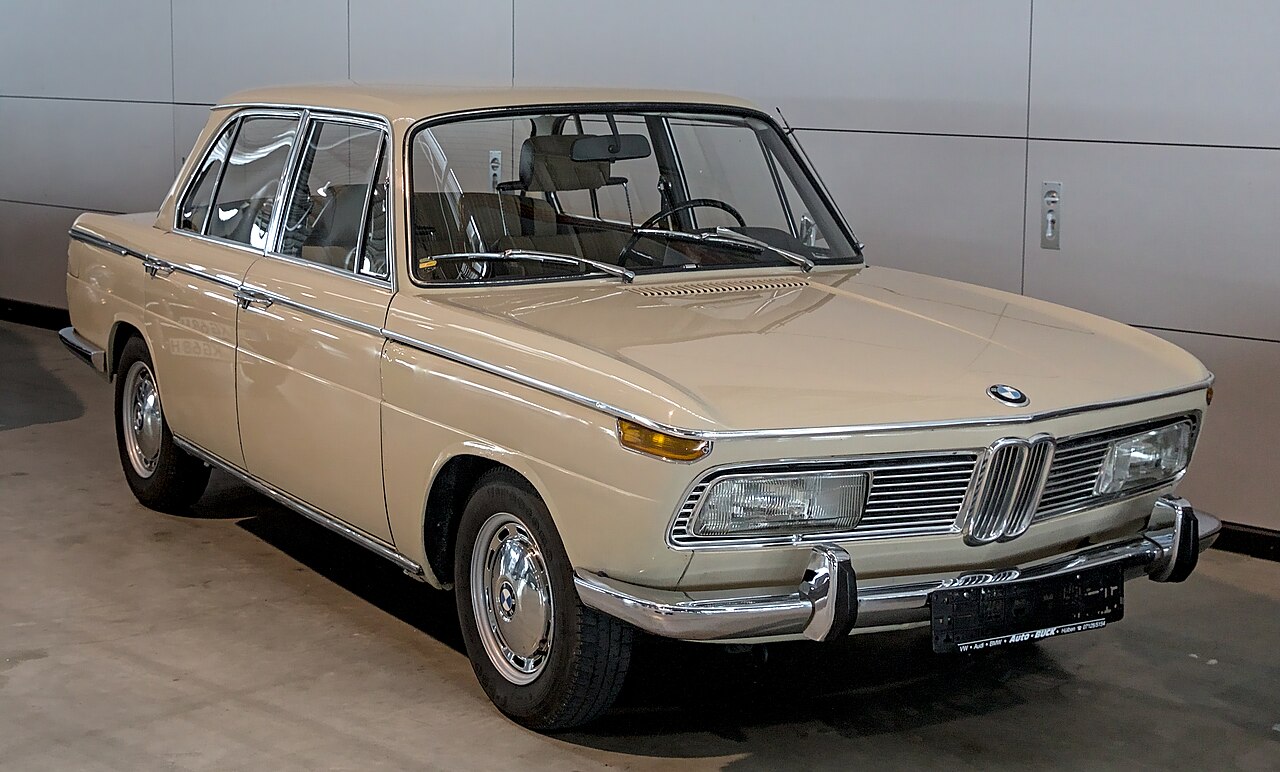
BMW's entire modern reputation for fuel injection started here — the 2000 tii was the very first fuel-injected BMW ever built.
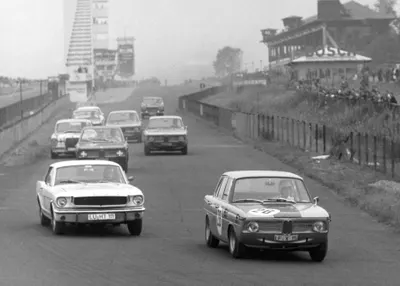
The 2000 tilux split the difference on purpose: the sportier TI's engine and chassis, wrapped in the plush 2000's styling, wood dashboard and optional leather seats.
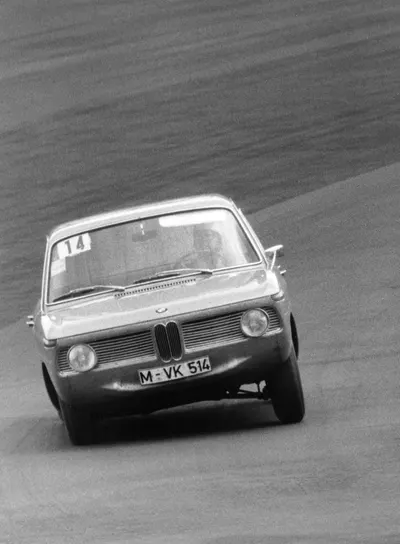
BMW's 1800 TI performance upgrades weren't developed in-house — they came from outside tuner Alpina, years before Alpina became BMW's own factory performance arm.
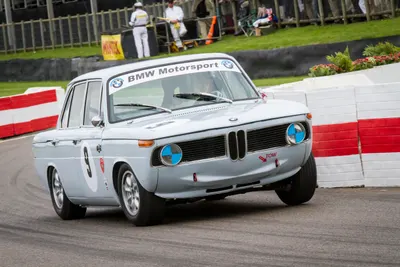
Only 200 examples of this homologation-special 1800 TI/SA were built, sold exclusively to licensed racing and sports drivers - and one won the 1965 Spa 24 Hours.
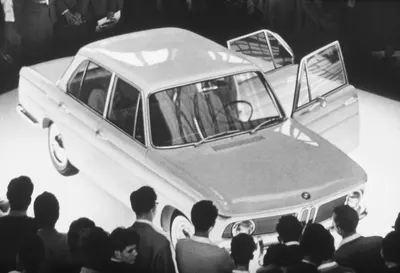
The New Class sedans that saved BMW from near-bankruptcy hid an odd trick under the hood: the engine was tilted 30 degrees sideways just to get the low, sleek bonnet line the stylists wanted.
Rivals
Same body, same money, other badges — tap any card to flip.

It briefly served as senior sibling to Marquette, a GM companion brand cancelled after just one year.

Nissan hired former BMW engineers to help develop the 510's suspension, which is why period reviewers frequently compared its handling to the BMW 1600/2002.

A Trabant 601 won its class at the 1970 Monte Carlo Rally, with a second 601 right behind it in second.

The 600 was a stopgap: the P50's body over the 601's mechanicals, and for a while its estate was built alongside the new 601 saloon.

The G80 Sport brought a 370 PS twin-turbo 3.3 V6, a mesh grille and copper-tinted chrome with copper stitching to match.

The Vigor was sold only with a five-cylinder engine, an unusual configuration Honda used to fit a longer engine transversely under a short hood.

The GS/E coupe earned the nickname "German Charger" for its long hood, short deck stance borrowed from Detroit muscle cars.

This DeVille/Fleetwood was the first production car anywhere to mount its V8 sideways, Cadillac's front-drive gamble on the new C-body.