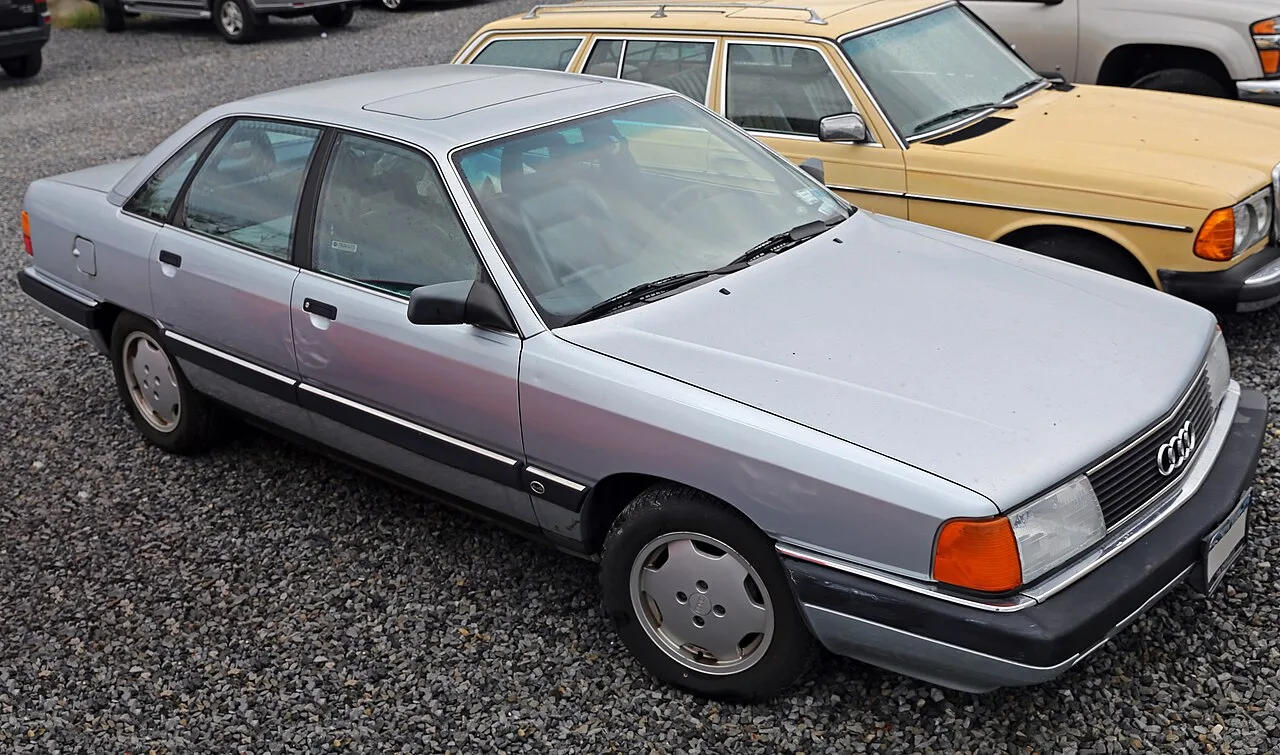
Its flush pin-mounted windows gave the base model a 0.30 drag coefficient, and it introduced Audi's procon-ten crash system.
Lead trim: 100 1.8 (75 PS) · up to 217 hp
Audi 1001982–1991
- 0spots by members
- Unclaimednobody has spotted one yet
- 0sets it belongs to
Nobody in Burbles has spotted a Audi 100 yet. See one on the street, point the app at it, and the first card is yours — with your @handle permanently credited on this page.
FactIts flush pin-mounted windows gave the base model a 0.30 drag coefficient, and it introduced Audi's procon-ten crash system.
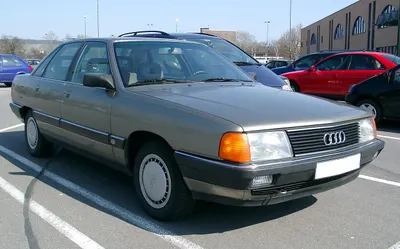
The third-generation Audi 100 launched in September 1982 with aerodynamic styling that gave a drag coefficient of 0.30 on the base model, with pin-mounted flush windows, and introduced the procon-ten restraint system. Two-door models were no longer offered, and the 100 Avant was positioned as a station wagon rather than a hatchback. The 200, launched in 1983, continued as the upmarket variant with several versions of a 2.2 L turbo five-cylinder, from 165 PS through 200 PS to a final 220 PS 20-valve engine from 1991, and the 1983 Audi 200 Turbo had a top speed of 139 mph. The car received a minor facelift in January 1988, and in January 1990 the 100 became the first model to wear the TDI label, with a 2.5 L straight-five direct-injection turbodiesel of 120 PS. It was sold as the 5000 in North America. The Audi V8 used an enlarged version of its bodyshell. About 1,078,443 were built, 852,243 100s, 122,852 100 Avants, 97,195 200s and 6,153 200 Avants, in calendar-year figures that may include late C2 production.
Collectors Spotted in the Audi 100 Lineage
No member has published a public street spot of the Audi 100 yet — the First · Worldwide stamp is wide open.
Trims & Figures
25 published trims in the catalogue. A blank is a figure not recorded, not zero.
| Trim | Years | Engine | Power | Torque | 0–60 | Drive | Gearbox | MSRP |
|---|---|---|---|---|---|---|---|---|
| 100 1.8 (75 PS) | 1982–1987 | 1.8 L Inline-4 | 74 hp | 102 lb-ft | — | — | — | — |
| 100 1.8 (90 PS) | 1983–1990 | 1.8 L Inline-4 | 89 hp | 106 lb-ft | — | — | — | — |
| 100 1.9 five-cylinder (100 PS) | 1982–1984 | 1.9 L Inline-5 | 99 hp | 111 lb-ft | — | — | — | — |
| 100 2.0 diesel five-cylinder (70 PS) | 1982–1989 | 2.0 L Inline-5 | 69 hp | 90 lb-ft | — | — | — | — |
| 100 2.0 five-cylinder (115 PS) | 1984–1990 | 2.0 L Inline-5 | 113 hp | 125 lb-ft | — | — | — | — |
| 100 2.0 turbodiesel five-cylinder (100 PS) | 1988–1989 | 2.0 L Inline-5 | 99 hp | 142 lb-ft | — | — | — | — |
| 100 2.0 turbodiesel five-cylinder (87 PS) | 1983–1988 | 2.0 L Inline-5 | 86 hp | — | — | — | — | — |
| 100 2.1 five-cylinder (136 PS) | 1982–1984 | 2.1 L Inline-5 | 134 hp | 132 lb-ft | — | — | — | — |
| 100 2.2 five-cylinder (138 PS) | 1984–1990 | 2.2 L Inline-5 | 136 hp | 139 lb-ft | — | — | — | — |
| 100 2.2 five-cylinder catalyst (115 PS) | 1984–1987 | 2.2 L Inline-5 | 113 hp | 122 lb-ft | — | — | — | — |
| 100 2.2 turbo five-cylinder (165 PS) | 1986–1990 | 2.2 L Inline-5 | 163 hp | 177 lb-ft | — | — | — | — |
| 100 2.3 five-cylinder catalyst (136 PS) | 1986–1990 | 2.3 L Inline-5 | 134 hp | 140 lb-ft | — | — | — | — |
| 100 2.4 diesel five-cylinder (82 PS) | 1989–1990 | 2.4 L Inline-5 | 81 hp | 120 lb-ft | — | — | — | — |
| 100 2.5 TDI five-cylinder (120 PS) | 1990–1990 | 2.5 L Inline-5 | 118 hp | 195 lb-ft | — | — | — | — |
| 200 2.1 turbo five-cylinder (182 PS) | 1983–1987 | 2.1 L Inline-5 | 180 hp | 186 lb-ft | — | — | — | — |
| 200 2.2 turbo five-cylinder (165 PS) | 1985–1991 | 2.2 L Inline-5 | 163 hp | 177 lb-ft | — | — | — | — |
| 200 2.2 turbo five-cylinder (200 PS) | 1988–1990 | 2.2 L Inline-5 | 197 hp | 199 lb-ft | — | — | — | — |
| 200 Quattro 20V 2.2 turbo five-cylinder (220 PS) | 1989–1991 | 2.2 L Inline-5 | 217 hp | 228 lb-ft | — | AWD | — | — |
| 5000 2.1 (North America, 100 hp) | 1984–1984 | 2.1 L Inline-5 | 100 hp | 107 lb-ft | — | — | — | — |
| 5000 2.2 (North America, 110 hp) | 1986–1987 | 2.2 L Inline-5 | 110 hp | 122 lb-ft | — | — | — | — |
| 5000 2.2 (North America, 115 hp) | 1985–1985 | 2.2 L Inline-5 | 115 hp | 126 lb-ft | — | — | — | — |
| 5000 2.3 (North America, 130 hp) | 1987–1991 | 2.3 L Inline-5 | 130 hp | 140 lb-ft | — | — | — | — |
| 5000 Turbo 2.1 (North America, 140 hp) | 1984–1985 | 2.1 L Inline-5 | 140 hp | — | — | — | — | — |
| 5000 Turbo 2.2 (North America, 158 hp) | 1986–1987 | 2.2 L Inline-5 | 158 hp | 166 lb-ft | — | — | — | — |
| 5000 Turbo 2.2 (North America, 162 hp) | 1987–1991 | 2.2 L Inline-5 | 162 hp | 177 lb-ft | — | — | — | — |
Owning one
We don’t estimate running costs for a car like this. What it costs depends on its condition, its specialist and how it is driven, and an average would mislead.
Owners’ builds
Nobody has claimed one yet.
Photographs
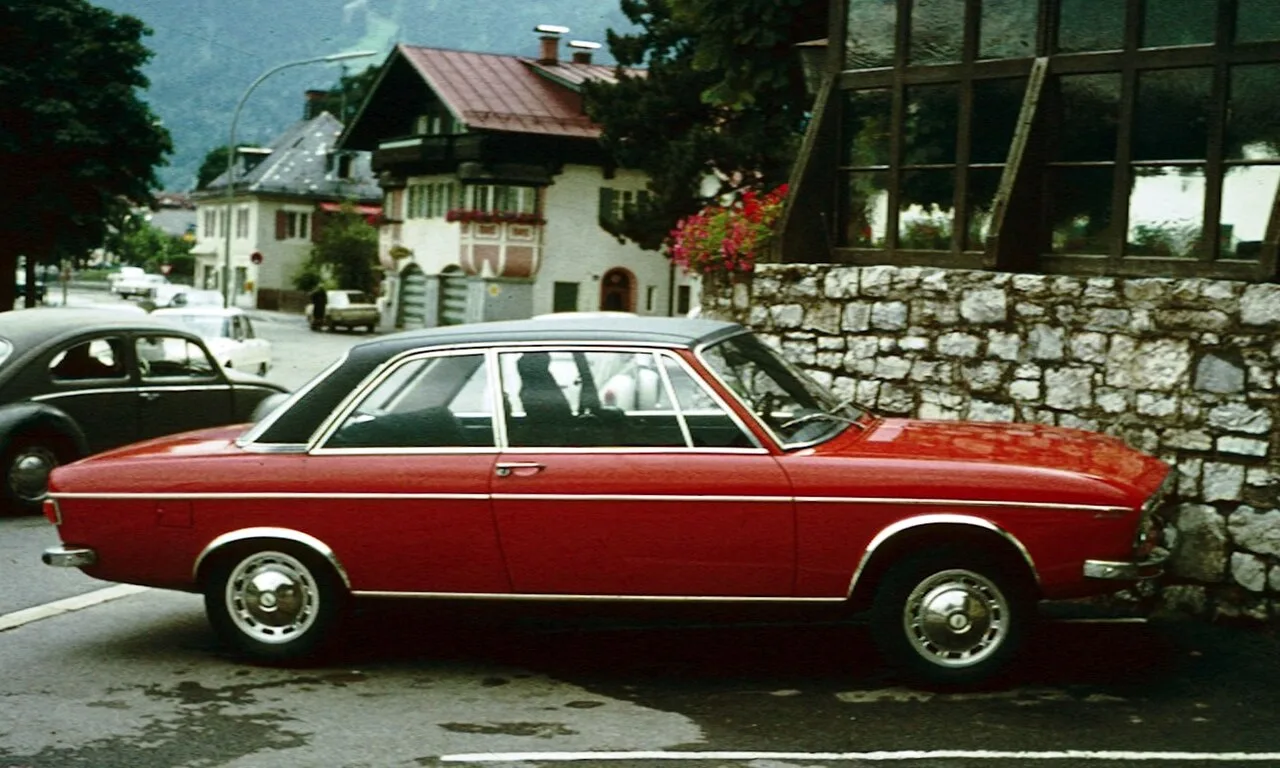
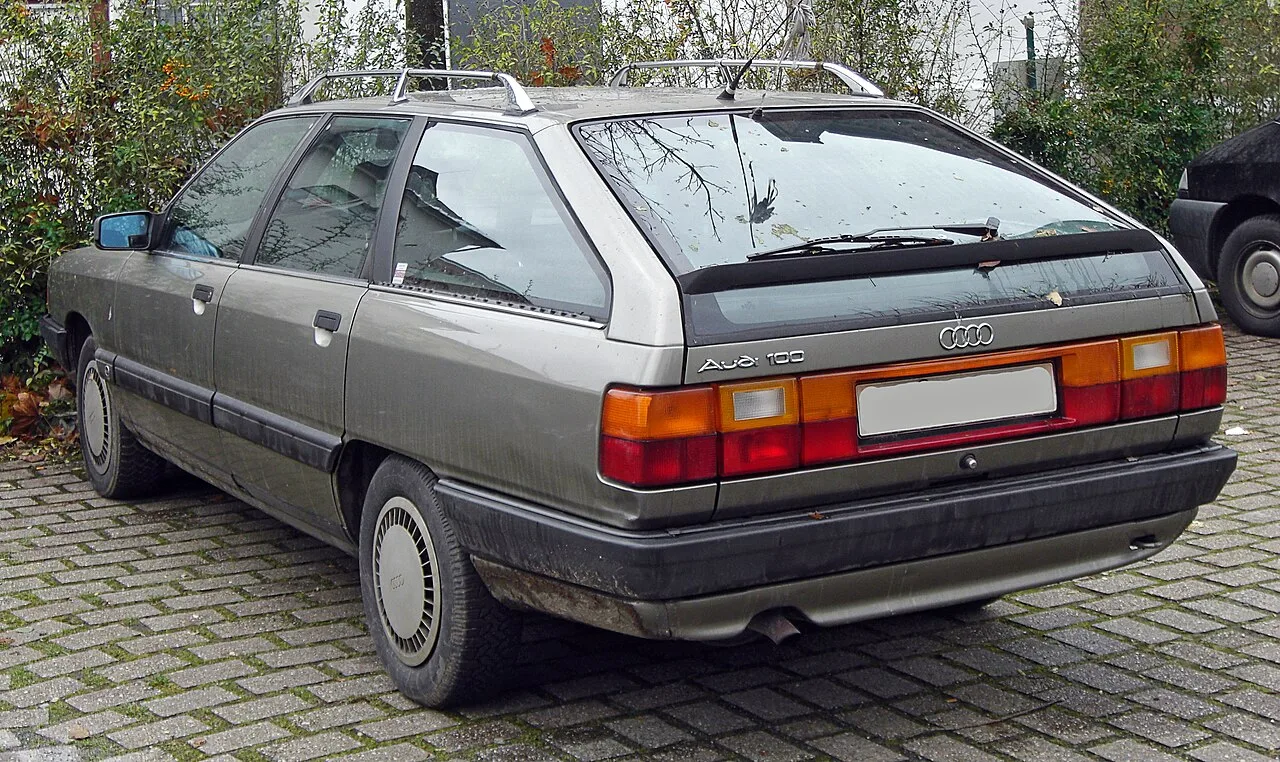
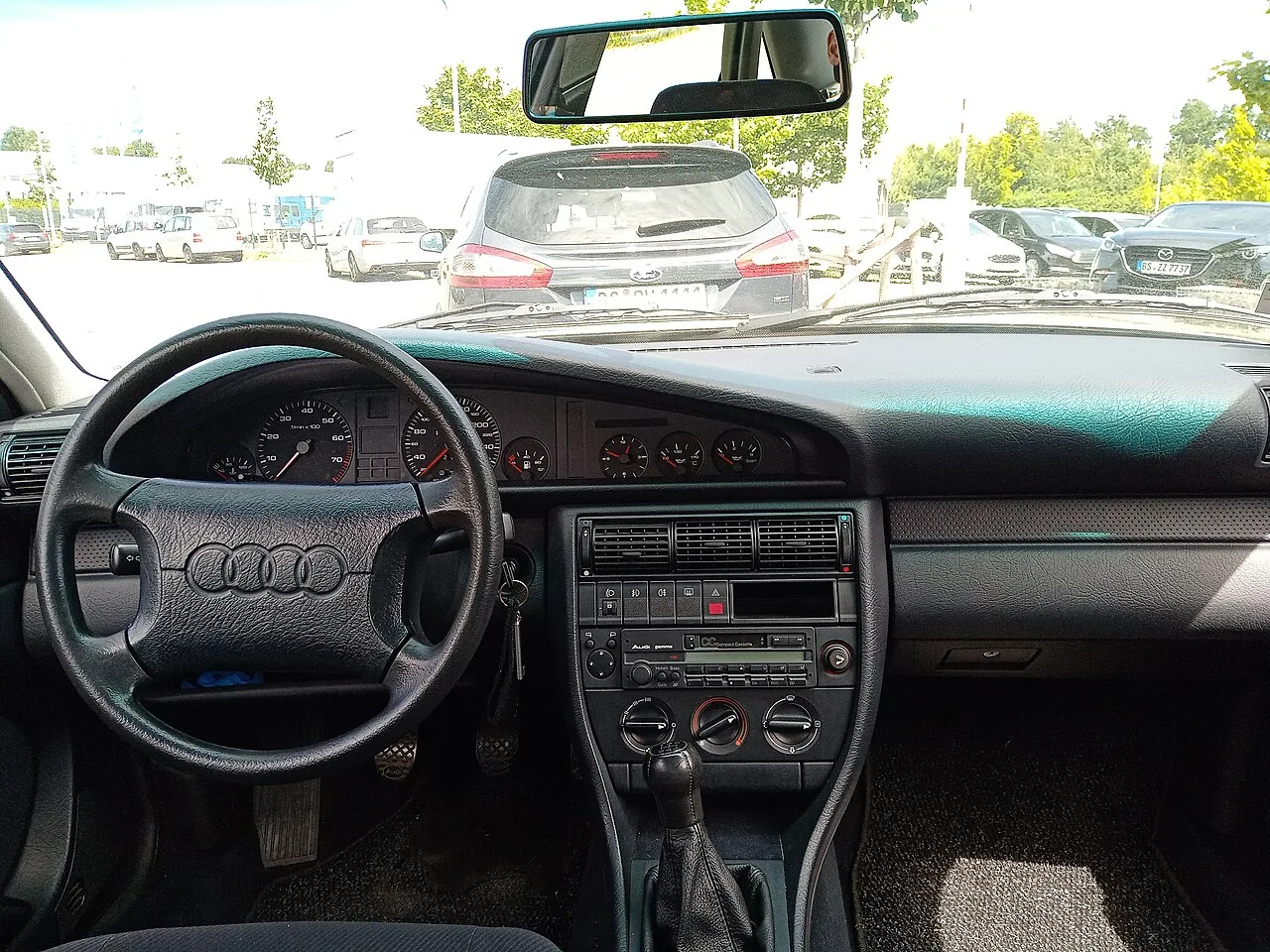
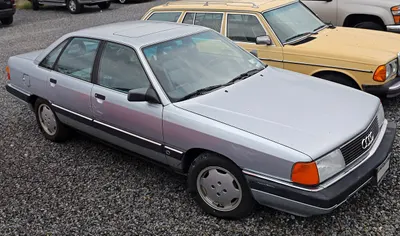
This Audi 100 didn't get replaced in 1994 — it got renamed. Audi dropped the '100' badge and called the same car the A6, while its hot-rod S4 derivative became the S6.
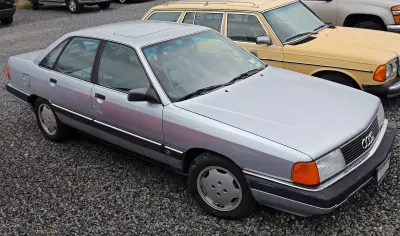
The TDI badge that would define a generation of Audi diesels debuted right here, in January 1990, on this C3 100 — and lasted barely a year before the C4 replaced it.
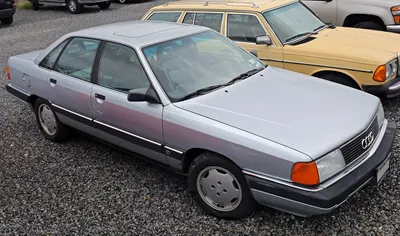
Its flush pin-mounted windows gave the base model a 0.30 drag coefficient, and it introduced Audi's procon-ten crash system.
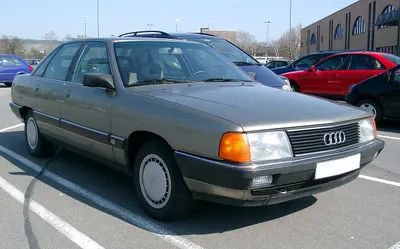
This generation carried the world's first inline five-cylinder petrol engine and became Audi's first car to reach a million built.
The 100 badge was never a model number, it was the horsepower rating, 100 PS, at launch.
Rivals
Same body, same money, other badges — tap any card to flip.

It briefly served as senior sibling to Marquette, a GM companion brand cancelled after just one year.

Nissan hired former BMW engineers to help develop the 510's suspension, which is why period reviewers frequently compared its handling to the BMW 1600/2002.

A Trabant 601 won its class at the 1970 Monte Carlo Rally, with a second 601 right behind it in second.

The 600 was a stopgap: the P50's body over the 601's mechanicals, and for a while its estate was built alongside the new 601 saloon.

The G80 Sport brought a 370 PS twin-turbo 3.3 V6, a mesh grille and copper-tinted chrome with copper stitching to match.

The Vigor was sold only with a five-cylinder engine, an unusual configuration Honda used to fit a longer engine transversely under a short hood.

The GS/E coupe earned the nickname "German Charger" for its long hood, short deck stance borrowed from Detroit muscle cars.

This DeVille/Fleetwood was the first production car anywhere to mount its V8 sideways, Cadillac's front-drive gamble on the new C-body.