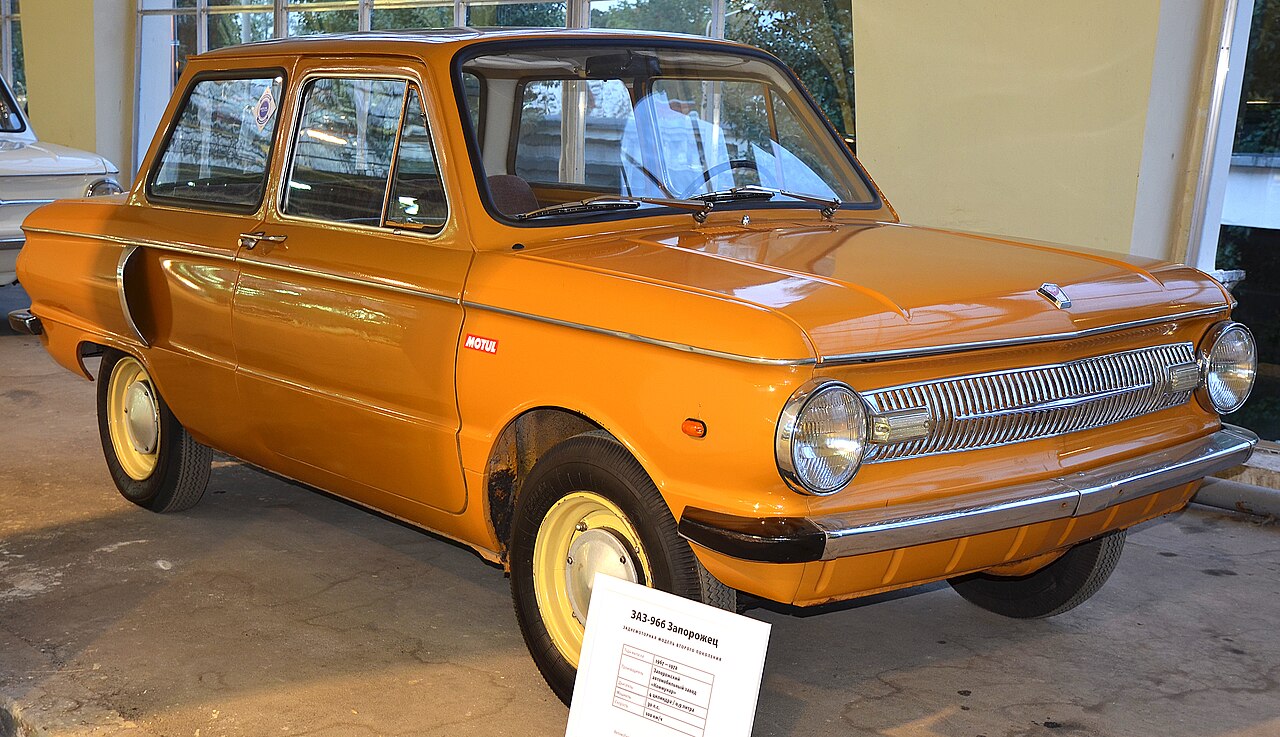
One Zaporozhets variant was built so a driver missing one arm and one leg could drive it: a joystick-style steering wheel for the hand, a thigh-operated gear selector for the leg.
Lead trim: ZAZ-966V 887 cc MeMZ-966A V4 (30 PS) · up to 50 hp
ZAZ Zaporozhets1966–1994
- 0spots by members
- Unclaimednobody has spotted one yet
- 0sets it belongs to
Nobody in Burbles has spotted a ZAZ Zaporozhets yet. See one on the street, point the app at it, and the first card is yours — with your @handle permanently credited on this page.
FactOne Zaporozhets variant was built so a driver missing one arm and one leg could drive it: a joystick-style steering wheel for the hand, a thigh-operated gear selector for the leg.
The second-generation Zaporozhets, from November 1966 to 1 June 1994, is a two-door notchback supermini with the same air-cooled rear V4, restyled entirely by ZAZ so that it no longer resembled the Fiat 600 (more like the Corvair, Hillman Imp or NSU Prinz), with the "ears" (round air intakes each side) that gave rise to the nickname "ushastyi". The ZAZ-966 (1966–1972; prototype shown in 1961) began as the 966V with the 30 PS 887 cc MeMZ-966A and a standard radio, ran alongside the 965A until May 1969, and in 1968 the upgraded 966B got the new 40 PS 1,197 cc MeMZ-968 V4 (780 kg, top speed 75 mph); some markets swapped in a 956 cc Renault unit. The ZAZ-968 (1971–1978) kept the 40 hp engine with a horizontal chrome trim in place of the fake grille and better front brakes, the 968A (1973–1980) added a new steering wheel and plastic dash, and the up-market 968A of late 1974 had a padded dash, a collapsing steering column and VAZ-2101 seats. The ZAZ-968M of 1979 (prototyped in 1977) had the ears removed, black plastic trim, louvered bonnet and rear quarters and a glove box, with the 40 hp MeMZ-968E (76-octane), the dual-carburettor ZAZ-968GE or the 50 hp MeMZ-968BE (8.4:1, 93-octane); it was the last and longest-lived Zaporozhets, replaced by the front-drive Tavria. In all 3,422,444 Zaporozhets were built at Melitopol from 1960 to 1994, up to 25% of output as hand-control versions for disabled people.
Collectors Spotted in the ZAZ Zaporozhets Lineage
No member has published a public street spot of the ZAZ Zaporozhets yet — the First · Worldwide stamp is wide open.
Trims & Figures
3 published trims in the catalogue. A blank is a figure not recorded, not zero.
| Trim | Years | Engine | Power | Torque | 0–60 | Drive | Gearbox | MSRP |
|---|---|---|---|---|---|---|---|---|
| ZAZ-966B / 968 1,197 cc MeMZ-968 V4 (40 PS) | 1968–1994 | 1.2 L V4 | 39 hp | — | — | RWD | — | — |
| ZAZ-966V 887 cc MeMZ-966A V4 (30 PS) | 1966–1968 | 0.9 L V4 | 30 hp | — | — | RWD | — | — |
| ZAZ-968M 1,197 cc MeMZ-968BE V4 (50 hp) | 1979–1994 | 1.2 L V4 | 50 hp | — | — | RWD | — | — |
Owning one
We don’t estimate running costs for a car like this. What it costs depends on its condition, its specialist and how it is driven, and an average would mislead.
Owners’ builds
Nobody has claimed one yet.
Photographs
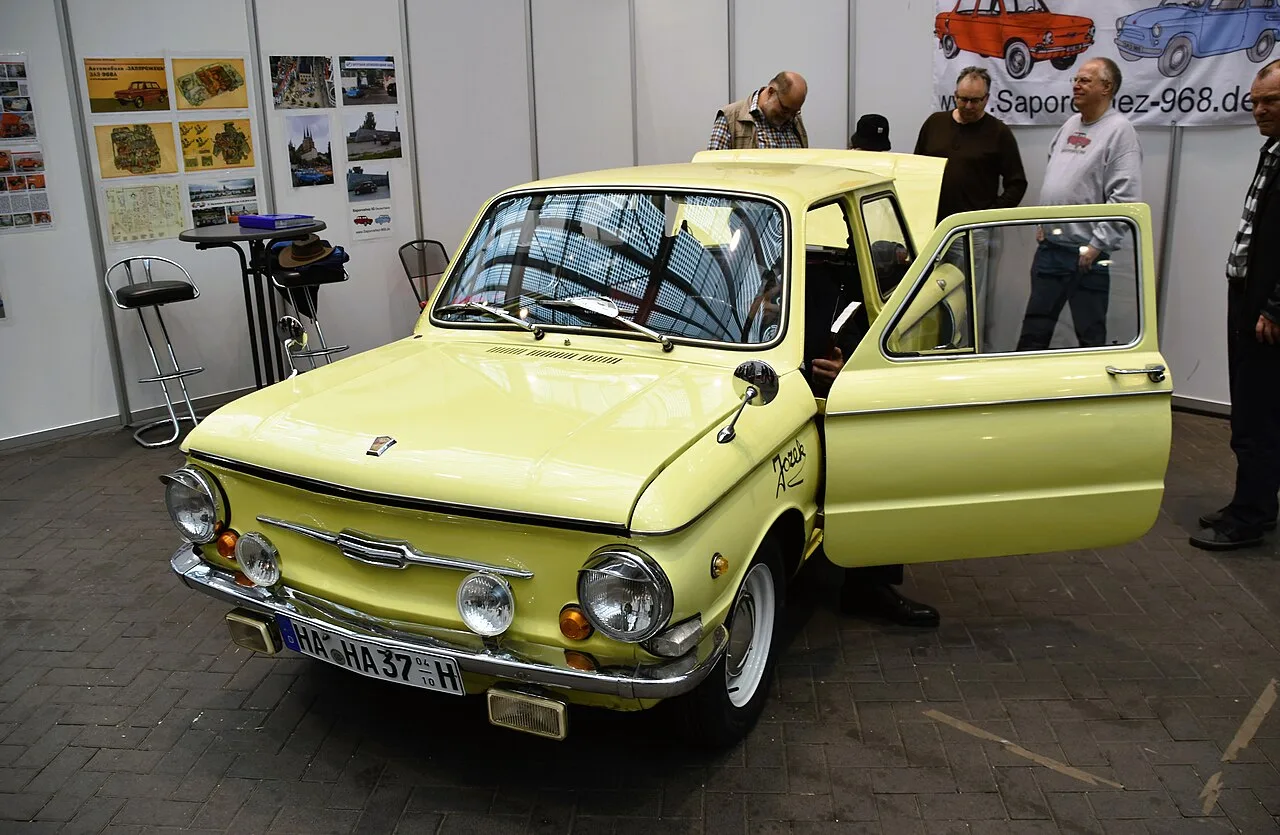
One Zaporozhets variant was built so a driver missing one arm and one leg could drive it: a joystick-style steering wheel for the hand, a thigh-operated gear selector for the leg.
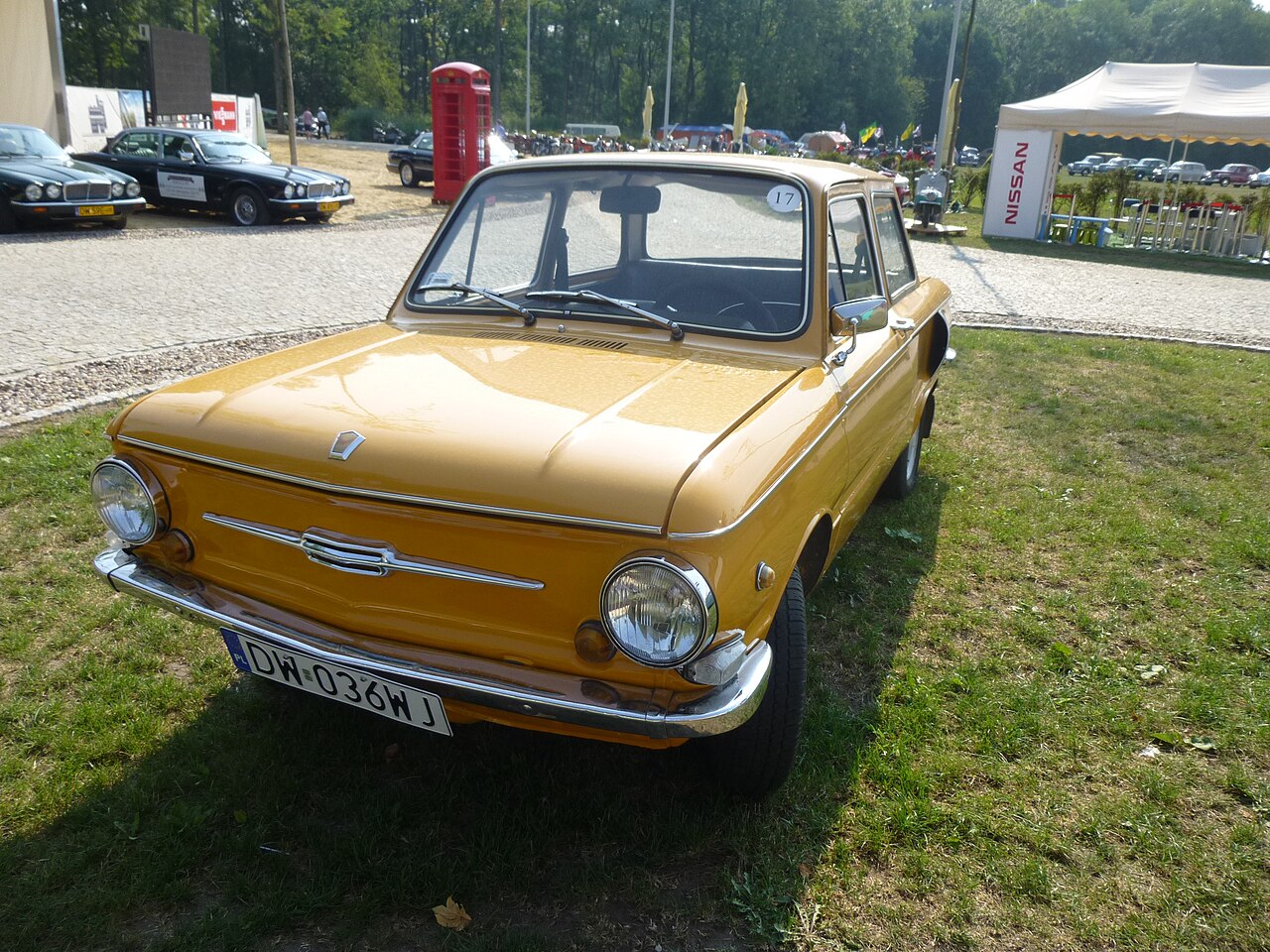
Like the Beetle and the Trabant, the Zaporozhets became the Soviet Union's people's car, the most affordable of its era.
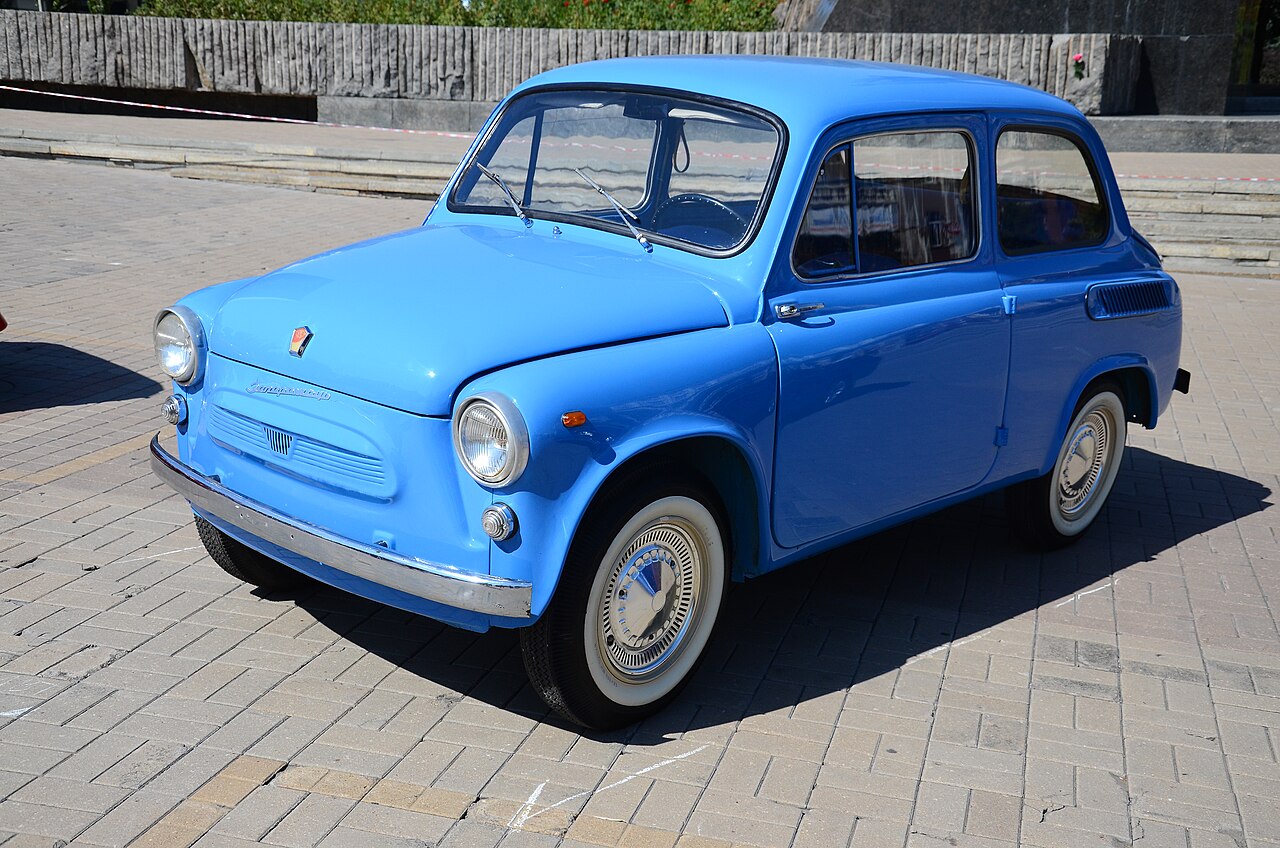
The tiny Zaporozhets' front doors swing open like a Rolls-Royce's suicide doors — not for style, but to make the Soviet people's car easier for disabled drivers to get into.
Rivals
Same body, same money, other badges — tap any card to flip.

It briefly served as senior sibling to Marquette, a GM companion brand cancelled after just one year.

Nissan hired former BMW engineers to help develop the 510's suspension, which is why period reviewers frequently compared its handling to the BMW 1600/2002.

A Trabant 601 won its class at the 1970 Monte Carlo Rally, with a second 601 right behind it in second.

The 600 was a stopgap: the P50's body over the 601's mechanicals, and for a while its estate was built alongside the new 601 saloon.

The G80 Sport brought a 370 PS twin-turbo 3.3 V6, a mesh grille and copper-tinted chrome with copper stitching to match.

The Vigor was sold only with a five-cylinder engine, an unusual configuration Honda used to fit a longer engine transversely under a short hood.

The GS/E coupe earned the nickname "German Charger" for its long hood, short deck stance borrowed from Detroit muscle cars.

This DeVille/Fleetwood was the first production car anywhere to mount its V8 sideways, Cadillac's front-drive gamble on the new C-body.