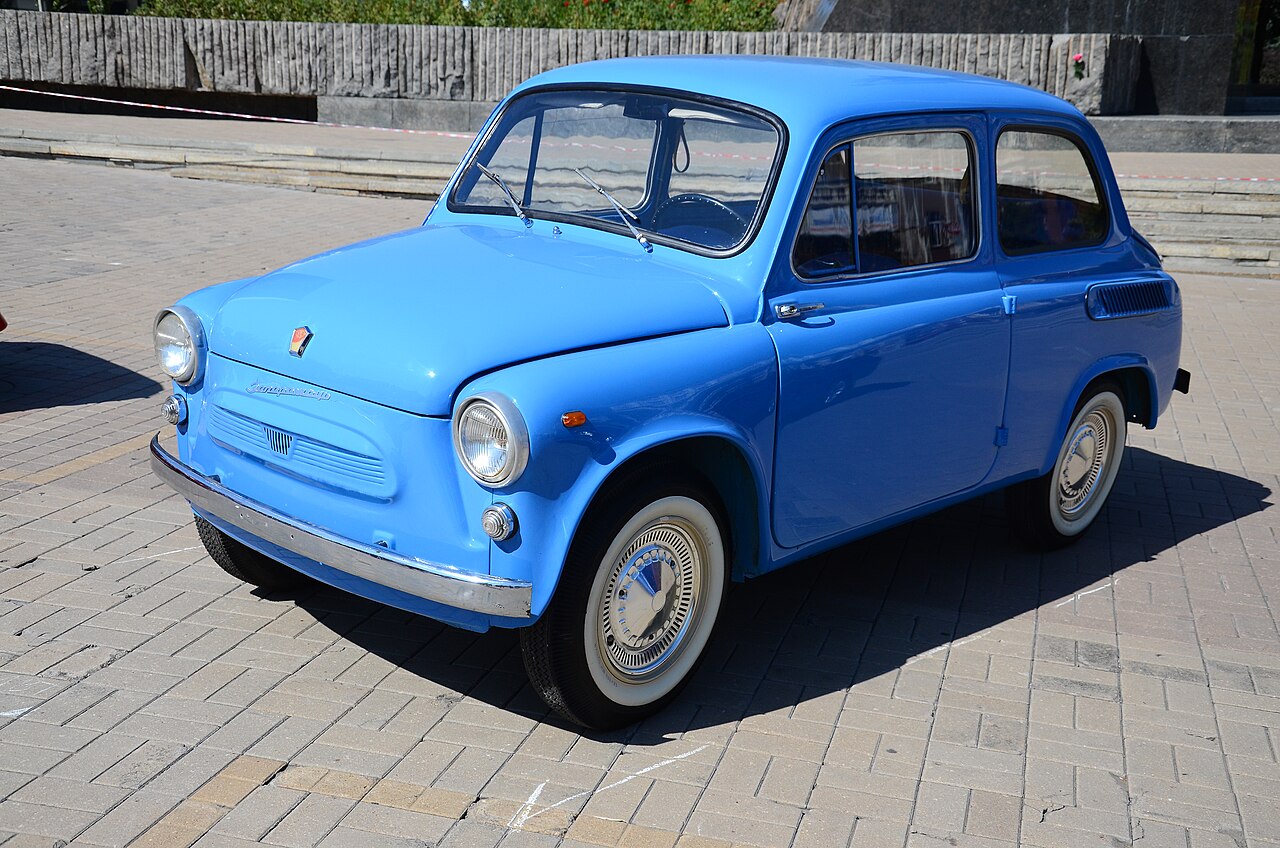
The tiny Zaporozhets' front doors swing open like a Rolls-Royce's suicide doors — not for style, but to make the Soviet people's car easier for disabled drivers to get into.
Lead trim: ZAZ-965 746 cc MeMZ-965 V4 (23 hp) · up to 27 hp
ZAZ Zaporozhets1960–1969
- 0spots by members
- Unclaimednobody has spotted one yet
- 0sets it belongs to
Nobody in Burbles has spotted a ZAZ Zaporozhets yet. See one on the street, point the app at it, and the first card is yours — with your @handle permanently credited on this page.
FactThe tiny Zaporozhets' front doors swing open like a Rolls-Royce's suicide doors — not for style, but to make the Soviet people's car easier for disabled drivers to get into.
The first-generation ZAZ Zaporozhets, the Soviet "people's car" built at Zaporizhzhia from October 1960 to May 1969, began as the ZAZ-965 (1960–1963), a simple economy city car that partly replaced the Moskvitch 401: the Soviet ministry chose the Fiat 600 as its model, though the ZAZ was a completely different car, with a rear-mounted air-cooled V4 (magnesium-alloy block, developed for the LuAZ-967) in place of the Fiat's water-cooled inline-four, four-wheel independent suspension with front torsion bars and suicide-door-style front doors. The first prototype, the Moskvitch-444 of October 1957, had a 17.5 hp flat-twin that lasted only 30,000 km between overhauls; the 746 cc V4 of 23 hp followed, and the first car was delivered on 12 June 1959, approved on 25 July 1960 and in production from 25 October at 1,800 roubles. The ZAZ-965A (November 1962–May 1969) used an 887 cc OHV V4 (partly aluminium) of 27 PS, from November 1966 some with the 30 PS MeMZ-965A; 322,106 (or 322,116) ZAZ-965s were built in all, plus versions for disabled drivers (965B, AB, AR), the 965S post-office van and the export 965AE "Yalta". The 90° V4 was practical for servicing in harsh winters and gave good traction on slopes at the expense of cornering stability; it was nicknamed "horbatyi" (hunchback) and, by urban legend, a Soviet tank starter motor.
Collectors Spotted in the ZAZ Zaporozhets Lineage
No member has published a public street spot of the ZAZ Zaporozhets yet — the First · Worldwide stamp is wide open.
Trims & Figures
2 published trims in the catalogue. A blank is a figure not recorded, not zero.
| Trim | Years | Engine | Power | Torque | 0–60 | Drive | Gearbox | MSRP |
|---|---|---|---|---|---|---|---|---|
| ZAZ-965 746 cc MeMZ-965 V4 (23 hp) | 1960–1962 | 0.7 L V4 | 23 hp | — | — | RWD | — | — |
| ZAZ-965A 887 cc MeMZ-965 OHV V4 (27 PS) | 1962–1969 | 0.9 L V4 | 27 hp | — | — | RWD | — | — |
Owning one
We don’t estimate running costs for a car like this. What it costs depends on its condition, its specialist and how it is driven, and an average would mislead.
Owners’ builds
Nobody has claimed one yet.
Photographs
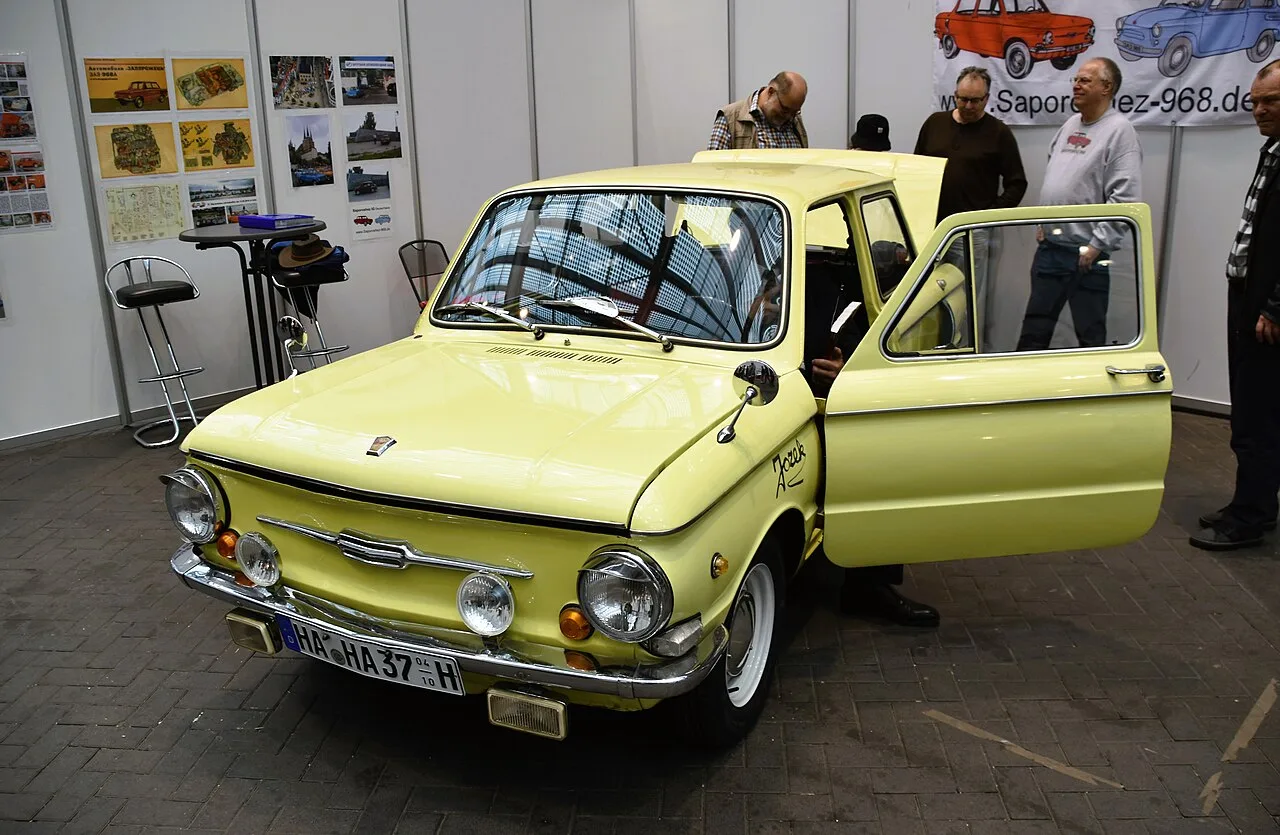
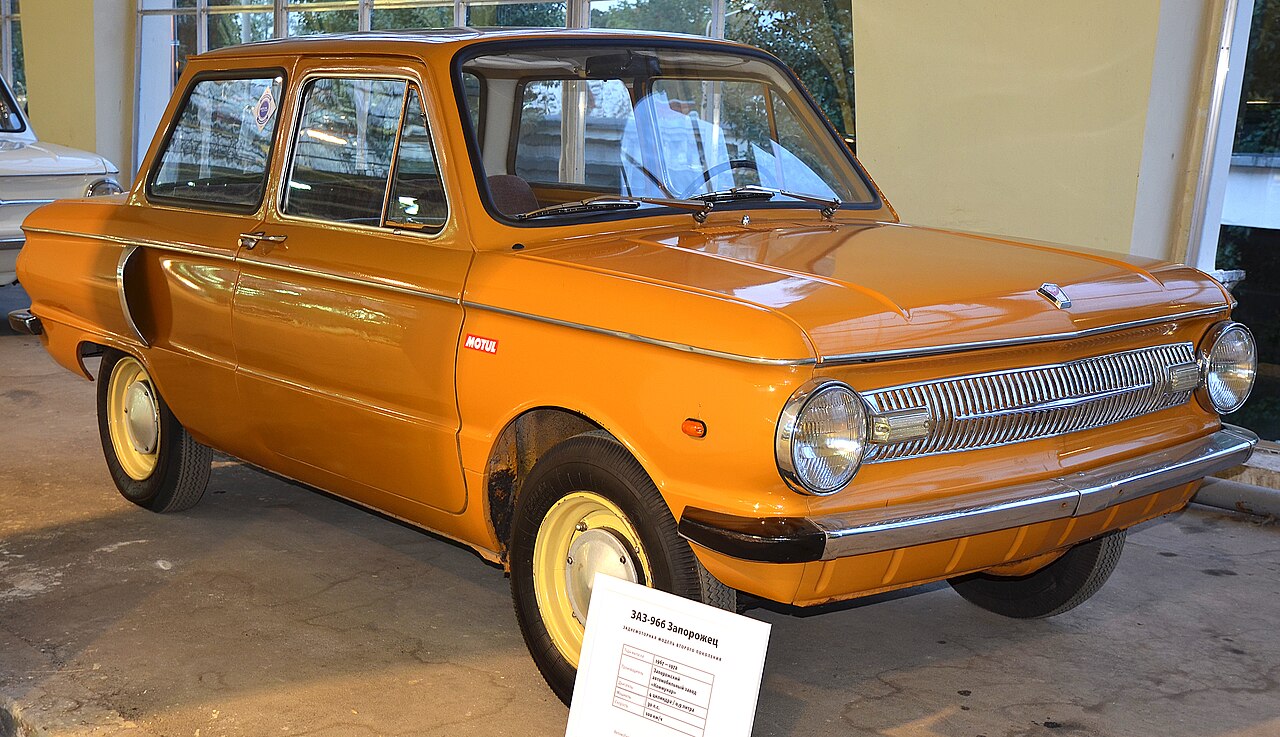
One Zaporozhets variant was built so a driver missing one arm and one leg could drive it: a joystick-style steering wheel for the hand, a thigh-operated gear selector for the leg.
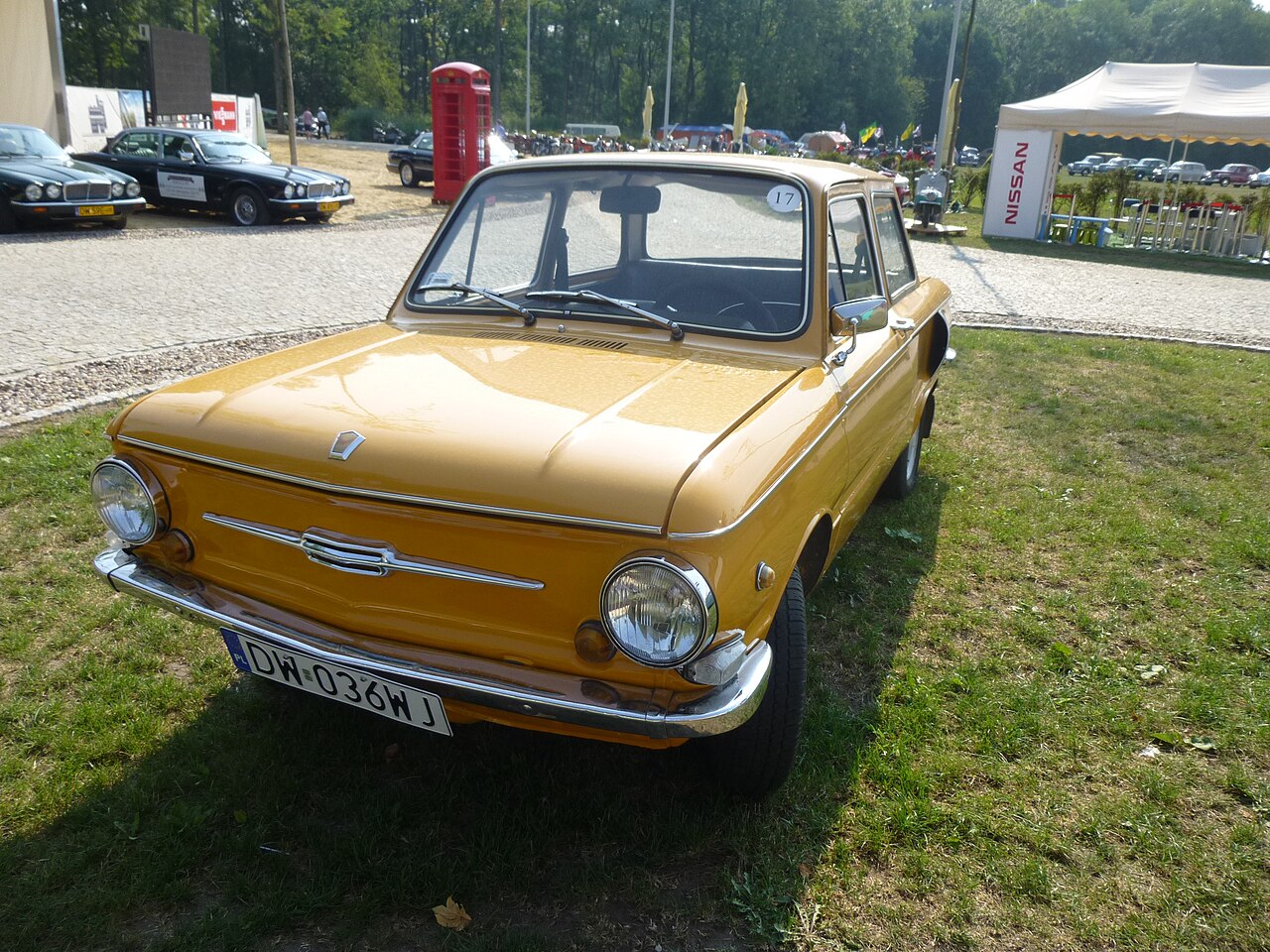
Like the Beetle and the Trabant, the Zaporozhets became the Soviet Union's people's car, the most affordable of its era.
The tiny Zaporozhets' front doors swing open like a Rolls-Royce's suicide doors — not for style, but to make the Soviet people's car easier for disabled drivers to get into.
Rivals
Same body, same money, other badges — tap any card to flip.

It briefly served as senior sibling to Marquette, a GM companion brand cancelled after just one year.

Nissan hired former BMW engineers to help develop the 510's suspension, which is why period reviewers frequently compared its handling to the BMW 1600/2002.

A Trabant 601 won its class at the 1970 Monte Carlo Rally, with a second 601 right behind it in second.

The 600 was a stopgap: the P50's body over the 601's mechanicals, and for a while its estate was built alongside the new 601 saloon.

The G80 Sport brought a 370 PS twin-turbo 3.3 V6, a mesh grille and copper-tinted chrome with copper stitching to match.

The Vigor was sold only with a five-cylinder engine, an unusual configuration Honda used to fit a longer engine transversely under a short hood.

The GS/E coupe earned the nickname "German Charger" for its long hood, short deck stance borrowed from Detroit muscle cars.

This DeVille/Fleetwood was the first production car anywhere to mount its V8 sideways, Cadillac's front-drive gamble on the new C-body.