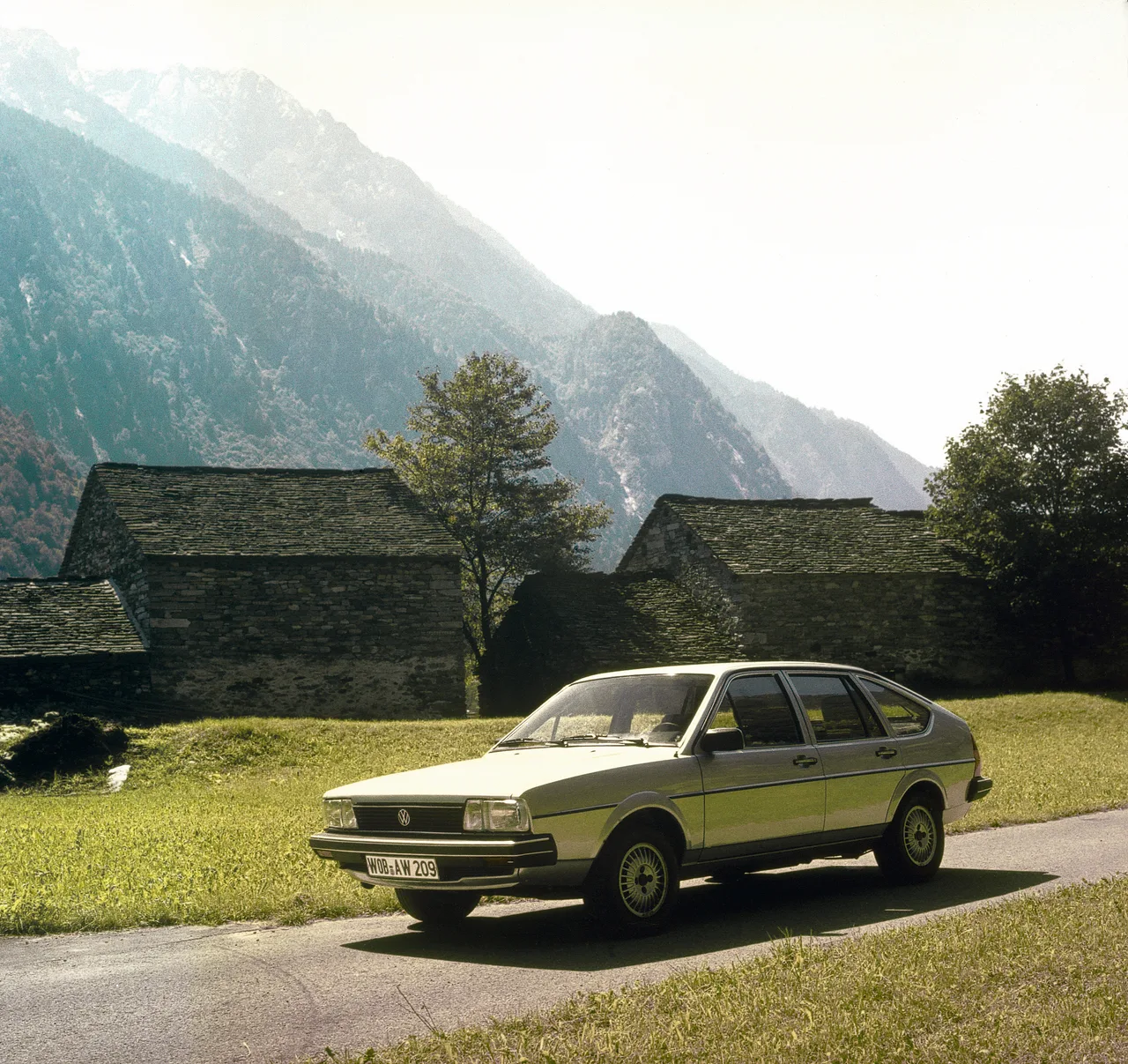
The Passat Syncro's 4WD system mostly borrowed from the Audi 80 quattro — except the rear axle, which VW lifted from its own Transporter van just to keep a flat load floor in the wagon.
Median 99 hp across 394 similar cars
Lead trim: 1.3 (55 PS, FY) · up to 134 hp
Volkswagen Passat B2 / Quantum1980–1988
- 0spots by members
- Unclaimednobody has spotted one yet
- 0sets it belongs to
Nobody in Burbles has spotted a Volkswagen Passat B2 / Quantum yet. See one on the street, point the app at it, and the first card is yours — with your @handle permanently credited on this page.
FactThe Passat Syncro's 4WD system mostly borrowed from the Audi 80 quattro — except the rear axle, which VW lifted from its own Transporter van just to keep a flat load floor in the wagon.
The Volkswagen Passat (B2) is an automobile produced by Volkswagen from 1981 to 1988, the second generation of the Passat, on a platform slightly longer than that of the preceding B1 and, as before, based on the platform of the Audi 80. The body configurations included hatchback, Variant (estate/wagon) and a three-box saloon which, until the 1985 facelift, was marketed as the Volkswagen Santana in Europe; in the United States both the Santana sedan and station wagon were sold as the Quantum. Like the previous generation the B2 was mainly sold with four-cylinder petrol and diesel engines, but unlike its predecessor the top-of-the-line versions received five-cylinder Audi or VW engines of 1.9–2.2 litres. The four-wheel drive Syncro Variant was introduced in April 1984, initially only with the 2-litre five-cylinder engine, with the 2.2-litre option added in August; it shared the mechanics of the Audi 80 quattro rather than the Golf Syncro. The "Formel E" 4+E transmission had an overdrive fourth and an even taller fifth gear for better gas mileage. Passat B2 production in China ended in January 2013.
Collectors Spotted in the Volkswagen Passat Lineage
No member has published a public street spot of the Volkswagen Passat yet — the First · Worldwide stamp is wide open.
Trims & Figures
12 published trims in the catalogue. A blank is a figure not recorded, not zero.
| Trim | Years | Engine | Power | Torque | 0–60 | Drive | Gearbox | MSRP |
|---|---|---|---|---|---|---|---|---|
| 1.3 (55 PS, FY) | 1980–1983 | 1.3 L Inline-4 | 54 hp | 66 lb-ft | — | — | — | — |
| 1.6 (75 PS, JU) | 1983–1987 | 1.6 L Inline-4 | 74 hp | 92 lb-ft | — | — | — | — |
| 1.6 (85 PS, YP) | 1981–1982 | 1.6 L Inline-4 | 84 hp | 94 lb-ft | — | — | — | — |
| 1.6 D diesel (54 PS, CR/JK) | 1980–1988 | 1.6 L Inline-4 | 53 hp | 74 lb-ft | — | — | — | — |
| 1.6 TD turbodiesel (70 PS, CY) | 1981–1988 | 1.6 L Inline-4 | 69 hp | 98 lb-ft | — | — | — | — |
| 1.8 (90 PS, DS) | 1983–1988 | 1.8 L Inline-4 | 89 hp | 107 lb-ft | — | — | — | — |
| 1.8 K-Jetronic (112 PS, DZ) | 1984–1984 | 1.8 L Inline-4 | 110 hp | 118 lb-ft | — | — | — | — |
| 1.9 five-cylinder (115 PS, WN) | 1980–1983 | 1.9 L Inline-5 | 113 hp | 114 lb-ft | — | — | — | — |
| 2.0 five-cylinder (115 PS, JS) | 1983–1988 | 2.0 L Inline-5 | 113 hp | 121 lb-ft | — | — | — | — |
| 2.1 five-cylinder (115 PS, WE) | 1981–1983 | 2.1 L Inline-5 | 113 hp | 124 lb-ft | — | — | — | — |
| 2.2 five-cylinder (136 PS, KV) | 1985–1988 | 2.2 L Inline-5 | 134 hp | 136 lb-ft | — | — | — | — |
| 2.2 five-cylinder Syncro (120 PS, JT) | 1985–1988 | 2.2 L Inline-5 | 118 hp | 125 lb-ft | — | AWD | — | — |
Owning one
We don’t estimate running costs for a car like this. What it costs depends on its condition, its specialist and how it is driven, and an average would mislead.
Owners’ builds
Nobody has claimed one yet.
Photographs
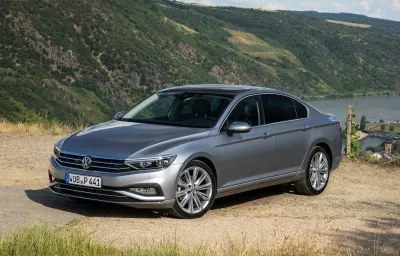
The B9 shares its body panels and glasshouse with the Škoda Superb, and at Cd 0.25 is the most aerodynamic estate Volkswagen has built.
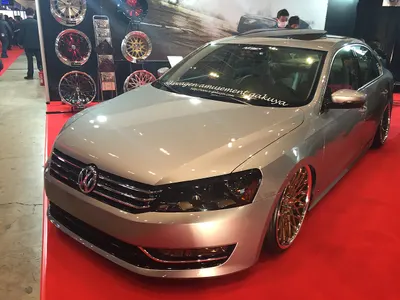
The B8 could park itself with a trailer attached, an option Volkswagen called Trailer Assist.
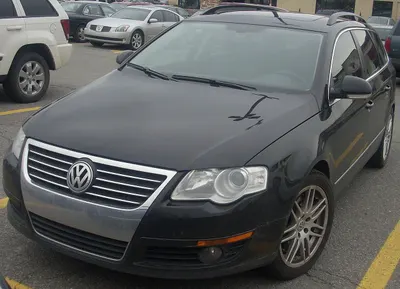
This Passat's TDI diesel never came back after 2015 — it got swept up in the Volkswagen emissions scandal and was permanently killed off in North America.
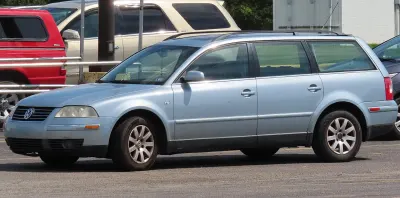
A self-driving B6 Passat Wagon placed second in DARPA's 2007 Urban Challenge — a family wagon doing autonomous-vehicle research years before it was a mainstream idea.
The B5.5 Passat's oddball W8 engine wasn't just a flex — Volkswagen used it as the proving ground for the W-engine layout that would later power the Phaeton, the Audi A8, and even the Bugatti Veyron's W16.
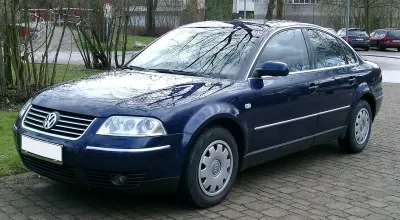
Look closely at the pre-facelift B5 Passat and you won't find separate fog lights — they're built right into the headlight housing itself.
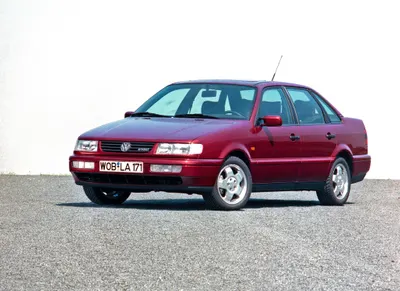
Insiders called this Passat the first "true Hahn model" — VW's own tacit admission that its recent cars had really just been rebadged Audis.
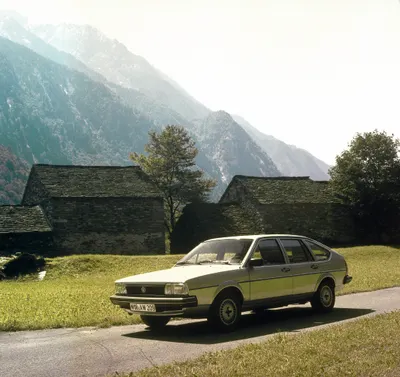
The Passat Syncro's 4WD system mostly borrowed from the Audi 80 quattro — except the rear axle, which VW lifted from its own Transporter van just to keep a flat load floor in the wagon.
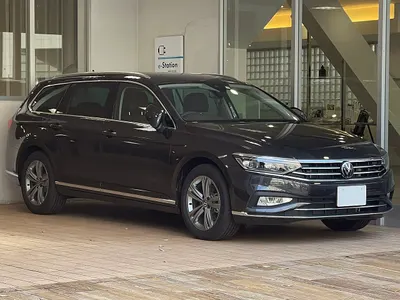
It was essentially a fastback Audi 80 wearing a VW badge, built to replace the air-cooled Type 3 and Type 4.
Rivals
Same body, same money, other badges — tap any card to flip.

It briefly served as senior sibling to Marquette, a GM companion brand cancelled after just one year.

Nissan hired former BMW engineers to help develop the 510's suspension, which is why period reviewers frequently compared its handling to the BMW 1600/2002.

A Trabant 601 won its class at the 1970 Monte Carlo Rally, with a second 601 right behind it in second.

The 600 was a stopgap: the P50's body over the 601's mechanicals, and for a while its estate was built alongside the new 601 saloon.

The G80 Sport brought a 370 PS twin-turbo 3.3 V6, a mesh grille and copper-tinted chrome with copper stitching to match.

The Vigor was sold only with a five-cylinder engine, an unusual configuration Honda used to fit a longer engine transversely under a short hood.

The GS/E coupe earned the nickname "German Charger" for its long hood, short deck stance borrowed from Detroit muscle cars.

This DeVille/Fleetwood was the first production car anywhere to mount its V8 sideways, Cadillac's front-drive gamble on the new C-body.