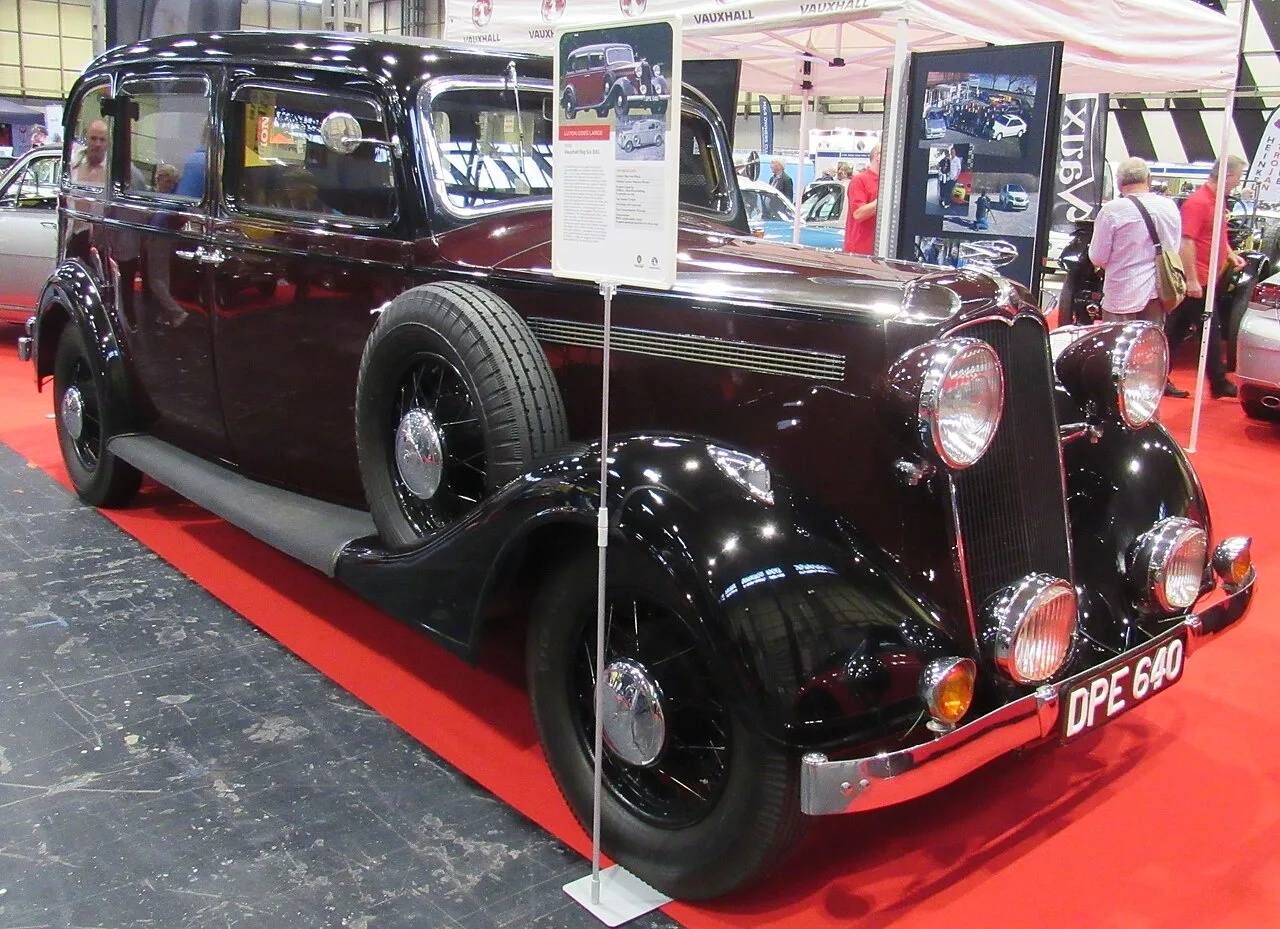
This Big Six carries a quiet distinction — it was the last chassis Vauxhall ever designed in-house before the marque's engineering independence faded.
Lead trim: Big Six GY 25 hp 3.2 six
Vauxhall Big Six GY/GL Twenty-FiveBIG-SIX-GY · 1937–1940
- 0spots by members
- Unclaimednobody has spotted one yet
- 0sets it belongs to
Nobody in Burbles has spotted a Vauxhall Big Six GY/GL Twenty-Five yet. See one on the street, point the app at it, and the first card is yours — with your @handle permanently credited on this page.
FactThis Big Six carries a quiet distinction — it was the last chassis Vauxhall ever designed in-house before the marque's engineering independence faded.
The GY/GL (Twenty-Five) replaced the BX/BY in 1937, first shown at the 1936 London Motor Show, with the same wheelbase options but a completely new chassis with cross-braced members, the last car chassis designed by Vauxhall: steel wheels replaced wires, the front suspension became independent using torsion bars, and Lockheed hydraulic brakes had a dual circuit. The engine was extensively altered, its capacity increased to 3215 cc by extending the stroke to 101.6 mm and decreasing the bore to 81.9 mm, which put the car into the lower 25 hp tax bracket; the 4-speed gearbox gained synchromesh on first in 1938 and the car came with a heater as standard while the Pedomatic starter was dropped. Bodies included a standard saloon by Vauxhall (£298), a Tickford foursome coupé (£365), a Wingham cabriolet by Martin Walker (£400), a Grosvenor sports saloon (£345), a Connaught continental saloon (£498) and a Grosvenor limousine (£575); an Autocar test reached 76 mph and 0–60 mph in 21.9 seconds. 6,822 were produced when war stopped production and the car did not return afterwards. Wheelbase 111 in (130 in GL), length 170 in (184 in).
Collectors Spotted in the Vauxhall Big Six Lineage
No member has published a public street spot of the Vauxhall Big Six yet — the First · Worldwide stamp is wide open.
Trims & Figures
One published trim in the catalogue. A blank is a figure not recorded, not zero.
| Trim | Years | Engine | Power | Torque | 0–60 | Drive | Gearbox | MSRP |
|---|---|---|---|---|---|---|---|---|
| Big Six GY 25 hp 3.2 six | 1937–1940 | 3.2 L Inline-6 | — | — | 21.9 s | RWD | — | — |
Owning one
We don’t estimate running costs for a car like this. What it costs depends on its condition, its specialist and how it is driven, and an average would mislead.
Owners’ builds
Nobody has claimed one yet.
Photographs
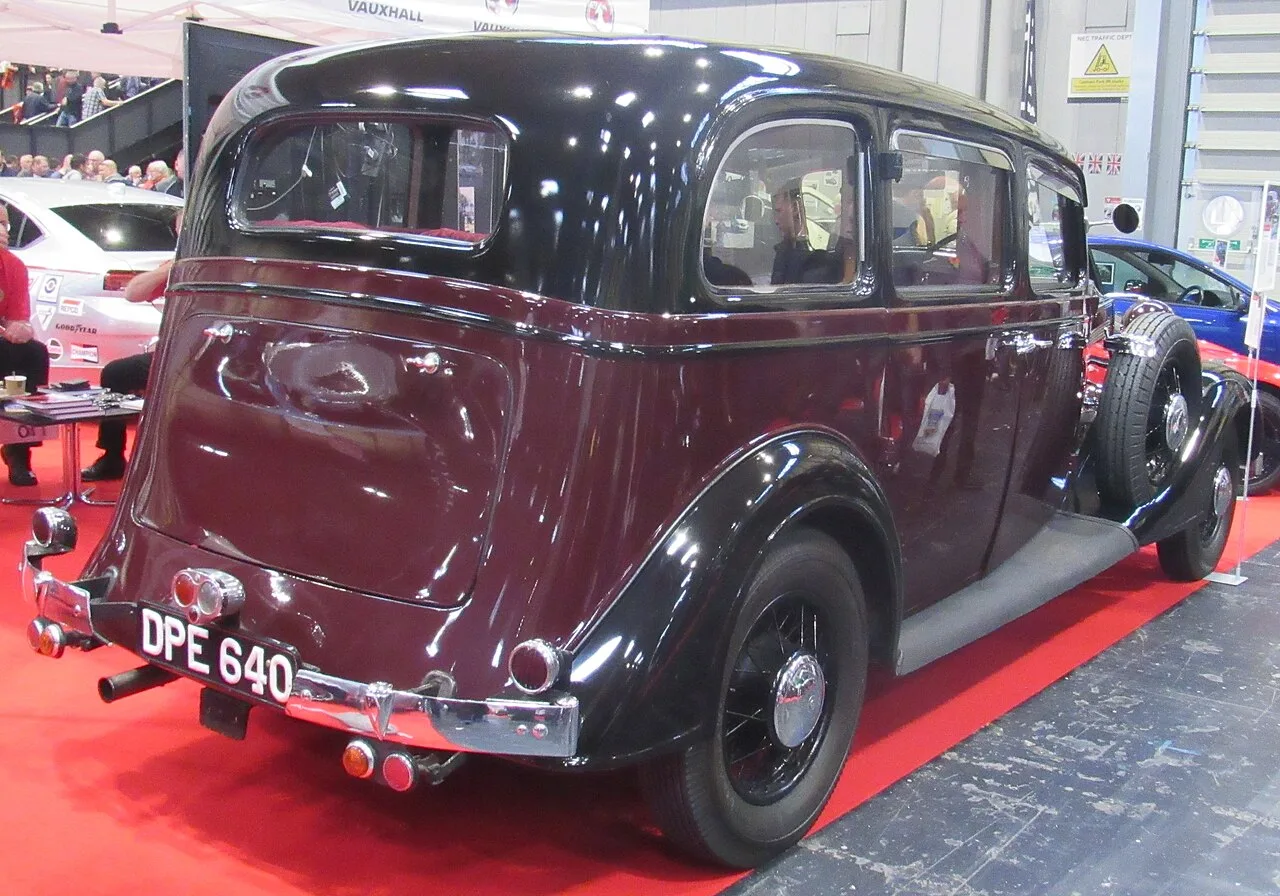
This Big Six carries a quiet distinction — it was the last chassis Vauxhall ever designed in-house before the marque's engineering independence faded.
The Big Six had no ignition key ritual — just press the accelerator and the starter motor kicked in, then disengaged itself once the engine caught. Vauxhall called it "Pedomatic."
Rivals
Same body, same money, other badges — tap any card to flip.

It briefly served as senior sibling to Marquette, a GM companion brand cancelled after just one year.

Nissan hired former BMW engineers to help develop the 510's suspension, which is why period reviewers frequently compared its handling to the BMW 1600/2002.

A Trabant 601 won its class at the 1970 Monte Carlo Rally, with a second 601 right behind it in second.

The 600 was a stopgap: the P50's body over the 601's mechanicals, and for a while its estate was built alongside the new 601 saloon.

The G80 Sport brought a 370 PS twin-turbo 3.3 V6, a mesh grille and copper-tinted chrome with copper stitching to match.

The Vigor was sold only with a five-cylinder engine, an unusual configuration Honda used to fit a longer engine transversely under a short hood.

The GS/E coupe earned the nickname "German Charger" for its long hood, short deck stance borrowed from Detroit muscle cars.

This DeVille/Fleetwood was the first production car anywhere to mount its V8 sideways, Cadillac's front-drive gamble on the new C-body.