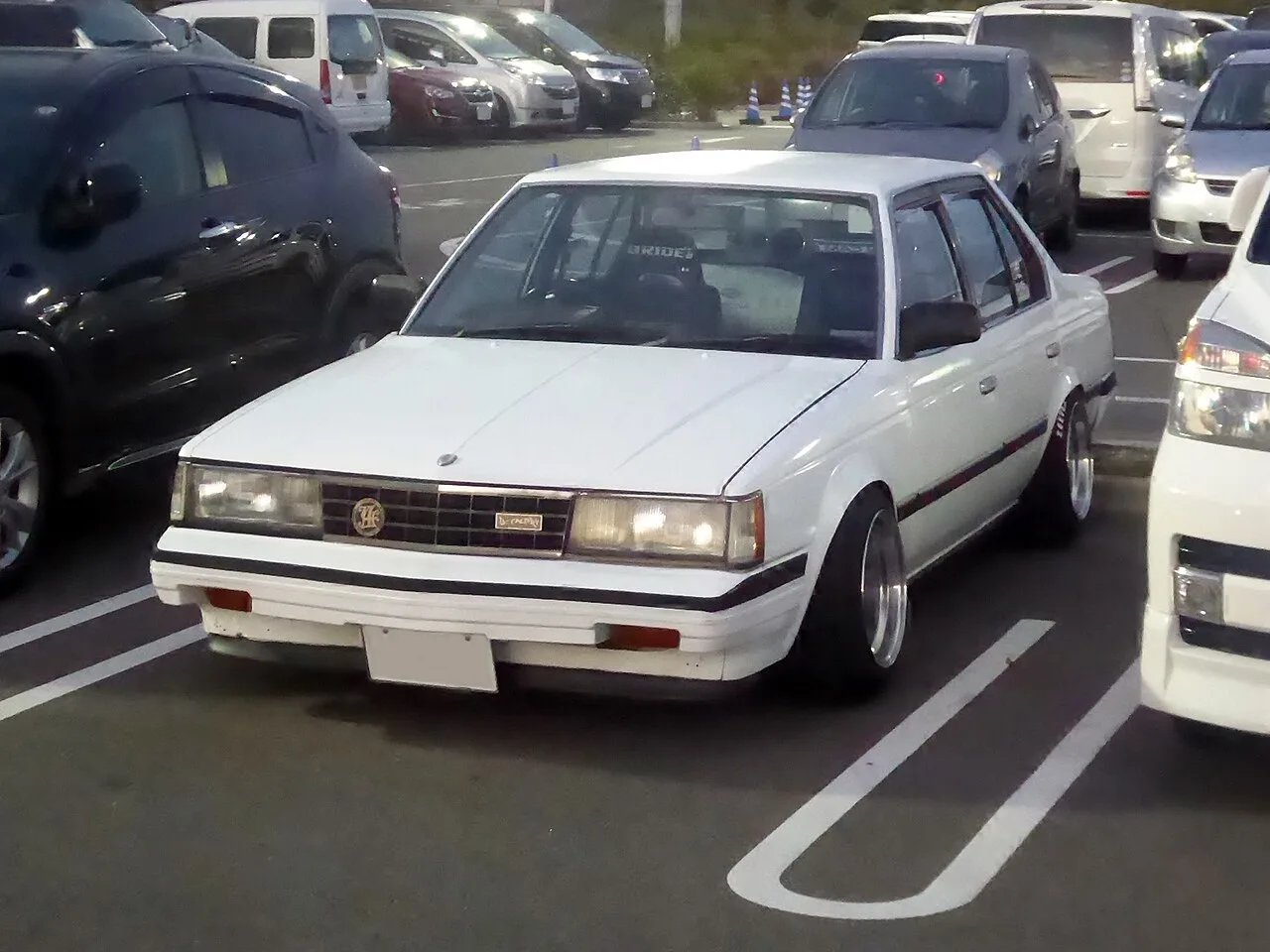
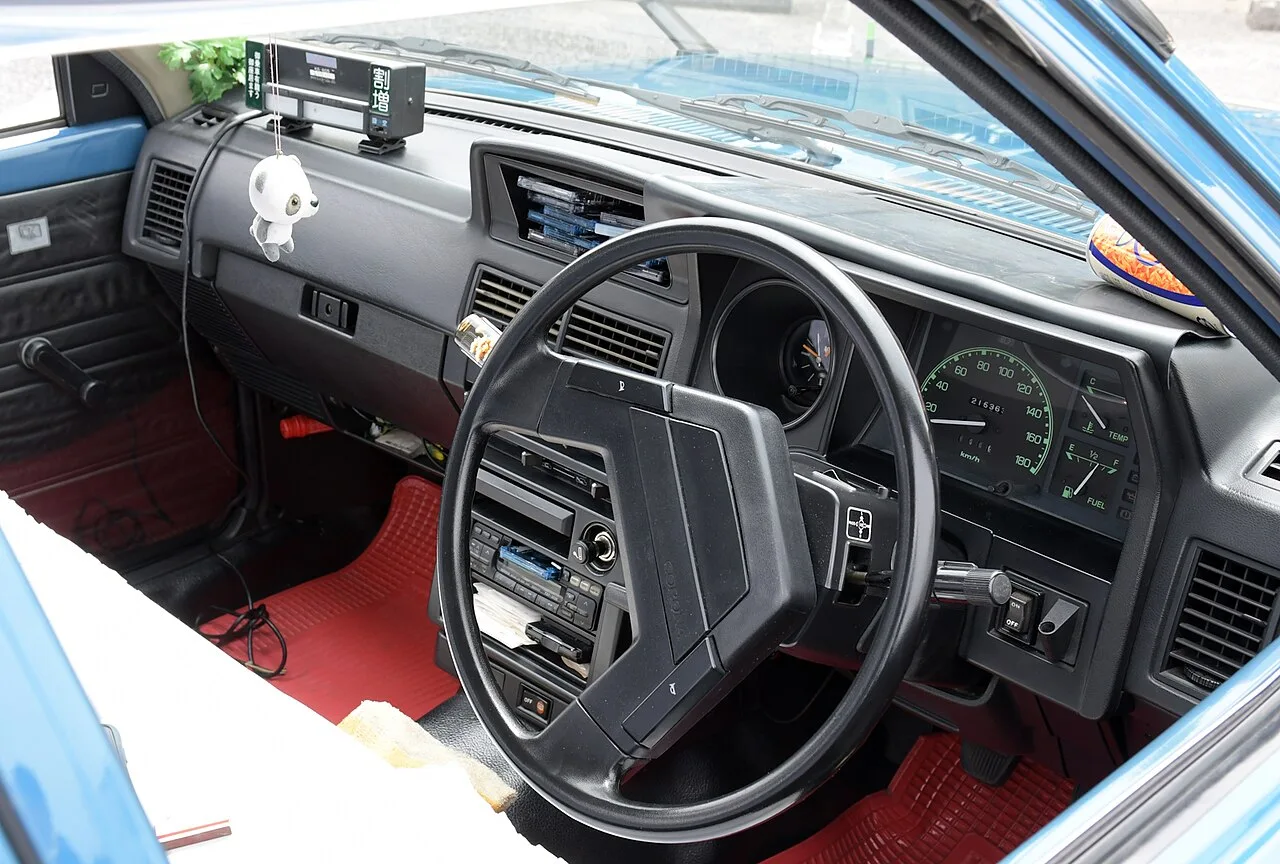
This Corona sedan outlived its own model run by over a decade, staying in Japanese taxi production until April 1998.
Lead trim: 1.8 1S-U (New Zealand) · up to 160 hp
Toyota Corona T140T140 · 1982–1987
- 0spots by members
- Unclaimednobody has spotted one yet
- 0sets it belongs to
Nobody in Burbles has spotted a Toyota Corona T140 yet. See one on the street, point the app at it, and the first card is yours — with your @handle permanently credited on this page.
FactThis Corona sedan outlived its own model run by over a decade, staying in Japanese taxi production until April 1998.
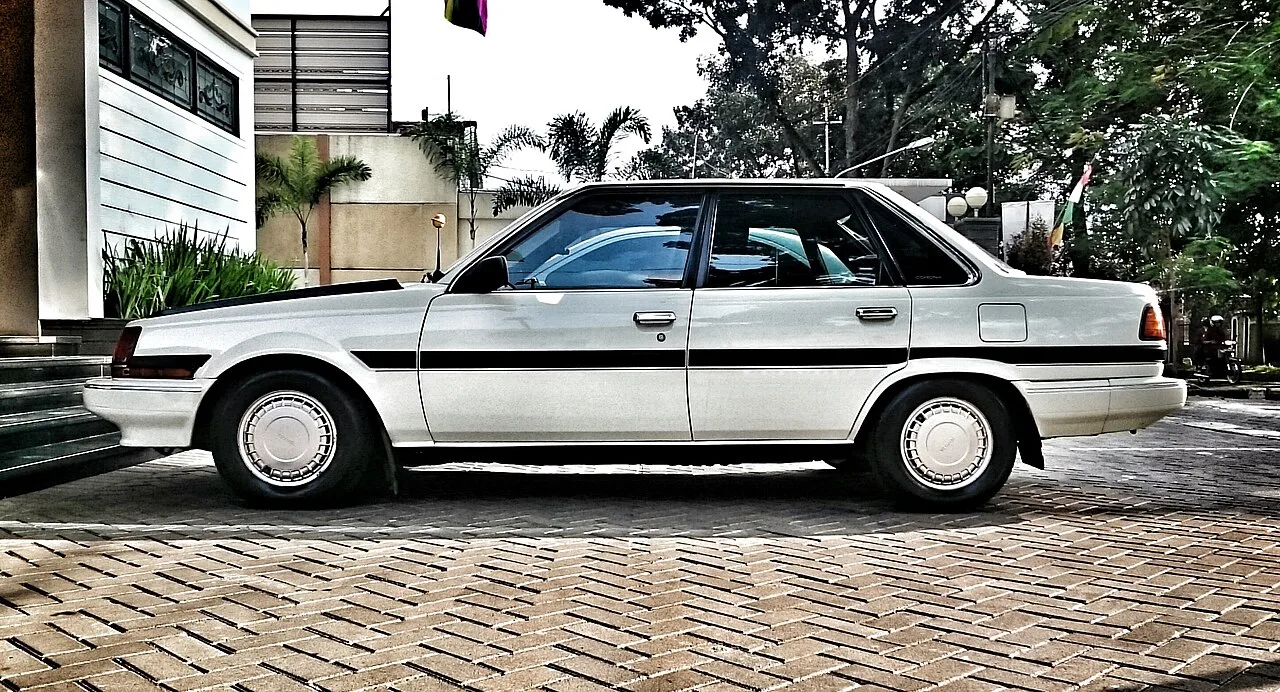
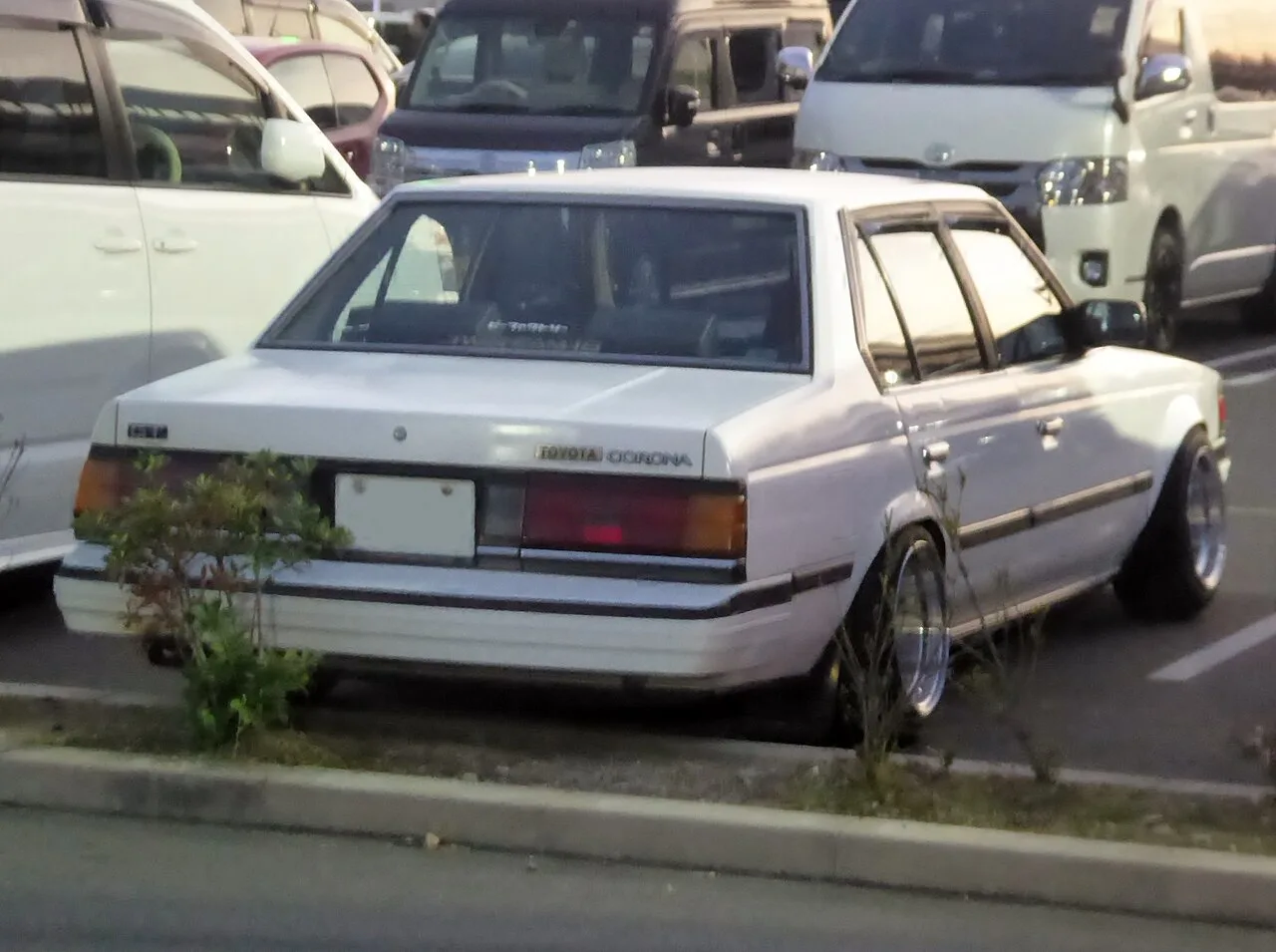
The longest-running Corona series, entering production as a rear-wheel-drive sedan, coupé and wagon in January 1982, with taxi production continuing until April 1998 and Toyota Australia building it until 1987 alongside the front-wheel-drive T150. It ranged from 1.5 L fours to a 2.4 L 22R-E, with the 4A-GEU twin-cam and the 3T-GTEU turbo in the sporting GT and GT-T.
Collectors Spotted in the Toyota Corona Lineage
No member has published a public street spot of the Toyota Corona yet — the First · Worldwide stamp is wide open.
Trims & Figures
3 published trims in the catalogue. A blank is a figure not recorded, not zero.
| Trim | Years | Engine | Power | Torque | 0–60 | Drive | Gearbox | MSRP |
|---|---|---|---|---|---|---|---|---|
| 1.8 1S-U (New Zealand) | 1983–1987 | 1.8 L Inline-4 | 100 hp | 112 lb-ft | — | RWD | — | — |
| GT 1.6 4A-GEU (New Zealand) | 1983–1987 | 1.6 L Inline-4 | 130 hp | 110 lb-ft | — | RWD | — | — |
| GT-T 1.8 3T-GTEU turbo (New Zealand) | 1983–1987 | 1.8 L Inline-4 | 160 hp | 152 lb-ft | — | RWD | — | — |
Owning one
We don’t estimate running costs for a car like this. What it costs depends on its condition, its specialist and how it is driven, and an average would mislead.
Owners’ builds
Nobody has claimed one yet.
Photographs
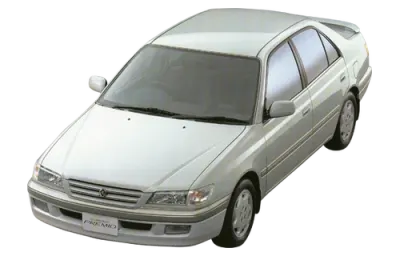
The tenth Corona, built for Japan from January 1996 to December 2001, was the last to carry the Corona name there; its automatic offered Normal, ECT PWR and ECT MANU modes.
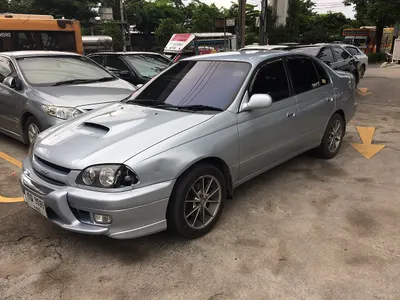
T190s assembled in Thames, New Zealand got their own spring and damper settings, developed by racer Chris Amon.
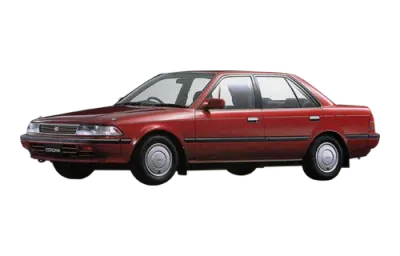
To mark 10 million Coronas sold, Toyota built 500 Corona Super Roomys in 1990, each with 210 mm more wheelbase.
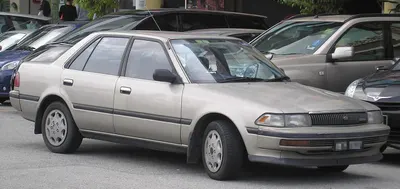
In 1983 this front-wheel-drive Corona liftback carried the first digital color LCD gauge cluster fitted to any Japanese car.
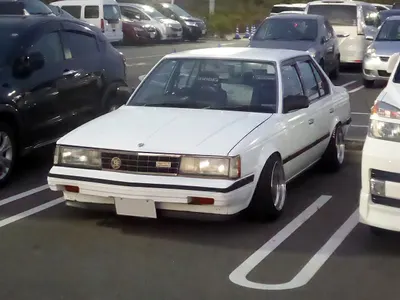
This Corona sedan outlived its own model run by over a decade, staying in Japanese taxi production until April 1998.
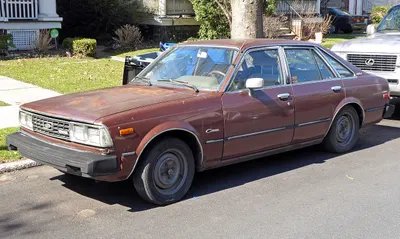
On this Corona the American engine changed mid-generation, swapping the 20R shared with the Celica for the 22R after the 1981 facelift.
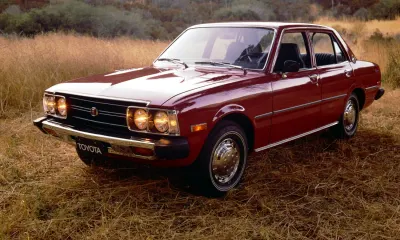
The Japan-only 2000GT paired its twin-cam with a Porsche-type synchromesh five-speed and claimed 200 km/h.
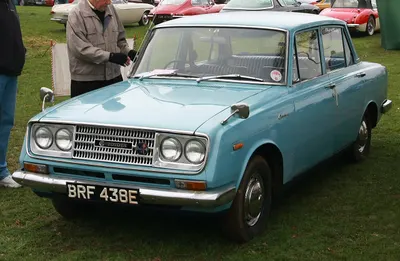
Only 2,222 units of the 1600GT were built in 13 months, a Yamaha twin-cam head grafted on as a budget 2000GT.
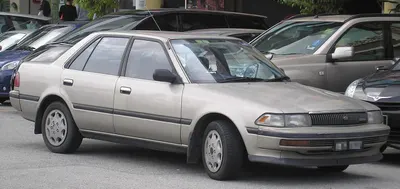
Toyota styled this Corona's front end after the 1955-57 Ford Thunderbird, exporting it as the Tiara after the Crown flopped in America.
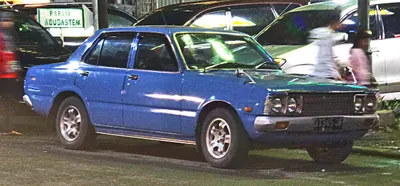
The first Corona was patched together from cut-down Crown and Master body panels after a hurried restyle.
Rivals
Same body, same money, other badges — tap any card to flip.

It briefly served as senior sibling to Marquette, a GM companion brand cancelled after just one year.

Nissan hired former BMW engineers to help develop the 510's suspension, which is why period reviewers frequently compared its handling to the BMW 1600/2002.

A Trabant 601 won its class at the 1970 Monte Carlo Rally, with a second 601 right behind it in second.

The 600 was a stopgap: the P50's body over the 601's mechanicals, and for a while its estate was built alongside the new 601 saloon.

The G80 Sport brought a 370 PS twin-turbo 3.3 V6, a mesh grille and copper-tinted chrome with copper stitching to match.

The Vigor was sold only with a five-cylinder engine, an unusual configuration Honda used to fit a longer engine transversely under a short hood.

The GS/E coupe earned the nickname "German Charger" for its long hood, short deck stance borrowed from Detroit muscle cars.

This DeVille/Fleetwood was the first production car anywhere to mount its V8 sideways, Cadillac's front-drive gamble on the new C-body.