VerifiedFIRST · WORLDWIDEFIRST PRINTONLY ONE IN VANCOUVERThe legendary 2JZ-GTE twin-turbo outlived the Supra that made it famous: the JZS161 Aristo kept building it for three more years after the Supra was gone.

The legendary 2JZ-GTE twin-turbo outlived the Supra that made it famous: the JZS161 Aristo kept building it for three more years after the Supra was gone.
Median 189 hp across 458 similar cars
Lead trim: V300
See a Toyota Aristo on the street, point Burbles at it, and the card goes in your binder. Own one? Add it to your garage in the app.
FactThe legendary 2JZ-GTE twin-turbo outlived the Supra that made it famous: the JZS161 Aristo kept building it for three more years after the Supra was gone.
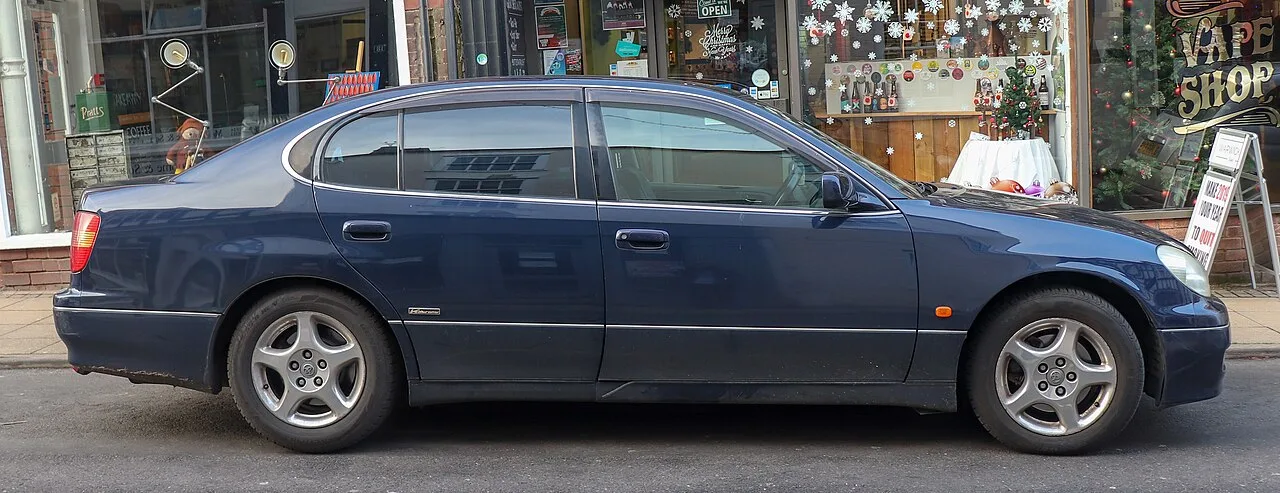
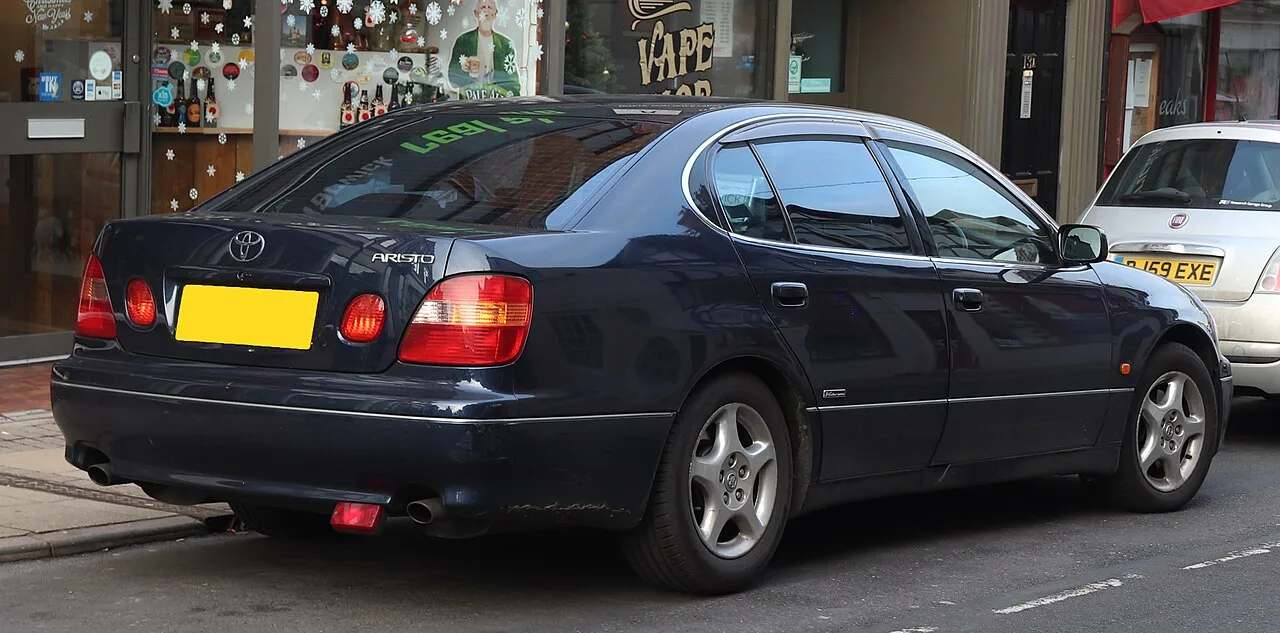
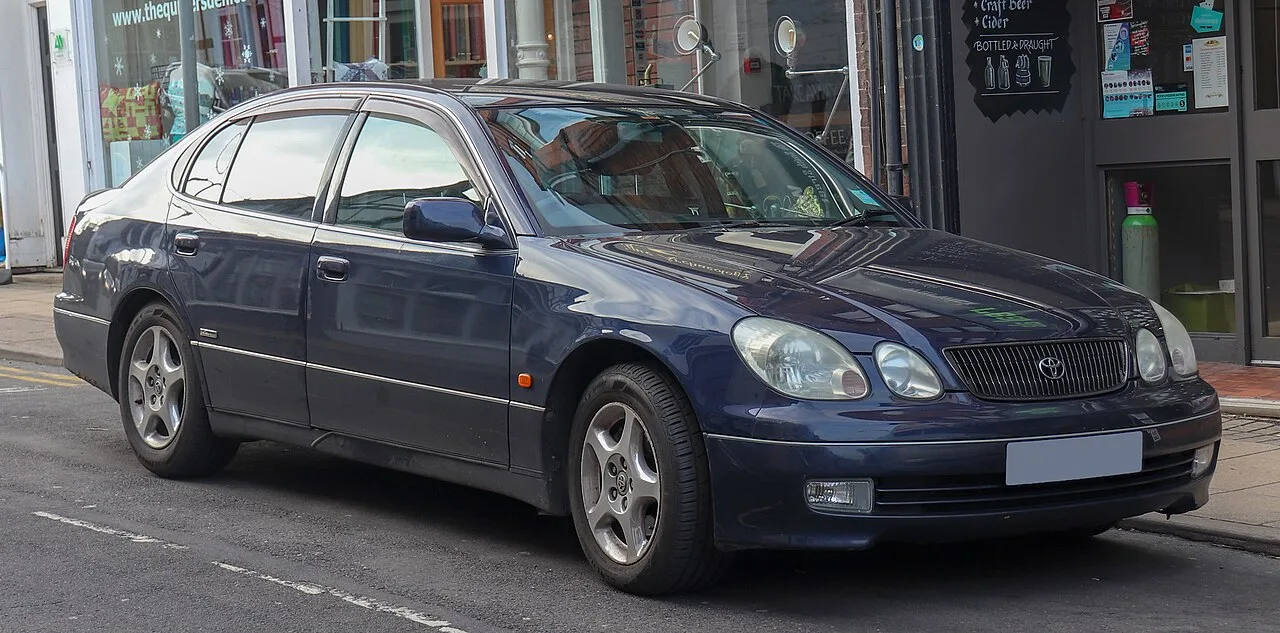
Second-generation Aristo, JDM-only sibling of the export Lexus GS. The V300 trim carried over the 2JZ-GTE twin-turbo six from the first-generation JZS147 (also catalogued), while other trims switched to a naturally aspirated V8; the twin-turbo six is the trim prized in the JDM import scene.
Real Toyota Aristo cards spotted on the street by Burbles collectors. Tap any card to flip it over, inspect the collector’s binder, or follow them.
VerifiedFIRST · WORLDWIDEFIRST PRINTONLY ONE IN VANCOUVERThe legendary 2JZ-GTE twin-turbo outlived the Supra that made it famous: the JZS161 Aristo kept building it for three more years after the Supra was gone.
One published trim in the catalogue. A blank is a figure not recorded, not zero.
| Trim | Years | Engine | Power | Torque | 0–60 | Drive | Gearbox | MSRP |
|---|---|---|---|---|---|---|---|---|
| V300 | 1997–2004 | 3.0 L Inline-6 | 276 hp | 333 lb-ft | — | RWD | automatic | — |
An estimate, for the V300 trim: fuel on its EPA figure and a dated national price, upkeep on a per-mile average for the kind of car it is.
Nobody has claimed one yet.

The legendary 2JZ-GTE twin-turbo outlived the Supra that made it famous: the JZS161 Aristo kept building it for three more years after the Supra was gone.

Building the original Aristo's body took 4,200 robotic welds — only eight spot welds on the entire car were left to human hands.
Same body, same money, other badges — tap any card to flip.

It briefly served as senior sibling to Marquette, a GM companion brand cancelled after just one year.

Nissan hired former BMW engineers to help develop the 510's suspension, which is why period reviewers frequently compared its handling to the BMW 1600/2002.

A Trabant 601 won its class at the 1970 Monte Carlo Rally, with a second 601 right behind it in second.

The 600 was a stopgap: the P50's body over the 601's mechanicals, and for a while its estate was built alongside the new 601 saloon.

The G80 Sport brought a 370 PS twin-turbo 3.3 V6, a mesh grille and copper-tinted chrome with copper stitching to match.

The Vigor was sold only with a five-cylinder engine, an unusual configuration Honda used to fit a longer engine transversely under a short hood.

The GS/E coupe earned the nickname "German Charger" for its long hood, short deck stance borrowed from Detroit muscle cars.

This DeVille/Fleetwood was the first production car anywhere to mount its V8 sideways, Cadillac's front-drive gamble on the new C-body.