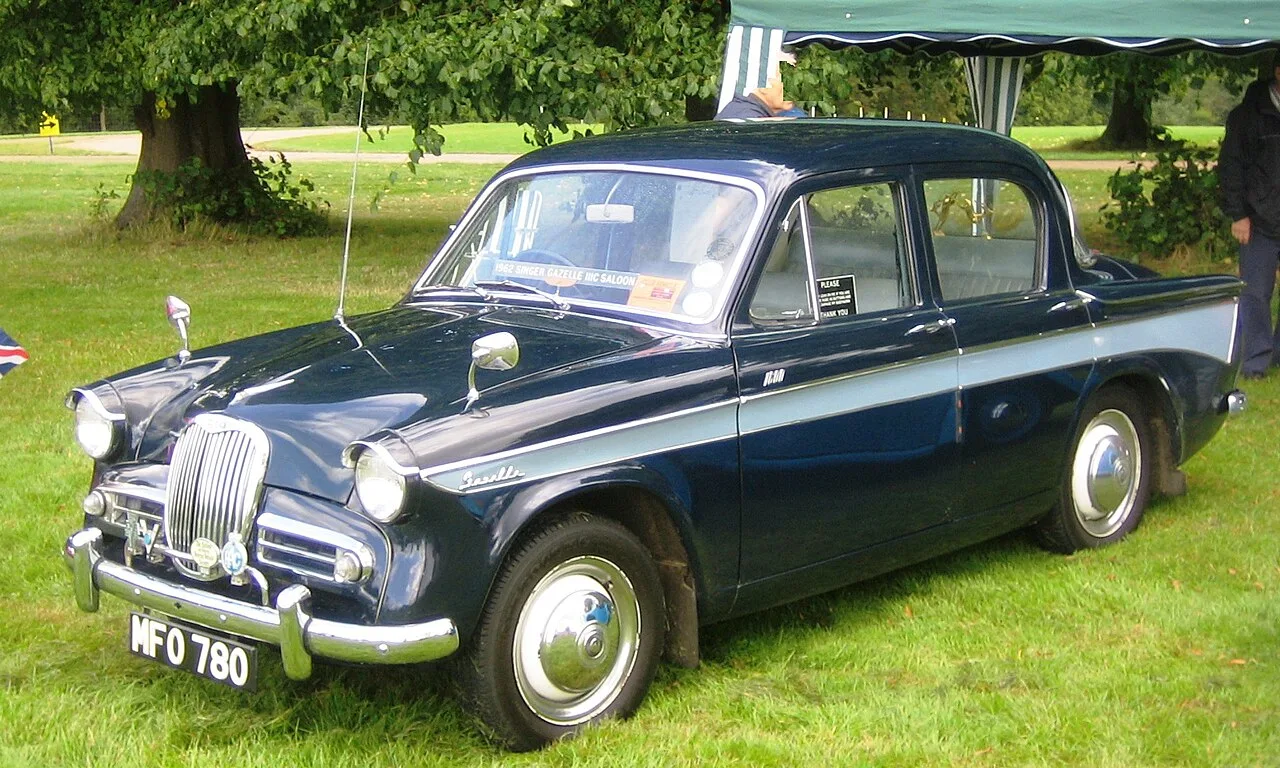
The Gazelle IIIB's engineers traded a carburettor for simplicity on purpose — easier servicing "in remoter territories" was the literal design brief.
Median 95 hp across 291 similar cars
Lead trim: 1,494 cc overhead-valve four (56 bhp) · up to 60 hp
Singer Gazelle IIA to IIIC1958–1963
- 0spots by members
- Unclaimednobody has spotted one yet
- 0sets it belongs to
Nobody in Burbles has spotted a Singer Gazelle IIA to IIIC yet. See one on the street, point the app at it, and the first card is yours — with your @handle permanently credited on this page.
FactThe Gazelle IIIB's engineers traded a carburettor for simplicity on purpose — easier servicing "in remoter territories" was the literal design brief.
The Singer Gazelle II was re-designated the IIA in 1958, when the standard Hillman pushrod overhead valve engine replaced the Singer overhead cam unit; the new engine was more powerful, developing 56 bhp against 49 bhp. In line with Rootes Group policy the car kept getting small upgrades, each with a new designation: in September 1958 the Gazelle, now re-designated III, received better seats, enhanced at the front by a folding central arm rest, and a new two-tone paint became available. The IIIA, introduced in September 1959, gained small tail fins and a larger windscreen, and the engine was upgraded with twin Solex carburettors replacing the single Solex, distinguishing it from the Minx and lifting output to 60 bhp; home market cars got a floor gear change, and as well as overdrive Smith's Easidrive automatic transmission also became an option. The IIIC used a 1592 cc engine.
Collectors Spotted in the Singer Gazelle Lineage
No member has published a public street spot of the Singer Gazelle yet — the First · Worldwide stamp is wide open.
Trims & Figures
2 published trims in the catalogue. A blank is a figure not recorded, not zero.
| Trim | Years | Engine | Power | Torque | 0–60 | Drive | Gearbox | MSRP |
|---|---|---|---|---|---|---|---|---|
| 1,494 cc overhead-valve four (56 bhp) | 1958–1959 | 1.5 L Inline-4 | 56 hp | — | — | — | — | — |
| 1,494 cc twin-Solex overhead-valve four (60 bhp) | 1959–1963 | 1.5 L Inline-4 | 60 hp | — | — | — | — | — |
Owning one
We don’t estimate running costs for a car like this. What it costs depends on its condition, its specialist and how it is driven, and an average would mislead.
Owners’ builds
Nobody has claimed one yet.
Photographs
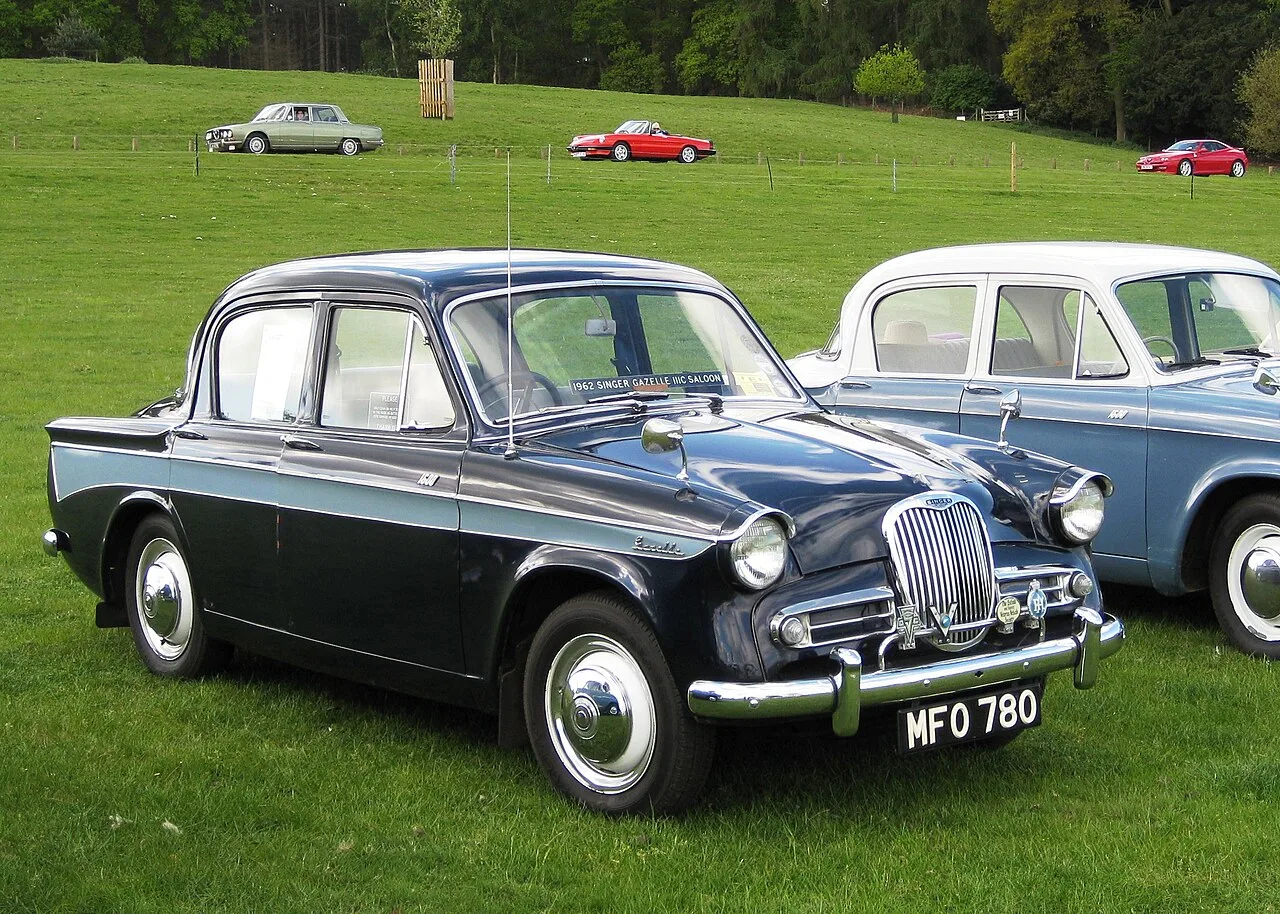
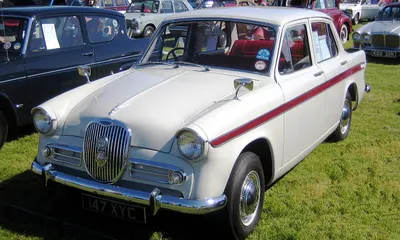
This final Gazelle broke with decades of Singer tradition, swapping the marque's signature oval grille for a rectangular one that no longer even moved with the opening bonnet.
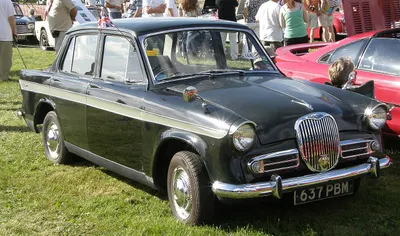
The Gazelle V arrived in August 1963 simply by following whatever facelift Rootes gave the Hillman Minx it was badge-engineered from.
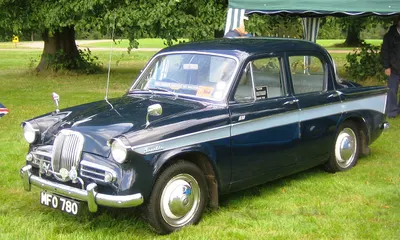
The Gazelle IIIB's engineers traded a carburettor for simplicity on purpose — easier servicing "in remoter territories" was the literal design brief.
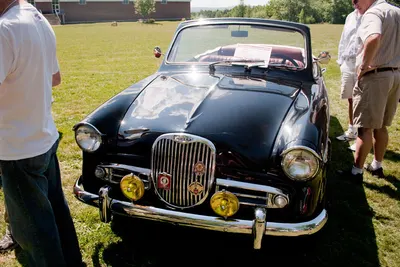
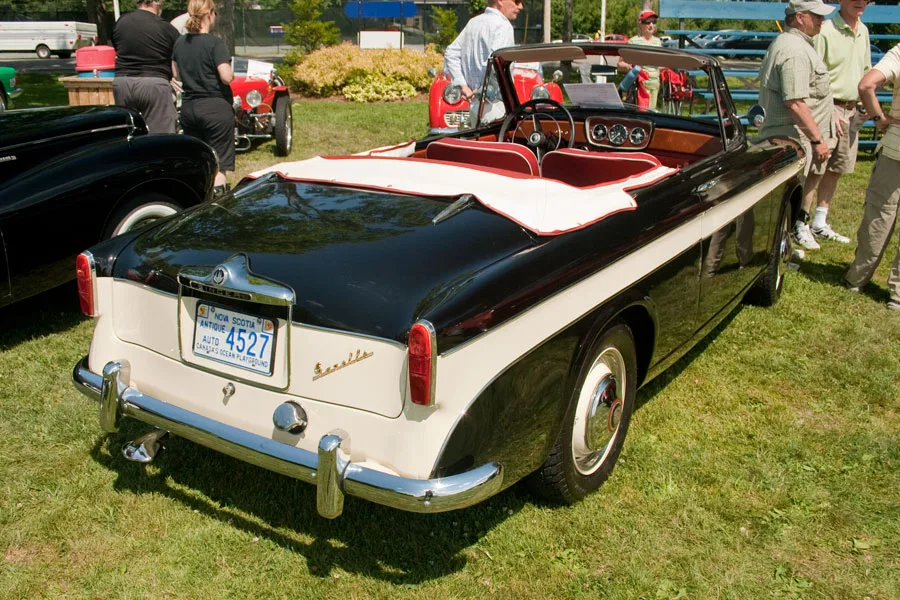
The Gazelle convertible's top had two settings: fully down, or rolled back halfway to a half-open 'coupé de ville' position.
Rivals
Same body, same money, other badges — tap any card to flip.

It briefly served as senior sibling to Marquette, a GM companion brand cancelled after just one year.

Nissan hired former BMW engineers to help develop the 510's suspension, which is why period reviewers frequently compared its handling to the BMW 1600/2002.

A Trabant 601 won its class at the 1970 Monte Carlo Rally, with a second 601 right behind it in second.

The 600 was a stopgap: the P50's body over the 601's mechanicals, and for a while its estate was built alongside the new 601 saloon.

The G80 Sport brought a 370 PS twin-turbo 3.3 V6, a mesh grille and copper-tinted chrome with copper stitching to match.

The Vigor was sold only with a five-cylinder engine, an unusual configuration Honda used to fit a longer engine transversely under a short hood.

The GS/E coupe earned the nickname "German Charger" for its long hood, short deck stance borrowed from Detroit muscle cars.

This DeVille/Fleetwood was the first production car anywhere to mount its V8 sideways, Cadillac's front-drive gamble on the new C-body.