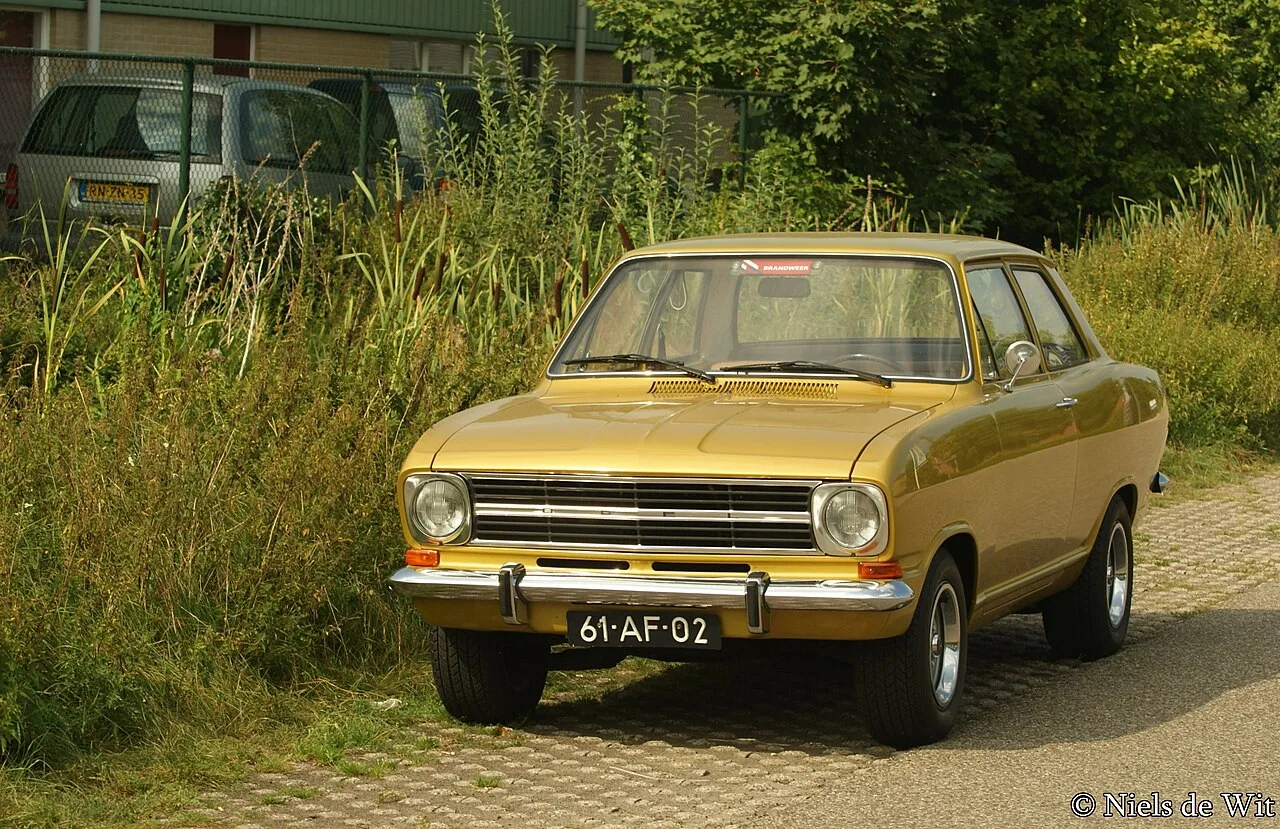
More than half of every Kadett C that Opel built — 52% of 1.7 million cars — left West Germany, making it as much an export hit as a home-market compact.
Lead trim: Kadett C 1.0 (993 cc, 40 PS) · up to 113 hp
Opel Kadett C1973–1979
- 0spots by members
- Unclaimednobody has spotted one yet
- 0sets it belongs to
Nobody in Burbles has spotted a Opel Kadett C yet. See one on the street, point the app at it, and the first card is yours — with your @handle permanently credited on this page.
FactMore than half of every Kadett C that Opel built — 52% of 1.7 million cars — left West Germany, making it as much an export hit as a home-market compact.
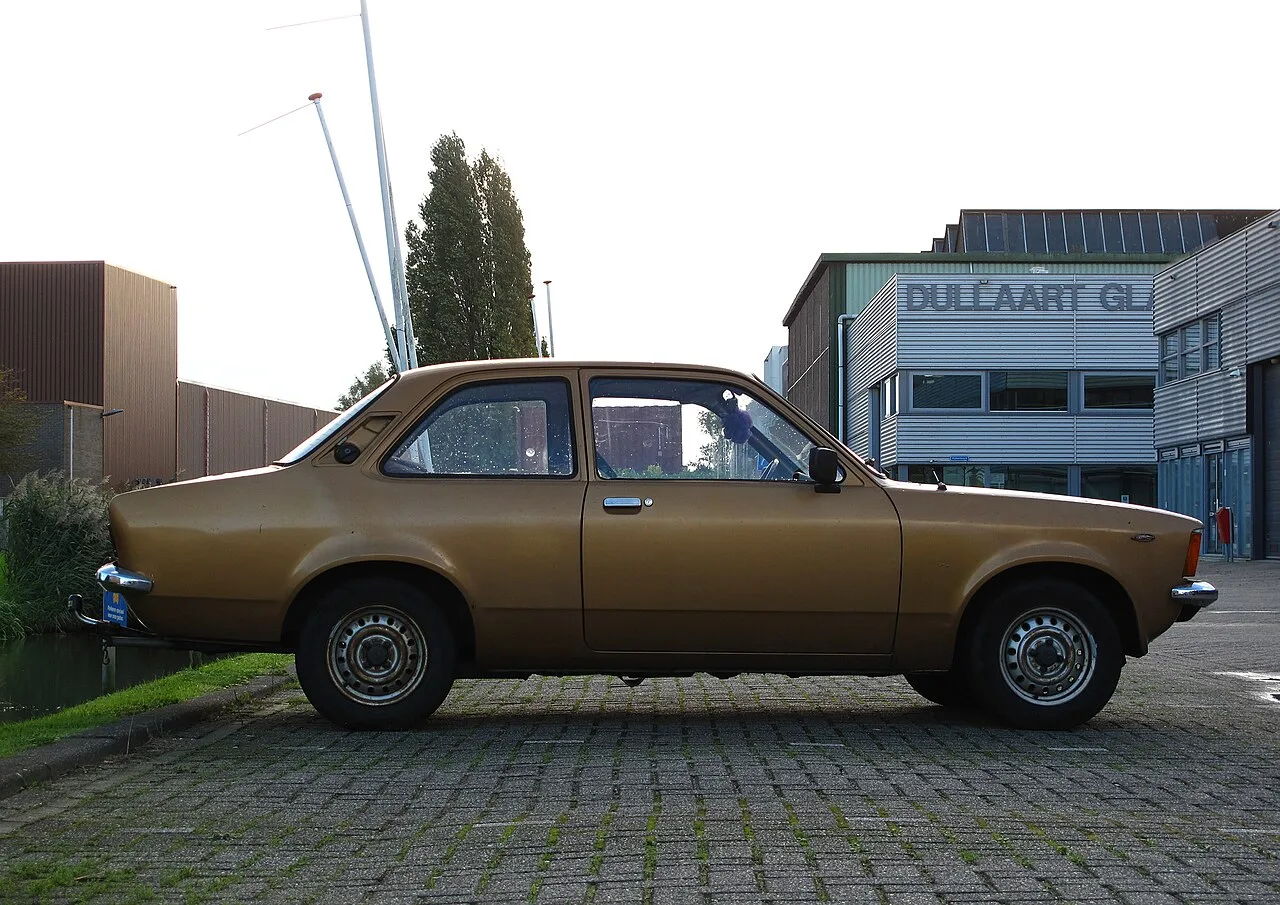
The Opel Kadett C, the fourth generation of the Kadett, was released in August 1973 as Opel's version of the General Motors "T-Car". It was the last small Opel to feature rear-wheel drive and remained in production at Bochum until July 1979, by which time Opel had produced 1,701,076, 52% of them exported outside West Germany; badge-engineered versions stayed in production as late as the mid-1990s as the Vauxhall Chevette (UK), Chevrolet Chevette (Brazil), Holden Gemini (Australia), Isuzu Gemini (Japan), Buick Opel (USA), Daewoo Maepsy (Korea) and others. Body styles were the "Limousine" (2/4-door saloon), the "City" 3-door hatchback, the "Caravan" 3-door estate, the coupé and the "Aero" targa-top cabriolet. Engines started with the 1.2-litre unit that had become an option for the Kadett B in 1971 (1,389,940 European Kadett Cs, almost 82%), a 1.0 from March 1974 with the same 993 cc as in 1962, the CIH 1.6 "S" from May 1977 with 75 PS, and the sporting 1.9-litre Bosch L-Jetronic injected GT/E from September 1975 with 105 PS, replaced in September 1977 by the 2.0-litre 20E in the Kadett Rallye 2.0E (110 PS, 189 km/h) and a 115 PS K-Jetronic 20EH in the GT/E. A five-speed manual was offered on the GT/E from 1975 and standard from 1977, and the 1.2 S and 1.6 could have a GM Strasbourg three-speed automatic. At launch the 1.0 and low-compression 1.2 had 200 mm drum brakes all round while other cars had front discs with servo assistance; the "Kadett Berlina" arrived in May 1977. Its T-car sibling, the Vauxhall Chevette, used a 1,256 cc Vauxhall OHV engine and a hatchback body.
Collectors Spotted in the Opel Kadett Lineage
No member has published a public street spot of the Opel Kadett yet — the First · Worldwide stamp is wide open.
Trims & Figures
8 published trims in the catalogue. A blank is a figure not recorded, not zero.
| Trim | Years | Engine | Power | Torque | 0–60 | Drive | Gearbox | MSRP |
|---|---|---|---|---|---|---|---|---|
| Kadett C 1.0 (993 cc, 40 PS) | 1974–1979 | 1.0 L Inline-4 | 39 hp | 51 lb-ft | — | RWD | — | — |
| Kadett C 1.2 N (1196 cc, 52 PS) | 1973–1976 | 1.2 L Inline-4 | 51 hp | 58 lb-ft | — | RWD | — | — |
| Kadett C 1.2 N (1196 cc, 55 PS) | 1976–1979 | 1.2 L Inline-4 | 54 hp | 61 lb-ft | — | RWD | — | — |
| Kadett C 1.2 S (1196 cc, 60 PS) | 1973–1979 | 1.2 L Inline-4 | 59 hp | 65 lb-ft | — | RWD | — | — |
| Kadett C 1.6 S CIH (1584 cc, 75 PS) | 1977–1979 | 1.6 L Inline-4 | 74 hp | 83 lb-ft | — | RWD | — | — |
| Kadett C GT/E 1.9 fuel injection (1897 cc, 105 PS) | 1975–1977 | 1.9 L Inline-4 | 104 hp | 113 lb-ft | — | RWD | — | — |
| Kadett C GT/E 2.0 20EH (1979 cc, 115 PS) | 1977–1979 | 2.0 L Inline-4 | 113 hp | 117 lb-ft | — | RWD | — | — |
| Kadett C Rallye 2.0E (1979 cc, 110 PS) | 1977–1979 | 2.0 L Inline-4 | 108 hp | 117 lb-ft | — | RWD | — | — |
Owning one
We don’t estimate running costs for a car like this. What it costs depends on its condition, its specialist and how it is driven, and an average would mislead.
Owners’ builds
Nobody has claimed one yet.
Photographs
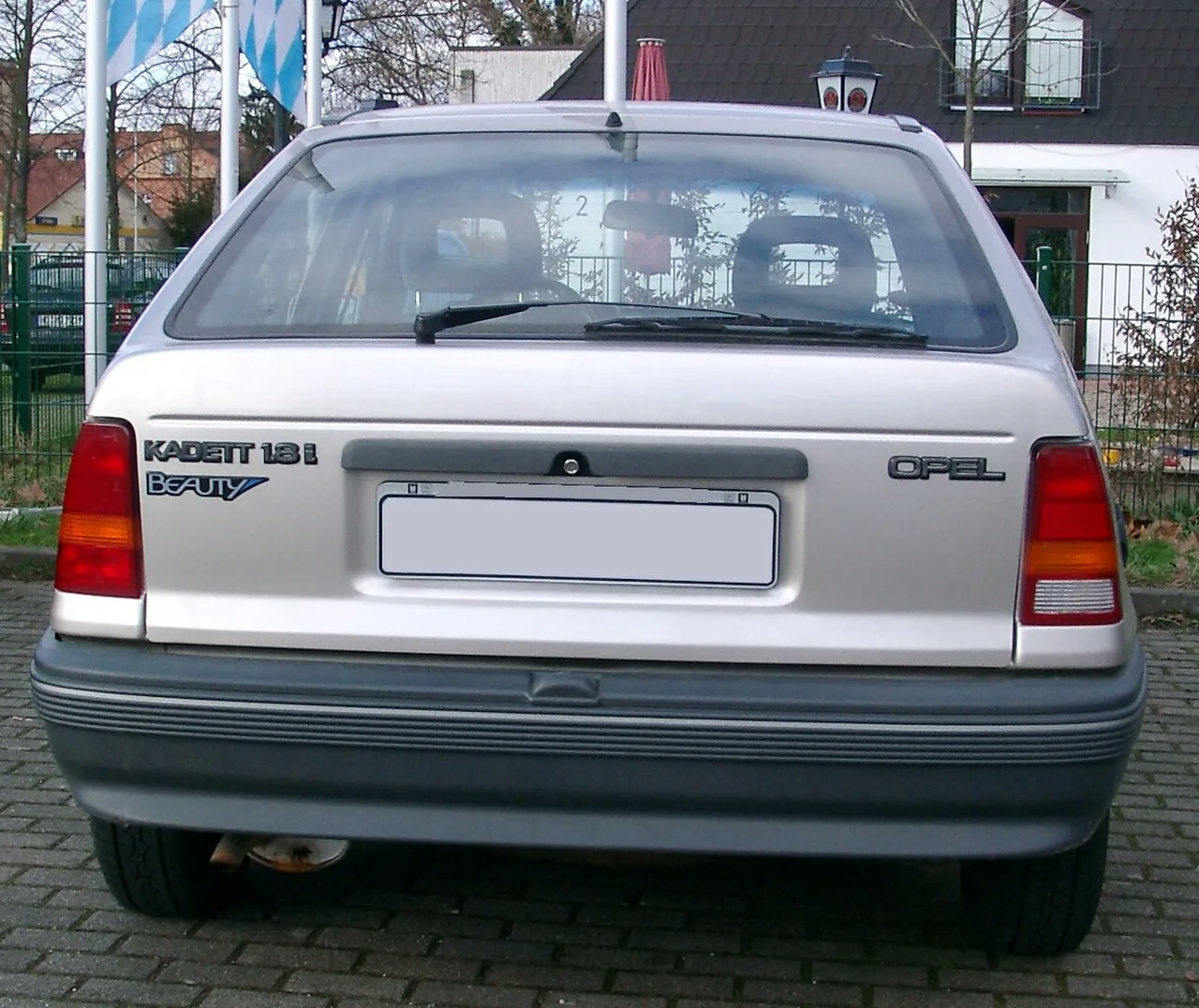
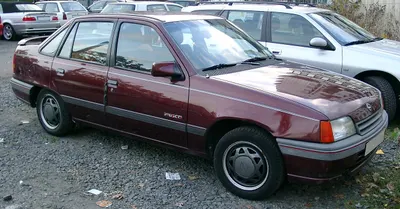
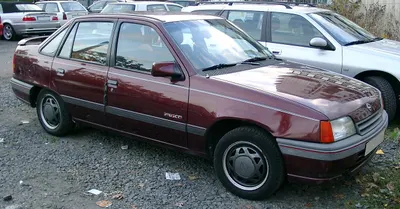
The Kadett E's swoopy 'teardrop' nose wasn't new — Opel lifted the front styling directly off its 1981 Tech 1 concept car.
The Kadett D introduced Family I with hydraulic valve lifters, a first for Opel that let mechanics swap clutches without pulling the gearbox.
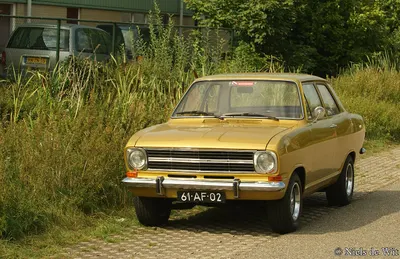
More than half of every Kadett C that Opel built — 52% of 1.7 million cars — left West Germany, making it as much an export hit as a home-market compact.
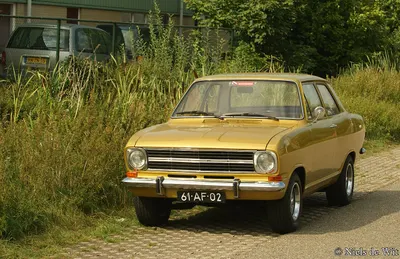
The sleek two-seat Opel GT sports car was basically a Kadett B underneath — its body was even built by a French contractor in Creil.
Opel let the Kadett name sit unused for 22 years — a casualty of WWII — before reviving it for this all-new 1962 generation.
Rivals
Same body, same money, other badges — tap any card to flip.

It briefly served as senior sibling to Marquette, a GM companion brand cancelled after just one year.

Nissan hired former BMW engineers to help develop the 510's suspension, which is why period reviewers frequently compared its handling to the BMW 1600/2002.

A Trabant 601 won its class at the 1970 Monte Carlo Rally, with a second 601 right behind it in second.

The 600 was a stopgap: the P50's body over the 601's mechanicals, and for a while its estate was built alongside the new 601 saloon.

The G80 Sport brought a 370 PS twin-turbo 3.3 V6, a mesh grille and copper-tinted chrome with copper stitching to match.

The Vigor was sold only with a five-cylinder engine, an unusual configuration Honda used to fit a longer engine transversely under a short hood.

The GS/E coupe earned the nickname "German Charger" for its long hood, short deck stance borrowed from Detroit muscle cars.

This DeVille/Fleetwood was the first production car anywhere to mount its V8 sideways, Cadillac's front-drive gamble on the new C-body.