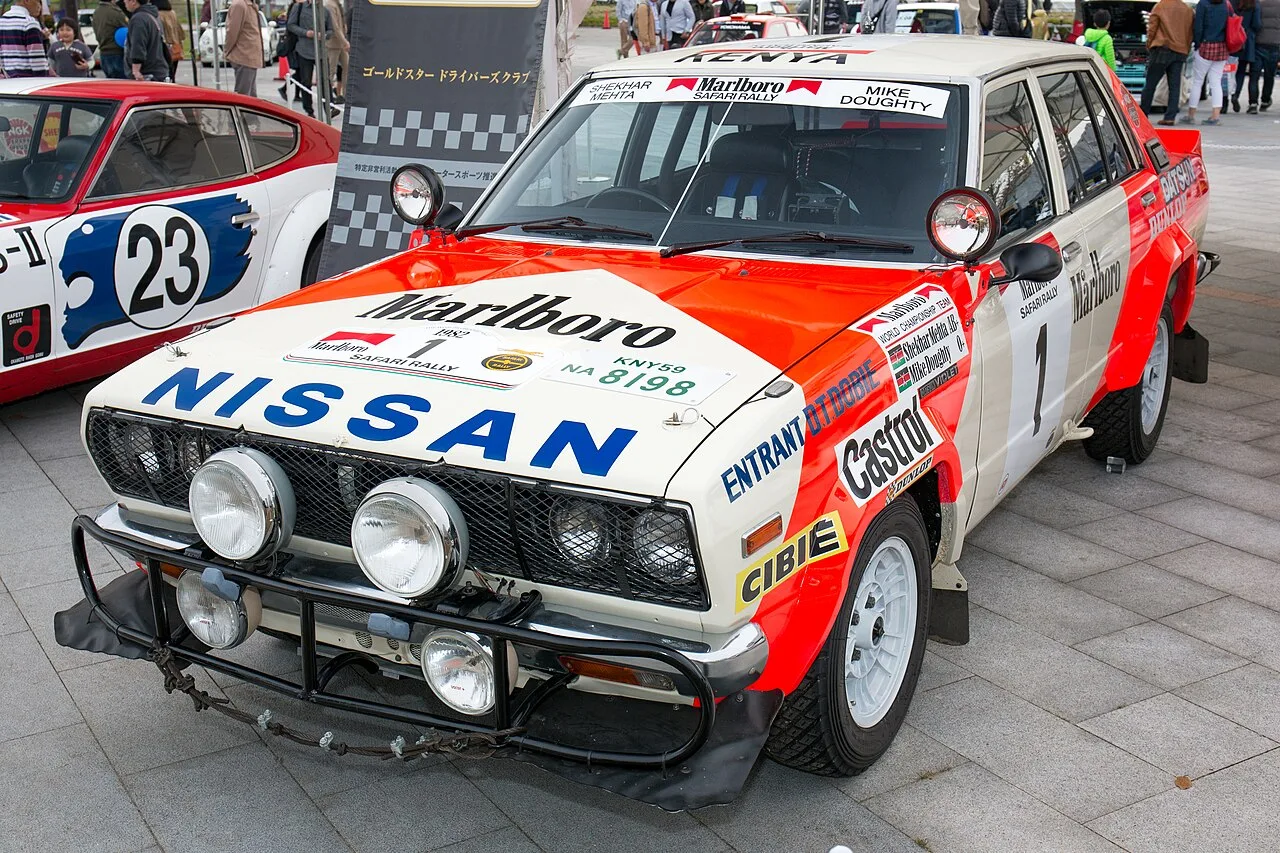
This compact Nissan felt oddly sluggish for its size — it was built on the platform of the much bigger Maxima, making it unusually heavy to haul around with its small engine.
Lead trim: Bluebird 1.6 naturally aspirated (84 PS) · up to 133 hp
Nissan Violet1986–1990
- 0spots by members
- Unclaimednobody has spotted one yet
- 0sets it belongs to
Nobody in Burbles has spotted a Nissan Violet yet. See one on the street, point the app at it, and the first card is yours — with your @handle permanently credited on this page.
FactThis compact Nissan felt oddly sluggish for its size — it was built on the platform of the much bigger Maxima, making it unusually heavy to haul around with its small engine.
Nissan renewed the Auster and Stanza lines in 1986 with squared-off styling for Japan and the US. The US Stanza kept the CA20E engine of the previous generation and, sharing a platform with the contemporary Maxima, was unusually heavy for its class and underpowered as a result. Outside North America turbocharged models were badged "Bluebird GTi" in Europe and "Stanza Supremo" in Japan (the sister model was the Auster XTT). In Europe the Auster replaced the Datsun/Nissan Bluebird: from July 1986 the T12 was imported as a knock-down kit from Japan and assembled at Nissan Motor Manufacturing UK in Sunderland as the Nissan Bluebird (saloons first, the hatchback from January 1987, with estates still sourced from Japan), and by early 1988 its UK content exceeded sixty percent so it was legally British and free of import restrictions. Almost all petrol cars used 8-valve versions of Nissan's CA engine with a five-speed manual or four-speed automatic, and the diesels used the normally aspirated LD20. The turbo models used the CA18ET, with 135 PS from a small turbocharger at 0.60 bar of boost and a 0–60 mph time of 8.6 seconds, the same engine as the European Nissan Silvia S12; naturally aspirated outputs ranged from 84 to 116 PS. Nissan replaced the Bluebird with the Primera in 1990.
Collectors Spotted in the Nissan Violet Lineage
No member has published a public street spot of the Nissan Violet yet — the First · Worldwide stamp is wide open.
Trims & Figures
5 published trims in the catalogue. A blank is a figure not recorded, not zero.
| Trim | Years | Engine | Power | Torque | 0–60 | Drive | Gearbox | MSRP |
|---|---|---|---|---|---|---|---|---|
| Bluebird 1.6 naturally aspirated (84 PS) | 1986–1990 | 1.6 L Inline-4 | 83 hp | 91 lb-ft | — | FWD | — | — |
| Bluebird 2.0 LD20 diesel (67 PS) | 1986–1990 | 2.0 L Inline-4 | 66 hp | 94 lb-ft | — | FWD | — | — |
| Bluebird 2.0 naturally aspirated (116 PS) | 1986–1990 | 2.0 L Inline-4 | 114 hp | — | — | FWD | — | — |
| Bluebird GTi / Stanza Supremo 1.8 CA18ET turbo (135 PS) | 1986–1990 | 1.8 L Inline-4 | 133 hp | 135 lb-ft | 8.6 s | FWD | — | — |
| Stanza 2.0 CA20E (US) | 1986–1989 | 2.0 L Inline-4 | 105 hp | 118 lb-ft | — | FWD | — | — |
Owning one
We don’t estimate running costs for a car like this. What it costs depends on its condition, its specialist and how it is driven, and an average would mislead.
Owners’ builds
Nobody has claimed one yet.
Photographs
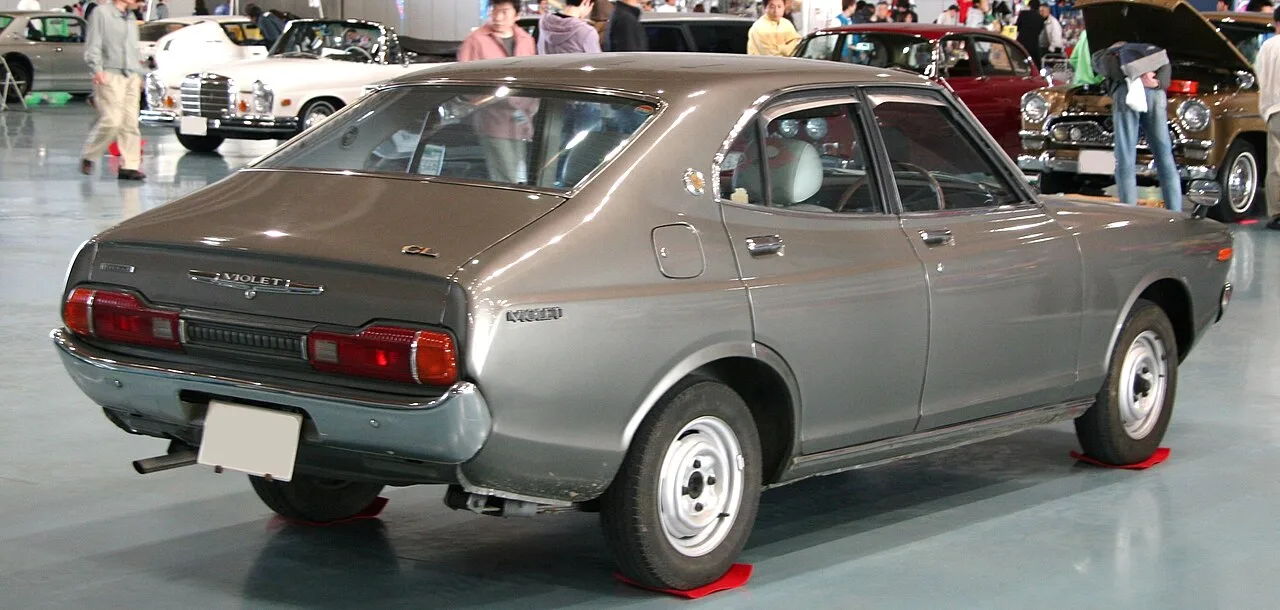
This compact Nissan felt oddly sluggish for its size — it was built on the platform of the much bigger Maxima, making it unusually heavy to haul around with its small engine.
The T11-generation Stanza pulled off something no other Nissan managed in the US: Consumer Reports rated it more reliable than the Toyota Camry, from 1983 through 1986, before Nissan fell back behind Toyota and Honda for good.
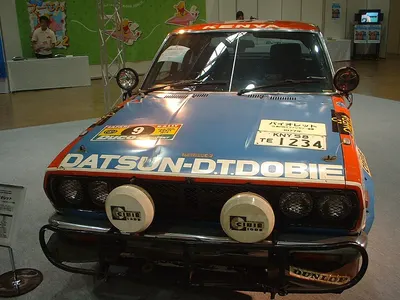
A kit-ordering mix-up left Nissan Australia with 120 two-door Stanza coupes nobody planned to build in 1979 — they sold them anyway, with zero promotion, and every one sold out.
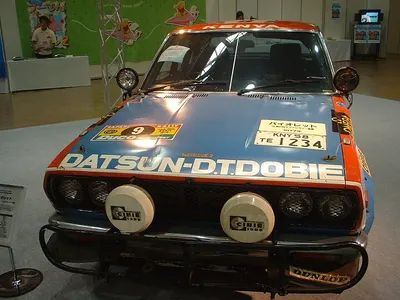
Complaints about the fastback's dark cabin and poor rear visibility were so loud that Nissan rebuilt the entire back half of the car mid-run in 1976 — roof panel, doors and all — into a conventional notchback.
Rivals
Same body, same money, other badges — tap any card to flip.

It briefly served as senior sibling to Marquette, a GM companion brand cancelled after just one year.

Nissan hired former BMW engineers to help develop the 510's suspension, which is why period reviewers frequently compared its handling to the BMW 1600/2002.

A Trabant 601 won its class at the 1970 Monte Carlo Rally, with a second 601 right behind it in second.

The 600 was a stopgap: the P50's body over the 601's mechanicals, and for a while its estate was built alongside the new 601 saloon.

The G80 Sport brought a 370 PS twin-turbo 3.3 V6, a mesh grille and copper-tinted chrome with copper stitching to match.

The Vigor was sold only with a five-cylinder engine, an unusual configuration Honda used to fit a longer engine transversely under a short hood.

The GS/E coupe earned the nickname "German Charger" for its long hood, short deck stance borrowed from Detroit muscle cars.

This DeVille/Fleetwood was the first production car anywhere to mount its V8 sideways, Cadillac's front-drive gamble on the new C-body.