Complaints about the fastback's dark cabin and poor rear visibility were so loud that Nissan rebuilt the entire back half of the car mid-run in 1976 — roof panel, doors and all — into a conventional notchback.
Median 90 hp across 221 similar cars
Lead trim: 160J SSS twin-carb (95 PS DIN, export) · up to 108 hp
Nissan Violet 710 / Datsun 7101973–1977
- 0spots by members
- Unclaimednobody has spotted one yet
- 0sets it belongs to
Nobody in Burbles has spotted a Nissan Violet 710 / Datsun 710 yet. See one on the street, point the app at it, and the first card is yours — with your @handle permanently credited on this page.
FactComplaints about the fastback's dark cabin and poor rear visibility were so loud that Nissan rebuilt the entire back half of the car mid-run in 1976 — roof panel, doors and all — into a conventional notchback.
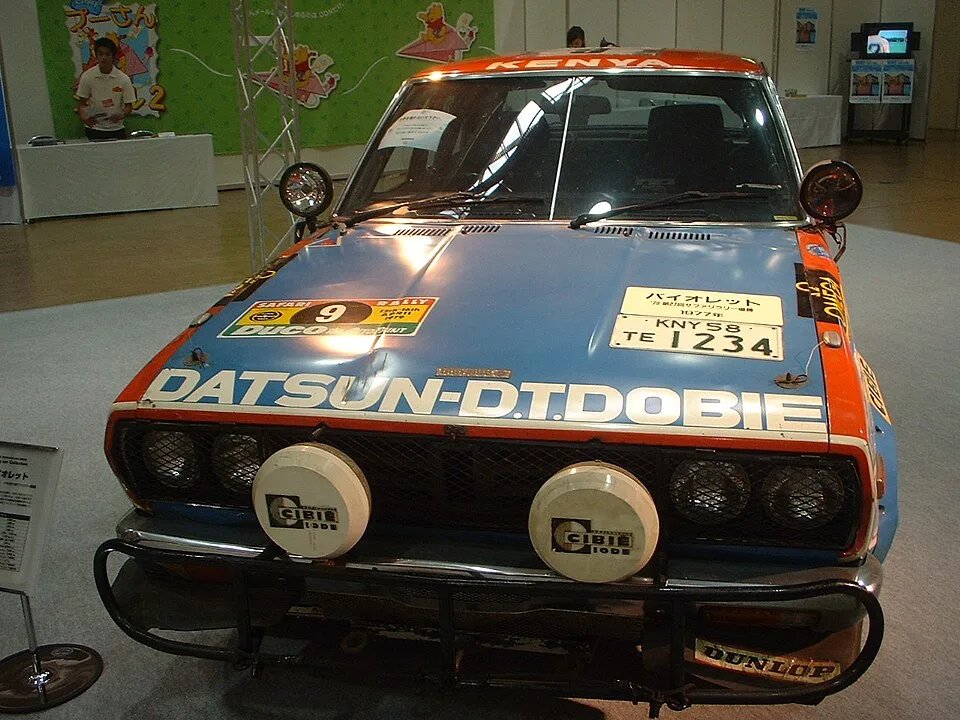
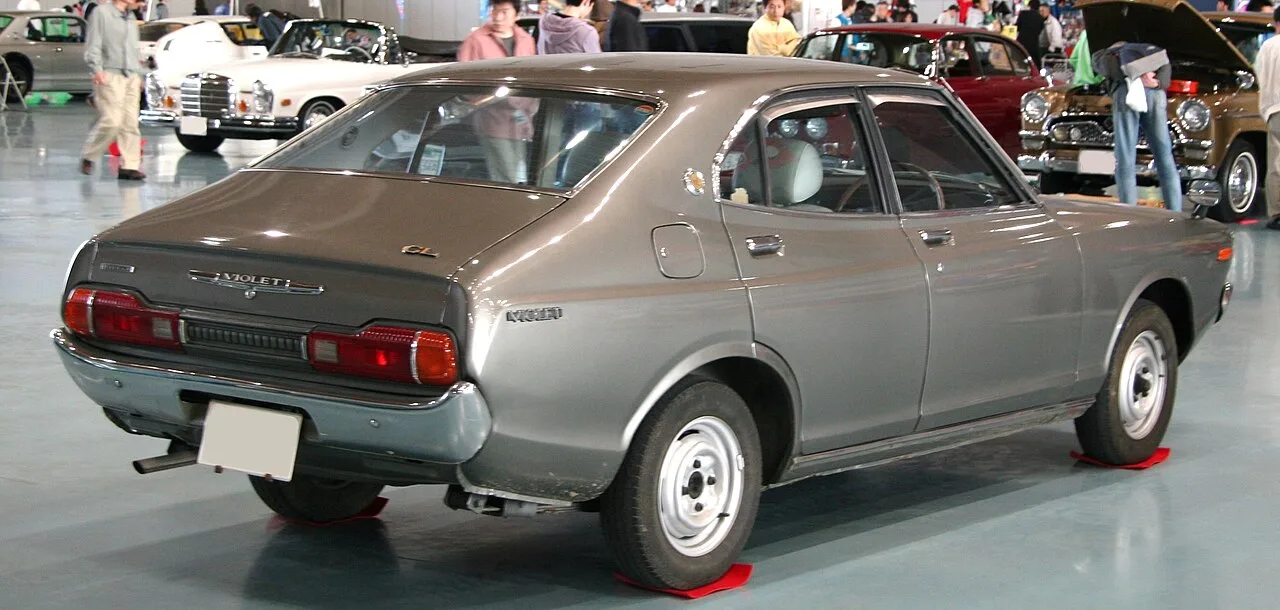
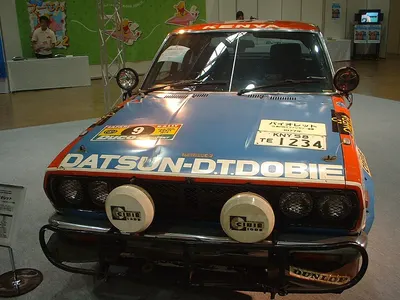
Introduced in January 1973, the Nissan Violet was a smaller version of the Datsun Bluebird 610, sold outside Japan under the Datsun brand as the 140J/160J and, in the United States, simply as the Datsun 710. It was built as a two-door saloon, two-door coupé, four-door fastback (later a regular four-door saloon), estate and van, and was initially exclusive to Nissan's Japanese Nissan Cherry Store dealerships as a larger companion to the Nissan Cherry. The sporty SSS has rear independent suspension, while the others have a leaf-sprung rear. The fastback's "coke bottle" styling drew complaints about its looks, limited rear vision and dark rear cabin, and taxi companies refused to buy more, so from February 1976 Nissan replaced the entire rear end (roof panel and doors included) with notchback bodywork, which took the new chassis code 711; the coupés and vans were not remodelled. The most powerful version in Japan was the fuel-injected 1600 SSS-E with 110 PS JIS at 6200 rpm, and in export markets the twin-carb 160J SSS claimed 95 PS DIN. In the United States and Canada it was the Datsun 710 (two- or four-door sedans, a two-door coupé and a five-door wagon), with the 2-litre L20B also used in the 610 rated at 97 or 94 hp SAE net in 1975 (49-state and Canadian versus California trim); the Taiwanese Yue Loong Violet 707 and the Mexican Datsun 160J were built locally.
Collectors Spotted in the Nissan Violet Lineage
No member has published a public street spot of the Nissan Violet yet — the First · Worldwide stamp is wide open.
Trims & Figures
3 published trims in the catalogue. A blank is a figure not recorded, not zero.
| Trim | Years | Engine | Power | Torque | 0–60 | Drive | Gearbox | MSRP |
|---|---|---|---|---|---|---|---|---|
| 160J SSS twin-carb (95 PS DIN, export) | 1973–1977 | 1.6 L Inline-4 | 94 hp | — | — | RWD | — | — |
| Datsun 710 2.0 L20B (US; 97 hp, 94 hp California) | 1974–1977 | 2.0 L Inline-4 | 97 hp | 112 lb-ft | — | RWD | — | — |
| Violet 1600 SSS-E fuel-injected (110 PS JIS, Japan) | 1973–1977 | 1.6 L Inline-4 | 108 hp | 106 lb-ft | — | RWD | — | — |
Owning one
We don’t estimate running costs for a car like this. What it costs depends on its condition, its specialist and how it is driven, and an average would mislead.
Owners’ builds
Nobody has claimed one yet.
Photographs
This compact Nissan felt oddly sluggish for its size — it was built on the platform of the much bigger Maxima, making it unusually heavy to haul around with its small engine.
The T11-generation Stanza pulled off something no other Nissan managed in the US: Consumer Reports rated it more reliable than the Toyota Camry, from 1983 through 1986, before Nissan fell back behind Toyota and Honda for good.
A kit-ordering mix-up left Nissan Australia with 120 two-door Stanza coupes nobody planned to build in 1979 — they sold them anyway, with zero promotion, and every one sold out.
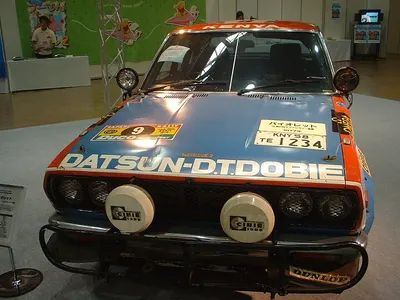
Complaints about the fastback's dark cabin and poor rear visibility were so loud that Nissan rebuilt the entire back half of the car mid-run in 1976 — roof panel, doors and all — into a conventional notchback.
Rivals
Same body, same money, other badges — tap any card to flip.

It briefly served as senior sibling to Marquette, a GM companion brand cancelled after just one year.

Nissan hired former BMW engineers to help develop the 510's suspension, which is why period reviewers frequently compared its handling to the BMW 1600/2002.

A Trabant 601 won its class at the 1970 Monte Carlo Rally, with a second 601 right behind it in second.

The 600 was a stopgap: the P50's body over the 601's mechanicals, and for a while its estate was built alongside the new 601 saloon.

The G80 Sport brought a 370 PS twin-turbo 3.3 V6, a mesh grille and copper-tinted chrome with copper stitching to match.

The Vigor was sold only with a five-cylinder engine, an unusual configuration Honda used to fit a longer engine transversely under a short hood.

The GS/E coupe earned the nickname "German Charger" for its long hood, short deck stance borrowed from Detroit muscle cars.

This DeVille/Fleetwood was the first production car anywhere to mount its V8 sideways, Cadillac's front-drive gamble on the new C-body.