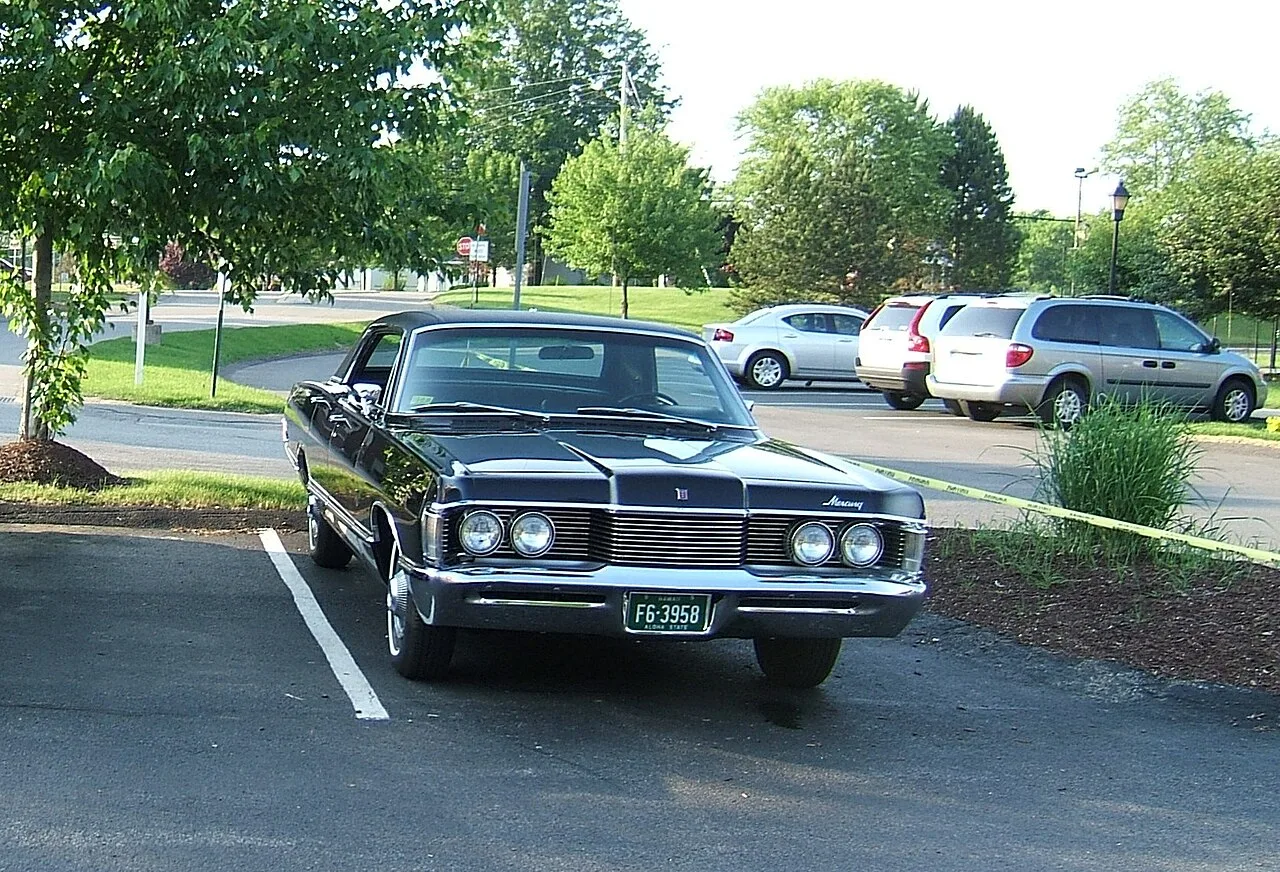
This Park Lane Brougham introduced wraparound front turn signals and parking lights that lit both forward and to the side — a look Ford kept using on its cars for decades after.
Lead trim: Park Lane
Mercury Park Lane1964–1968
- 0spots by members
- Unclaimednobody has spotted one yet
- 0sets it belongs to
Nobody in Burbles has spotted a Mercury Park Lane yet. See one on the street, point the app at it, and the first card is yours — with your @handle permanently credited on this page.
FactThis Park Lane Brougham introduced wraparound front turn signals and parking lights that lit both forward and to the side — a look Ford kept using on its cars for decades after.
For 1964, Mercury's 25th anniversary, the Park Lane returned atop the line above the Monterey and the reintroduced Montclair, this time on the same wheelbase as other Mercury lines (120.0–123.0 in on the infobox), differing primarily in trim; it was 81.1 in wide, related to the Ford LTD, with a 410 cu in and a 428 cu in Ford FE V8 (infobox; the page gives no ratings). The four-door hardtop or hardtop fastback listed at US$3,413 and 6,060 were sold; as the premium trim many carried the "breezeway" retractable rear window, and Mercury offered a fastback roofline as part of the Marauder option package. The Colony Park station wagon was aligned with the Park Lane. For 1965 the full-size chassis was redesigned with a slab-sided look inspired by the Lincoln Continental and the retractable rear window was limited to sedans. For 1967 the Park Lane Brougham was introduced as an exclusive trim package on the sedan only (the flagship Mercury for 1967, in four-door sedan and hardtop, with "Twin Comfort Lounge" split bench seats; 3,325 sedans and 4,189 hardtops built), with "yacht deck paneling" woodgrain trim a rarely ordered option on hardtop coupes and convertibles. As the division redesigned its full-sized line for 1969 the Marquis was expanded to a full range and took the Park Lane's place.
Collectors Spotted in the Mercury Park Lane Lineage
No member has published a public street spot of the Mercury Park Lane yet — the First · Worldwide stamp is wide open.
Trims & Figures
One published trim in the catalogue. A blank is a figure not recorded, not zero.
| Trim | Years | Engine | Power | Torque | 0–60 | Drive | Gearbox | MSRP |
|---|---|---|---|---|---|---|---|---|
| Park Lane | 1964–1968 | V8 | — | — | — | RWD | — | — |
Owning one
We don’t estimate running costs for a car like this. What it costs depends on its condition, its specialist and how it is driven, and an average would mislead.
Owners’ builds
Nobody has claimed one yet.
Photographs
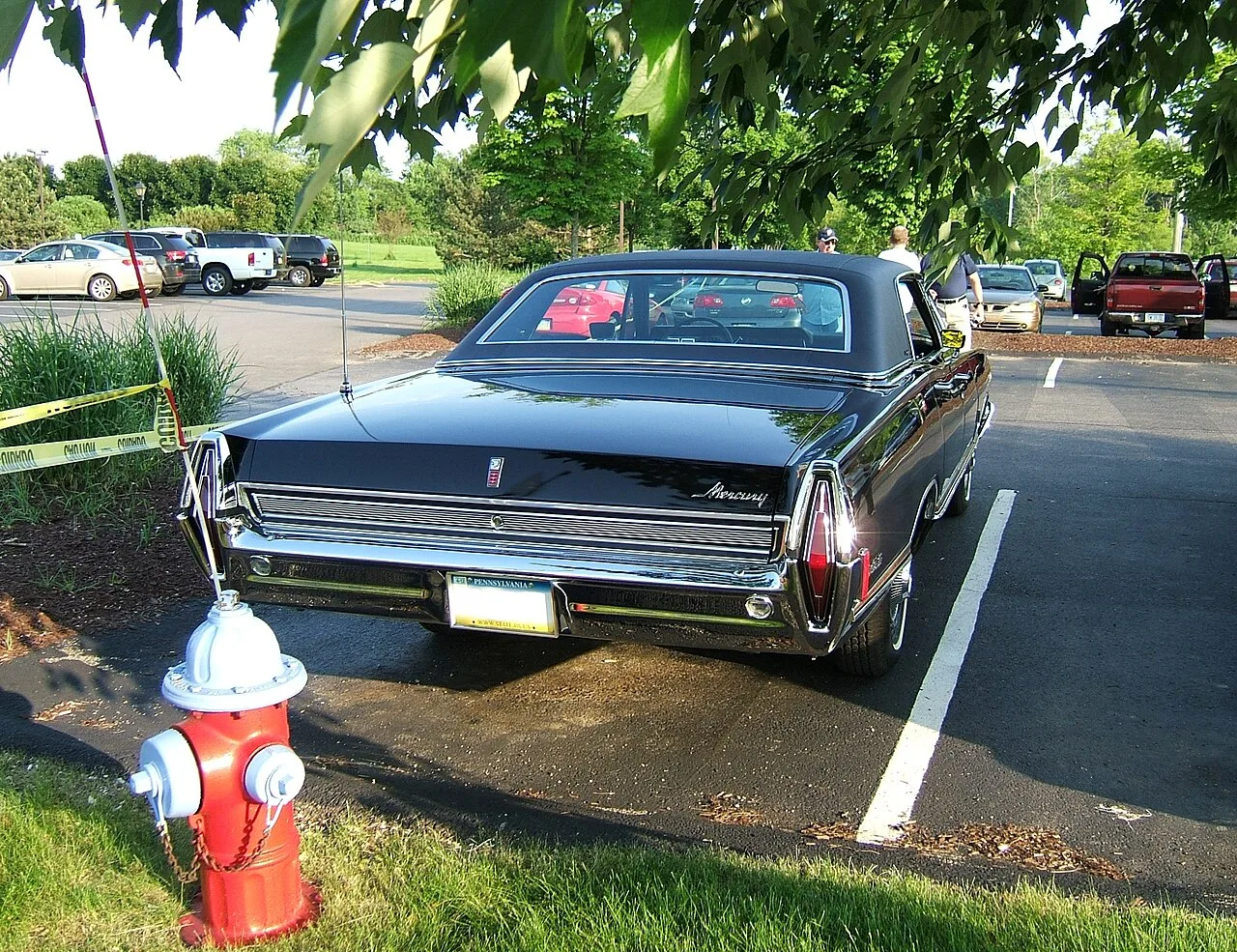
This Park Lane Brougham introduced wraparound front turn signals and parking lights that lit both forward and to the side — a look Ford kept using on its cars for decades after.
In 1958 the Park Lane's optional Super Marauder engine became the first mass-production engine in any American car officially rated at 400 horsepower.
Rivals
Same body, same money, other badges — tap any card to flip.

It briefly served as senior sibling to Marquette, a GM companion brand cancelled after just one year.

Nissan hired former BMW engineers to help develop the 510's suspension, which is why period reviewers frequently compared its handling to the BMW 1600/2002.

A Trabant 601 won its class at the 1970 Monte Carlo Rally, with a second 601 right behind it in second.

The 600 was a stopgap: the P50's body over the 601's mechanicals, and for a while its estate was built alongside the new 601 saloon.

The G80 Sport brought a 370 PS twin-turbo 3.3 V6, a mesh grille and copper-tinted chrome with copper stitching to match.

The Vigor was sold only with a five-cylinder engine, an unusual configuration Honda used to fit a longer engine transversely under a short hood.

The GS/E coupe earned the nickname "German Charger" for its long hood, short deck stance borrowed from Detroit muscle cars.

This DeVille/Fleetwood was the first production car anywhere to mount its V8 sideways, Cadillac's front-drive gamble on the new C-body.