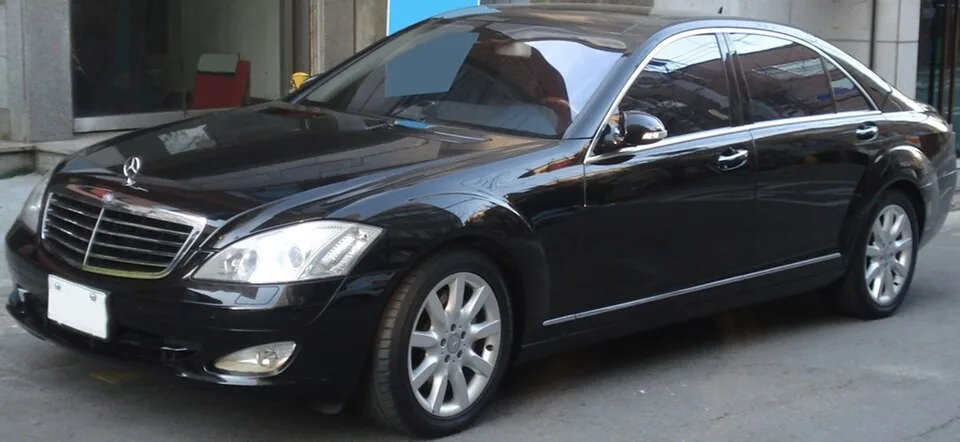
The 300 SE sedan raced European Touring Car events despite costing nearly double the top W111 model it was based on.
Median 95 hp across 325 similar cars
Lead trim: 300 SE (M189 3.0 fuel-injected I6, 160 hp) · up to 170 hp
Mercedes-Benz S-ClassW112 · 1961–1967
- 0spots by members
- Unclaimednobody has spotted one yet
- 0sets it belongs to
Nobody in Burbles has spotted a Mercedes-Benz S-Class yet. See one on the street, point the app at it, and the first card is yours — with your @handle permanently credited on this page.
FactThe 300 SE sedan raced European Touring Car events despite costing nearly double the top W111 model it was based on.
The Mercedes-Benz W112 is a luxury automobile produced by Mercedes-Benz from 1961 to 1967 and marketed as the 300 SE, available as a standard sedan (its principal form, 1961–1965), stretched-wheelbase sedan (Lang, from March 1963, 1,546 built) and a distinct coupé and convertible (1962–1967, introduced in February 1962 with the Paul Bracq designed bodywork and interior it shares with the W111 220 SE coupé/convertible). The sedan is based on the W111 Fintail chassis and coachwork, and was created as a stopgap after the 300d Adenauer limousine, using the 3.0 litre mechanically fuel-injected M189 six-cylinder — at the time the company's largest engine — from the 300d, with a higher level of wood and leather trim than the corresponding W111 and standard power steering, automatic transmission and pneumatic self-levelling suspension (a manual transmission would return as an option). Its M189 produced 160 hp (170 after 1964) with a top speed of 180 km/h (190 after 1964, 175 and 185 for automatic). It cost almost twice the price of the top W111 model, the 220 SE, and built numbers were low: 5,202 sedans (3,656 short and 1,546 long), and 2,419 coupés and cabriolets in the page's text (its model list gives 2,419 coupés and 708 cabriolets); in November 1967 the coupé and cabriolet's M189 was replaced by the 2.8 litre electronically fuel-injected straight-six of the W111 280 SE. The 300 SE sedan was entered in international and European Touring Car Challenge events and won several rallies.
Collectors Spotted in the Mercedes-Benz S-Class Lineage
No member has published a public street spot of the Mercedes-Benz S-Class yet — the First · Worldwide stamp is wide open.
Trims & Figures
2 published trims in the catalogue. A blank is a figure not recorded, not zero.
| Trim | Years | Engine | Power | Torque | 0–60 | Drive | Gearbox | MSRP |
|---|---|---|---|---|---|---|---|---|
| 300 SE (M189 3.0 fuel-injected I6, 160 hp) | 1961–1964 | 3.0 L Inline-6 | 160 hp | — | — | RWD | — | — |
| 300 SE (M189, 170 hp after 1964) | 1964–1967 | 3.0 L Inline-6 | 170 hp | — | — | RWD | — | — |
Owning one
We don’t estimate running costs for a car like this. What it costs depends on its condition, its specialist and how it is driven, and an average would mislead.
Owners’ builds
Nobody has claimed one yet.
Photographs
This S63 drops the S-Class's century-old hood ornament for a Panamericana grille with a giant badge up front — a first for the S-Class sedan.
This S-Class pioneered a new kind of rear airbag: instead of being gas-inflated, it deploys by inflating a supporting structure and letting ordinary ambient air fill the bag - a world first.
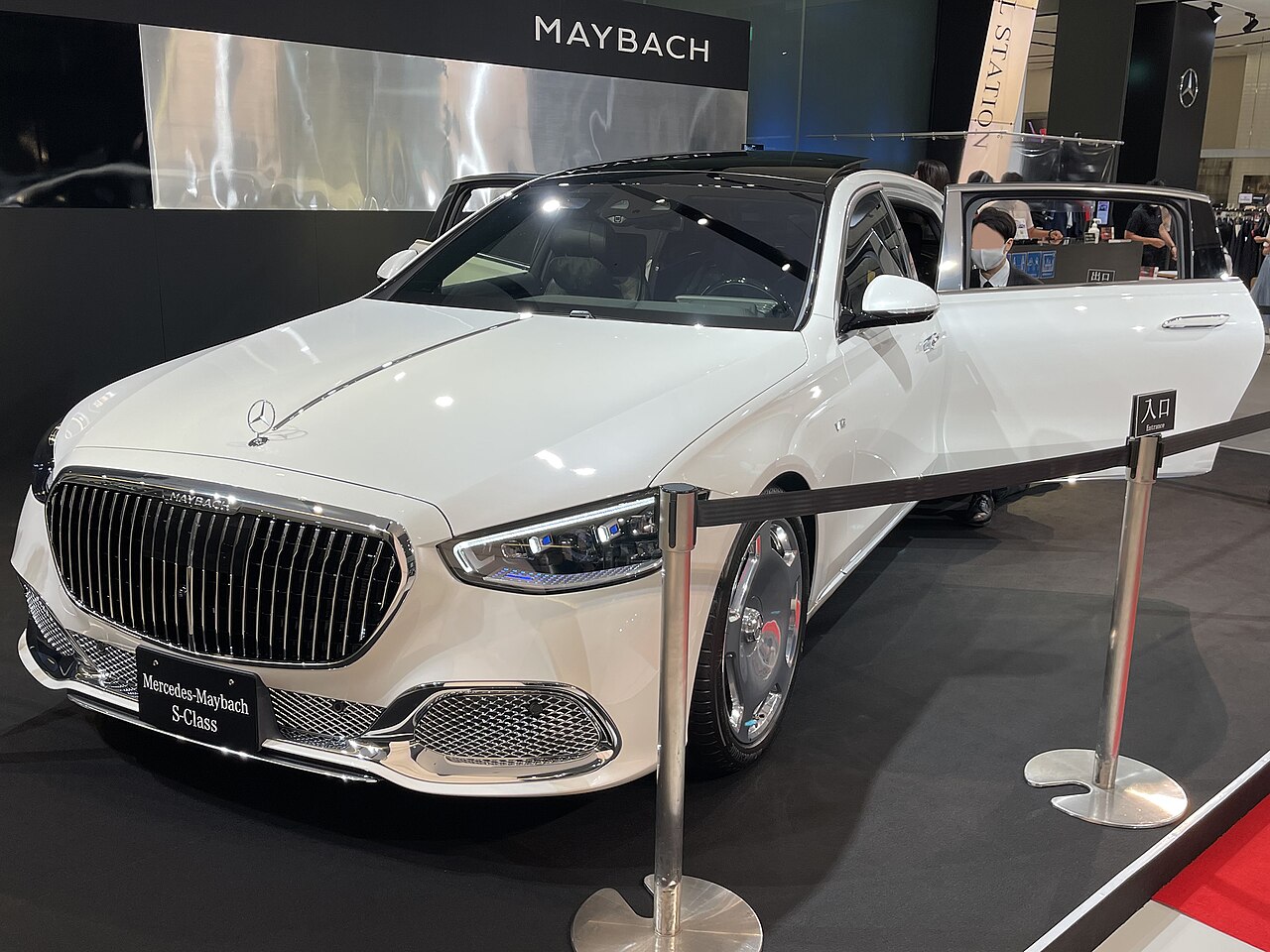
The Z223 Maybach S-Class is 18 cm longer than the car it replaced, and the first Mercedes with rear-passenger frontal airbags.
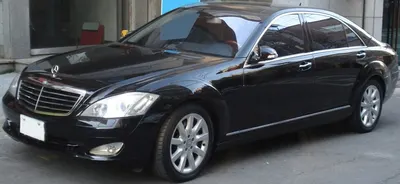
The V12 AMG S-Class went out on a high note: a 130-unit S 65 Final Edition unveiled at the 2019 Geneva show before the engine was retired for good.
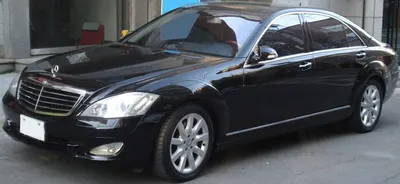
The W222 S63 AMG's battery wasn't a bespoke part — Mercedes borrowed a lightweight 78 Ah lithium-ion unit straight from the SLS AMG Black Series supercar.
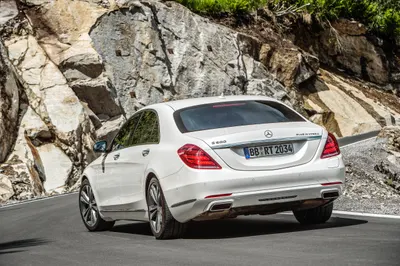
The W222 S-Class got a suspension with 'eyes': a stereo camera reads the road up to 15 meters ahead at speeds up to 130 km/h, softening each damper before the car even hits the bump.
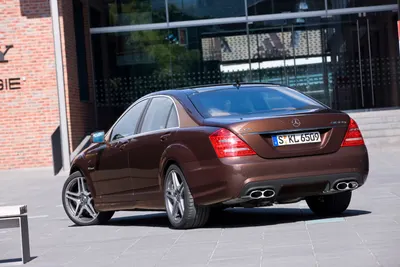
Mercedes built this S65 with a 5-speed automatic while rivals had moved to seven gears, saving the V12's torque from a gearbox it would have broken.
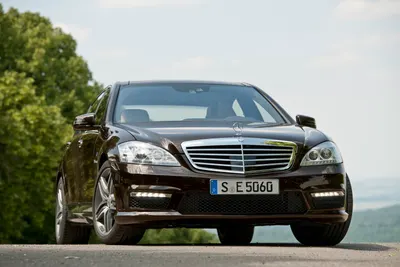
The S63 AMG's tail lights hide a tiny detail: 52 individual LEDs arranged into a glowing "C" shape on each side.
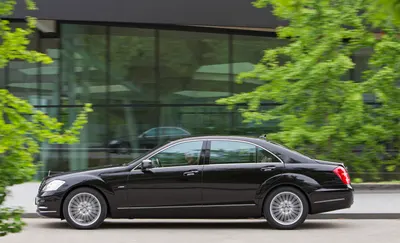
The W221 was the first S-Class offered with Mercedes' Active Body Control-based Magic Body Control successor tech groundwork and the first to include a night-vision assist system as an option in the US.
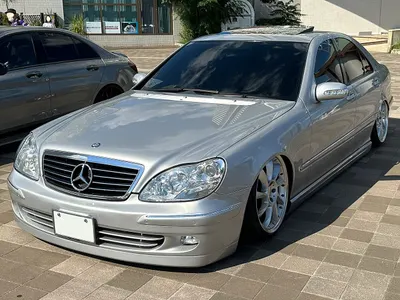
AMG's own V12 for the S65 reportedly made 1,200 N·m of torque in testing — Mercedes had to electronically cap it because the transmission behind it couldn't survive the real number.
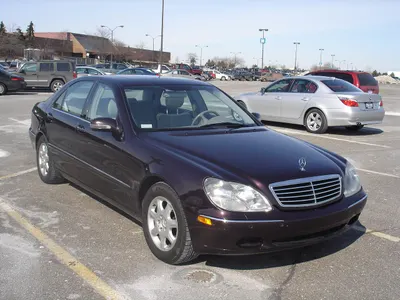
The sportier S 55 AMG and the flagship S 600 made identical horsepower — Mercedes simply aimed one at drivers and the other at passengers.
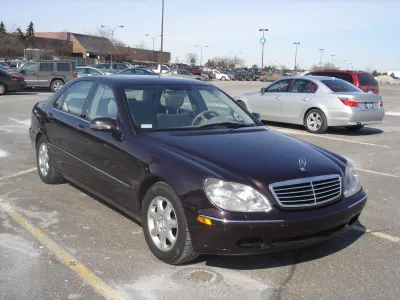
The W220 dropped nearly 200 kg compared to its W140 predecessor despite growing in interior space, a weight-reduction goal set directly in response to criticism of the older car's bulk.
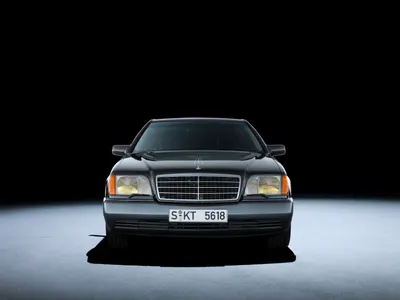
The W140's development cost roughly one billion dollars, making it one of the most expensive car programs of its era.
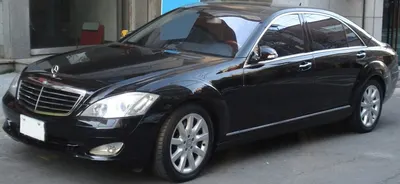
The W126 S-Class pioneered seat belt pretensioners that automatically cinched tight the instant the car sensed a crash coming — years ahead of the rest of the industry.
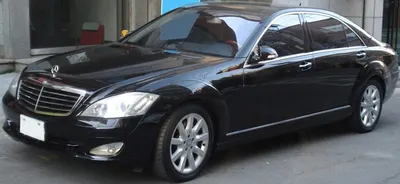
China quietly cloned this S-Class in 1974: the Shanghai SH771, a reverse-engineered copy meant to replace a 1950s sedan, built only as prototypes.
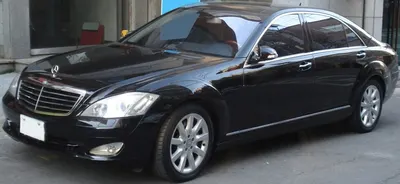
Mercedes dropped its flagship 600 limousine's 6.3-litre V8 into an ordinary-looking sedan body. It's the car historians credit as the first true Mercedes sleeper.
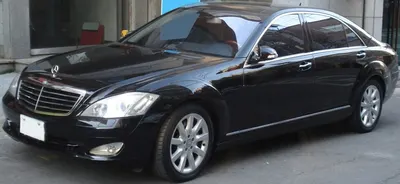
The W108 sold well enough in Southeast Asia and North America to rack up 383,072 built by 1972.
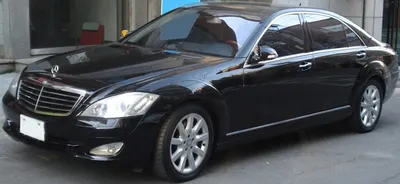
The 300 SE sedan raced European Touring Car events despite costing nearly double the top W111 model it was based on.
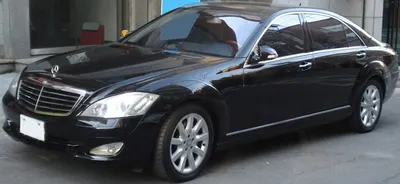
Every W111 sedan wore the pointed "Heckflosse" fintail that gave the whole line its nickname — except these two-door coupes and cabriolets, which designer Paul Bracq deliberately gave a cleaner, more modern rear years ahead of its time.
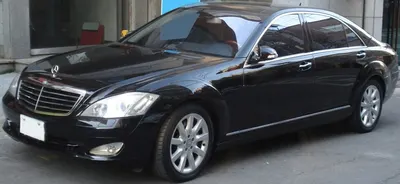
The "Fintail" quietly rewrote car safety: Mercedes built in front and rear crumple zones and patented retractable seatbelts, years before either was ever required by law.
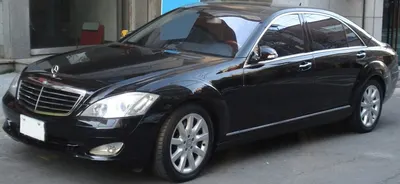
The 220 SE cabriolet cost ten percent more than a Cadillac Eldorado Biarritz, with no power steering on offer at any price.
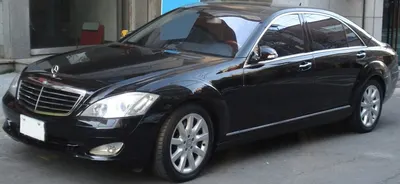
The 219 is a 220's front end welded to a 180's rear doors, a factory mix-and-match of two different cars.
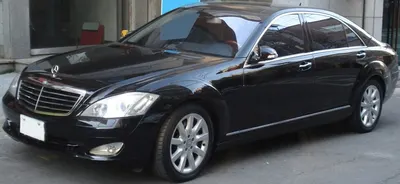
The 220 a exists because Mercedes stretched a four-cylinder W120 170mm to squeeze in a straight-six.
Rivals
Same body, same money, other badges — tap any card to flip.

It briefly served as senior sibling to Marquette, a GM companion brand cancelled after just one year.

Nissan hired former BMW engineers to help develop the 510's suspension, which is why period reviewers frequently compared its handling to the BMW 1600/2002.

A Trabant 601 won its class at the 1970 Monte Carlo Rally, with a second 601 right behind it in second.

The 600 was a stopgap: the P50's body over the 601's mechanicals, and for a while its estate was built alongside the new 601 saloon.

The G80 Sport brought a 370 PS twin-turbo 3.3 V6, a mesh grille and copper-tinted chrome with copper stitching to match.

The Vigor was sold only with a five-cylinder engine, an unusual configuration Honda used to fit a longer engine transversely under a short hood.

The GS/E coupe earned the nickname "German Charger" for its long hood, short deck stance borrowed from Detroit muscle cars.

This DeVille/Fleetwood was the first production car anywhere to mount its V8 sideways, Cadillac's front-drive gamble on the new C-body.