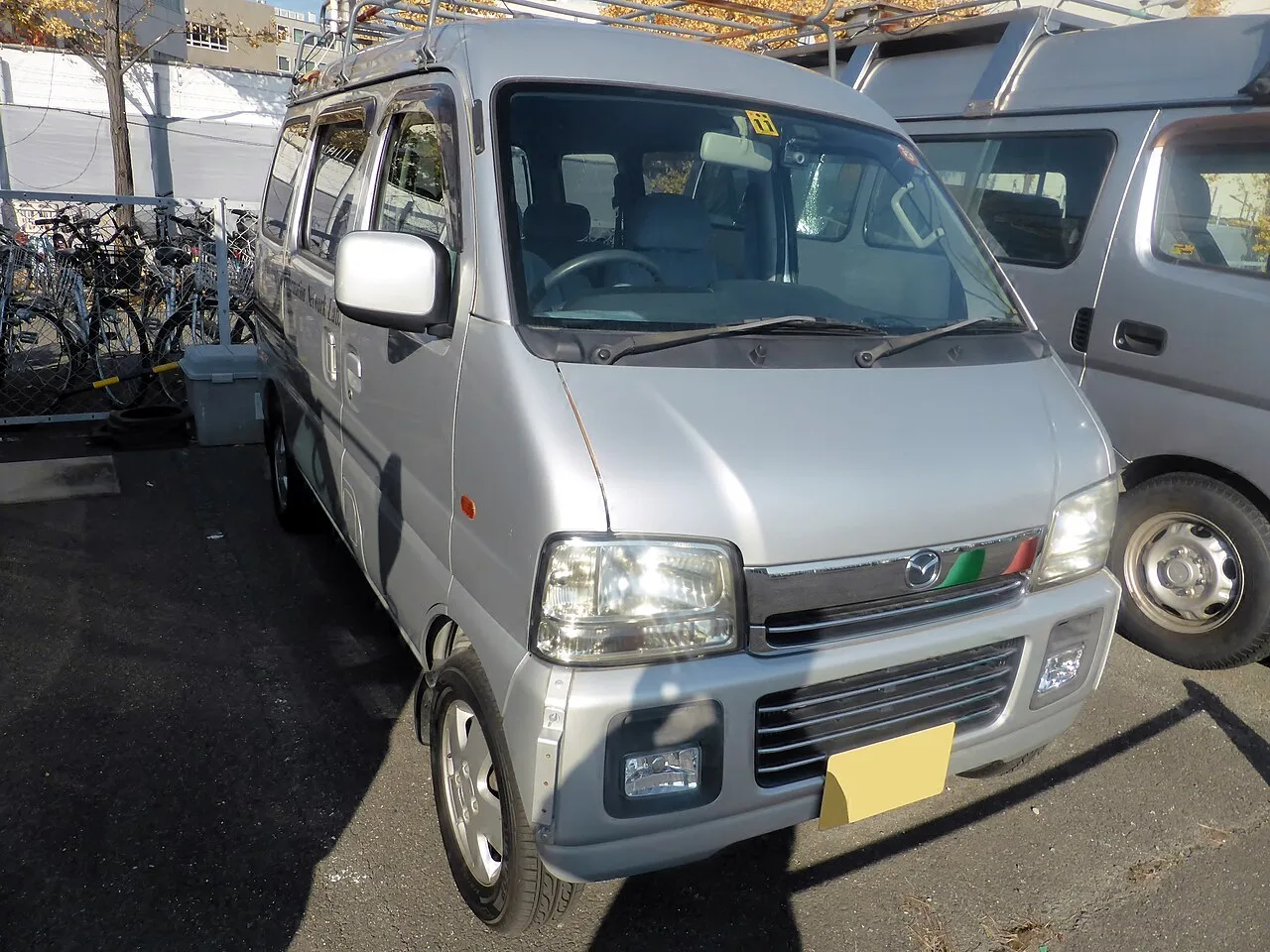
The Suzuki Every underneath was, for the first time, designed as a passenger vehicle first, with the work vans derived from it.
Lead trim: 657 cc K6A
Mazda Scrum Van / Wagon2005–2015
- 0spots by members
- Unclaimednobody has spotted one yet
- 0sets it belongs to
Nobody in Burbles has spotted a Mazda Scrum Van / Wagon yet. See one on the street, point the app at it, and the first card is yours — with your @handle permanently credited on this page.
FactThe Suzuki Every underneath was, for the first time, designed as a passenger vehicle first, with the work vans derived from it.
This Mazda Scrum van and wagon is the rebadged fifth-generation Suzuki Every (DA64), introduced in Japan in August 2005 and built until February 2015. Unlike earlier Everys it was designed primarily as a passenger vehicle, with a rear seat that slides 150 mm. It is mid-engined with rear- or four-wheel drive and Suzuki's 657 cc K6A three-cylinder, naturally aspirated or turbocharged, with a 5-speed manual or a 3- or 4-speed automatic. It was also sold as the Mitsubishi Minicab Van and Town Box and the Nissan NV100 Clipper.
Collectors Spotted in the Mazda Scrum Lineage
No member has published a public street spot of the Mazda Scrum yet — the First · Worldwide stamp is wide open.
Trims & Figures
2 published trims in the catalogue. A blank is a figure not recorded, not zero.
| Trim | Years | Engine | Power | Torque | 0–60 | Drive | Gearbox | MSRP |
|---|---|---|---|---|---|---|---|---|
| 657 cc K6A | 2005–2015 | 0.7 L Inline-3 | — | — | — | — | — | — |
| 657 cc K6A turbo | 2005–2015 | 0.7 L Inline-3 | — | — | — | — | — | — |
Owning one
We don’t estimate running costs for a car like this. What it costs depends on its condition, its specialist and how it is driven, and an average would mislead.
Owners’ builds
Nobody has claimed one yet.
Photographs
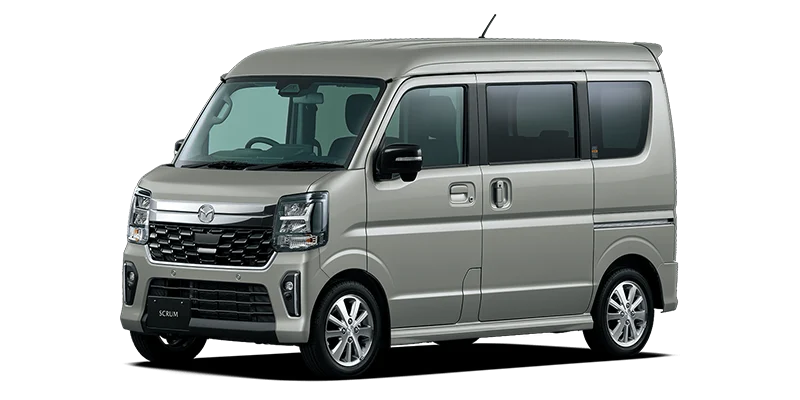
The Suzuki Every it shares its body with went into production in Pakistan in October 2024, replacing the Suzuki Bolan there.
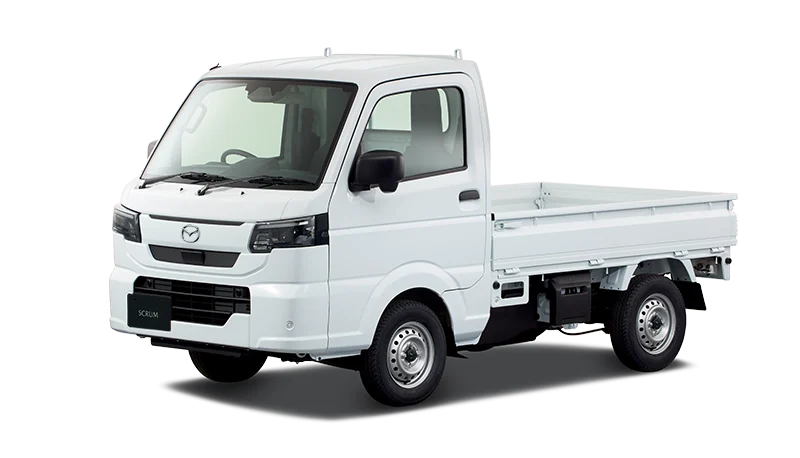
Its Suzuki Carry base was the first all-new Carry in 14 years and 9 months, and the only kei truck with rust-proof steel in its frame too.
The Suzuki Every underneath was, for the first time, designed as a passenger vehicle first, with the work vans derived from it.
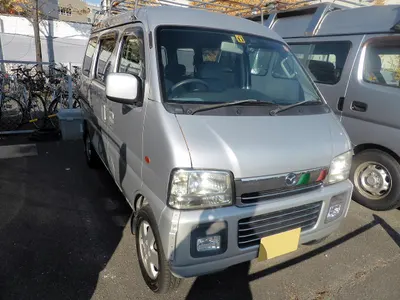
Scrum is named for the rugby maneuver, chosen by Mazda to signify toughness.
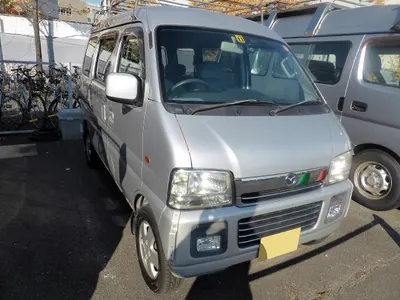
Mazda named this tiny kei truck after a rugby scrum — borrowing the term specifically to signal toughness.
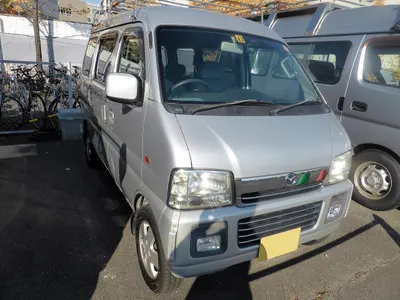
This very first Scrum lasted just nine months on sale before Japan's kei-car rules changed and it was replaced by a bigger-engined successor.
Rivals
Same body, same money, other badges — tap any card to flip.
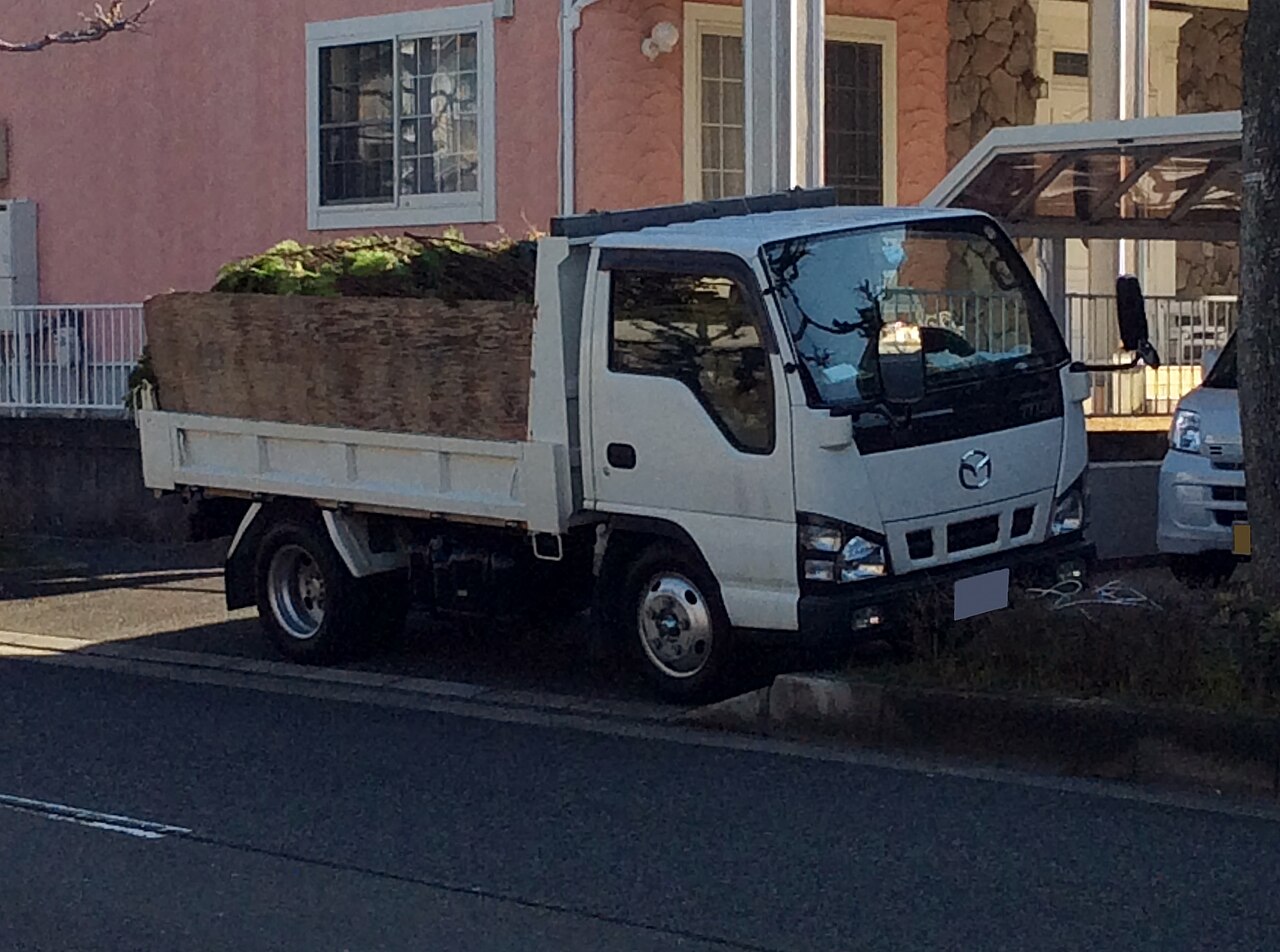
When Mazda's E2000 — the truck that became the Titan — launched in January 1964, the factory was tasked with building 1,900 of them a month.
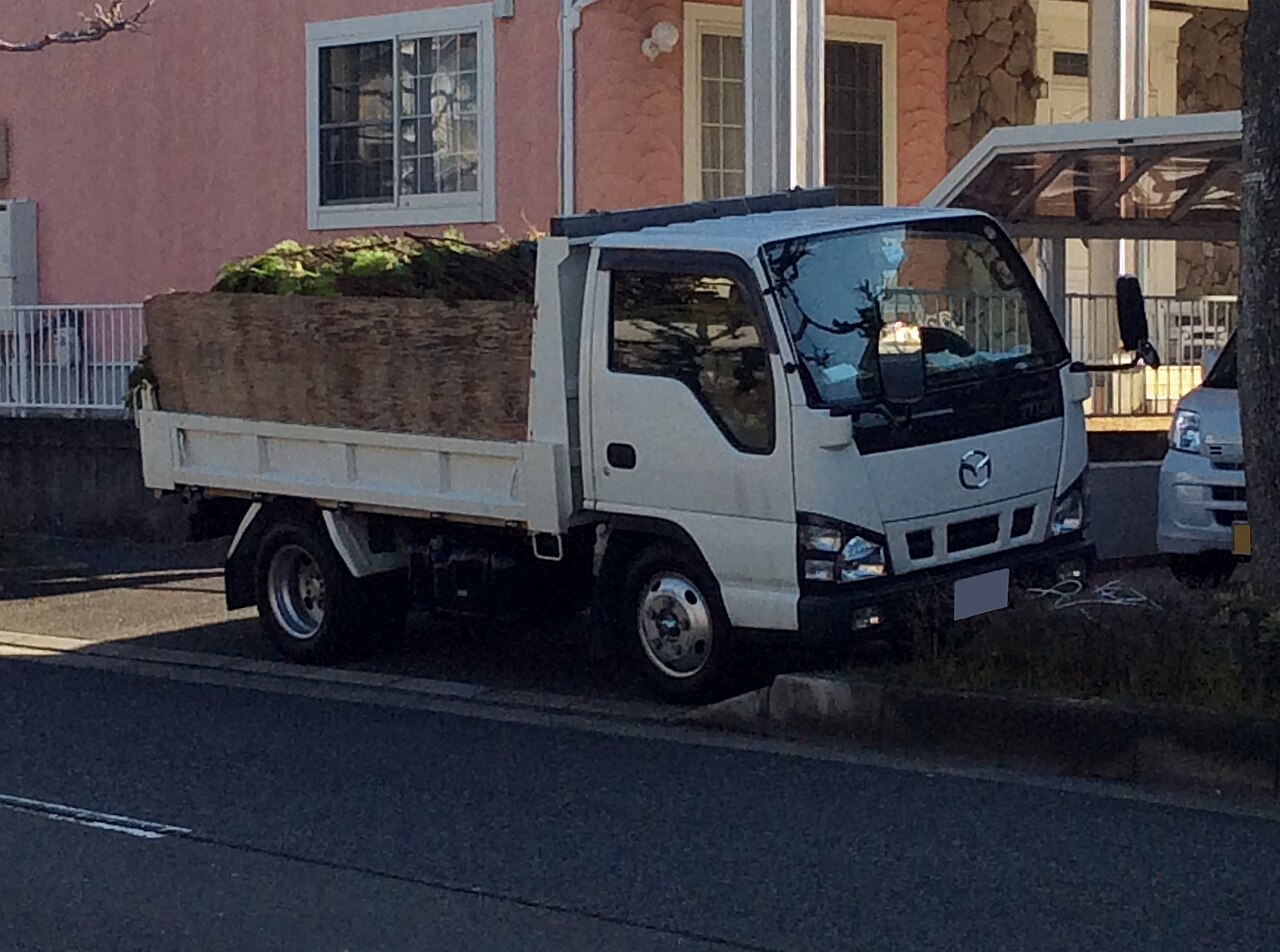
Swaraj Mazda built this truck under license in India from 1985, and the plant survived name changes all the way to SML Isuzu.
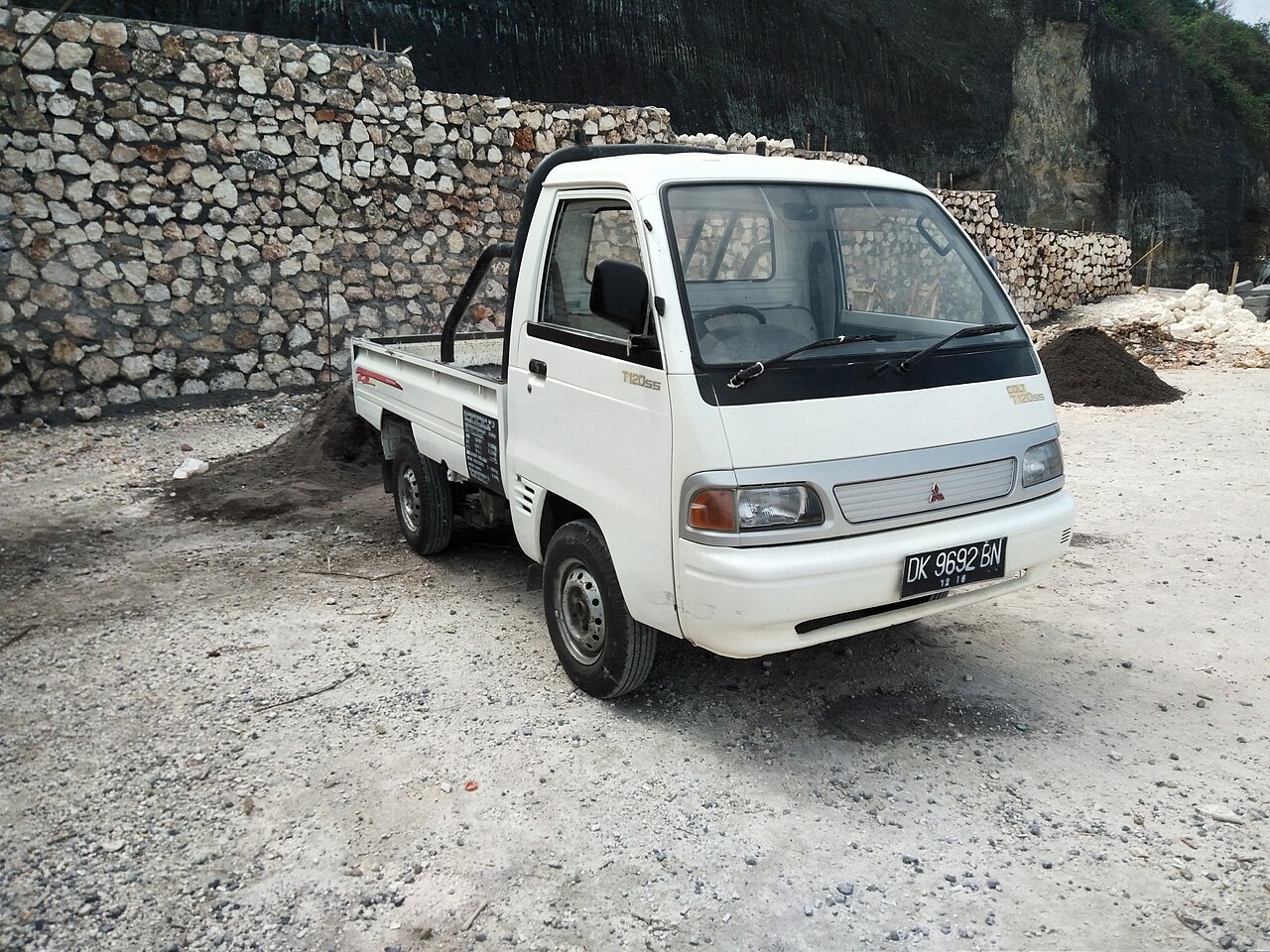
Indonesia built this pickup for 28 years with no successor, the last one leaving the Jakarta line in January 2019 after 324,960 units.
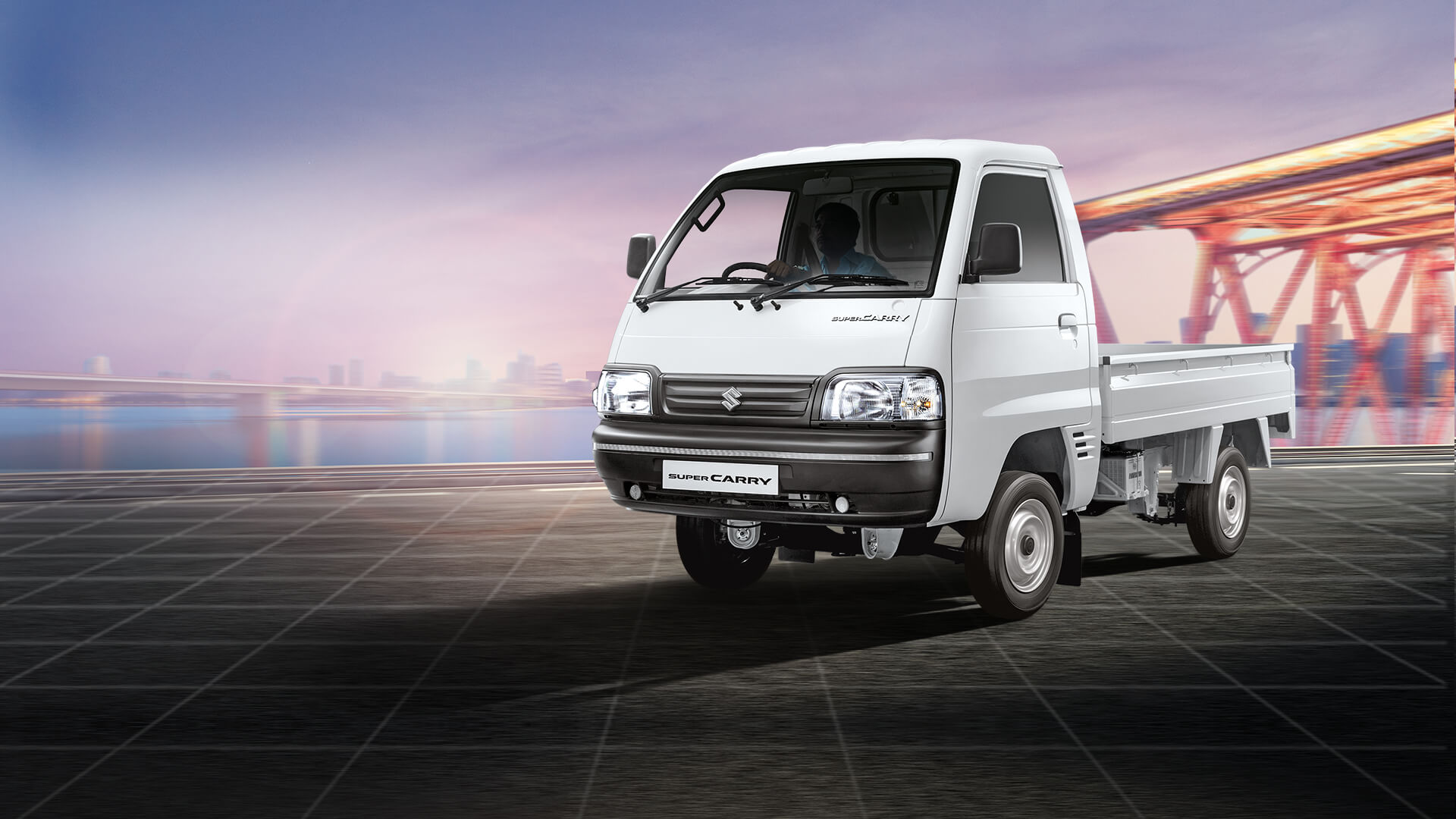
Suzuki's first-ever diesel engine, fitted to the Super Carry, is so small that it isn't able to power an air-conditioning system at all.
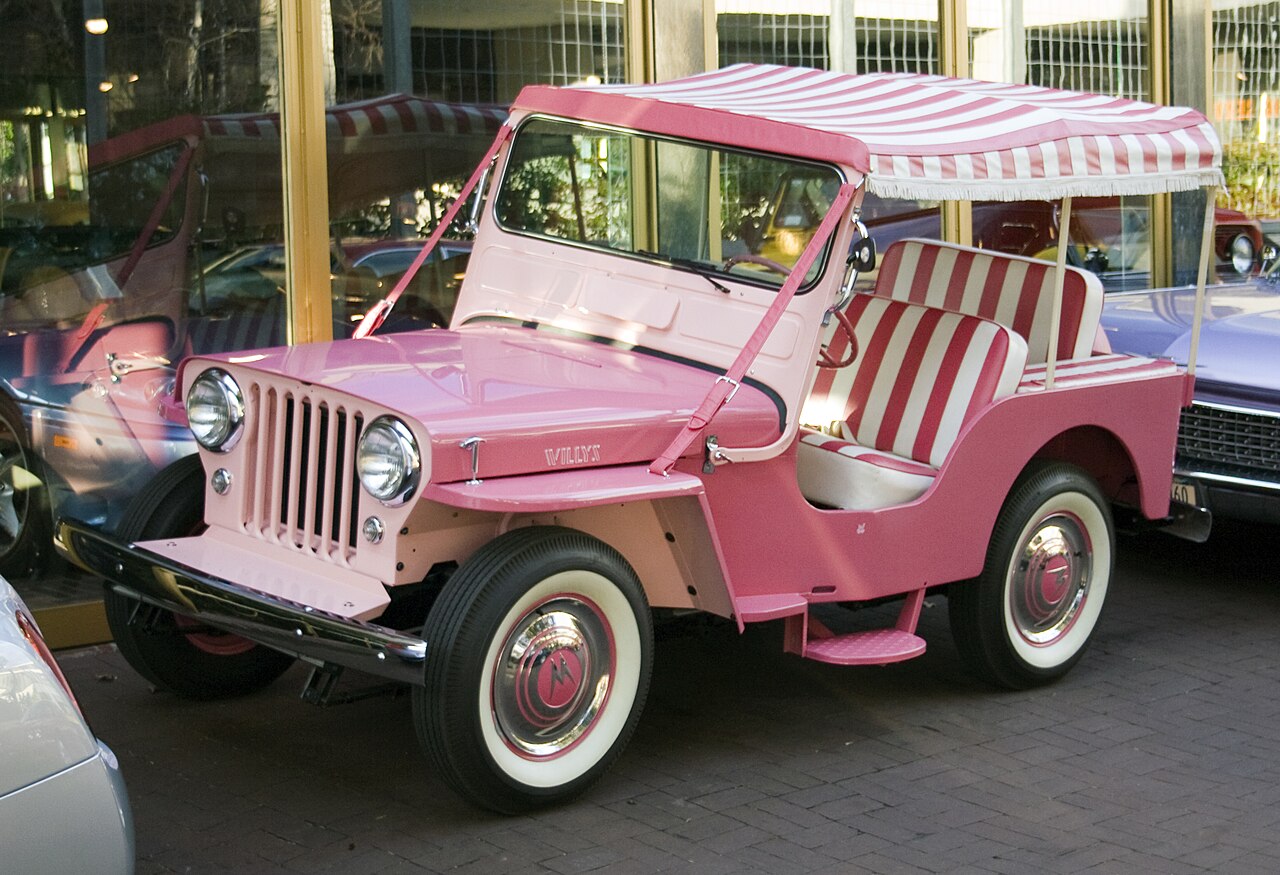
A right-hand-drive DJ-3A was built so postal drivers could reach roadside mailboxes without leaving the seat.
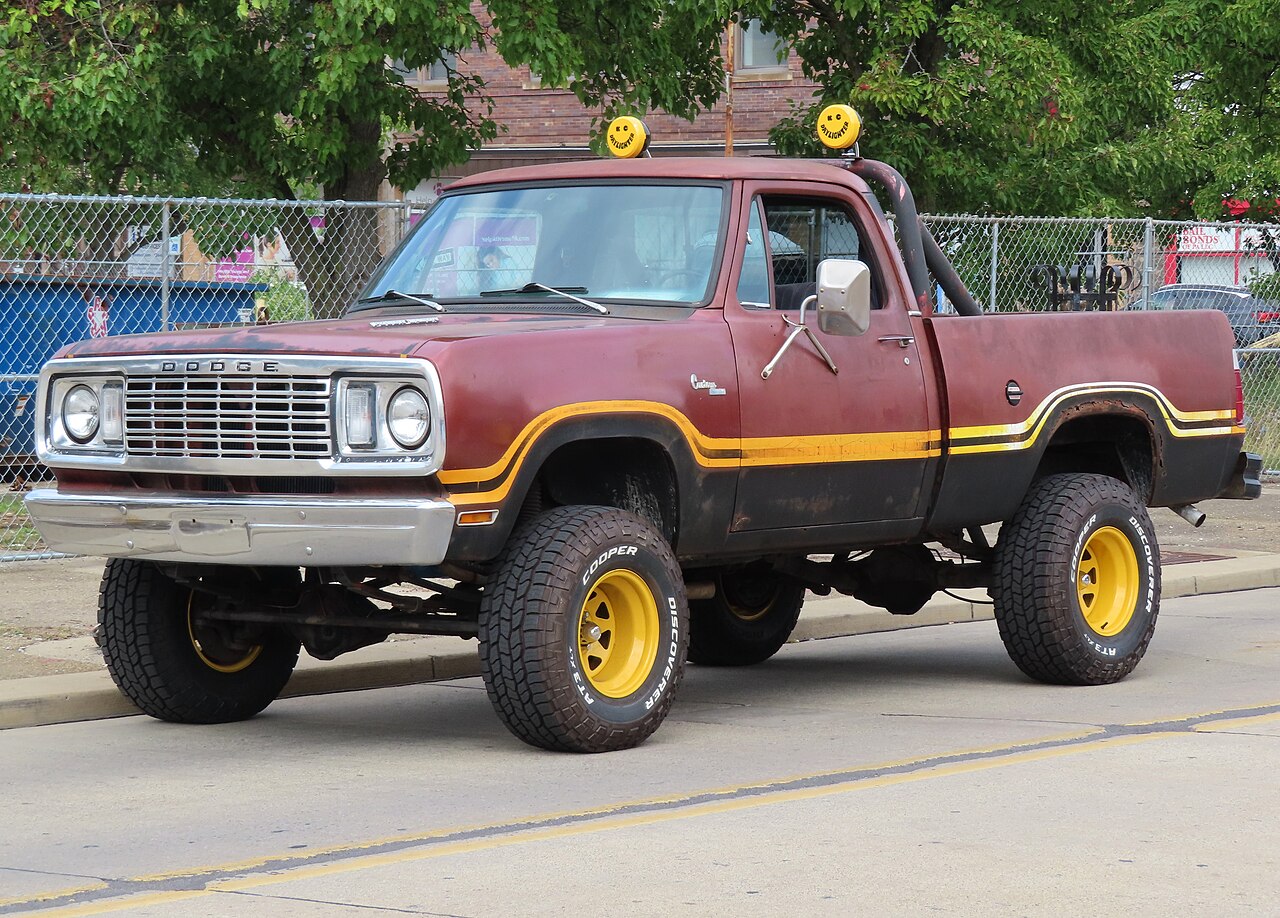
The Power Wagon name and civilian pickup design were derived directly from the WC-series military trucks Dodge built for World War II.
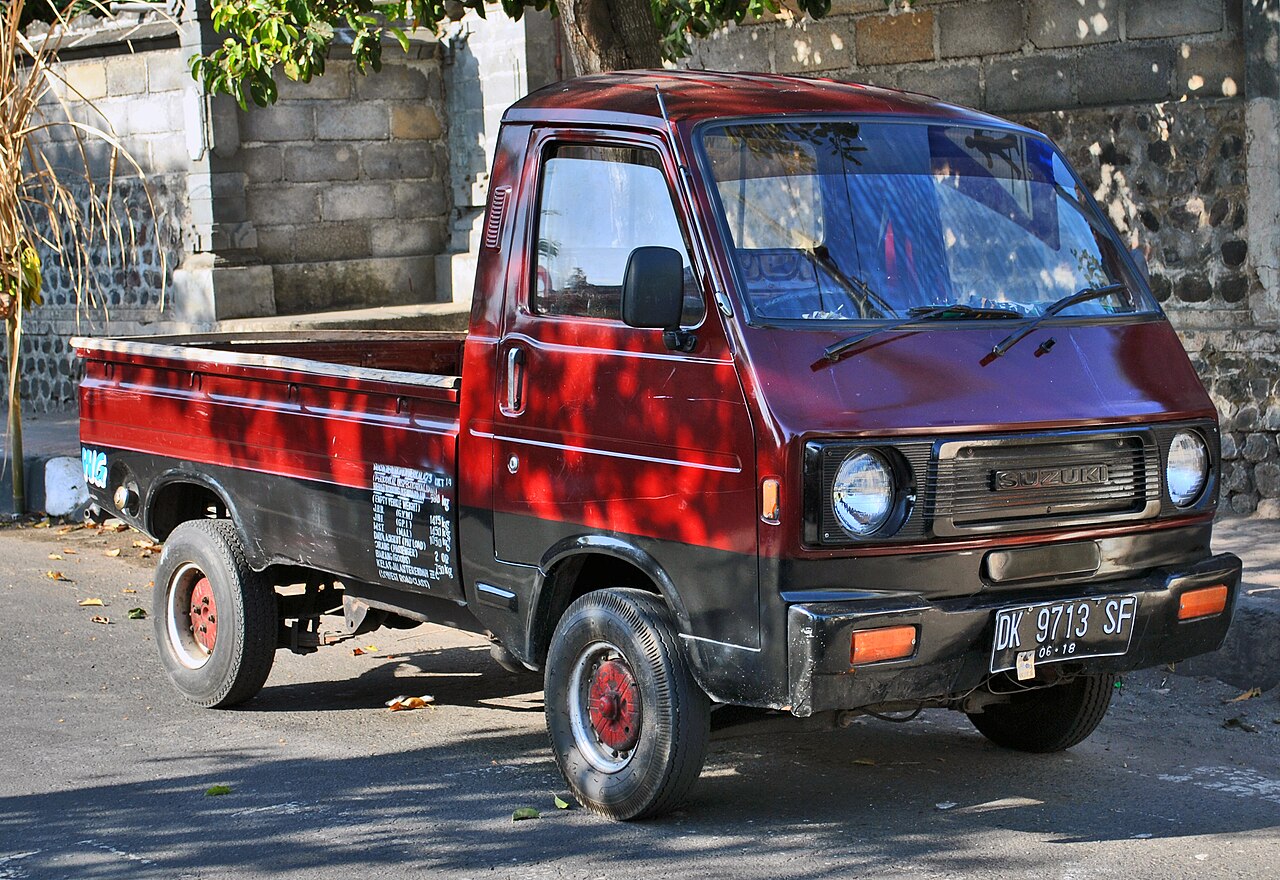
Suzuki kept the L20 Carry at the exact same 21 hp as its predecessor but still called it progress — the gain was a patented Cylinder Crank Injection lubrication system, not more power.
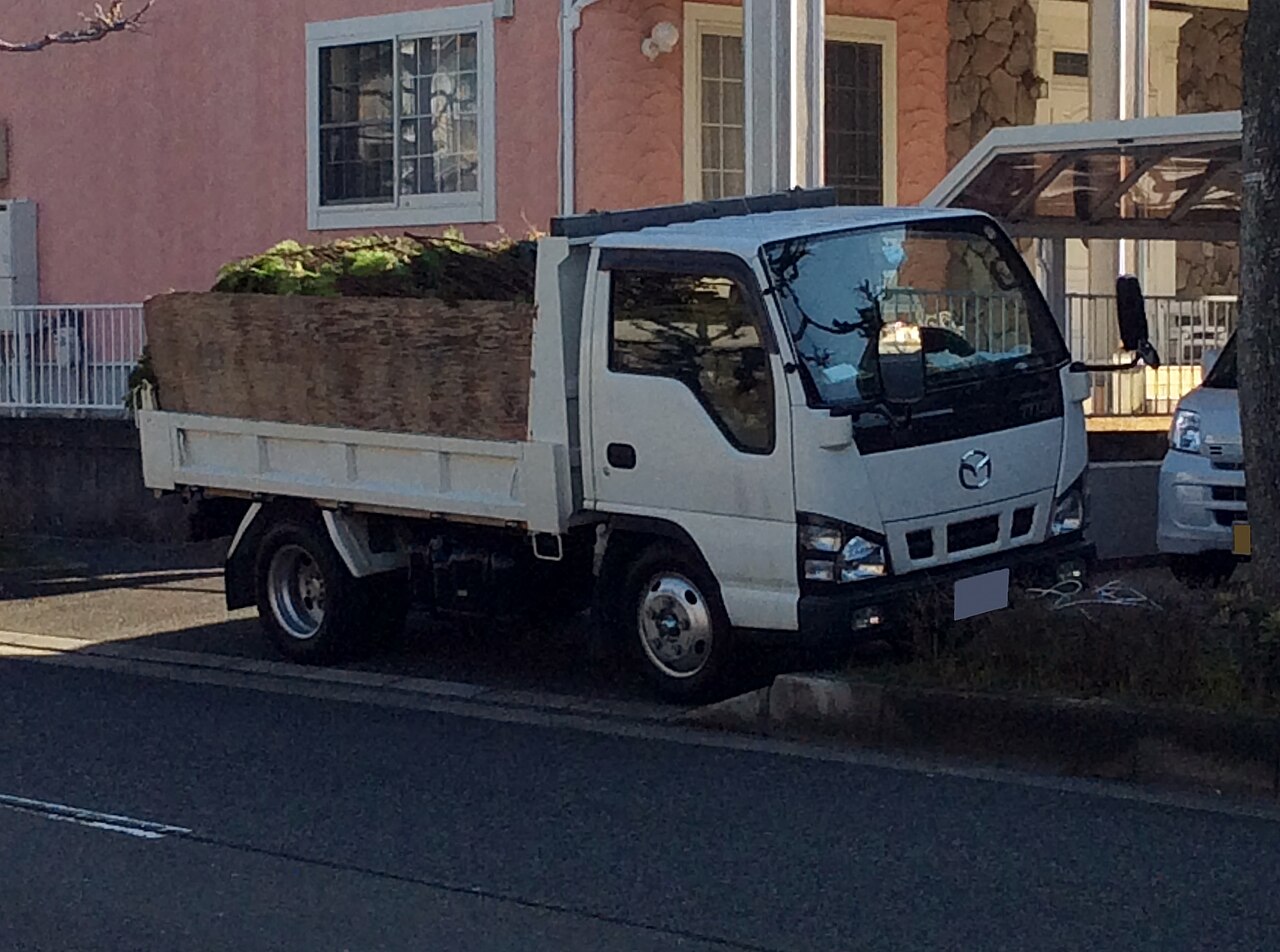
This generation of Titan quietly became the ancestor of two other trucks entirely: it was license-built by Kia as the Kia Titan in South Korea, and formed the basis of the Australian Ford Trader.