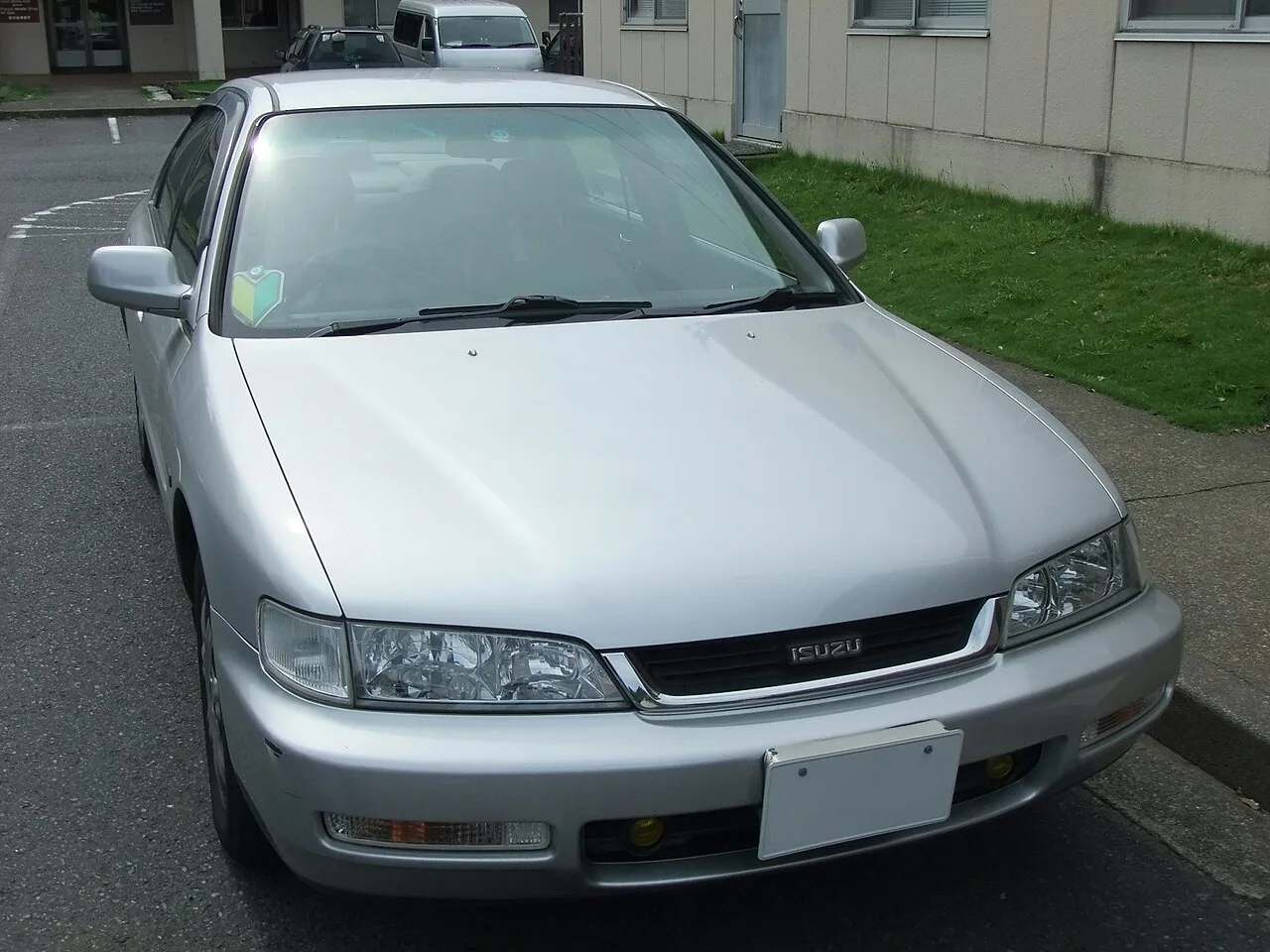
A decade before Alfa Romeo's famed Selespeed, Isuzu was already selling an automated-clutch manual gearbox on the humble Aska.
Median 104 hp across 360 similar cars
Lead trim: 1817 cc 4ZB1 (JJ110) · up to 148 hp
Isuzu Aska first generation1983–1989
- 0spots by members
- Unclaimednobody has spotted one yet
- 0sets it belongs to
Nobody in Burbles has spotted a Isuzu Aska first generation yet. See one on the street, point the app at it, and the first card is yours — with your @handle permanently credited on this page.
FactA decade before Alfa Romeo's famed Selespeed, Isuzu was already selling an automated-clutch manual gearbox on the humble Aska.
The original Isuzu Aska was developed as a part of GM's J-car program and was a replacement for Isuzu's dated Florian. In contrast to fellow J-cars from other GM divisions, the Aska only came in one body style, a four-door sedan, and the Isuzu J-car variant differed most notably in the rear styling. From 1983 to 1984 it was known as the "Florian Aska", before being renamed simply "Aska" in 1985. The car was launched in March 1983 with carburetted 1.8 and 2.0 litre gasoline engines and a diesel, going on sale a month later; the turbodiesel followed in August 1983 with 89 PS, and in October 1983 a turbocharged and fuel-injected version of the 2.0 litre engine, which developed 150 PS, joined the lineup as the LJ Turbo. A version branded by the German tuner Irmscher, with a distinctive body kit, was added in November 1985 and became something of a cult object among some car fans in Japan. In September 1984 the innovative but ultimately unsuccessful semi-automatic NAVi5 system became available for the naturally aspirated Aska 2.0. From 1984 the Aska was assembled in Arica, Chile, from CKD kits as the Chevrolet Aska, exported to Southeast Asia as the Isuzu JJ, and sold in New Zealand as the Holden Camira (JJ) between 1984 and 1987.
Collectors Spotted in the Isuzu Aska Lineage
No member has published a public street spot of the Isuzu Aska yet — the First · Worldwide stamp is wide open.
Trims & Figures
5 published trims in the catalogue. A blank is a figure not recorded, not zero.
| Trim | Years | Engine | Power | Torque | 0–60 | Drive | Gearbox | MSRP |
|---|---|---|---|---|---|---|---|---|
| 1817 cc 4ZB1 (JJ110) | 1983–1989 | 1.8 L Inline-4 | 87 hp | — | — | — | — | — |
| 1995 cc 4FC1 (JJ510) | 1983–1989 | 2.0 L Inline-4 | — | — | — | — | — | — |
| 1995 cc 4FC1-T turbo (JJ510) | 1983–1989 | 2.0 L Inline-4 | 88 hp | — | — | — | — | — |
| 1995 cc 4ZC1 (JJ120) | 1983–1989 | 2.0 L Inline-4 | 108 hp | — | — | — | — | — |
| 1995 cc 4ZC1-T turbo (JJ120) | 1983–1989 | 2.0 L Inline-4 | 148 hp | — | — | — | — | — |
Owning one
We don’t estimate running costs for a car like this. What it costs depends on its condition, its specialist and how it is driven, and an average would mislead.
Owners’ builds
Nobody has claimed one yet.
Photographs
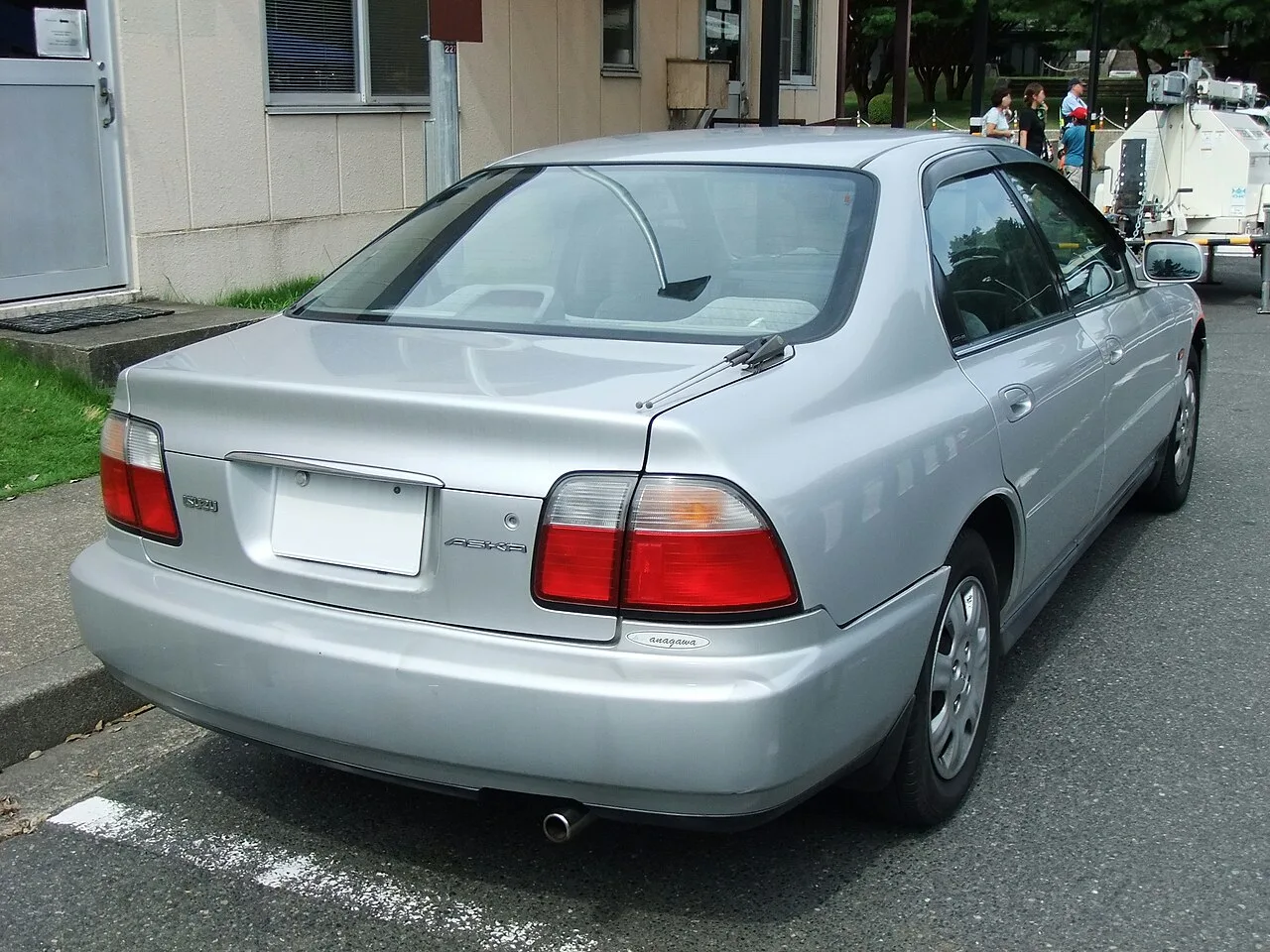
This Aska wasn't really an Isuzu at all — unable to fund a new mid-size car, Isuzu struck a deal with Subaru and sold a rebadged Legacy, while Subaru got rebadged Isuzu Bighorns in return.
A decade before Alfa Romeo's famed Selespeed, Isuzu was already selling an automated-clutch manual gearbox on the humble Aska.
Rivals
Same body, same money, other badges — tap any card to flip.

It briefly served as senior sibling to Marquette, a GM companion brand cancelled after just one year.

Nissan hired former BMW engineers to help develop the 510's suspension, which is why period reviewers frequently compared its handling to the BMW 1600/2002.

A Trabant 601 won its class at the 1970 Monte Carlo Rally, with a second 601 right behind it in second.

The 600 was a stopgap: the P50's body over the 601's mechanicals, and for a while its estate was built alongside the new 601 saloon.

The G80 Sport brought a 370 PS twin-turbo 3.3 V6, a mesh grille and copper-tinted chrome with copper stitching to match.

The Vigor was sold only with a five-cylinder engine, an unusual configuration Honda used to fit a longer engine transversely under a short hood.

The GS/E coupe earned the nickname "German Charger" for its long hood, short deck stance borrowed from Detroit muscle cars.

This DeVille/Fleetwood was the first production car anywhere to mount its V8 sideways, Cadillac's front-drive gamble on the new C-body.