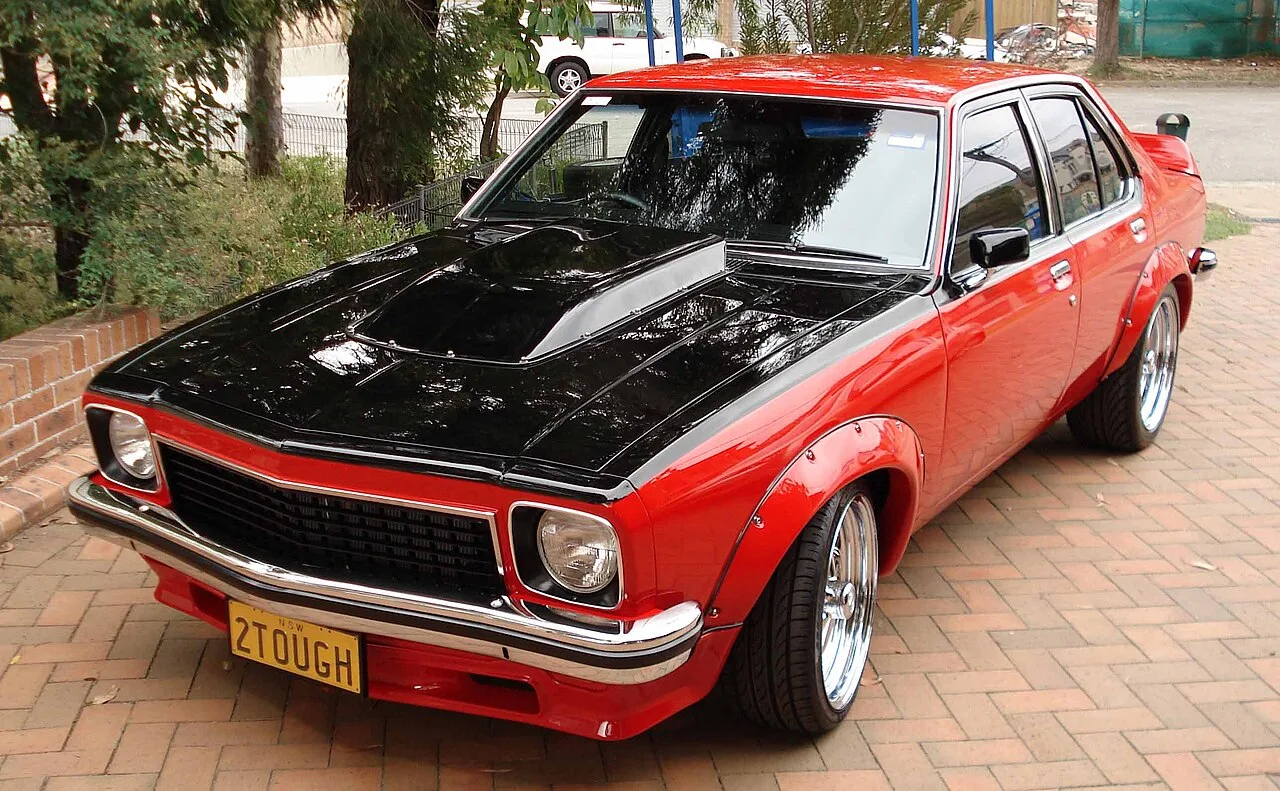
The LX Torana's race-bred A9X option wore a bonnet scoop that faced backward — built to feed the carburettor, not the wind, for maximum power on track.
Lead trim: 2.85 OHV six (from July 1976) · up to 240 hp
Holden Torana LX1976–1978
- 0spots by members
- Unclaimednobody has spotted one yet
- 0sets it belongs to
Nobody in Burbles has spotted a Holden Torana LX yet. See one on the street, point the app at it, and the first card is yours — with your @handle permanently credited on this page.
FactThe LX Torana's race-bred A9X option wore a bonnet scoop that faced backward — built to feed the carburettor, not the wind, for maximum power on track.
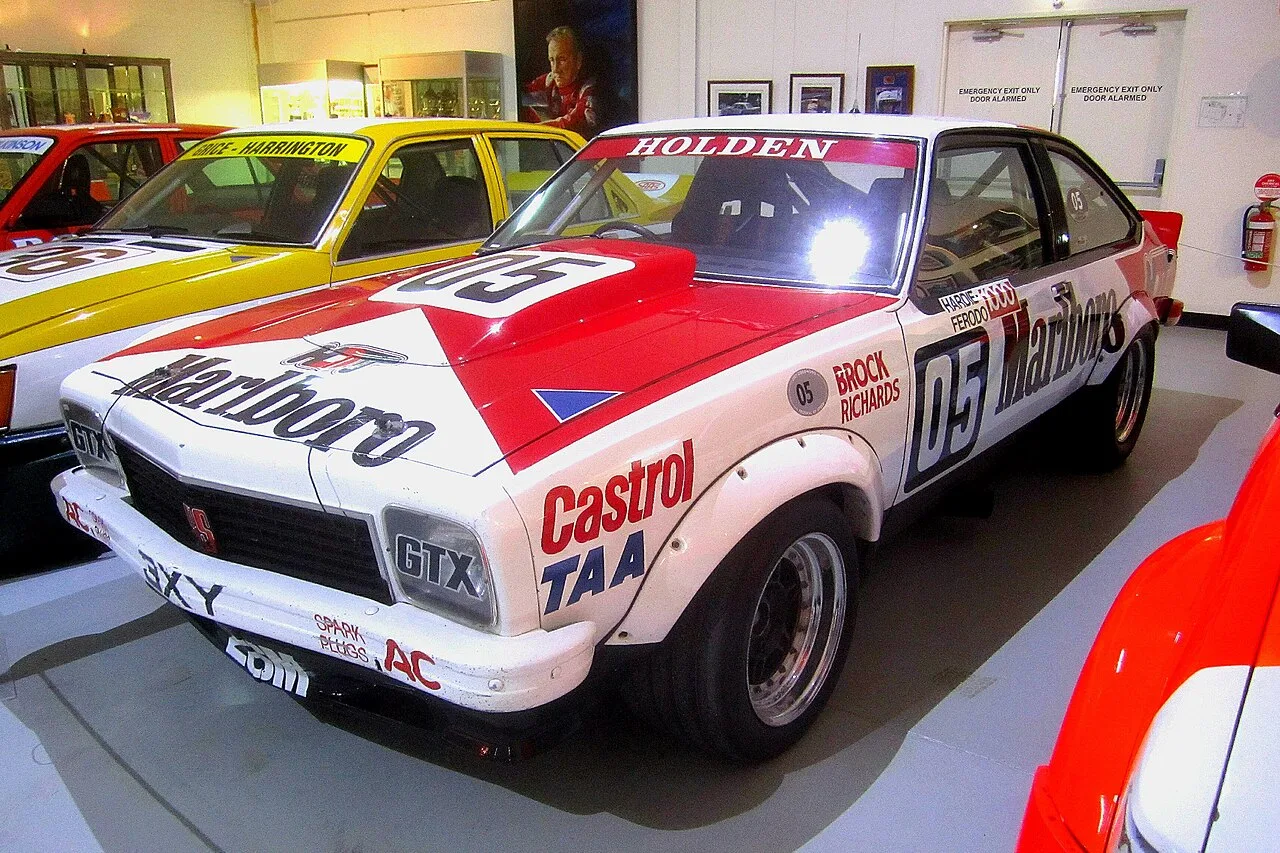
The mildly facelifted LX series arrived in February 1976, with round headlights replacing the LH's rectangular ones, black side window surrounds and an enlarged front Holden badge, and a two-door hatchback body introduced as an alternative to the four-door sedan. In July 1976 the LX was subjected to performance-reducing engine modifications to comply with new ADR27A emission regulations, and power outputs, from then on specified in kilowatts as part of Australia's metrication programme, dropped accordingly. In November 1976 the four-cylinder Torana was relaunched as the Holden LX Sunbird, and during 1977 the LX series gained the limited-build A9X option aimed at winning at Bathurst on the SLR 5000 sedan and SS hatchback; A9Xs shared by Peter Brock and Jim Richards won the 1978 and 1979 Bathurst 1000s. A total of 65,977 LX Toranas were produced.
Collectors Spotted in the Holden Torana Lineage
No member has published a public street spot of the Holden Torana yet — the First · Worldwide stamp is wide open.
Trims & Figures
10 published trims in the catalogue. A blank is a figure not recorded, not zero.
| Trim | Years | Engine | Power | Torque | 0–60 | Drive | Gearbox | MSRP |
|---|---|---|---|---|---|---|---|---|
| 1.9 Opel CIH four (102 hp) | 1976–1976 | 1.9 L Inline-4 | 102 hp | 115 lb-ft | — | — | — | — |
| 1.9 Opel CIH four Sunbird (96 hp) | 1976–1978 | 1.9 L Inline-4 | 96 hp | 116 lb-ft | — | — | — | — |
| 2.85 OHV six (February–July 1976) | 1976–1976 | 2.9 L Inline-6 | 118 hp | 168 lb-ft | — | — | — | — |
| 2.85 OHV six (from July 1976) | 1976–1978 | 2.9 L Inline-6 | 78 hp | — | — | — | — | — |
| 3.3 OHV six (February–July 1976) | 1976–1976 | 3.3 L Inline-6 | 135 hp | 194 lb-ft | — | — | — | — |
| 3.3 OHV six (from July 1976) | 1976–1978 | 3.3 L Inline-6 | 86 hp | — | — | — | — | — |
| 4.2 OHV V8 (February–July 1976) | 1976–1976 | 4.2 L V8 | 185 hp | 262 lb-ft | — | — | — | — |
| 4.2 OHV V8 (from July 1976) | 1976–1978 | 4.2 L V8 | 111 hp | 262 lb-ft | — | — | — | — |
| 5.0 OHV V8 (February–July 1976) | 1976–1976 | 5.0 L V8 | 240 hp | 315 lb-ft | — | — | — | — |
| 5.0 OHV V8 (from July 1976) | 1976–1978 | 5.0 L V8 | 169 hp | — | — | — | — | — |
Owning one
We don’t estimate running costs for a car like this. What it costs depends on its condition, its specialist and how it is driven, and an average would mislead.
Owners’ builds
Nobody has claimed one yet.
Photographs
Holden officially killed the V8 Torana with the UC — but a factory-sanctioned dealer could still order you a turbocharged six. Only 33 of these UC SL/T turbos were ever built, in batches of five.
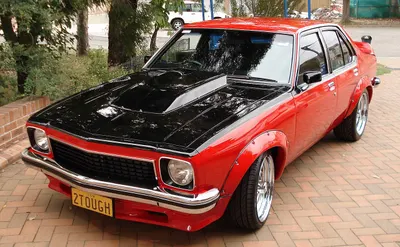
The LX Torana's race-bred A9X option wore a bonnet scoop that faced backward — built to feed the carburettor, not the wind, for maximum power on track.
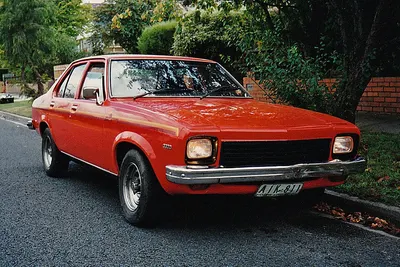
The LH Torana's hottest version, the L34, wasn't sold to just anyone: Holden quietly required a current CAMS racing licence before a dealer could let you buy one.
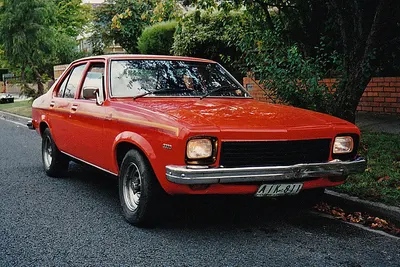
The TA Torana was only ever meant as a stopgap, built for 11 months to bridge a gap before its real replacement — and it still moved 11,304 units.
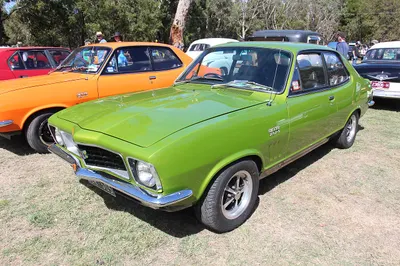
In pouring rain at Bathurst 1972, Peter Brock drove the XU-1 solo for all 500 miles to beat the mighty Ford GTHO — the start of the Torana legend.
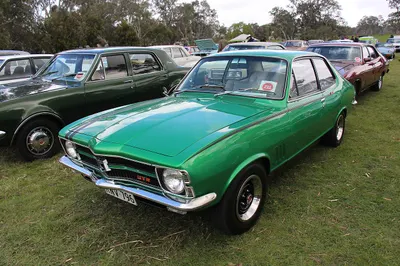
Nobody's fully sure who designed the LC Torana's four-door body — some accounts say Australia shipped the design to Britain for the Vauxhall Viva saloon, though Vauxhall's own historians say it was the other way round.
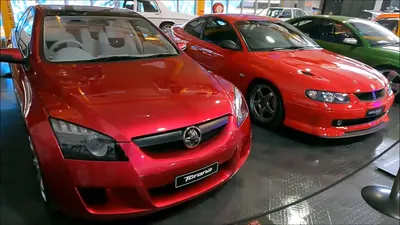
This Torana's sport option was named for the reigning Formula One World Champion — Australian driver Sir Jack Brabham.
Rivals
Same body, same money, other badges — tap any card to flip.

It briefly served as senior sibling to Marquette, a GM companion brand cancelled after just one year.

Nissan hired former BMW engineers to help develop the 510's suspension, which is why period reviewers frequently compared its handling to the BMW 1600/2002.

A Trabant 601 won its class at the 1970 Monte Carlo Rally, with a second 601 right behind it in second.

The 600 was a stopgap: the P50's body over the 601's mechanicals, and for a while its estate was built alongside the new 601 saloon.

The G80 Sport brought a 370 PS twin-turbo 3.3 V6, a mesh grille and copper-tinted chrome with copper stitching to match.

The Vigor was sold only with a five-cylinder engine, an unusual configuration Honda used to fit a longer engine transversely under a short hood.

The GS/E coupe earned the nickname "German Charger" for its long hood, short deck stance borrowed from Detroit muscle cars.

This DeVille/Fleetwood was the first production car anywhere to mount its V8 sideways, Cadillac's front-drive gamble on the new C-body.