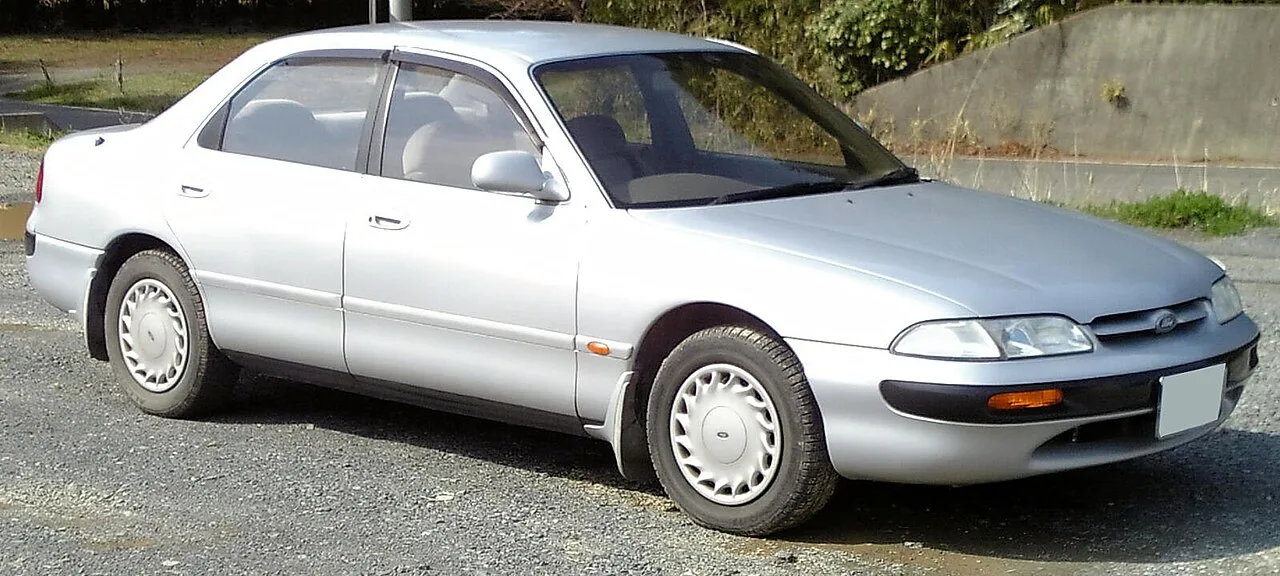
Australia's AT/AV Telstars were imported from Japan on a technicality — Ford used import credits earned by exporting Capris to the US to justify bringing them in.
Median 115 hp across 376 similar cars
Lead trim: Telstar 1.8 (Malaysia; 90 hp) · up to 145 hp
Ford Telstar AT / AVAT-AV · 1987–1992
- 0spots by members
- Unclaimednobody has spotted one yet
- 0sets it belongs to
Nobody in Burbles has spotted a Ford Telstar AT / AV yet. See one on the street, point the app at it, and the first card is yours — with your @handle permanently credited on this page.
FactAustralia's AT/AV Telstars were imported from Japan on a technicality — Ford used import credits earned by exporting Capris to the US to justify bringing them in.
The original Telstar was replaced in Australia in October 1987 by the AT series, a rebadged and lightly restyled Mazda 626 (GD) sedan and TX5 hatchback, with a station wagon on the GD-based GV platform unique to Japan and New Zealand (where it replaced the Sierra). The AV facelift (January 1990, new grille, trim and wheels) came as the range moved to Japanese-built imports to free Broadmeadows for the Capri convertible; the base GL carried over a 2.0-litre inline-four of 68 kW (91 hp), Ghia models had a 2.2-litre 12-valve four with 84 kW (113 hp), and the flagship TX5 Turbo a variation of the 2.2 rated at 108 kW (145 hp) on premium fuel (100 kW / 130 hp on regular) with anti-lock brakes. Telstar sedans left Australia in October 1989 for the locally built Ford Corsair (a rebadged Nissan Pintara U12); from 1990 to 1992 only the Japanese-built TX5 hatch was sold there. In Malaysia (Amim Holdings, from March 1988) the 1.8-litre made 90 hp (67 kW) and the new 12-valve 2.0-litre 110 hp (82 kW) from 1990; in Indonesia (as the Telstar Grand sedan and Thunder liftback) the carburetted 12-valve 2.0-litre claimed 109 PS (80 kW) at 5,300 rpm and 165 N·m (122 lb·ft) at 3,300 rpm. In Japan the sedan was sold from May 1987 to October 1991 and the station wagon from September 1990 to October 1997, with 1.8- or 2.0-litre petrol fours of 82 to 140 PS or a 2-litre Comprex diesel of 82 PS, a twin-cam 1.8 of 115 PS added in June 1989, a 4WD diesel wagon in August 1992 and the off-road-inspired Canoa Wagon in November 1994. Engines: 1.6 F6, 1.8 F8 (and DOHC), 2.0 FE, FET turbo and FE3 DOHC, 2.2 F2 and F2T turbo, and the 2.0 RF Comprex diesel.
Collectors Spotted in the Ford Telstar Lineage
No member has published a public street spot of the Ford Telstar yet — the First · Worldwide stamp is wide open.
Trims & Figures
7 published trims in the catalogue. A blank is a figure not recorded, not zero.
| Trim | Years | Engine | Power | Torque | 0–60 | Drive | Gearbox | MSRP |
|---|---|---|---|---|---|---|---|---|
| Telstar 1.8 (Malaysia; 90 hp) | 1988–1992 | 1.8 L Inline-4 | 90 hp | 104 lb-ft | — | FWD | — | — |
| Telstar 1.8 F8 DOHC (Japan; 115 PS, from June 1989) | 1989–1991 | 1.8 L Inline-4 | 113 hp | 115 lb-ft | — | FWD | — | — |
| Telstar 2.0 (Australia GL; 91 hp) | 1987–1992 | 2.0 L Inline-4 | 91 hp | 113 lb-ft | — | FWD | — | — |
| Telstar 2.0 12-valve (Malaysia; 110 hp) | 1990–1992 | 2.0 L Inline-4 | 110 hp | 122 lb-ft | — | FWD | — | — |
| Telstar Ghia 2.2 F2 12-valve (Australia; 113 hp) | 1987–1992 | 2.2 L Inline-4 | 113 hp | 131 lb-ft | — | FWD | — | — |
| Telstar Grand / Thunder 2.0 12-valve carburettor (Indonesia; 109 PS) | 1987–1992 | 2.0 L Inline-4 | 108 hp | 122 lb-ft | — | FWD | — | — |
| Telstar TX5 Turbo 2.2 F2T turbo (Australia; 145 hp premium) | 1987–1992 | 2.2 L Inline-4 | 145 hp | 190 lb-ft | — | FWD | — | — |
Owning one
We don’t estimate running costs for a car like this. What it costs depends on its condition, its specialist and how it is driven, and an average would mislead.
Owners’ builds
Nobody has claimed one yet.
Photographs
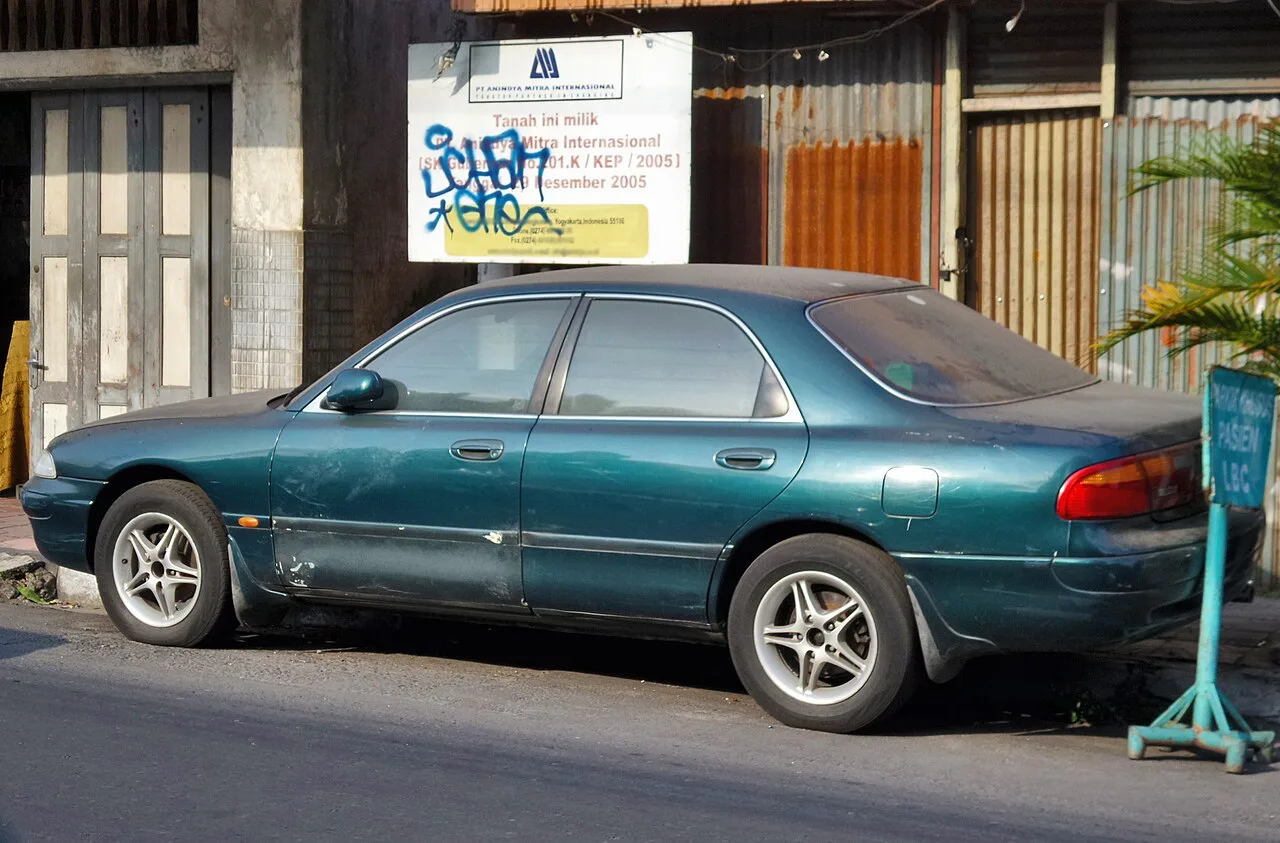
By its last generation, the Telstar had shrunk from an Asia-Pacific staple to a Japan-only car — Ford simply handed the rest of the region to the Mondeo.
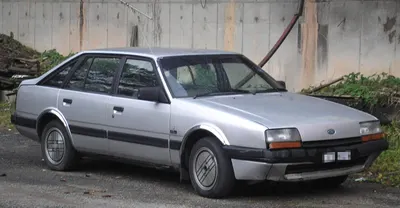
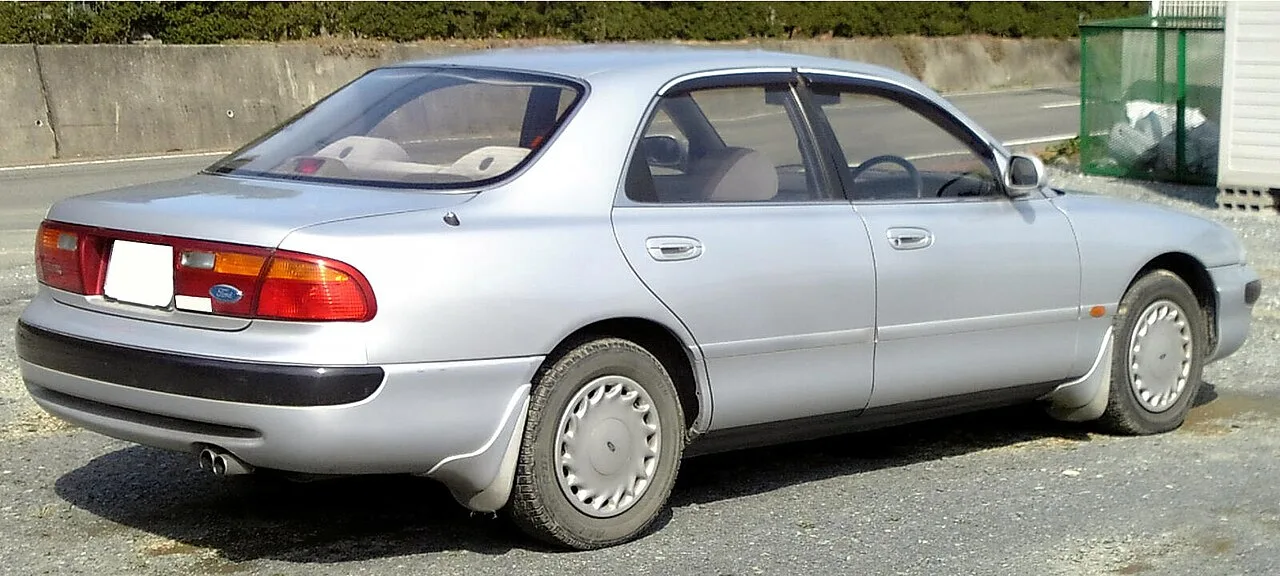
Despite a name that suggests a world car, this Telstar generation never left Japan: both it and its Mazda Capella twin were sold exclusively on the home market.
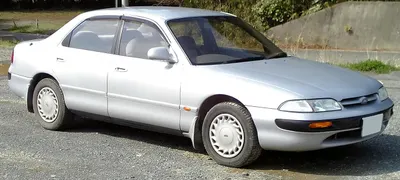
In New Zealand, this generation got its own namesake special edition — the Telstar Radisich, named after local racing driver Paul Radisich, built in two 100-car runs.
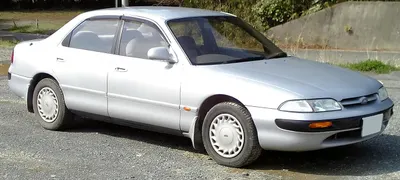
Australia's AT/AV Telstars were imported from Japan on a technicality — Ford used import credits earned by exporting Capris to the US to justify bringing them in.
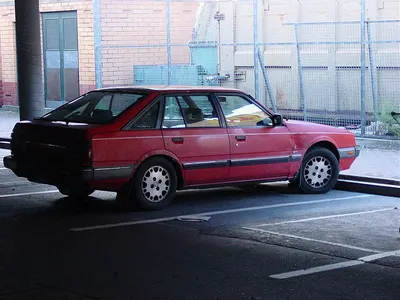
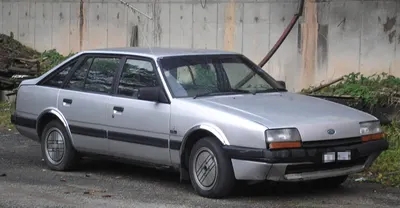
Ford Australia sank A$150 million into reskinning this Mazda-based Telstar and building a local plant for it — only to shift hatchback production to Japan a few years later.
Rivals
Same body, same money, other badges — tap any card to flip.

It briefly served as senior sibling to Marquette, a GM companion brand cancelled after just one year.

Nissan hired former BMW engineers to help develop the 510's suspension, which is why period reviewers frequently compared its handling to the BMW 1600/2002.

A Trabant 601 won its class at the 1970 Monte Carlo Rally, with a second 601 right behind it in second.

The 600 was a stopgap: the P50's body over the 601's mechanicals, and for a while its estate was built alongside the new 601 saloon.

The G80 Sport brought a 370 PS twin-turbo 3.3 V6, a mesh grille and copper-tinted chrome with copper stitching to match.

The Vigor was sold only with a five-cylinder engine, an unusual configuration Honda used to fit a longer engine transversely under a short hood.

The GS/E coupe earned the nickname "German Charger" for its long hood, short deck stance borrowed from Detroit muscle cars.

This DeVille/Fleetwood was the first production car anywhere to mount its V8 sideways, Cadillac's front-drive gamble on the new C-body.