The Prefect's windscreen wipers ran off engine vacuum, so climbing a steep hill in the rain, they'd slow to a dead stop, only kicking back into life once you crested the top.
Lead trim: Prefect E93A 1,172 cc sidevalve four
Ford Prefect E93AE93A · 1938–1949
- 0spots by members
- Unclaimednobody has spotted one yet
- 0sets it belongs to
Nobody in Burbles has spotted a Ford Prefect E93A yet. See one on the street, point the app at it, and the first card is yours — with your @handle permanently credited on this page.
FactThe Prefect's windscreen wipers ran off engine vacuum, so climbing a steep hill in the rain, they'd slow to a dead stop, only kicking back into life once you crested the top.
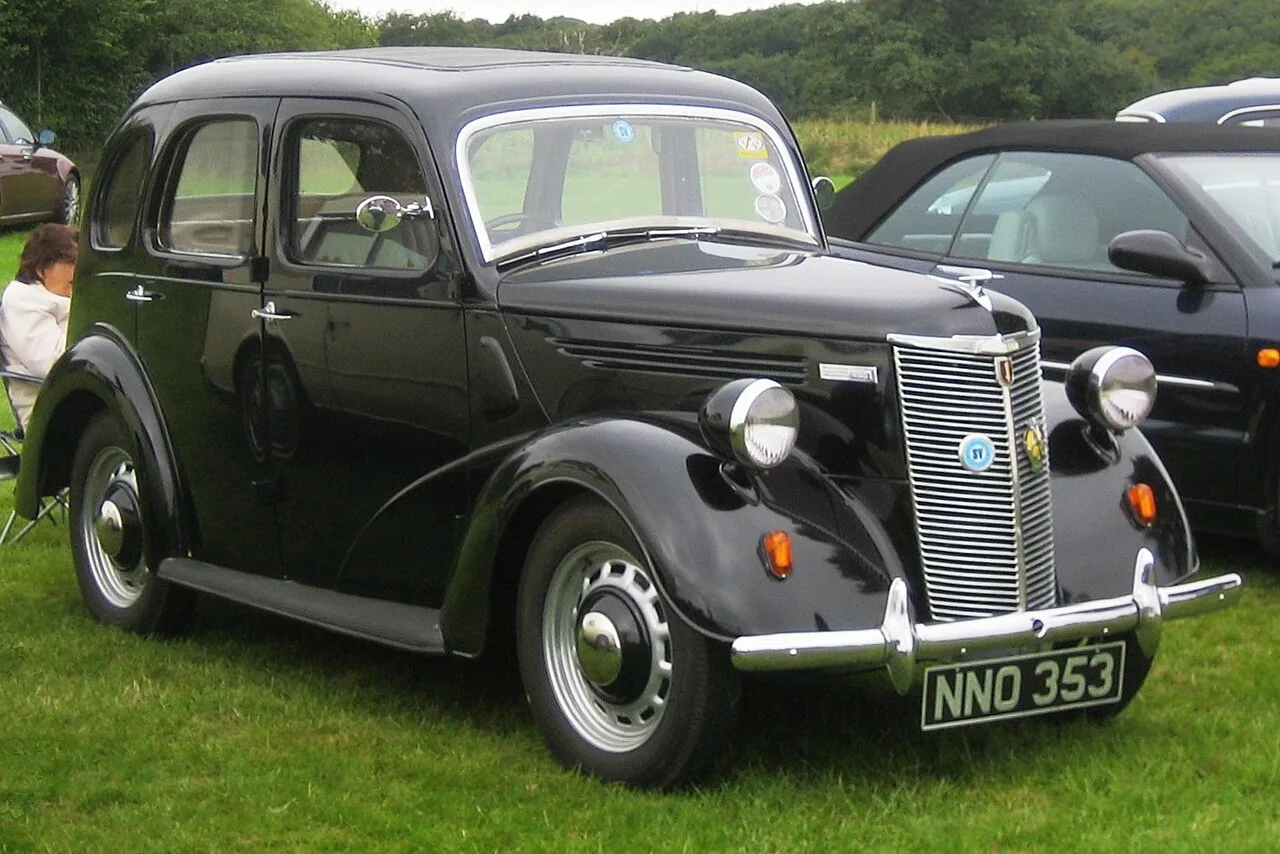
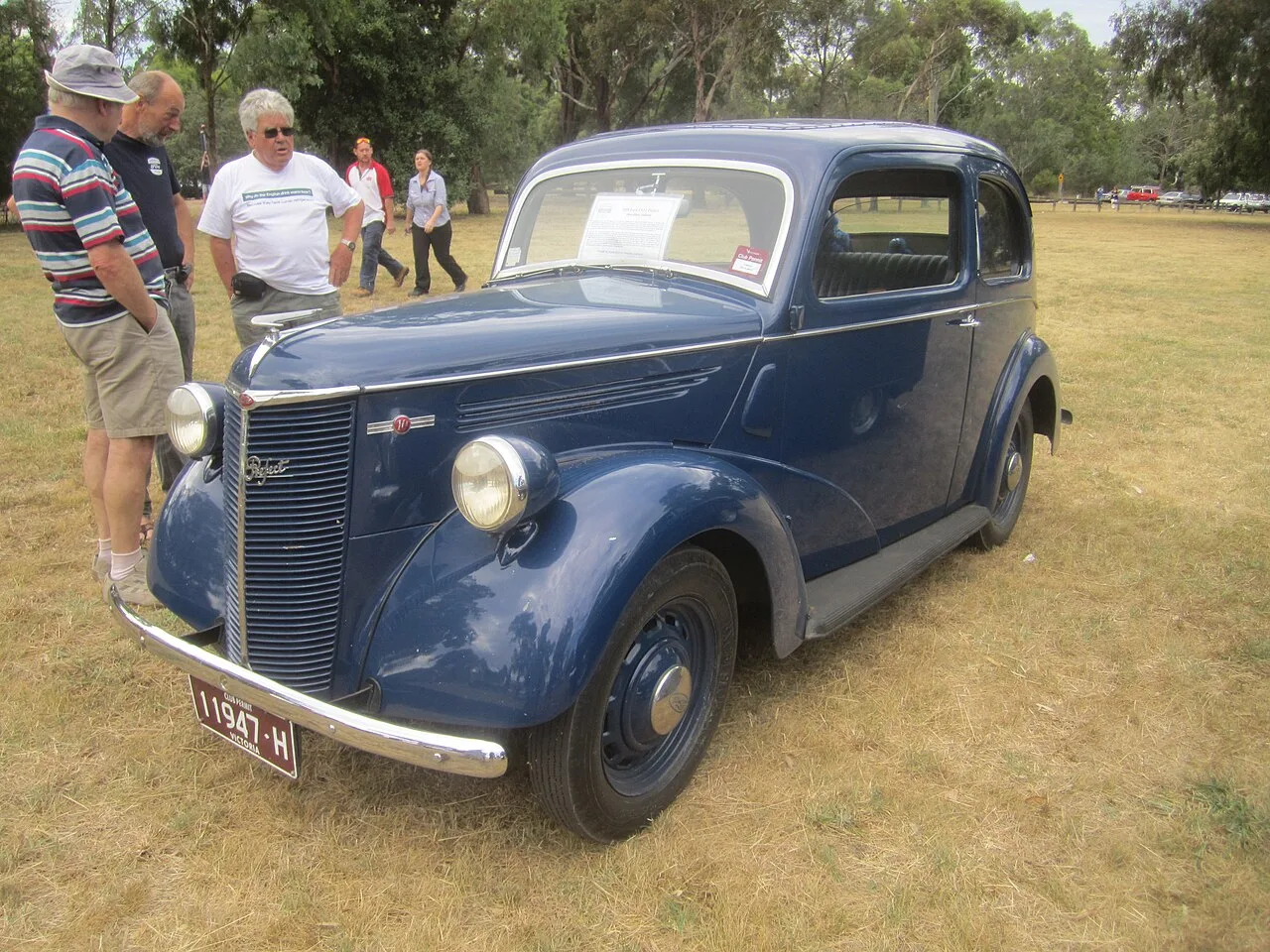
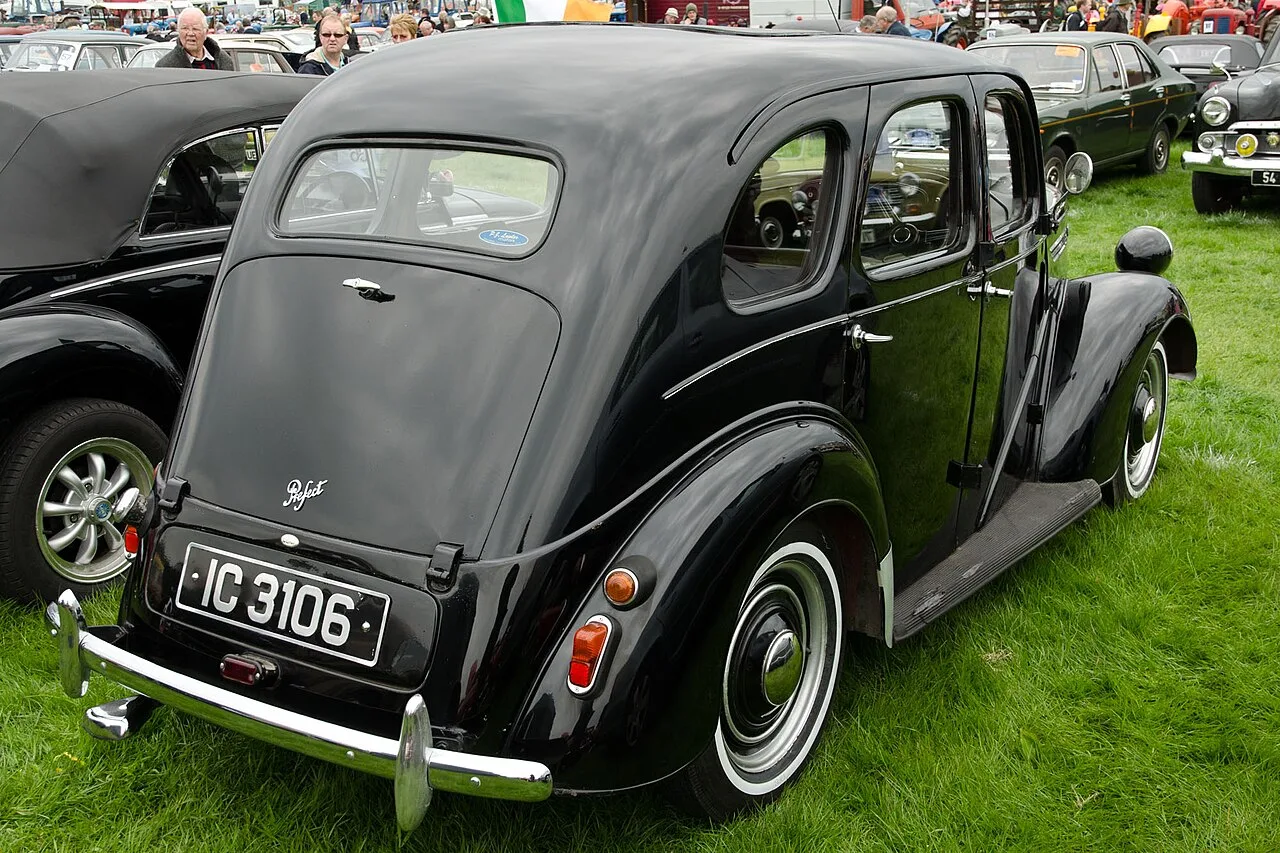
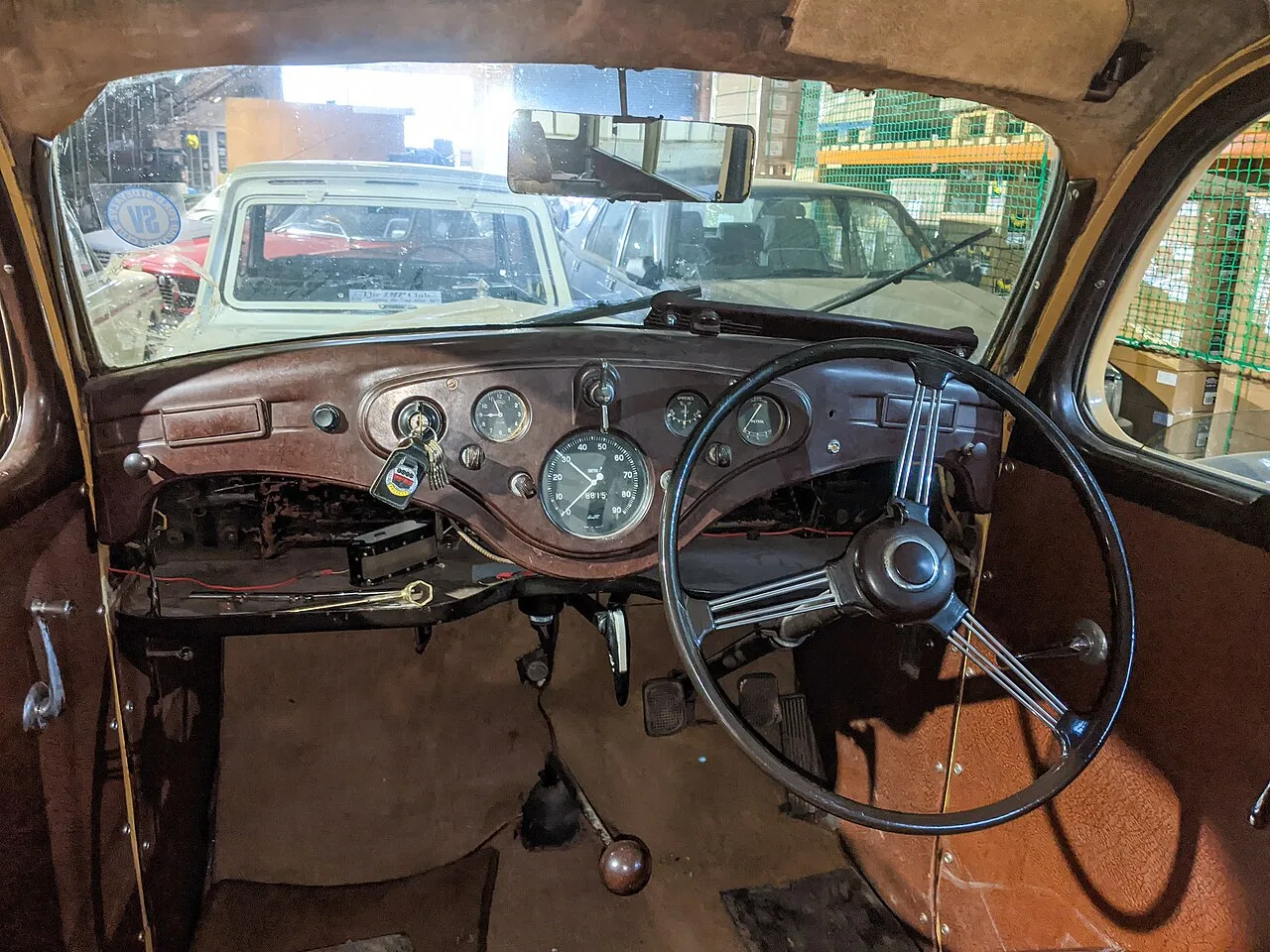
The Ford Prefect is a line of British cars produced by Ford UK between 1938 and 1961 as an upmarket version of the Ford Popular and Anglia small family cars, introduced in October 1938 and built at Dagenham until 1941, back on the market in 1945 and offered until 1961. The E93A was a slight reworking of the previous year's 7W, the first Ford car designed outside Detroit and designed specifically for the British market, with a 1,172 cc side-valve four with thermosiphon cooling (no pump), a crank-handle start as backup to the 6-volt starter, vacuum-powered windscreen wipers that slowed to a standstill uphill, a windscreen that opened forward on hinges and a durable four-cylinder motor; wheelbase 87 in, length 151 in, width 61 in, height 63.5 in, curb weight 1,845 lb (837 kg), 3-speed manual. The commonest bodies were two- and four-door saloons (a few pre-war tourers and drophead coupés), post-war only four-door saloons for the home market and two-door models for export; 41,486 were made up to 1941 and a further 158,007 between 1945 and 1948. The Australian E93A (Geelong) had an all-steel roof and was made as a two-door saloon, tourer, 5 cwt panel van, coupé utility and roadster utility, recoded E03A in late 1939 (1939–1945) and followed by the A53A (1946–1948, extended boot, chrome grille slats from October 1947). Like its siblings the Prefect became a popular hot-rod basis, especially in Britain, where its lightweight structure and four-cylinder engines appealed to builders. The page gives no power figure.
Collectors Spotted in the Ford Prefect Lineage
No member has published a public street spot of the Ford Prefect yet — the First · Worldwide stamp is wide open.
Trims & Figures
One published trim in the catalogue. A blank is a figure not recorded, not zero.
| Trim | Years | Engine | Power | Torque | 0–60 | Drive | Gearbox | MSRP |
|---|---|---|---|---|---|---|---|---|
| Prefect E93A 1,172 cc sidevalve four | 1938–1949 | 1.2 L | 30 hp | — | — | — | — | — |
Owning one
We don’t estimate running costs for a car like this. What it costs depends on its condition, its specialist and how it is driven, and an average would mislead.
Owners’ builds
Nobody has claimed one yet.
Photographs
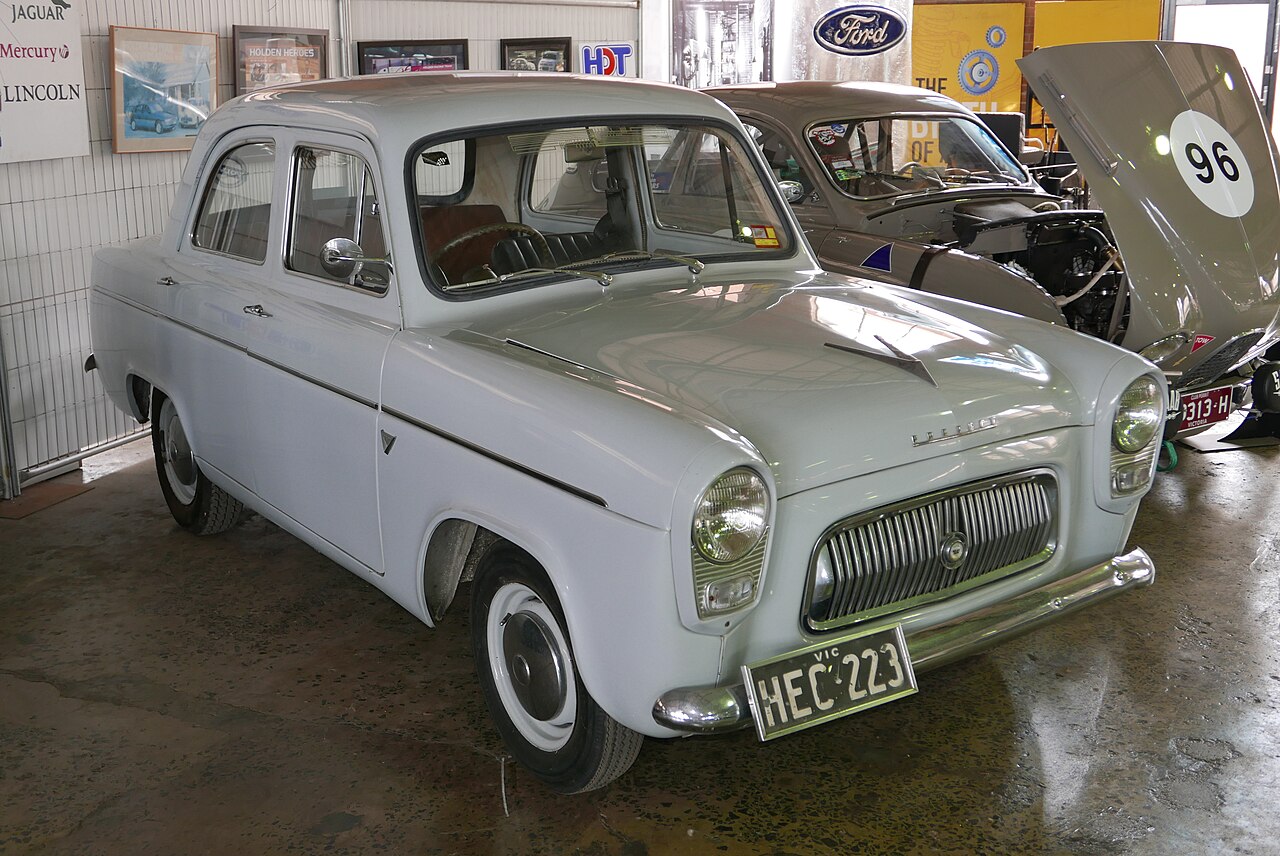
A heater was a bolt-on dealer extra for most Prefect buyers — but Deluxe versions built in New Zealand got one fitted at the factory, plus plush carpet to match.
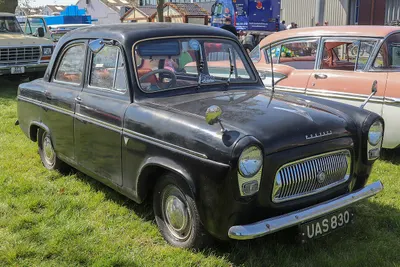
The 100E's wipers ran on engine vacuum, not electricity — floor it up a hill in the rain and they'd slow down or stop completely, right when you needed them most.
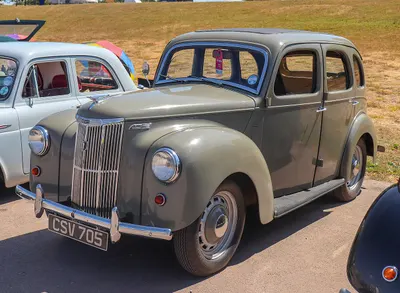
The Motor's 1948 road test clocked this Prefect at just 61 mph flat out — but still called it the cheapest four-door car on the British market.
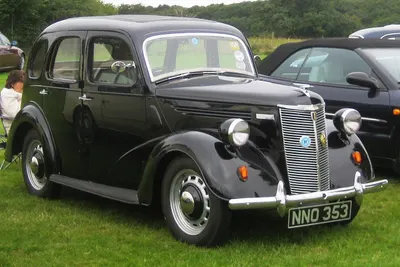
The Prefect's windscreen wipers ran off engine vacuum, so climbing a steep hill in the rain, they'd slow to a dead stop, only kicking back into life once you crested the top.
Rivals
Same body, same money, other badges — tap any card to flip.

It briefly served as senior sibling to Marquette, a GM companion brand cancelled after just one year.

Nissan hired former BMW engineers to help develop the 510's suspension, which is why period reviewers frequently compared its handling to the BMW 1600/2002.

A Trabant 601 won its class at the 1970 Monte Carlo Rally, with a second 601 right behind it in second.

The 600 was a stopgap: the P50's body over the 601's mechanicals, and for a while its estate was built alongside the new 601 saloon.

The G80 Sport brought a 370 PS twin-turbo 3.3 V6, a mesh grille and copper-tinted chrome with copper stitching to match.

The Vigor was sold only with a five-cylinder engine, an unusual configuration Honda used to fit a longer engine transversely under a short hood.

The GS/E coupe earned the nickname "German Charger" for its long hood, short deck stance borrowed from Detroit muscle cars.

This DeVille/Fleetwood was the first production car anywhere to mount its V8 sideways, Cadillac's front-drive gamble on the new C-body.