The 100E's wipers ran on engine vacuum, not electricity — floor it up a hill in the rain and they'd slow down or stop completely, right when you needed them most.
Lead trim: Prefect 100E 1,172 cc sidevalve four (36 bhp)
Ford Prefect 100E100E · 1953–1959
- 0spots by members
- Unclaimednobody has spotted one yet
- 0sets it belongs to
Nobody in Burbles has spotted a Ford Prefect 100E yet. See one on the street, point the app at it, and the first card is yours — with your @handle permanently credited on this page.
FactThe 100E's wipers ran on engine vacuum, not electricity — floor it up a hill in the rain and they'd slow down or stop completely, right when you needed them most.
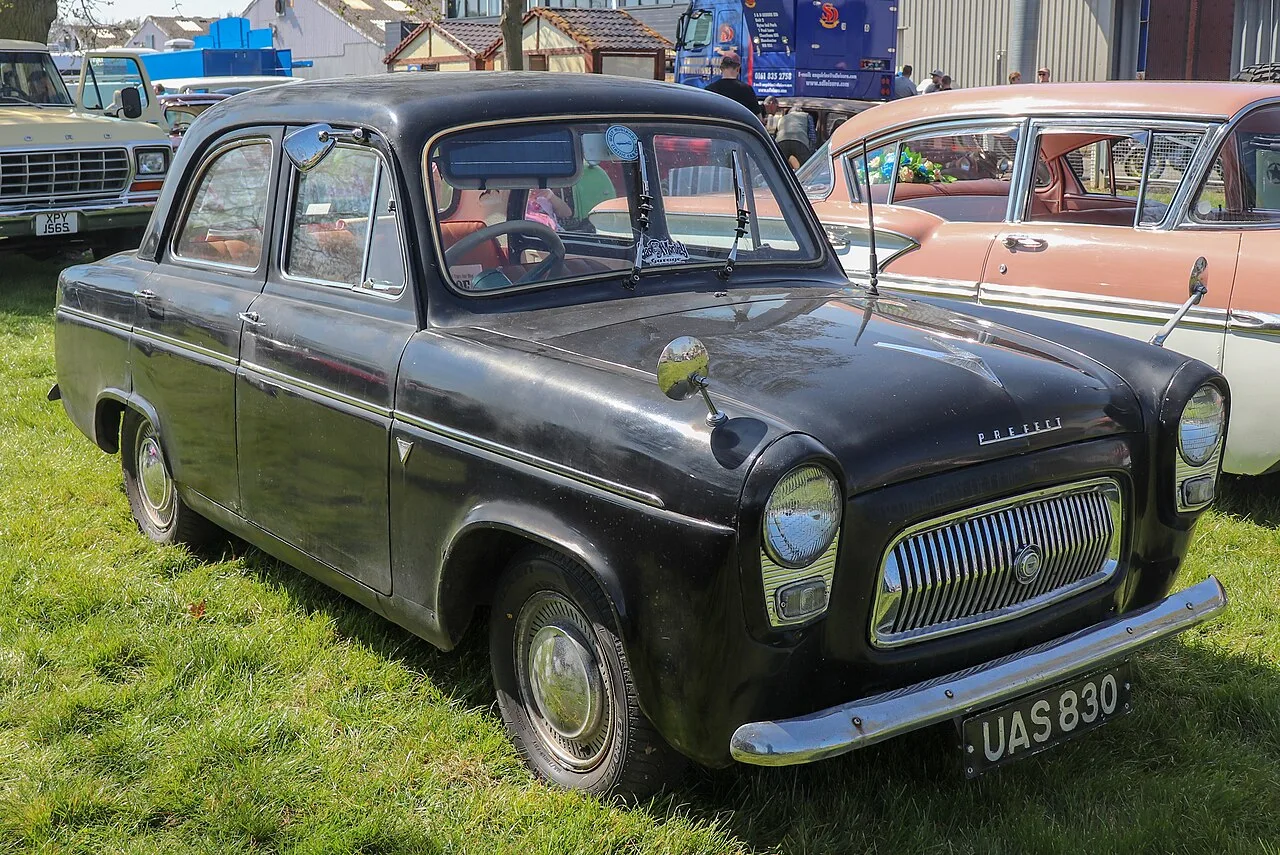
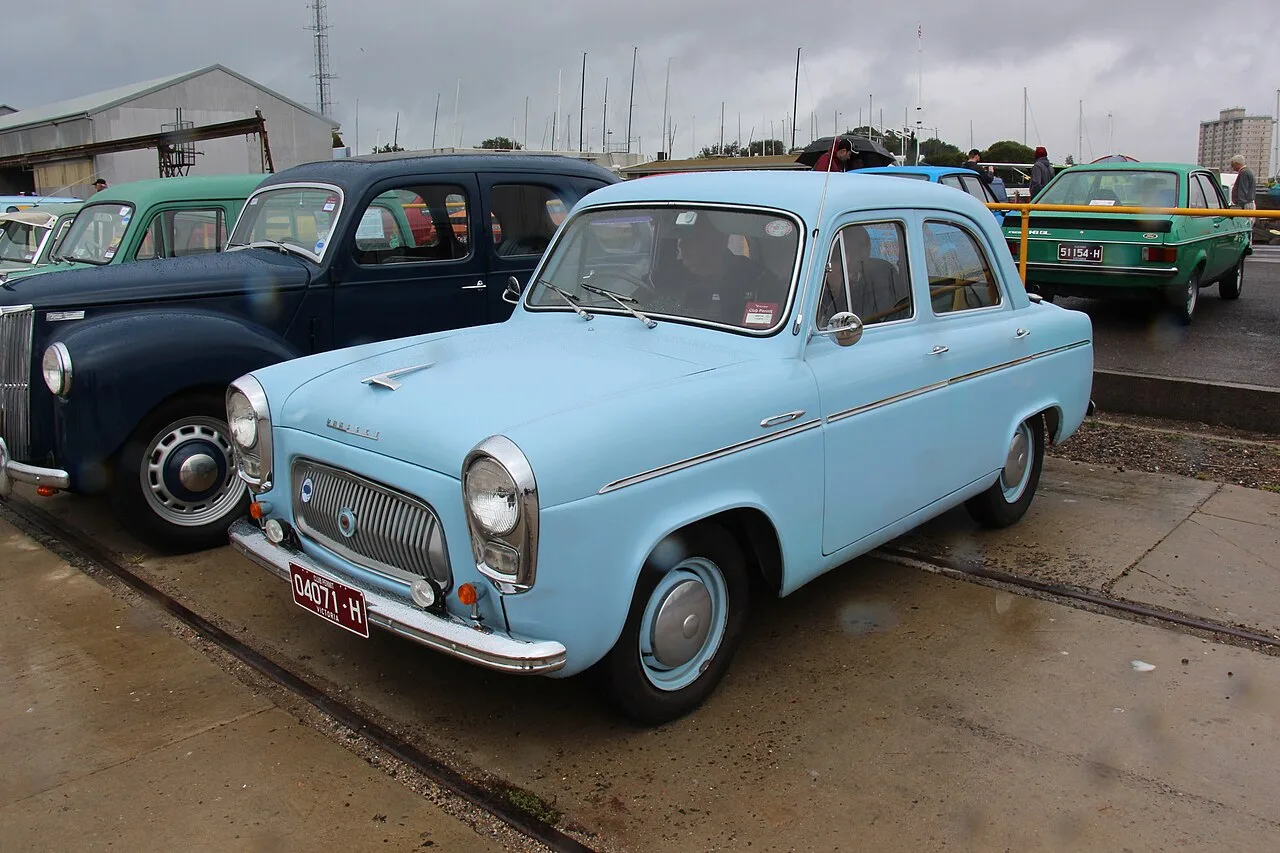
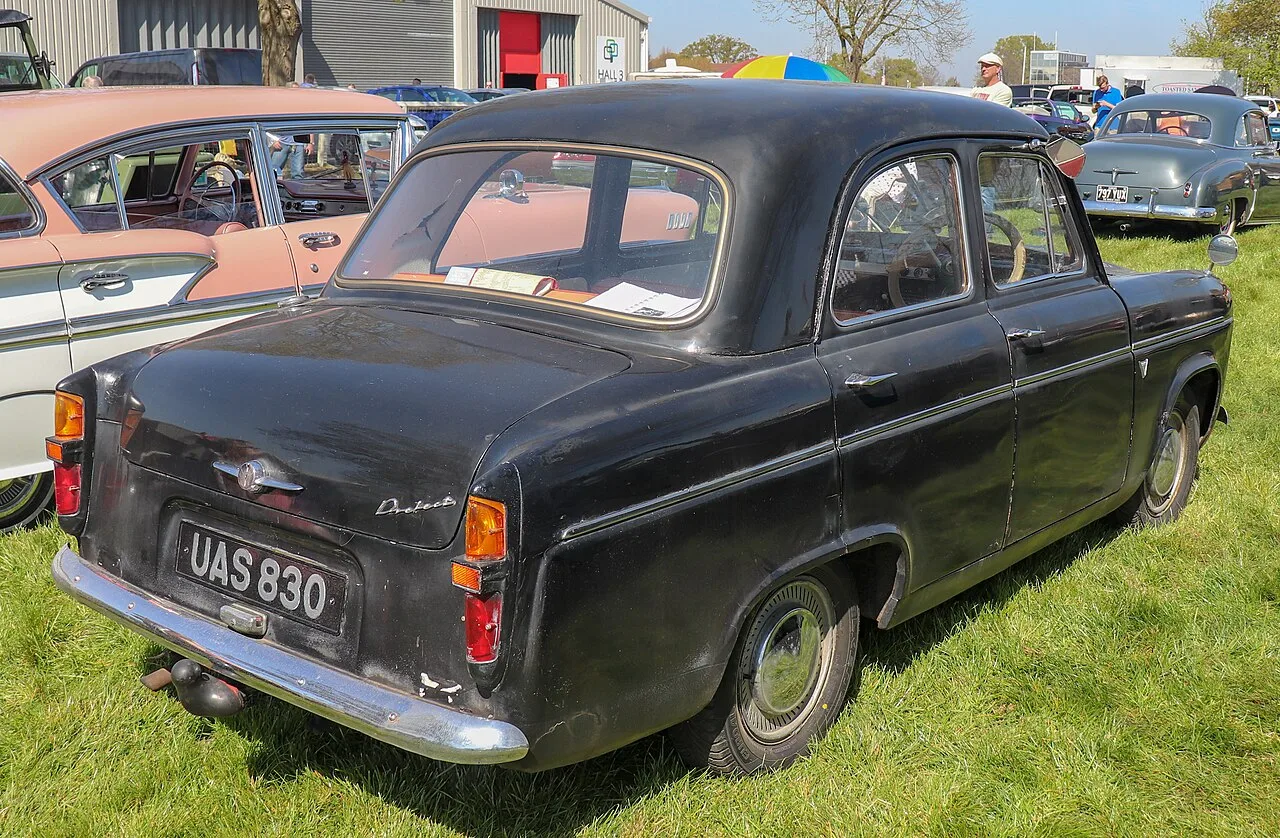
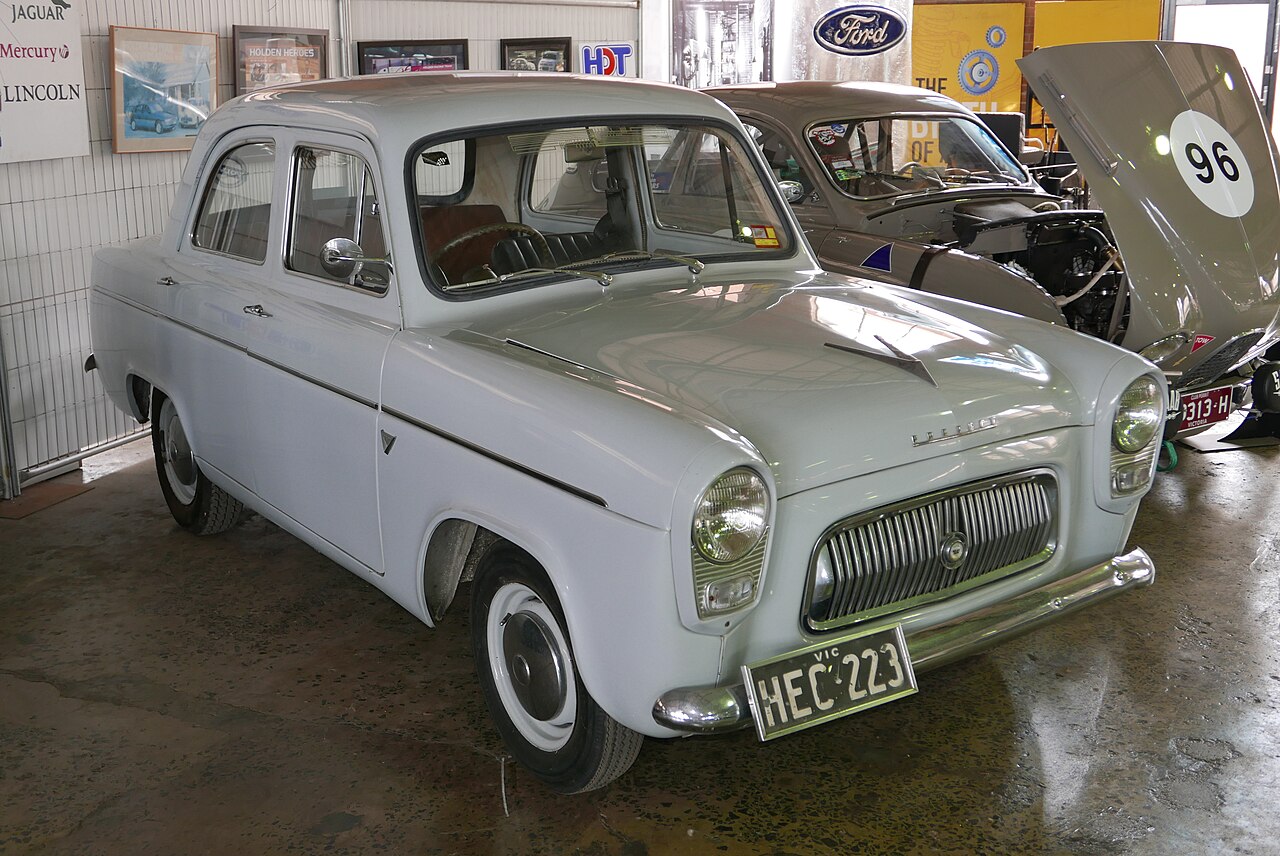
In 1953 a much redesigned Prefect was introduced alongside the similar Anglia and stayed in production until 1959, distinguished from the Anglia by the vertical bars of its radiator grille and four doors. The separate chassis was replaced by integral construction and coil independent front suspension replaced the transverse leaf spring, with Girling hydraulic brakes (7 in drums quickly increased to 8 in); a new 1,172 cc side-valve engine with the same bore, stroke and layout but adjustable tappets, compression raised from 6.3:1 to 7:1 and larger inlet valves raised power by 20% to 36 bhp, with a 3-speed floor-shift gearbox, separate PVC front seats (leather optional) and two circular instruments before the driver. The dashboard was revised in 1956 and 1959, and in 1955 an estate version was introduced as the Ford Squire (mechanically identical to the Escort estate of the Anglia 100E, with wooden strakes and higher trim). The Motor tested a de-luxe 100E in 1957 at a top speed of 71 mph (114 km/h), 0–60 mph in 32.2 seconds and 33.1 mpg; it cost £658 including £220 taxes on the home market and 100,554 were made. Wheelbase 87 in, length 152 in, width 57 in, height 58.5 in; also built in Ireland (Cork), Australia (Geelong), New Zealand (Lower Hutt) and Singapore.
Collectors Spotted in the Ford Prefect Lineage
No member has published a public street spot of the Ford Prefect yet — the First · Worldwide stamp is wide open.
Trims & Figures
One published trim in the catalogue. A blank is a figure not recorded, not zero.
| Trim | Years | Engine | Power | Torque | 0–60 | Drive | Gearbox | MSRP |
|---|---|---|---|---|---|---|---|---|
| Prefect 100E 1,172 cc sidevalve four (36 bhp) | 1953–1959 | 1.2 L | 36 hp | — | — | — | — | — |
Owning one
We don’t estimate running costs for a car like this. What it costs depends on its condition, its specialist and how it is driven, and an average would mislead.
Owners’ builds
Nobody has claimed one yet.
Photographs
A heater was a bolt-on dealer extra for most Prefect buyers — but Deluxe versions built in New Zealand got one fitted at the factory, plus plush carpet to match.
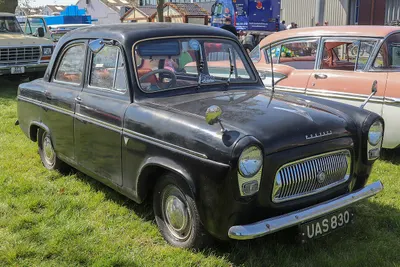
The 100E's wipers ran on engine vacuum, not electricity — floor it up a hill in the rain and they'd slow down or stop completely, right when you needed them most.
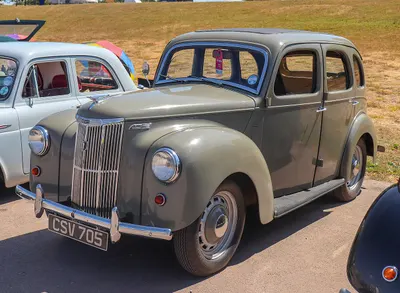
The Motor's 1948 road test clocked this Prefect at just 61 mph flat out — but still called it the cheapest four-door car on the British market.
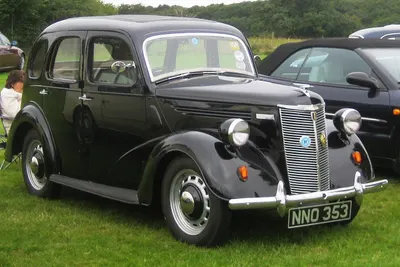
The Prefect's windscreen wipers ran off engine vacuum, so climbing a steep hill in the rain, they'd slow to a dead stop, only kicking back into life once you crested the top.
Rivals
Same body, same money, other badges — tap any card to flip.

It briefly served as senior sibling to Marquette, a GM companion brand cancelled after just one year.

Nissan hired former BMW engineers to help develop the 510's suspension, which is why period reviewers frequently compared its handling to the BMW 1600/2002.

A Trabant 601 won its class at the 1970 Monte Carlo Rally, with a second 601 right behind it in second.

The 600 was a stopgap: the P50's body over the 601's mechanicals, and for a while its estate was built alongside the new 601 saloon.

The G80 Sport brought a 370 PS twin-turbo 3.3 V6, a mesh grille and copper-tinted chrome with copper stitching to match.

The Vigor was sold only with a five-cylinder engine, an unusual configuration Honda used to fit a longer engine transversely under a short hood.

The GS/E coupe earned the nickname "German Charger" for its long hood, short deck stance borrowed from Detroit muscle cars.

This DeVille/Fleetwood was the first production car anywhere to mount its V8 sideways, Cadillac's front-drive gamble on the new C-body.