The Anglia's clever fold-down spare-wheel trick bought extra boot space — but it cost rear passengers over five inches of legroom compared to the 7Y it replaced.
Lead trim: Anglia E04A 933 cc sidevalve four
Ford Anglia E04AE04A · 1939–1948
- 0spots by members
- Unclaimednobody has spotted one yet
- 0sets it belongs to
Nobody in Burbles has spotted a Ford Anglia E04A yet. See one on the street, point the app at it, and the first card is yours — with your @handle permanently credited on this page.
FactThe Anglia's clever fold-down spare-wheel trick bought extra boot space — but it cost rear passengers over five inches of legroom compared to the 7Y it replaced.
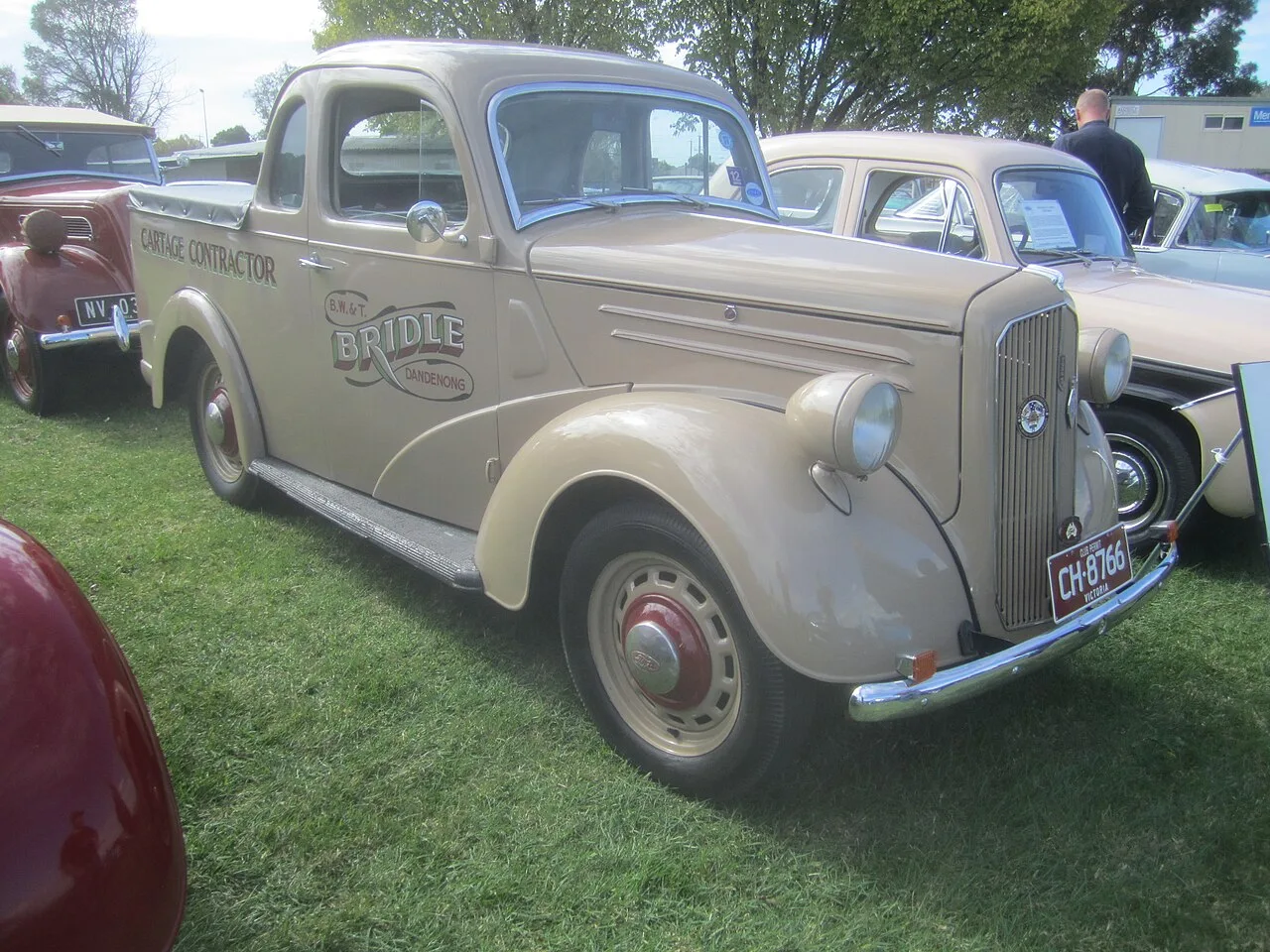
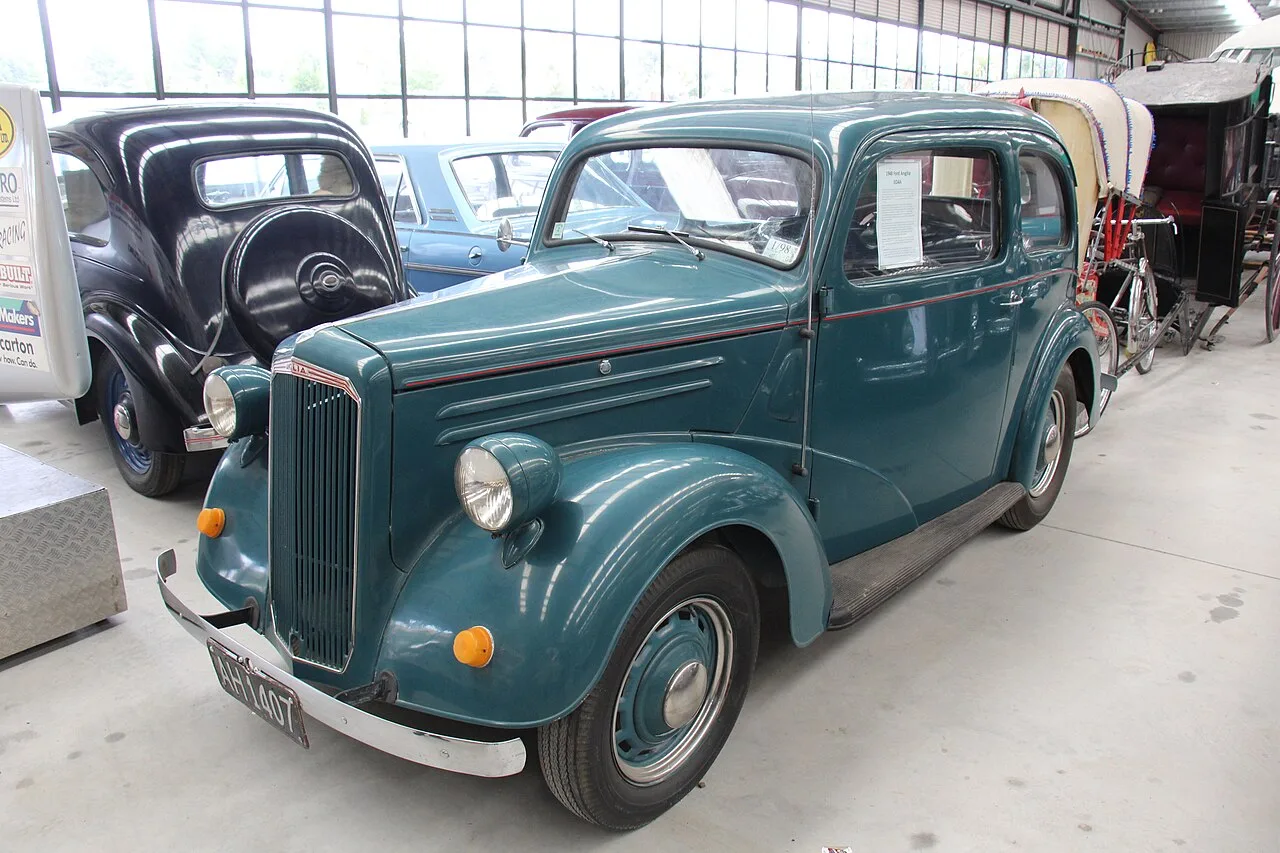
The first Ford Anglia, the E04A, was released on 31 October 1939 as the smallest model in the UK Ford range, replacing the Ford 7Y of which it was a facelift: a simple vehicle aimed at the affordable end of the market, mostly painted Ford black, in late-1930s style with an upright radiator, Standard and Deluxe models (the latter with better instrumentation and, pre-war, running boards), transverse leaf springs front and rear and mechanical brakes. A bulge at the back let the spare wheel be stowed flat on the boot floor, at the cost of rear leg room (38½ in against 43¾ in in the 7Y). The domestic engine was the 933 cc straight-four side-valve familiar since 1933, with the 1,172 cc four of the Ford Ten fitted for some export markets including North America, where imports began for model year 1948 with the three-hole 1937–38 7W grille, sealed-beam headlights and dual taillights. The vacuum-powered wipers tended to slow above about 40 mph though a reservoir helped; there was synchromesh between second and top but not first and second. Sales began in early 1940, production was suspended in early 1942 and resumed in mid-1945 and ceased in 1948 after 55,807 were built (the E04A also made in Australia from 1940 to 1945 as tourer and roadster; the Australian A54A of 1946–1948 used the E04A chassis and front panels with the 8 hp 933 cc engine). Wheelbase 90 in, length 152 in, width 57 in, height 63 in. The page gives no power figure.
Collectors Spotted in the Ford Anglia Lineage
No member has published a public street spot of the Ford Anglia yet — the First · Worldwide stamp is wide open.
Trims & Figures
2 published trims in the catalogue. A blank is a figure not recorded, not zero.
| Trim | Years | Engine | Power | Torque | 0–60 | Drive | Gearbox | MSRP |
|---|---|---|---|---|---|---|---|---|
| Anglia E04A 1,172 cc sidevalve four (export) | 1939–1948 | 1.2 L Inline-4 | — | — | — | RWD | — | — |
| Anglia E04A 933 cc sidevalve four | 1939–1948 | 0.9 L Inline-4 | — | — | — | RWD | — | — |
Owning one
We don’t estimate running costs for a car like this. What it costs depends on its condition, its specialist and how it is driven, and an average would mislead.
Owners’ builds
Nobody has claimed one yet.
Photographs
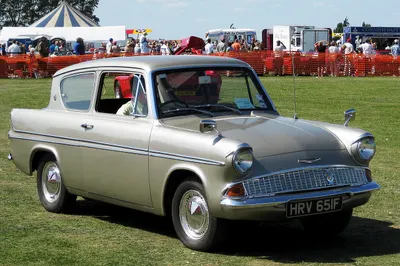
The humble Ford Anglia got an unexpectedly glamorous makeover: the Torino 105E was styled by Giovanni Michelotti, the designer behind Triumphs and Maseratis, and built in Turin by coachbuilder OSI.
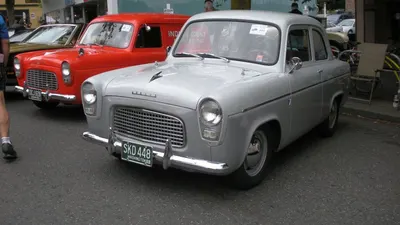
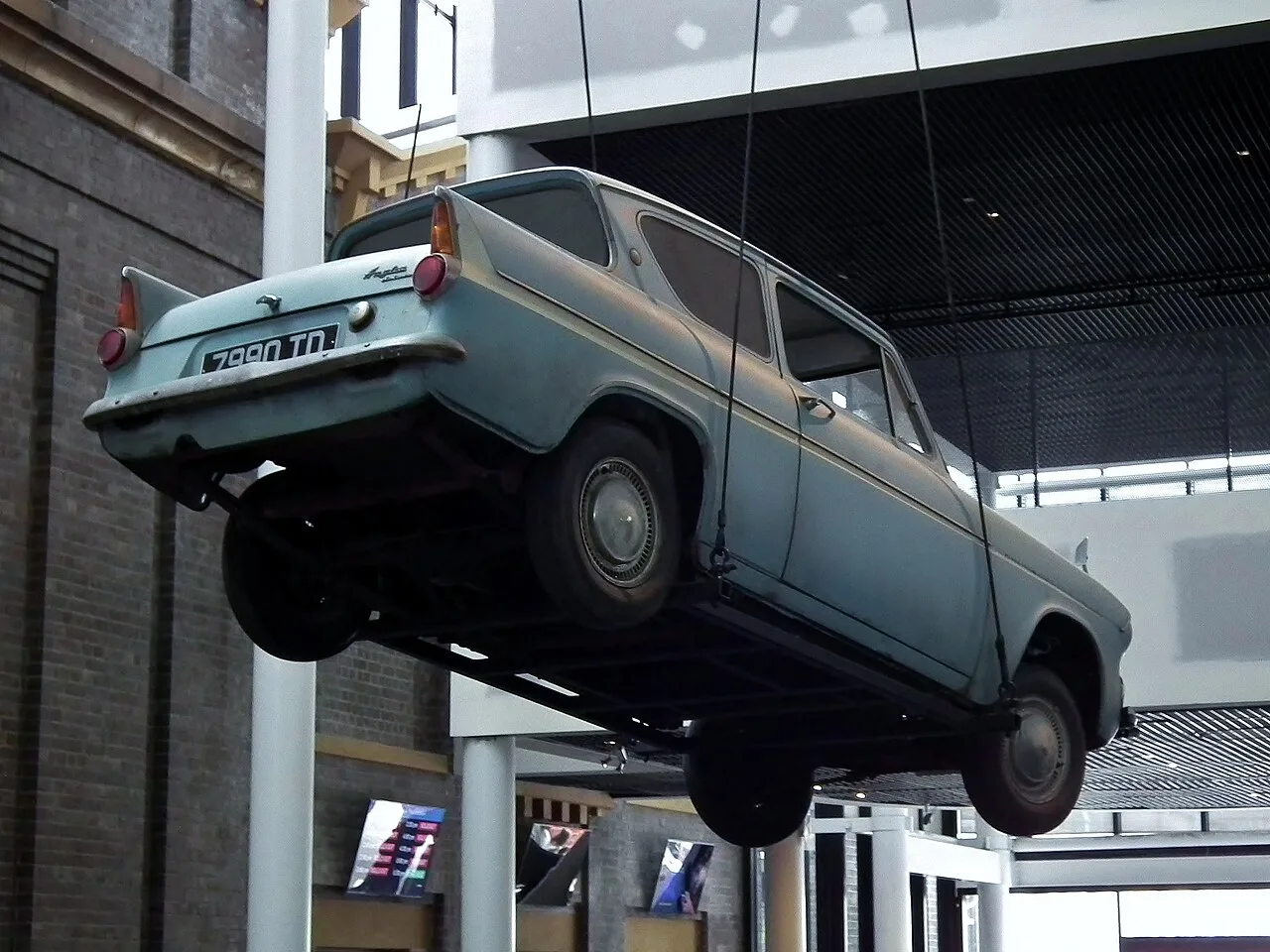
Ford sold the Anglia's backward-slanting rear window as a clever way to keep rain off the glass. It was actually copied wholesale from a 1958 Lincoln Continental, where the shape started as an engineering accident.
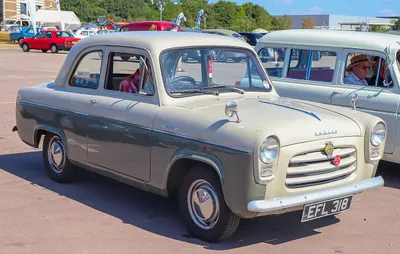
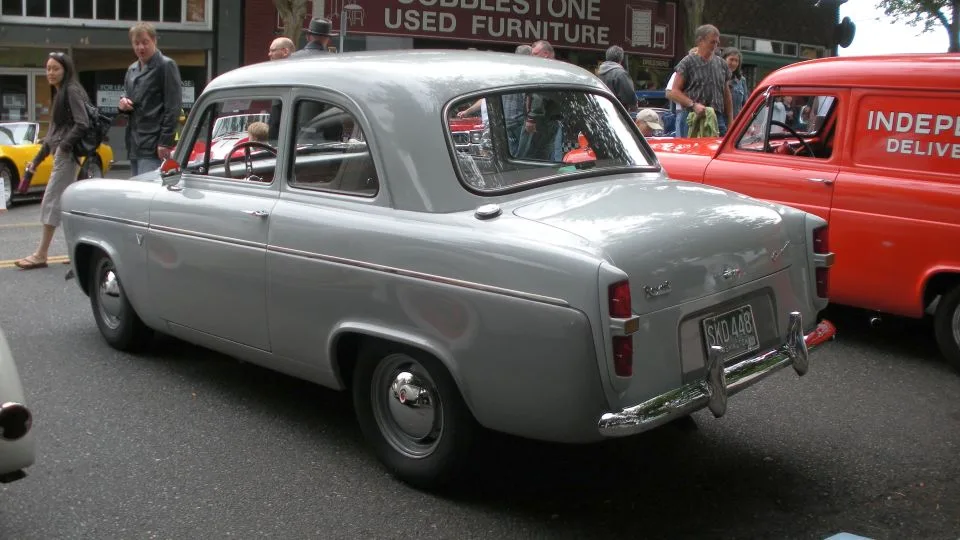
Ford offered a clutchless Newtondrive gearchange on the 100E for two years, then quietly dropped it.
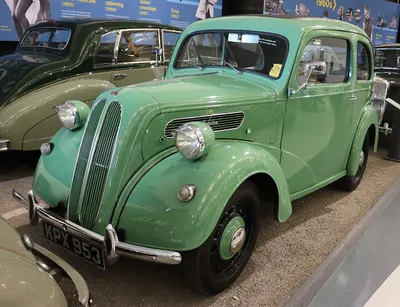
This humble Anglia carried a genuine democratizing claim: it was Britain's lowest-priced four-wheeled car of its day.
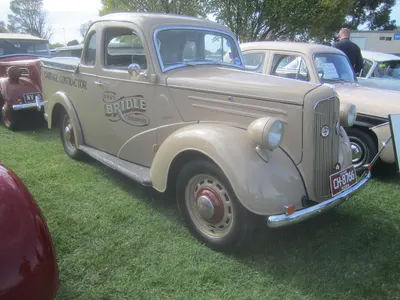
The Anglia's clever fold-down spare-wheel trick bought extra boot space — but it cost rear passengers over five inches of legroom compared to the 7Y it replaced.
Rivals
Same body, same money, other badges — tap any card to flip.

It briefly served as senior sibling to Marquette, a GM companion brand cancelled after just one year.

Nissan hired former BMW engineers to help develop the 510's suspension, which is why period reviewers frequently compared its handling to the BMW 1600/2002.

A Trabant 601 won its class at the 1970 Monte Carlo Rally, with a second 601 right behind it in second.

The 600 was a stopgap: the P50's body over the 601's mechanicals, and for a while its estate was built alongside the new 601 saloon.

The G80 Sport brought a 370 PS twin-turbo 3.3 V6, a mesh grille and copper-tinted chrome with copper stitching to match.

The Vigor was sold only with a five-cylinder engine, an unusual configuration Honda used to fit a longer engine transversely under a short hood.

The GS/E coupe earned the nickname "German Charger" for its long hood, short deck stance borrowed from Detroit muscle cars.

This DeVille/Fleetwood was the first production car anywhere to mount its V8 sideways, Cadillac's front-drive gamble on the new C-body.