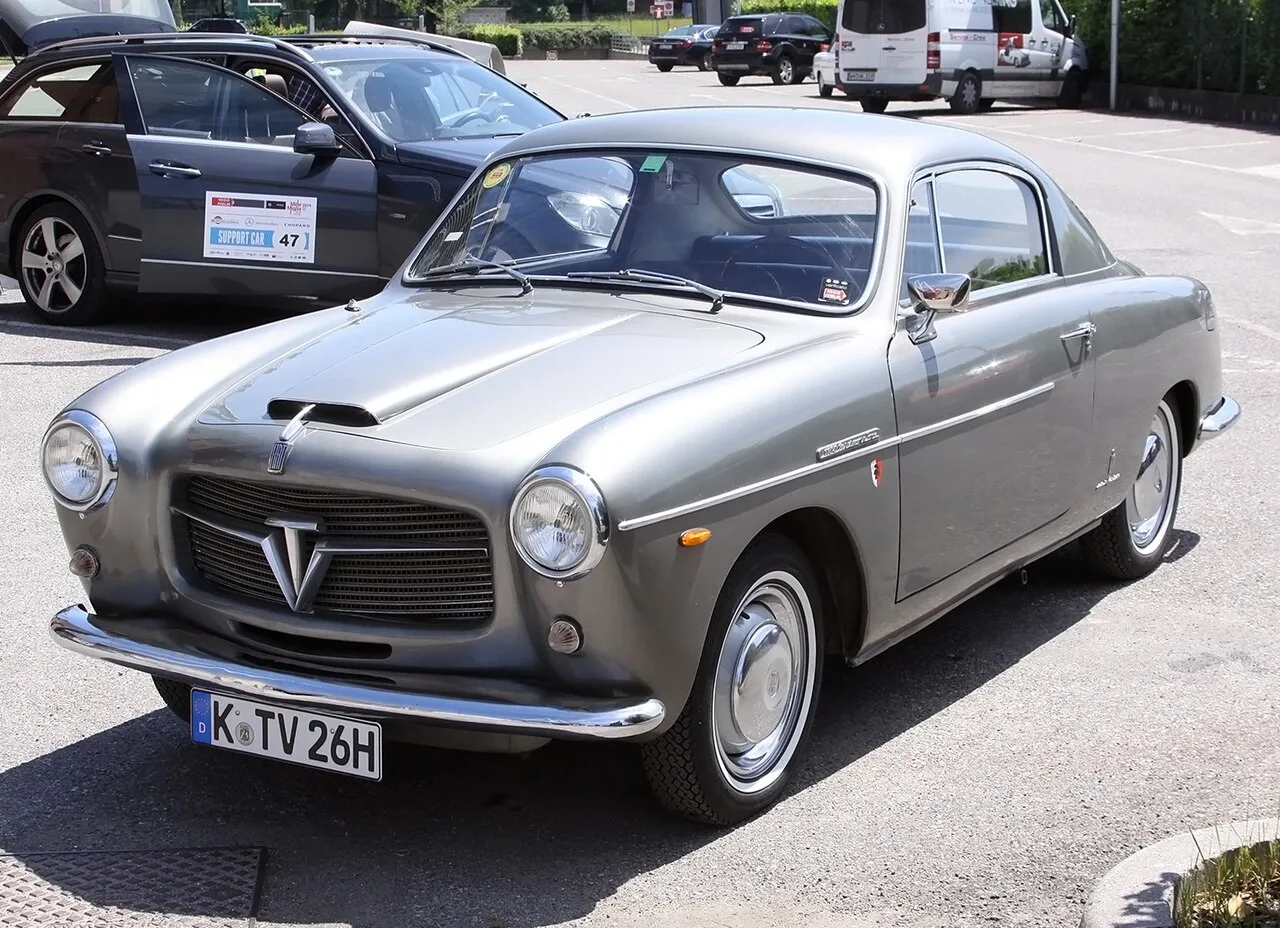
The 1100/103's doors were both hinged on the centre pillar throughout the 1950s — an odd layout Fiat only abandoned in 1960, borrowing the conventional front-hinged bodyshell from the 1200 Granluce.
Lead trim: 1100 Tipo A/B 1.1 (36 PS) · up to 52 hp
Fiat 1100/1031953–1962
- 0spots by members
- Unclaimednobody has spotted one yet
- 0sets it belongs to
Nobody in Burbles has spotted a Fiat 1100/103 yet. See one on the street, point the app at it, and the first card is yours — with your @handle permanently credited on this page.
FactThe 1100/103's doors were both hinged on the centre pillar throughout the 1950s — an odd layout Fiat only abandoned in 1960, borrowing the conventional front-hinged bodyshell from the 1200 Granluce.
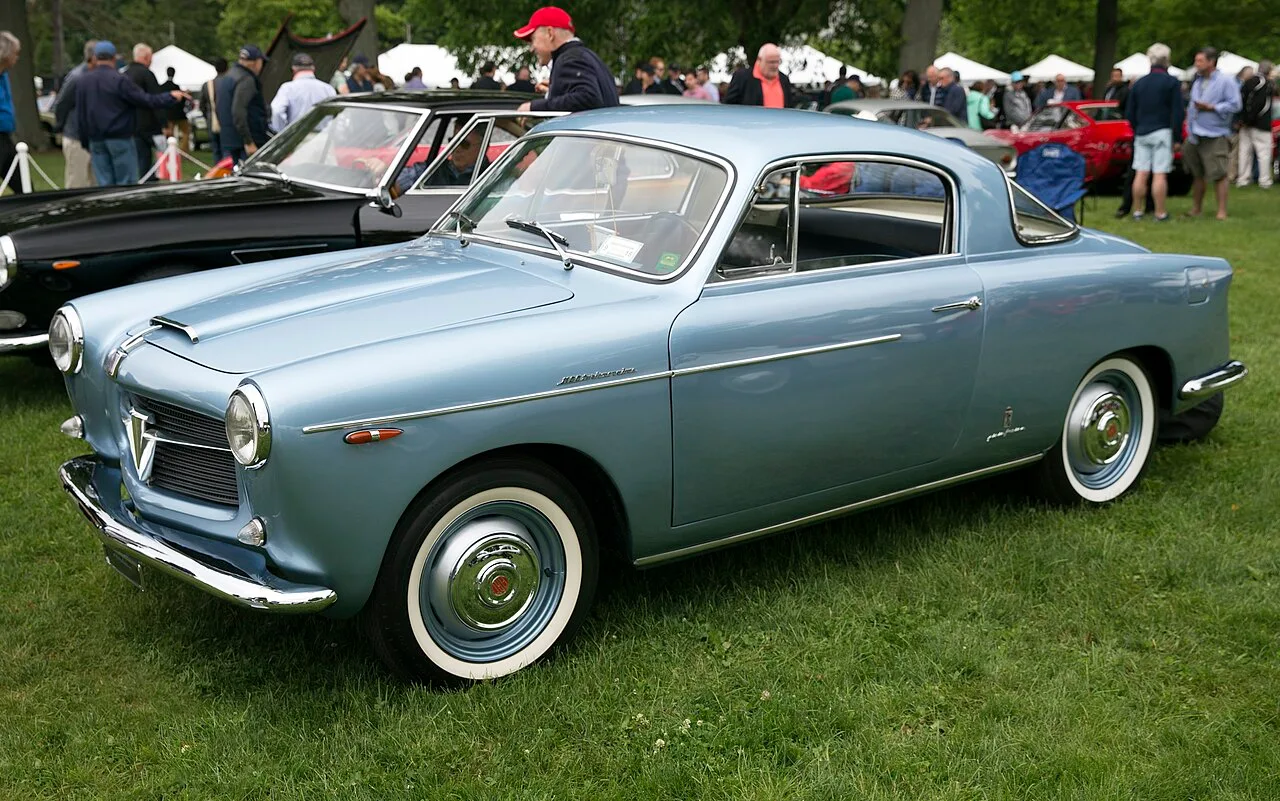
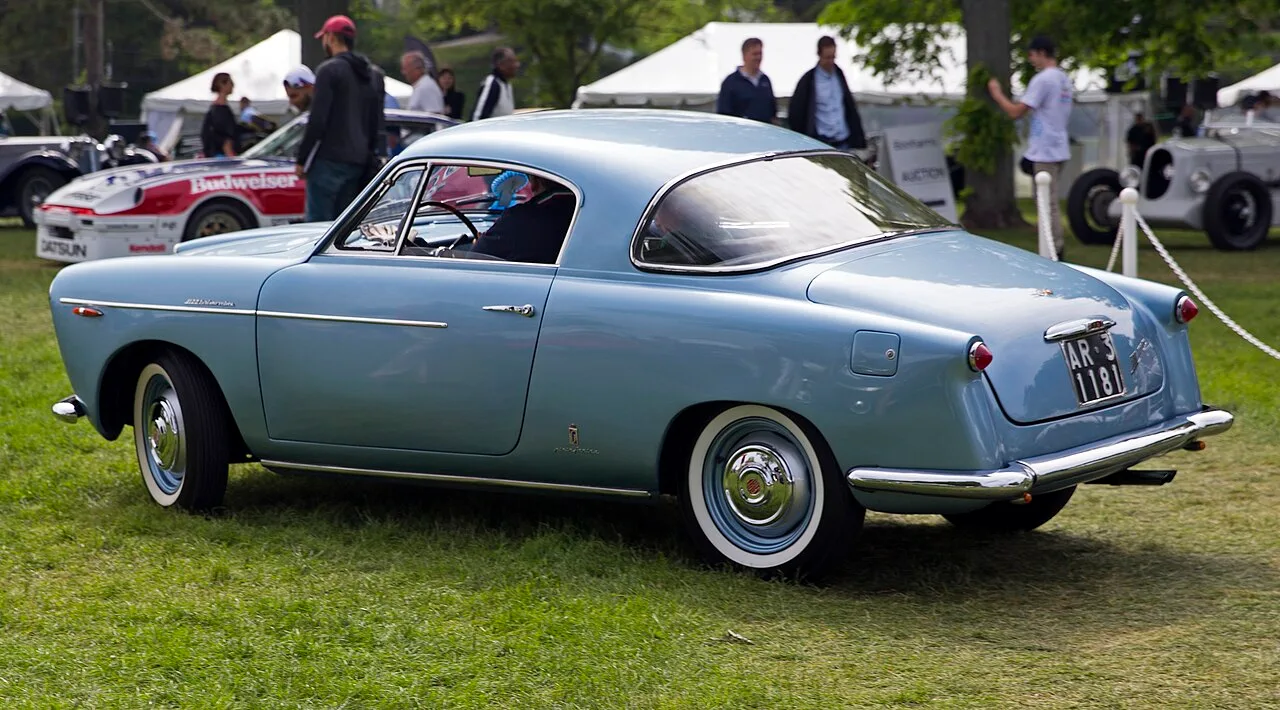
The Fiat 1100 is a small family car produced from 1953 until 1969 by the Italian manufacturer Fiat, an all-new unibody replacement for the Fiat 1100 E, which descended from the pre-war body-on-frame Fiat 508 C Balilla 1100. Codenamed Tipo 103, it retained the 1100 E's well-tested 1.1-litre engine, a four-speed manual transmission with synchromesh on the top three speeds and a column-mounted shifter, and was offered as the spartan Tipo A and richer Tipo B; both front doors were hinged on the centre pillar until 1960. At the October 1953 Paris Motor Show Fiat launched the sporting 1100 TV (Turismo Veloce), with a twin-choke Weber carburettor and higher compression, whose victories included class wins at the 1954 and 1955 Mille Miglia; a five-door Familiare estate followed in 1954 and the TV Trasformabile roadster in March 1955. The range was updated in June 1956 as the 103 E, in September 1957 as the 1958 103 D with a redesigned tail with tailfins, in 1959 with the upmarket 103 H Lusso, and in late 1960 as the 1100 Export, Special and Familiare, which remained on sale until 1962 when the 1100 D replaced them. It was also built as the NSU-Fiat Europa in Germany, the Zastava 1100B in Yugoslavia and, later, in India as the Premier Padmini.
Collectors Spotted in the Fiat 1100 Lineage
No member has published a public street spot of the Fiat 1100 yet — the First · Worldwide stamp is wide open.
Trims & Figures
7 published trims in the catalogue. A blank is a figure not recorded, not zero.
| Trim | Years | Engine | Power | Torque | 0–60 | Drive | Gearbox | MSRP |
|---|---|---|---|---|---|---|---|---|
| 1100 Export / Special 1.1 twin-carb (50 PS) | 1960–1962 | 1.1 L Inline-4 | 49 hp | — | — | RWD | — | — |
| 1100 TV 1.1 twin-choke (50 PS) | 1954–1956 | 1.1 L Inline-4 | 49 hp | — | — | RWD | — | — |
| 1100 Tipo A/B 1.1 (36 PS) | 1953–1956 | 1.1 L Inline-4 | 36 hp | — | — | RWD | — | — |
| 1100/103 D 1.1 (43 PS) | 1958–1959 | 1.1 L Inline-4 | 42 hp | — | — | RWD | — | — |
| 1100/103 E 1.1 (40 PS) | 1956–1957 | 1.1 L Inline-4 | 39 hp | — | — | RWD | — | — |
| 1100/103 E TV 1.1 (53 PS) | 1956–1957 | 1.1 L Inline-4 | 52 hp | — | — | RWD | — | — |
| 1100/103 H Lusso 1.1 twin-choke (50 PS) | 1959–1960 | 1.1 L Inline-4 | 49 hp | — | — | RWD | — | — |
Owning one
We don’t estimate running costs for a car like this. What it costs depends on its condition, its specialist and how it is driven, and an average would mislead.
Owners’ builds
Nobody has claimed one yet.
Photographs
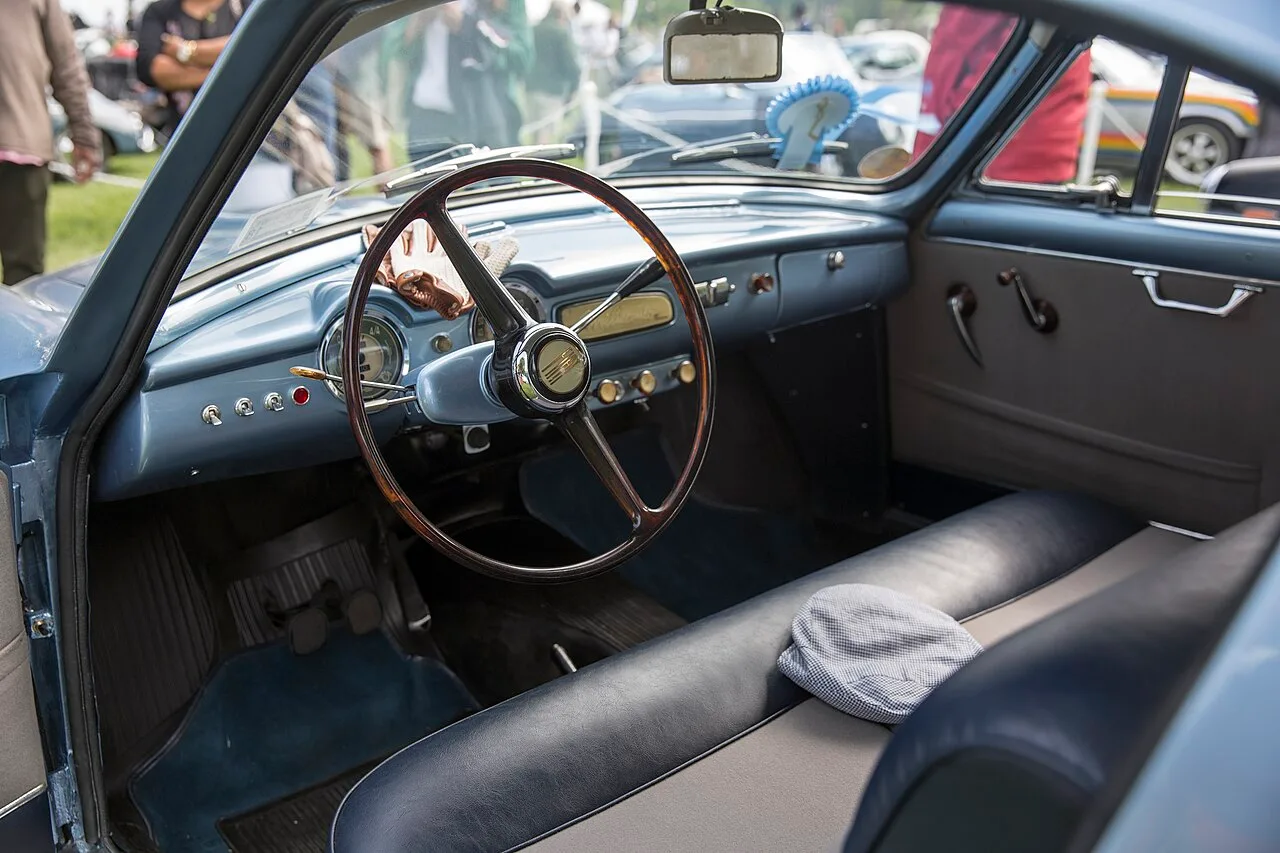
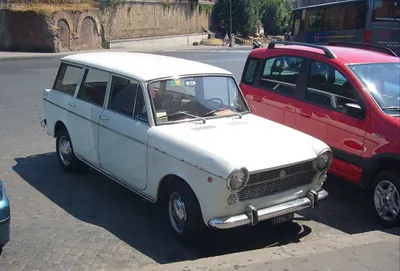
By the end of its life the 1100 R was cutting corners — Fiat simplified its interior by borrowing parts, including the steering wheel, from the smaller 850.
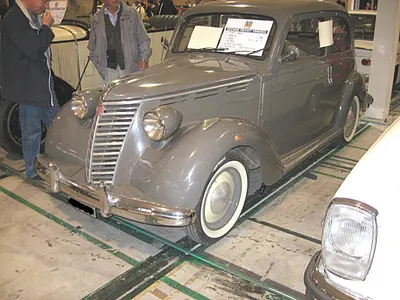
Europe stopped building this Fiat in 1969, but in India it just kept going — licence-built as the Premier Padmini, it stayed in production for another three decades, until 2000.
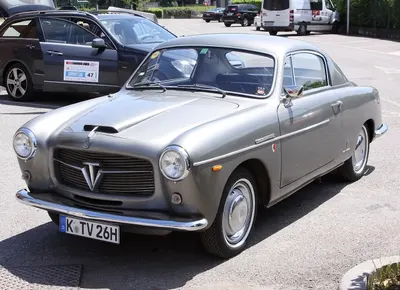
The 1100/103's doors were both hinged on the centre pillar throughout the 1950s — an odd layout Fiat only abandoned in 1960, borrowing the conventional front-hinged bodyshell from the 1200 Granluce.
Rivals
Same body, same money, other badges — tap any card to flip.

It briefly served as senior sibling to Marquette, a GM companion brand cancelled after just one year.

Nissan hired former BMW engineers to help develop the 510's suspension, which is why period reviewers frequently compared its handling to the BMW 1600/2002.

A Trabant 601 won its class at the 1970 Monte Carlo Rally, with a second 601 right behind it in second.

The 600 was a stopgap: the P50's body over the 601's mechanicals, and for a while its estate was built alongside the new 601 saloon.

The G80 Sport brought a 370 PS twin-turbo 3.3 V6, a mesh grille and copper-tinted chrome with copper stitching to match.

The Vigor was sold only with a five-cylinder engine, an unusual configuration Honda used to fit a longer engine transversely under a short hood.

The GS/E coupe earned the nickname "German Charger" for its long hood, short deck stance borrowed from Detroit muscle cars.

This DeVille/Fleetwood was the first production car anywhere to mount its V8 sideways, Cadillac's front-drive gamble on the new C-body.