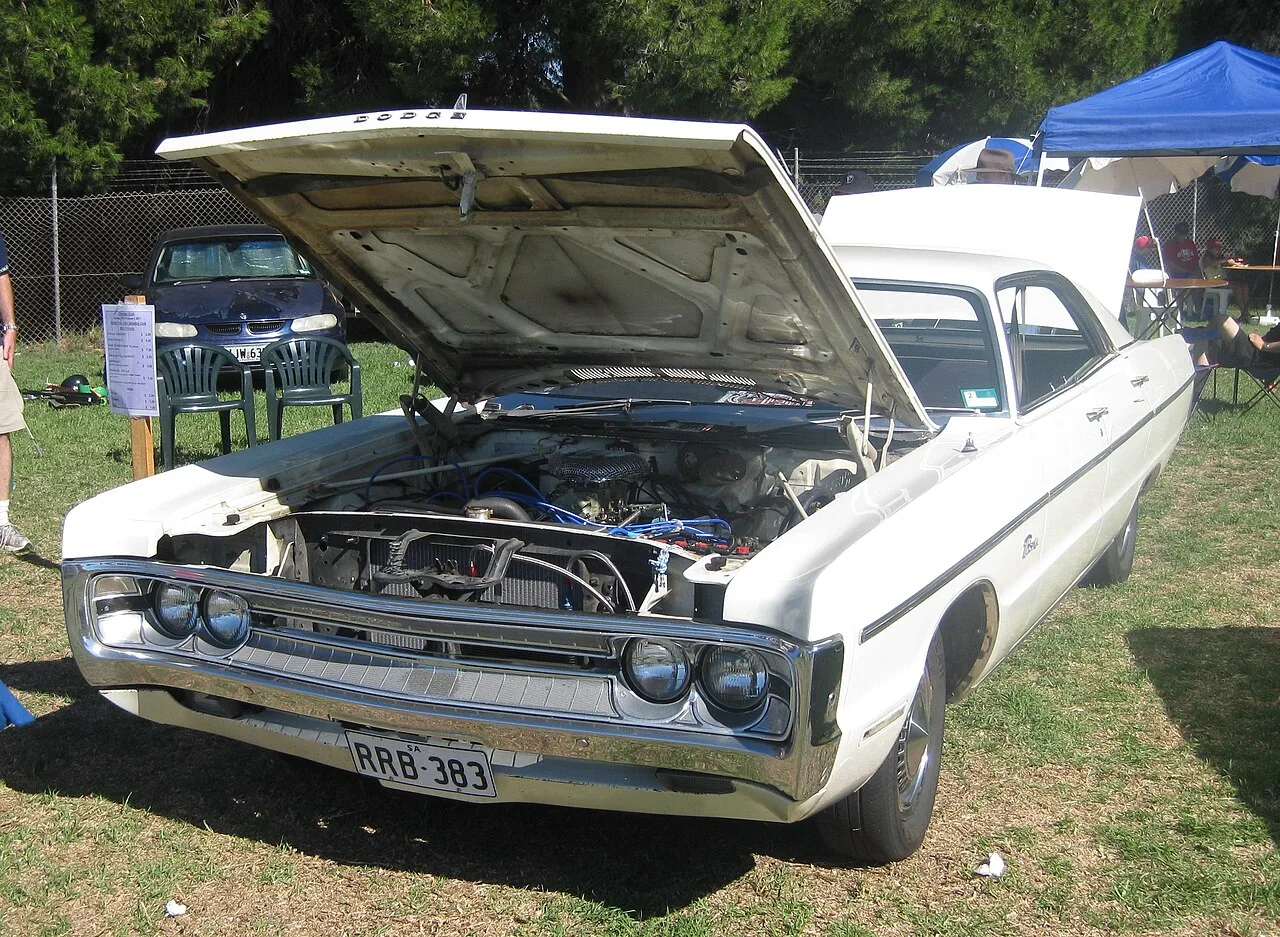
The Phoenix 400 badge promised numbered exclusivity, but Chrysler Australia never actually built 400 of either body style.
Median 96 hp across 242 similar cars
Lead trim: Phoenix 318 cu in V8 sedan (1970–1972) · up to 270 hp
Dodge Phoenix DE to DHDE/DF/DG/DH · 1969–1972
- 0spots by members
- Unclaimednobody has spotted one yet
- 0sets it belongs to
Nobody in Burbles has spotted a Dodge Phoenix DE to DH yet. See one on the street, point the app at it, and the first card is yours — with your @handle permanently credited on this page.
FactThe Phoenix 400 badge promised numbered exclusivity, but Chrysler Australia never actually built 400 of either body style.
The DE Phoenix was introduced in 1969, with horizontal dual headlights, a 120-inch wheelbase and an overall length of 214.5 inches. It was marketed as the 400 Limited Edition series, each car carrying a numbered dashboard badge; production was planned to be limited to 400 sedans and 400 hardtops, although actual production did not reach 400 of either. 371 examples of the DE were built at Chrysler Australia's Port Melbourne facility in 1969 and a further 385 in 1970. The body was completely new and featured the Plymouth Fury "Fuselage" curved sides, and for the first time the DE models featured hidden, parallel-action windshield wipers. The DF Phoenix was introduced in 1970, again marketed as the Phoenix 400 with individually numbered dash plaques (298 built at Port Melbourne in 1970 and 110 in 1971); the DG was introduced in 1971, again as the Phoenix 400 (298 built in 1971); and the DH was introduced in 1972 (73 built in that year). A decision to close the outdated Port Melbourne facility led to the discontinuation of the Phoenix, after which the Australian-developed Chrysler by Chrysler inherited the role of top luxury model in Chrysler Australia's range. The hardtop was fitted with a 383 cubic inch V8 while the sedan continued with the smaller 318 cubic inch V8, both body styles continuing until the Phoenix was discontinued.
Collectors Spotted in the Dodge Phoenix Lineage
No member has published a public street spot of the Dodge Phoenix yet — the First · Worldwide stamp is wide open.
Trims & Figures
3 published trims in the catalogue. A blank is a figure not recorded, not zero.
| Trim | Years | Engine | Power | Torque | 0–60 | Drive | Gearbox | MSRP |
|---|---|---|---|---|---|---|---|---|
| Phoenix 318 cu in V8 sedan (1970–1972) | 1970–1972 | 5.2 L V8 | 230 hp | 340 lb-ft | — | RWD | — | — |
| Phoenix 318 cu in V8 sedan (DE, 1969) | 1969–1969 | 5.2 L V8 | 230 hp | 340 lb-ft | — | RWD | — | — |
| Phoenix 383 cu in V8 hardtop (1969–1972) | 1969–1972 | 6.3 L V8 | 270 hp | 390 lb-ft | — | RWD | — | — |
Owning one
We don’t estimate running costs for a car like this. What it costs depends on its condition, its specialist and how it is driven, and an average would mislead.
Owners’ builds
Nobody has claimed one yet.
Photographs
The Phoenix 400 badge promised numbered exclusivity, but Chrysler Australia never actually built 400 of either body style.
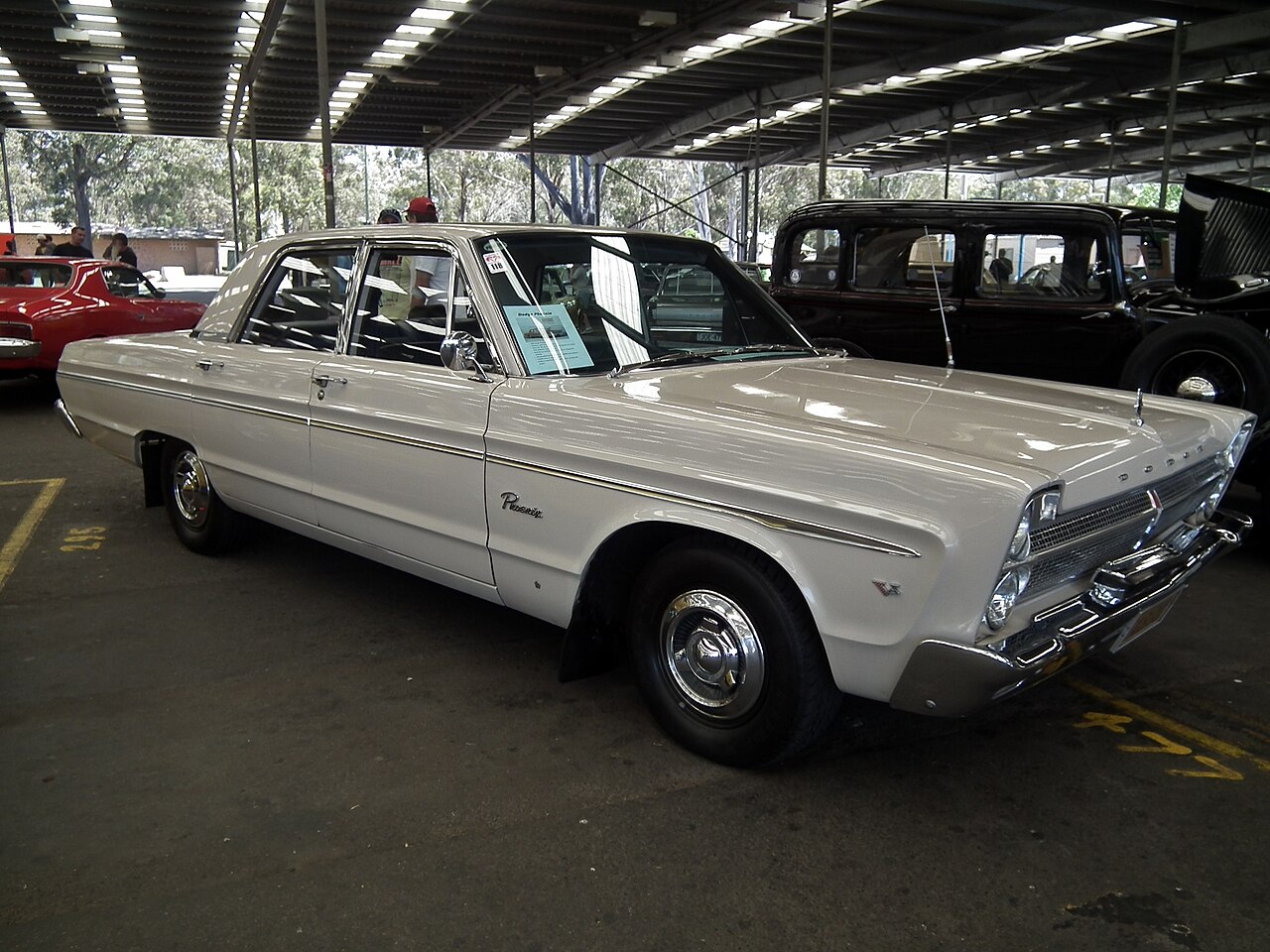
Built in Australia and badged a Dodge, this Phoenix still wore a Plymouth hood ornament — with the Dodge 'Fratzog' emblem simply stamped over the Plymouth outline.
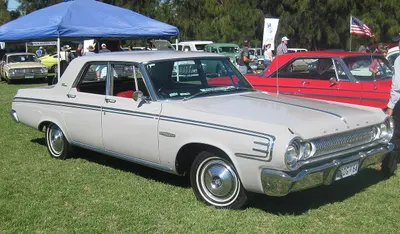
Some Dodge Phoenix wagons built in Australia ended up as hearses — stretched, converted to two doors, and fitted with oversized rear quarter windows in the British funeral-car tradition.
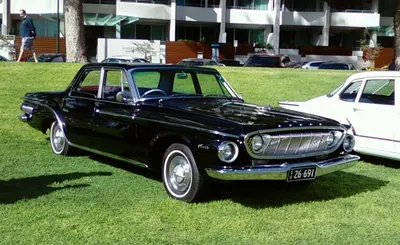
Australia's 1962 Dodge Phoenix SD2 went against the usual trend — it actually shrank, riding on a shorter, narrower body borrowed from the newly downsized US Dodge Dart.
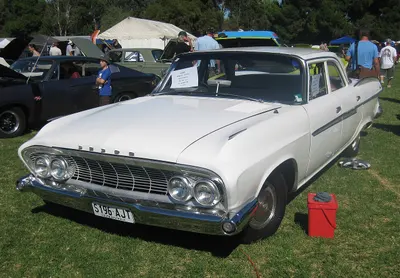
Australia's first Dodge Phoenix wasn't really Australian, or even really a Dodge interior-wise: it was a Canadian-built Dodge fitted with a Plymouth dashboard, shipped out in CKD kits and bolted together in Adelaide.
Rivals
Same body, same money, other badges — tap any card to flip.

It briefly served as senior sibling to Marquette, a GM companion brand cancelled after just one year.

Nissan hired former BMW engineers to help develop the 510's suspension, which is why period reviewers frequently compared its handling to the BMW 1600/2002.

A Trabant 601 won its class at the 1970 Monte Carlo Rally, with a second 601 right behind it in second.

The 600 was a stopgap: the P50's body over the 601's mechanicals, and for a while its estate was built alongside the new 601 saloon.

The G80 Sport brought a 370 PS twin-turbo 3.3 V6, a mesh grille and copper-tinted chrome with copper stitching to match.

The Vigor was sold only with a five-cylinder engine, an unusual configuration Honda used to fit a longer engine transversely under a short hood.

The GS/E coupe earned the nickname "German Charger" for its long hood, short deck stance borrowed from Detroit muscle cars.

This DeVille/Fleetwood was the first production car anywhere to mount its V8 sideways, Cadillac's front-drive gamble on the new C-body.