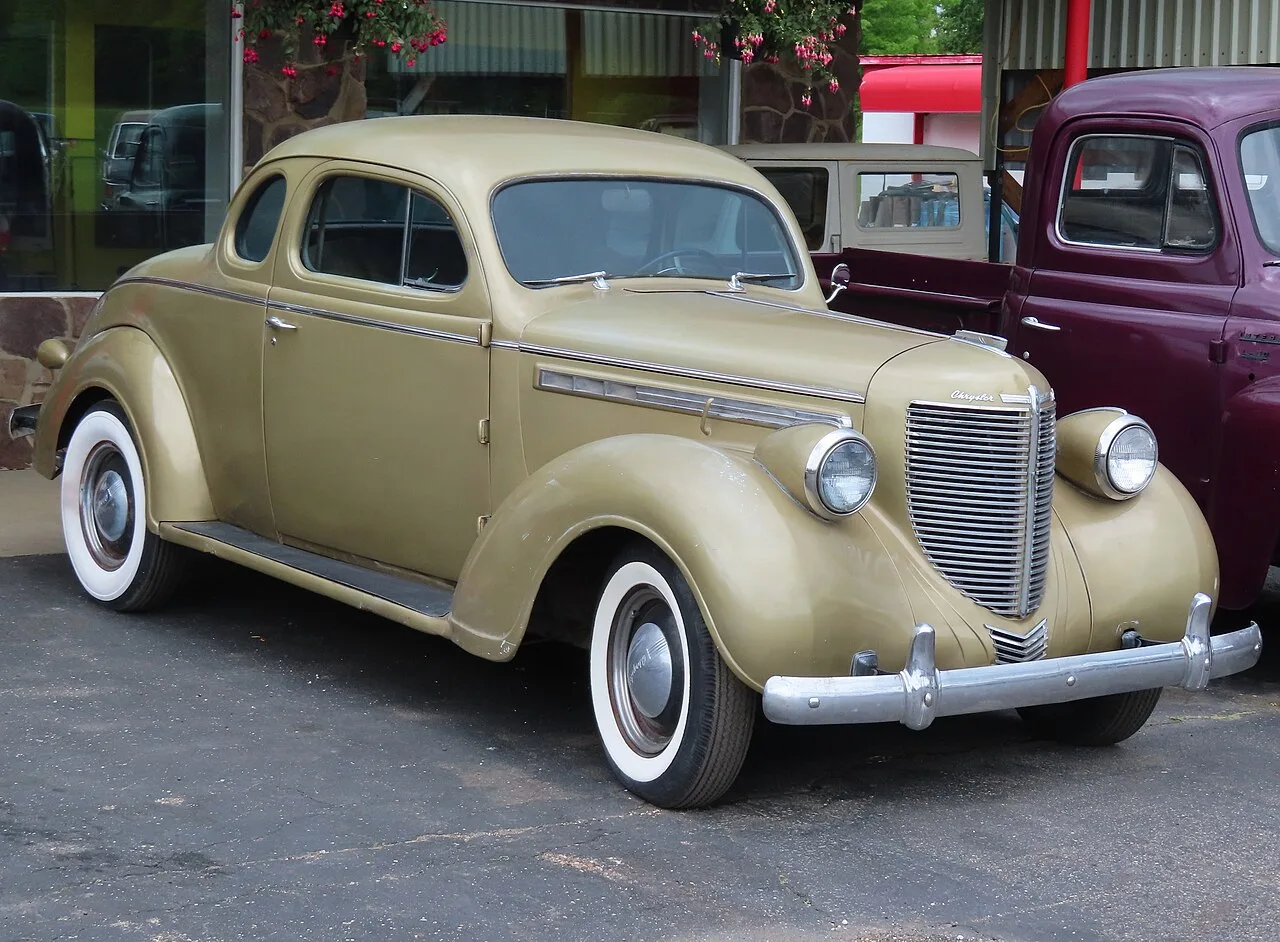
Chrysler's six-cylinder Royal was the direct heir to the very car that founded the company in 1925, and it stayed Chrysler's cheapest model for the rest of its life.
Median 84 hp across 187 similar cars
Lead trim: Royal 228.1 Chrysler I6 (1937–1938)
Chrysler Royal six-cylinderROYAL-SIX · 1937–1950
- 0spots by members
- Unclaimednobody has spotted one yet
- 0sets it belongs to
Nobody in Burbles has spotted a Chrysler Royal six-cylinder yet. See one on the street, point the app at it, and the first card is yours — with your @handle permanently credited on this page.
FactChrysler's six-cylinder Royal was the direct heir to the very car that founded the company in 1925, and it stayed Chrysler's cheapest model for the rest of its life.
The Royal was brought back as a new model in 1937 when the Airflow sold poorly and was sold alongside the Airflow, which continued to offer the Straight Eight: the 1937 Royal Series C-16 was installed with the Chrysler Straight Six and took the entry-level position in the Chrysler hierarchy (shared with the DeSoto Airstream), advertised in November 1936 in ten body types from US$715 (four-door sedan US$815). In 1939 the Series C-22 Royal introduced the "Royal Windsor" nameplate as a trim package and in 1941 "Royal", "Windsor" and "Highlander" became separate nameplates on the same wheelbase with only the Straight Six, "Windsor" models offering more standard features; the Royal replaced the Chrysler Six that the company originated with in 1925 and remained the six-cylinder entry-level model until it was dropped at the end of the 1950 model year, making the Windsor the entry-level car for 1951; pre-war models were offered in two wheelbase lengths (shorter for coupes and sedans, longer for seven-passenger sedans and limousines). Still well equipped and above the DeSoto Custom, Dodge Custom and Plymouth De Luxe, it had a 228.1 cu in (3.7 L) Chrysler I6 in 1937–1938 and a 241.5 cu in (4.0 L) I6 in 1939–1942, with wheelbases from 116 in (1937 C-16) to 139 in (1940 C-25 long). The Royal name was later revived by Chrysler Australia in 1957 and used on the 1955 Dodge Royal and as a Chrysler Newport trim level from 1970 to 1972.
Collectors Spotted in the Chrysler Royal Lineage
No member has published a public street spot of the Chrysler Royal yet — the First · Worldwide stamp is wide open.
Trims & Figures
2 published trims in the catalogue. A blank is a figure not recorded, not zero.
| Trim | Years | Engine | Power | Torque | 0–60 | Drive | Gearbox | MSRP |
|---|---|---|---|---|---|---|---|---|
| Royal 228.1 Chrysler I6 (1937–1938) | 1937–1938 | 3.7 L Inline-6 | 93 hp | — | — | RWD | — | — |
| Royal 241.5 Chrysler I6 (1939–1942) | 1939–1942 | 4.0 L Inline-6 | — | — | — | RWD | — | — |
Owning one
We don’t estimate running costs for a car like this. What it costs depends on its condition, its specialist and how it is driven, and an average would mislead.
Owners’ builds
Nobody has claimed one yet.
Photographs
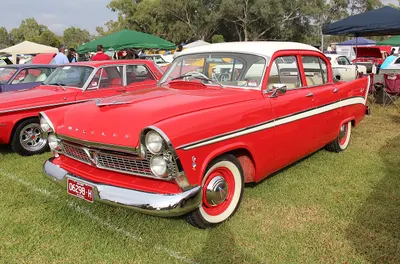
The final Royal, the AP3, borrowed its face from Detroit's 1959 DeSoto: stacked quad headlamps and triple tail lights on an Australian-built Plymouth-based sedan.
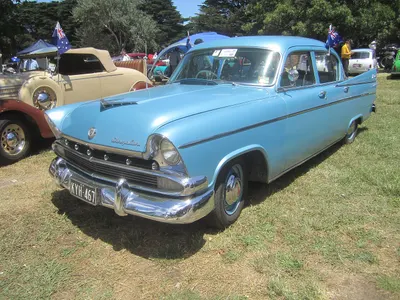
Australia's AP2 Royal grafted odd 'saddle fins' onto its tailfins — a grille-and-rear update that made it instantly distinct from the AP1 it replaced.
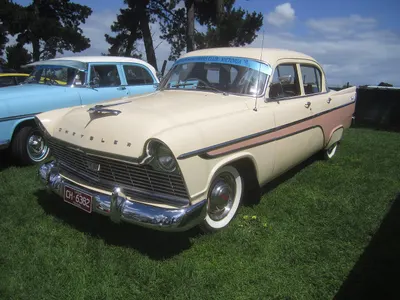
South Australia's Highway Patrol ran V8 versions of this Australian-built Chrysler Royal — a locally adapted family car good enough for police pursuit duty.
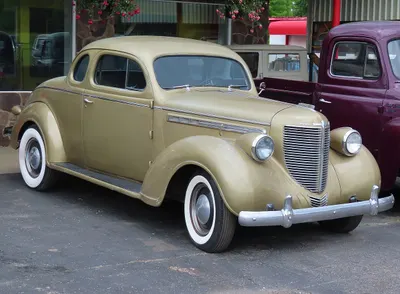
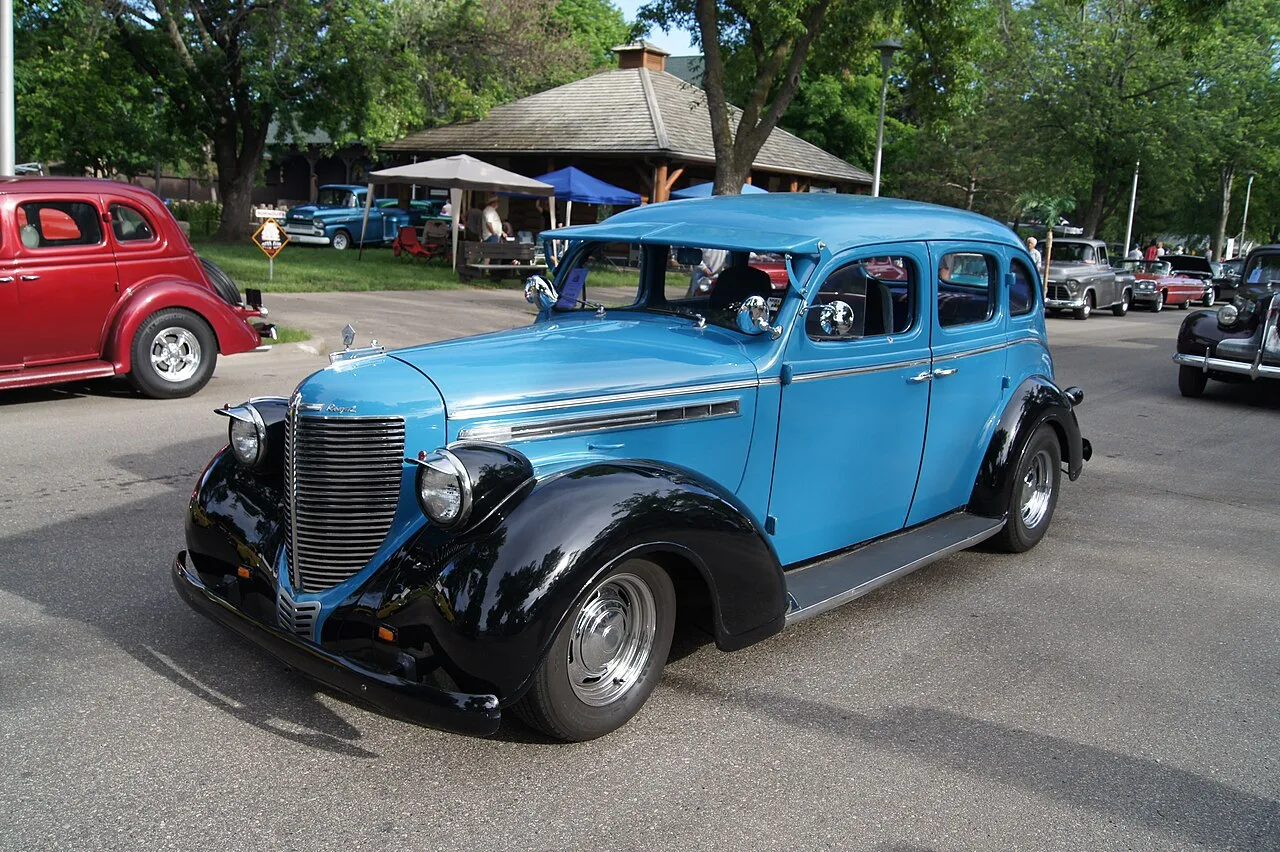
Chrysler's six-cylinder Royal was the direct heir to the very car that founded the company in 1925, and it stayed Chrysler's cheapest model for the rest of its life.
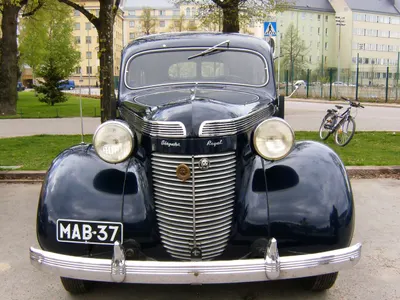
Chrysler's 1933 Royal broke from how the company had always named cars — it was only the second Chrysler nameplate that didn't reference an internal body code or a top speed.
Rivals
Same body, same money, other badges — tap any card to flip.

It briefly served as senior sibling to Marquette, a GM companion brand cancelled after just one year.

Nissan hired former BMW engineers to help develop the 510's suspension, which is why period reviewers frequently compared its handling to the BMW 1600/2002.

A Trabant 601 won its class at the 1970 Monte Carlo Rally, with a second 601 right behind it in second.

The 600 was a stopgap: the P50's body over the 601's mechanicals, and for a while its estate was built alongside the new 601 saloon.

The G80 Sport brought a 370 PS twin-turbo 3.3 V6, a mesh grille and copper-tinted chrome with copper stitching to match.

The Vigor was sold only with a five-cylinder engine, an unusual configuration Honda used to fit a longer engine transversely under a short hood.

The GS/E coupe earned the nickname "German Charger" for its long hood, short deck stance borrowed from Detroit muscle cars.

This DeVille/Fleetwood was the first production car anywhere to mount its V8 sideways, Cadillac's front-drive gamble on the new C-body.