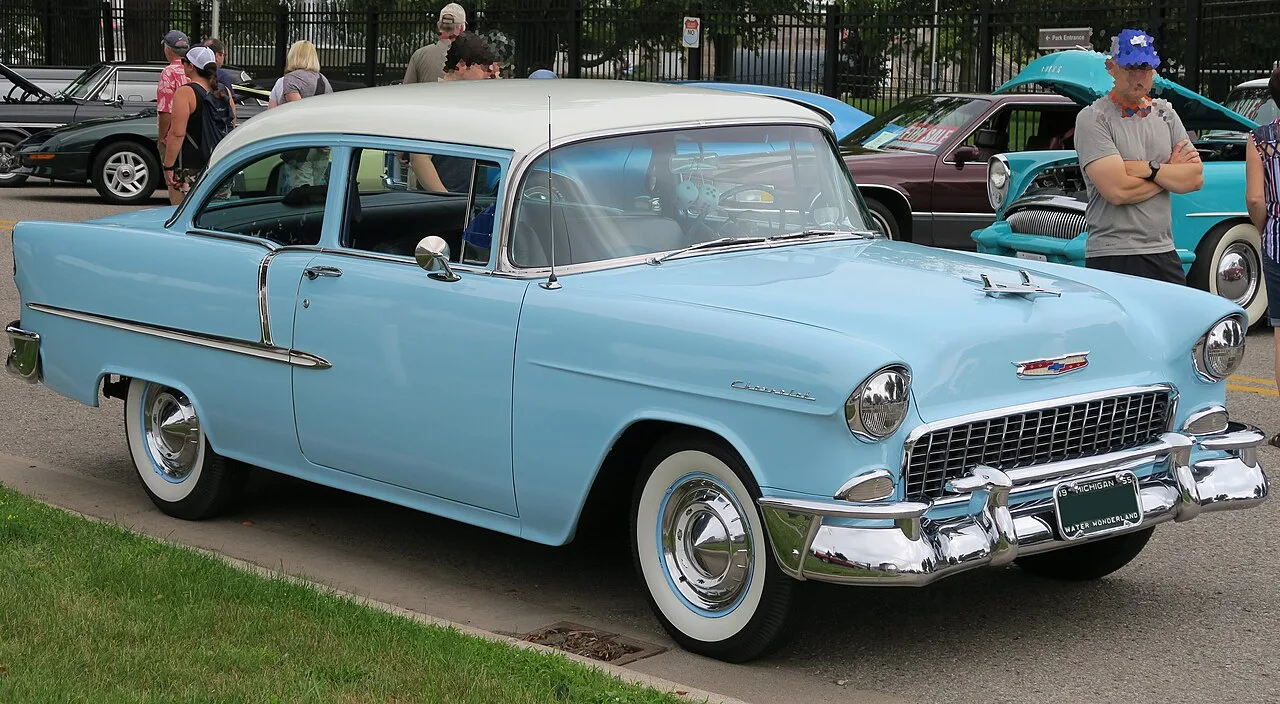
In 1957, even the mid-range Two-Ten could be ordered with Chevy's new Rochester Ram-Jet fuel injection on the 283 V8 — a technology most people only remember on the Corvette.
Median 85 hp across 147 similar cars
Lead trim: Two-Ten 235 "Blue Flame" I6 (1955; 123 hp, manual) · up to 283 hp
Chevrolet Two-TenTWO-TEN-1955 · 1955–1957
- 0spots by members
- Unclaimednobody has spotted one yet
- 0sets it belongs to
Nobody in Burbles has spotted a Chevrolet Two-Ten yet. See one on the street, point the app at it, and the first card is yours — with your @handle permanently credited on this page.
FactIn 1957, even the mid-range Two-Ten could be ordered with Chevy's new Rochester Ram-Jet fuel injection on the 283 V8 — a technology most people only remember on the Corvette.
As the American public began to prefer posh to economy, the Bel Air began to outsell both the 150 and 210, and as a partial answer Chevrolet re-introduced the Two-Ten Sport Coupe hardtop in the middle of the 1955 model year and added a four-door Two-Ten hardtop Sport Sedan for 1956; neither achieved the sales of its Bel Air counterpart, being only about $100 cheaper than a Bel Air that offered more luxury and premium exterior trim. The lower-priced Handyman wagon, a four-door in 1953 and 1954, became a two-door for 1955 to 1957, and both wagons were joined by a nine-passenger Beauville four-door in 1956 and 1957. The 1955 model year introduced a new chassis and the debut of the small-block V8, with a beefed-up center door frame, 11-inch drum brakes and warning lights in place of the ammeter and oil pressure gauges; it was the second Chevrolet to have a V8, the first being the Series D of 1917. For 1956 the engine choices stayed the same but with higher power ratings, the 265 cu in V8 was available in three versions and the six had a new unified build regardless of transmission. New for 1957 was the optional 283 small-block V8, in three carbureted versions plus a fuel-injected option; the Two-Ten shared the wedge-shaped side trim of the Bel Air, but its wedge was painted body color (or top color with the two-tone package) rather than filled with an aluminum trim panel, with "Chevrolet" in script inside. Collectors favor the 1953 convertible (very rare), the Delray Club Coupe with its upgraded vinyl interior and the Sport Coupe hardtops of 1953 and 1955 to 1957. Holden in Australia assembled 1955, 1956 and 1957 four-door sedans based on the 210 without using the 210 name, with six-cylinder engines and three-speed manuals. Each rating below is its own trim for its year; the page gives no dimensions for this generation.
Collectors Spotted in the Chevrolet Two-Ten Lineage
No member has published a public street spot of the Chevrolet Two-Ten yet — the First · Worldwide stamp is wide open.
Trims & Figures
13 published trims in the catalogue. A blank is a figure not recorded, not zero.
| Trim | Years | Engine | Power | Torque | 0–60 | Drive | Gearbox | MSRP |
|---|---|---|---|---|---|---|---|---|
| Two-Ten 235 "Blue Flame" I6 (1955; 123 hp, manual) | 1955–1955 | 3.9 L Inline-6 | 123 hp | 207 lb-ft | — | RWD | — | — |
| Two-Ten 235 "Blue Flame" I6 (1956; 140 hp) | 1956–1956 | 3.9 L Inline-6 | 140 hp | 210 lb-ft | — | RWD | — | — |
| Two-Ten 235 "Blue Flame" I6 (1957; 140 hp) | 1957–1957 | 3.9 L Inline-6 | 140 hp | 210 lb-ft | — | RWD | — | — |
| Two-Ten 265 "Turbo-Fire" V8 (1956; 170 hp) | 1956–1956 | 4.3 L V8 | 170 hp | 257 lb-ft | — | RWD | — | — |
| Two-Ten 265 "Turbo-Fire" V8 (1957; 162 hp) | 1957–1957 | 4.3 L V8 | 162 hp | 257 lb-ft | — | RWD | — | — |
| Two-Ten 265 "Turbo-Fire" V8 dual-quad (1956; 225 hp) | 1956–1956 | 4.3 L V8 | 225 hp | 270 lb-ft | — | RWD | — | — |
| Two-Ten 265 "Turbo-Fire" V8 quad-barrel (1956; 205 hp) | 1956–1956 | 4.3 L V8 | 205 hp | 268 lb-ft | — | RWD | — | — |
| Two-Ten 265 Turbo-Fire V8 (1955; 162 hp) | 1955–1955 | 4.3 L V8 | 162 hp | 260 lb-ft | — | RWD | — | — |
| Two-Ten 265 Turbo-Fire V8 (1955; 180 hp) | 1955–1955 | 4.3 L V8 | 180 hp | 260 lb-ft | — | RWD | — | — |
| Two-Ten 283 "Super Turbo-Fire" V8 (1957; 185 hp) | 1957–1957 | 4.6 L V8 | 185 hp | 275 lb-ft | — | RWD | — | — |
| Two-Ten 283 "Super Turbo-Fire" V8 Ram-Jet fuel injection (1957; 283 hp) | 1957–1957 | 4.6 L V8 | 283 hp | 290 lb-ft | — | RWD | — | — |
| Two-Ten 283 "Super Turbo-Fire" V8 dual four-barrel (1957; 270 hp) | 1957–1957 | 4.6 L V8 | 270 hp | 257 lb-ft | — | RWD | — | — |
| Two-Ten 283 "Super Turbo-Fire" V8 four-barrel (1957; 220 hp) | 1957–1957 | 4.6 L V8 | 220 hp | 300 lb-ft | — | RWD | — | — |
Owning one
We don’t estimate running costs for a car like this. What it costs depends on its condition, its specialist and how it is driven, and an average would mislead.
Owners’ builds
Nobody has claimed one yet.
Photographs
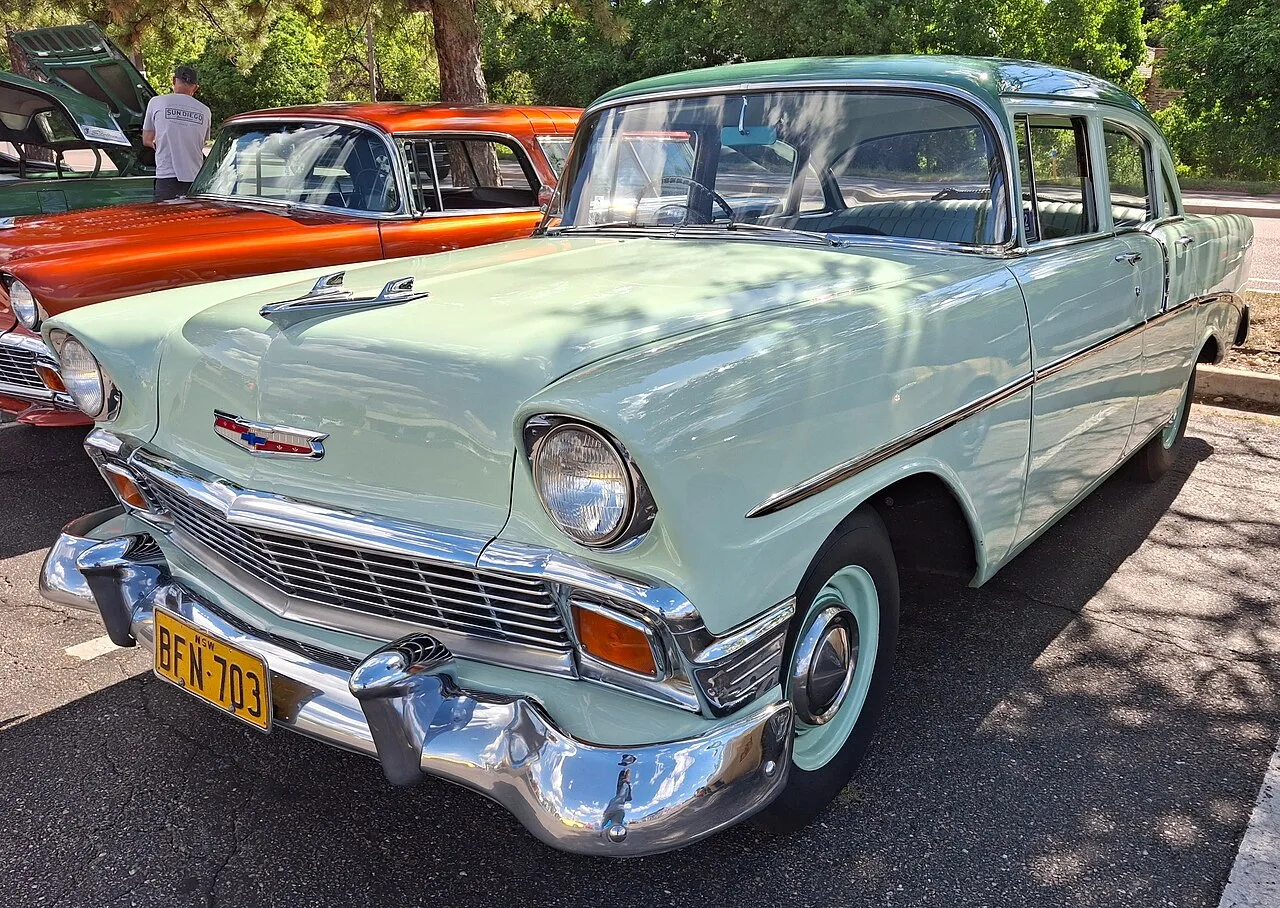
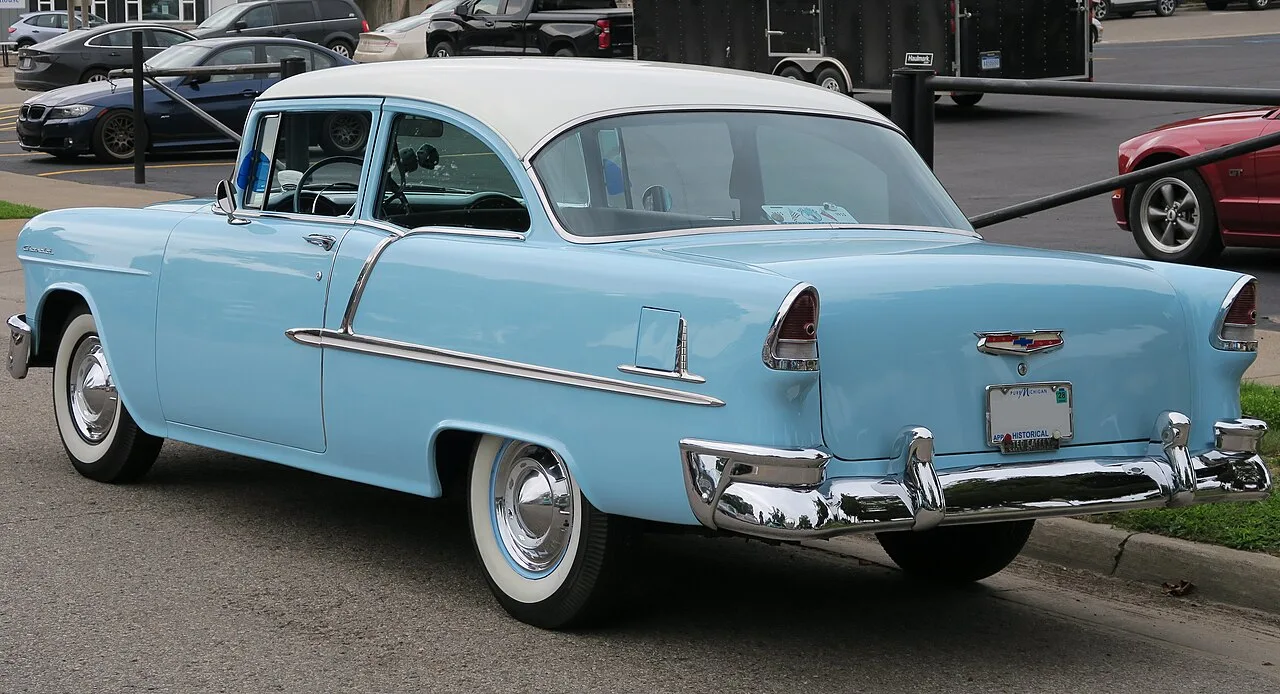
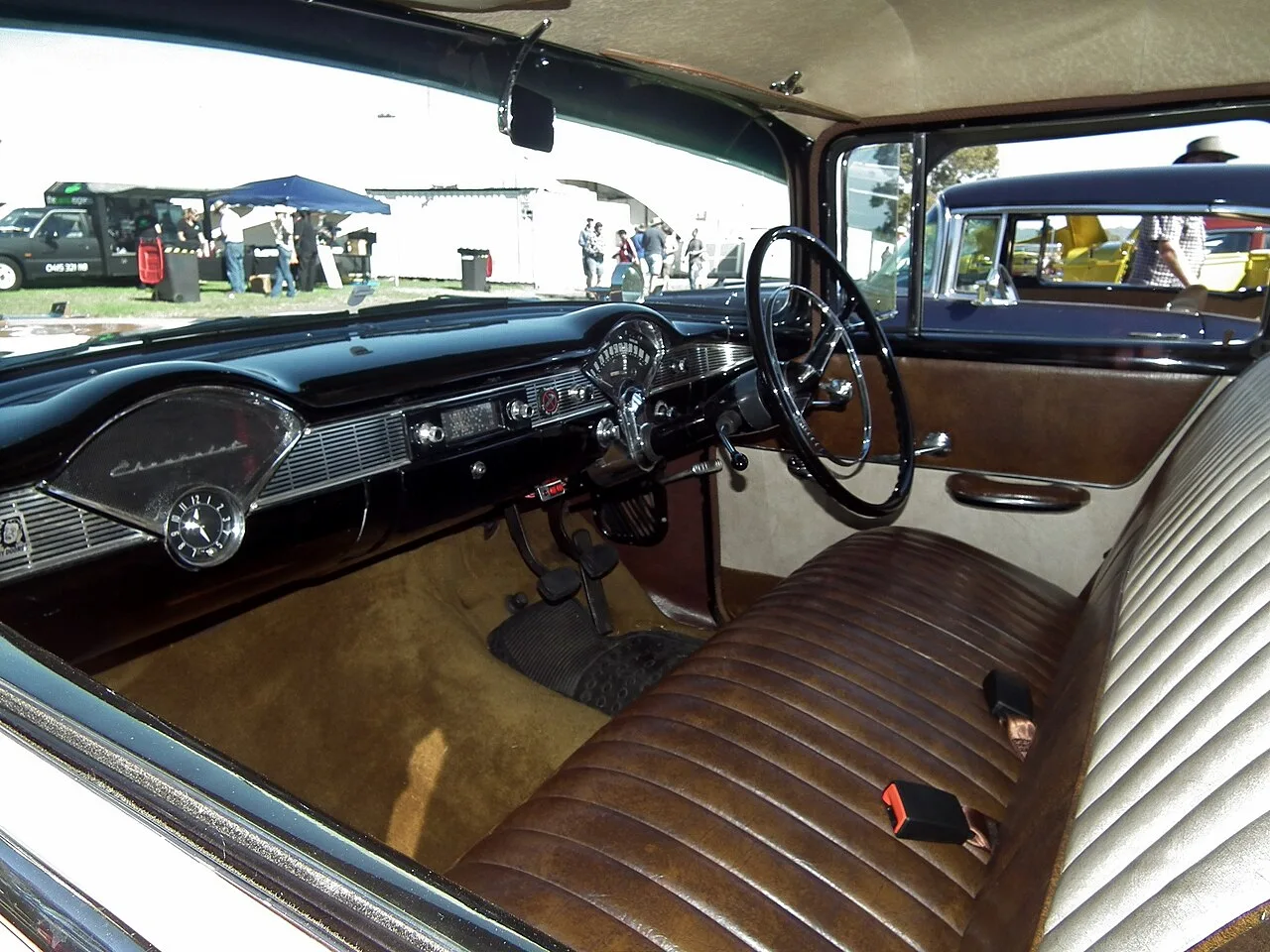
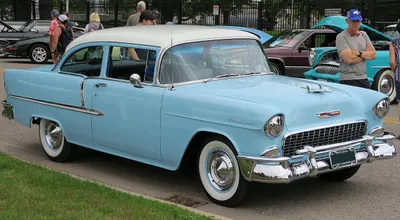
In 1957, even the mid-range Two-Ten could be ordered with Chevy's new Rochester Ram-Jet fuel injection on the 283 V8 — a technology most people only remember on the Corvette.
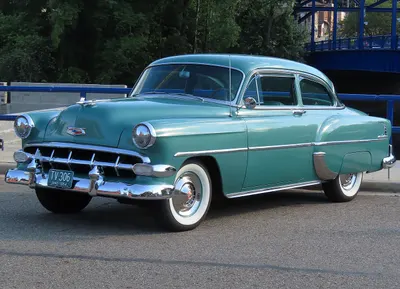
Everybody remembers the Bel Air, but it wasn't the volume leader: in 1953 and 1954 the mid-tier Two-Ten actually outsold every other Chevrolet, Bel Air included.
Rivals
Same body, same money, other badges — tap any card to flip.

It briefly served as senior sibling to Marquette, a GM companion brand cancelled after just one year.

Nissan hired former BMW engineers to help develop the 510's suspension, which is why period reviewers frequently compared its handling to the BMW 1600/2002.

A Trabant 601 won its class at the 1970 Monte Carlo Rally, with a second 601 right behind it in second.

The 600 was a stopgap: the P50's body over the 601's mechanicals, and for a while its estate was built alongside the new 601 saloon.

The G80 Sport brought a 370 PS twin-turbo 3.3 V6, a mesh grille and copper-tinted chrome with copper stitching to match.

The Vigor was sold only with a five-cylinder engine, an unusual configuration Honda used to fit a longer engine transversely under a short hood.

The GS/E coupe earned the nickname "German Charger" for its long hood, short deck stance borrowed from Detroit muscle cars.

This DeVille/Fleetwood was the first production car anywhere to mount its V8 sideways, Cadillac's front-drive gamble on the new C-body.