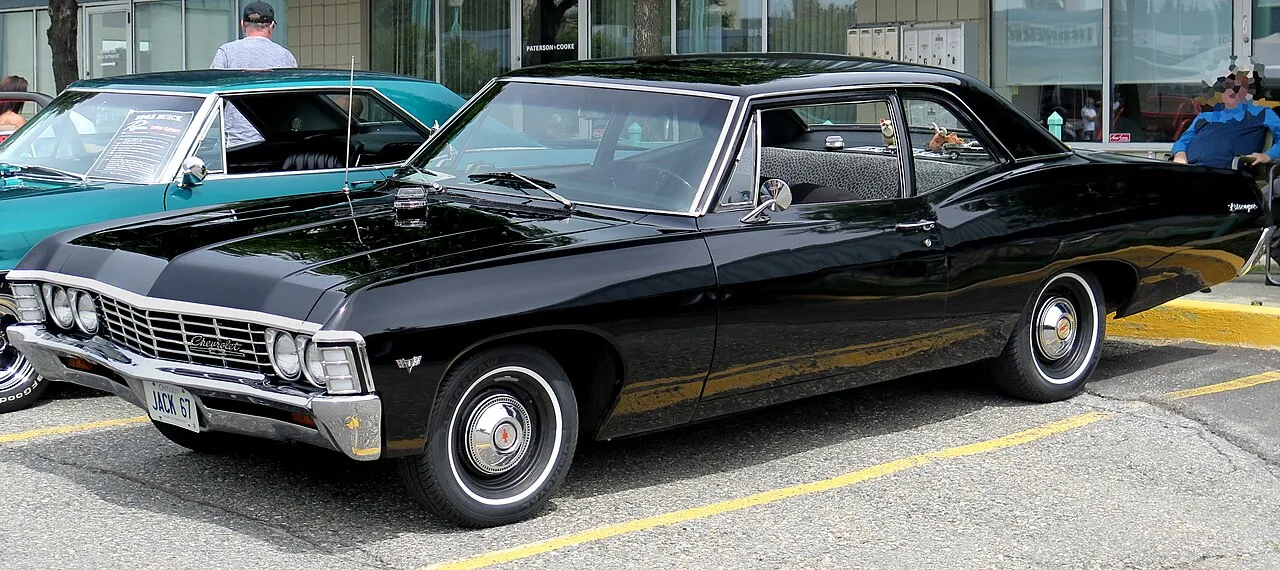
Chevrolet built the Biscayne as its cheapest, most stripped full-size model — which didn’t stop a Long Island dealer from turning a 1968 coupe into a 427-powered drag racer.
Median 99 hp across 304 similar cars
Lead trim: Biscayne 230 I6 (1965–1966) · up to 425 hp
Chevrolet BiscayneBISCAYNE-1965 · 1965–1970
- 0spots by members
- Unclaimednobody has spotted one yet
- 0sets it belongs to
Nobody in Burbles has spotted a Chevrolet Biscayne yet. See one on the street, point the app at it, and the first card is yours — with your @handle permanently credited on this page.
FactChevrolet built the Biscayne as its cheapest, most stripped full-size model — which didn’t stop a Long Island dealer from turning a 1968 coupe into a 427-powered drag racer.
The all-new 1965 Biscayne was larger yet and offered an even wider range of engines including a new, larger 250-ci inline-six; for 1967 the smaller 230 was dropped. For 1966 the top engine became the new Big-Block 427 ci V8, available in a high-powered, high-revving 425 hp (317 kW) version with solid lifters; although not available for the big Chevrolets in 1967 it returned in 1968 for two more model years, and the page states that a 1967 Biscayne 2-door sedan with a 427 and a 3-speed manual did 0–60 mph in 6.1 seconds and the quarter mile in 14.6 seconds. For 1969 Chevrolet reverted to separate series names for station wagons (what had been the Biscayne wagon became the Brookwood), the two-door sedan was dropped after 1969, and power steering and power brakes were standard for 1970; a base 2-door Biscayne cost $2,472 in 1965 (the Impala $2,728) and a base model $2,897 in 1970 ($3,150 for the Impala). The wagons had a "clamshell" Glide-away tailgate. Engines: 230 I6 (1965–1966), 250 cu in (4.1 L) I6, 283 (1965–1967), 327 (1965–1969), 307 cu in (5.0 L) (1968), 350 (1969–1970), 400 (1970), 409 (1965–1966), 396 cu in (6.5 L) (1965–1969), 427 cu in (7.0 L) Big-Block (1966–1969) and 454 cu in (7.4 L) Big-Block (1970) V8s. The Chevrolet Biscayne was a series of full-size cars produced by Chevrolet (General Motors) between 1958 and 1975 (model years 1958–1972 in the US, 1958–1975 in Canada), named after a show car displayed at the 1955 GM Motorama (the Biscayne XP-37) and after Biscayne Bay near Miami, and the least expensive model in the full-size range (except the 1958-only Delray), a step below the Bel Air, Impala and Caprice; it was produced primarily for the fleet market, though also for buyers wanting low-cost, no-frills transportation with the room and power of a full-size car. Most were sold with a six-cylinder engine through the late 1960s and the V8 was more popular by the early 1970s (76,800 V8 against 16,700 six-cylinder cars in 1970–72). The exterior lacked most chrome trim (two taillights per side except in 1959 and 1972, against three on the Impala) and the interior trim was spartan, yet customers could order any of Chevrolet's high-output big-block V8s and performance transmissions including a floor four-speed with Hurst shifter and low-ratio final drive; few were built and they are highly sought after, and Baldwin Chevrolet of Long Island became famous for the 1968 "Street Racer Special" Biscayne coupe with a dealer-fitted 427 and heavy-duty suspension, the high-performance Biscayne being nicknamed "Bisquick" by enthusiasts (a nickname tagged "citation needed").
Collectors Spotted in the Chevrolet Biscayne Lineage
No member has published a public street spot of the Chevrolet Biscayne yet — the First · Worldwide stamp is wide open.
Trims & Figures
12 published trims in the catalogue. A blank is a figure not recorded, not zero.
| Trim | Years | Engine | Power | Torque | 0–60 | Drive | Gearbox | MSRP |
|---|---|---|---|---|---|---|---|---|
| Biscayne 230 I6 (1965–1966) | 1965–1966 | 3.8 L Inline-6 | 140 hp | 220 lb-ft | — | RWD | — | — |
| Biscayne 250 I6 | 1965–1970 | 4.1 L Inline-6 | 155 hp | 235 lb-ft | — | RWD | — | — |
| Biscayne 283 V8 (1965–1967) | 1965–1967 | 4.6 L V8 | 195 hp | 285 lb-ft | — | RWD | — | — |
| Biscayne 307 V8 (1968) | 1968–1968 | 5.0 L V8 | 200 hp | 300 lb-ft | — | RWD | — | — |
| Biscayne 327 V8 (1965–1969) | 1965–1969 | 5.4 L V8 | — | — | — | RWD | — | — |
| Biscayne 350 V8 (1969–1970) | 1969–1970 | 5.7 L V8 | 250 hp | 345 lb-ft | — | RWD | — | — |
| Biscayne 396 V8 (1965–1969) | 1965–1969 | 6.5 L V8 | 325 hp | 410 lb-ft | — | RWD | — | — |
| Biscayne 400 V8 (1970) | 1970–1970 | 6.6 L V8 | 265 hp | 400 lb-ft | — | RWD | — | — |
| Biscayne 409 V8 (1965–1966) | 1965–1966 | 6.7 L V8 | 340 hp | 420 lb-ft | — | RWD | — | — |
| Biscayne 427 Big-Block V8 (1968–1969) | 1968–1969 | 7.0 L V8 | 390 hp | 460 lb-ft | — | RWD | — | — |
| Biscayne 427 Big-Block V8 (425 hp, solid lifters, 1966) | 1966–1966 | 7.0 L V8 | 425 hp | 460 lb-ft | — | RWD | — | — |
| Biscayne 454 Big-Block V8 (1970) | 1970–1970 | 7.4 L V8 | 390 hp | 500 lb-ft | — | RWD | — | — |
Owning one
An estimate, for the Biscayne 230 I6 (1965–1966) trim: fuel on its EPA figure and a dated national price, upkeep on a per-mile average for the kind of car it is.
Owners’ builds
Nobody has claimed one yet.
Photographs
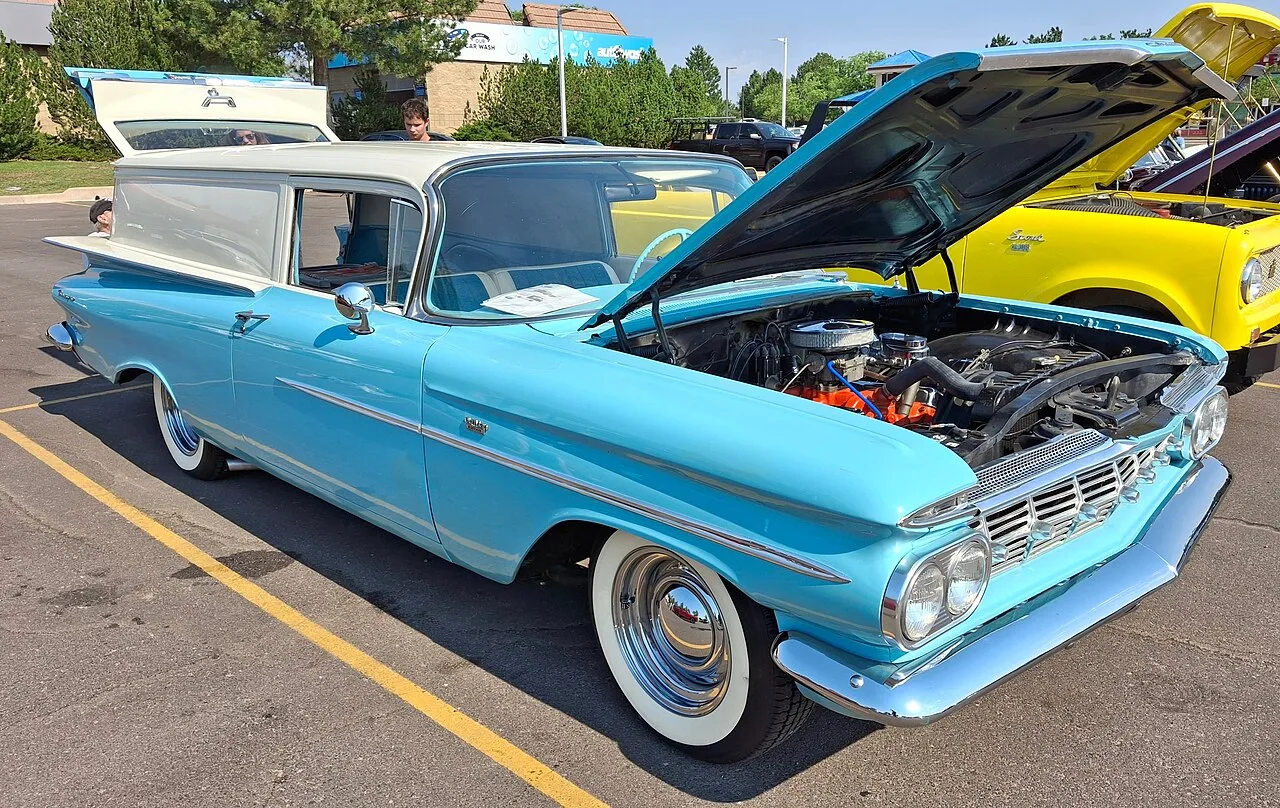
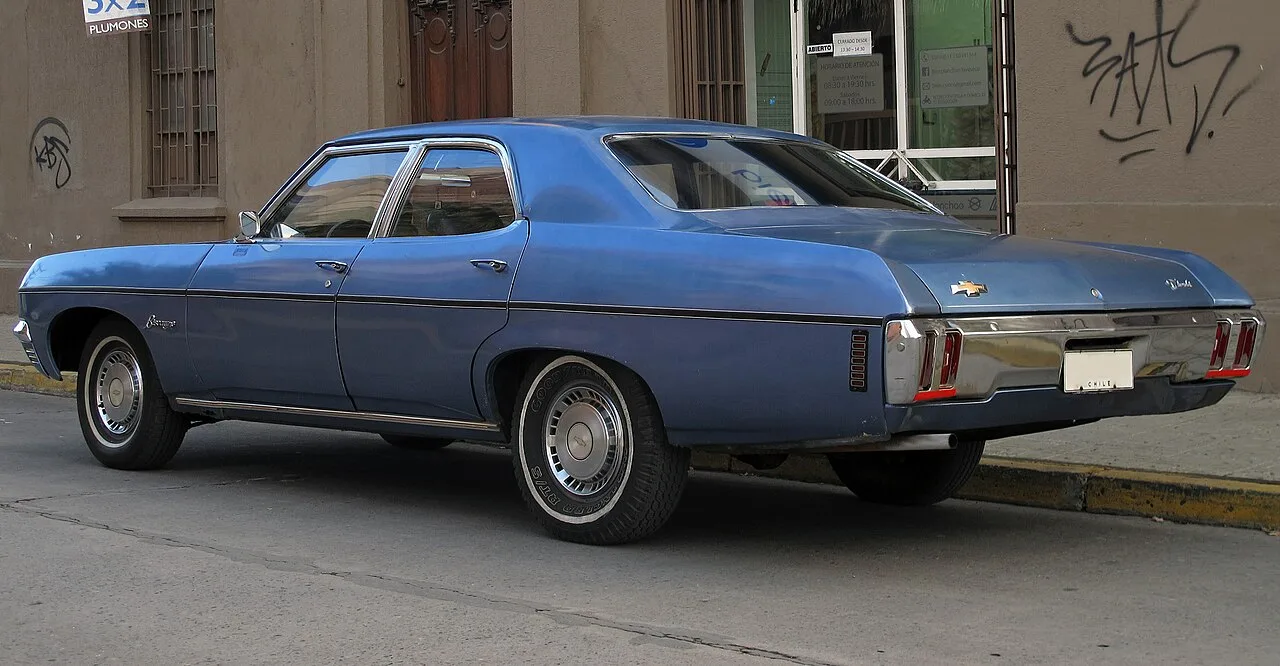
Chevrolet quietly dropped the Biscayne from US showrooms after 1972, selling it only to fleet buyers — but the nameplate kept going strong in Canada all the way through 1975.
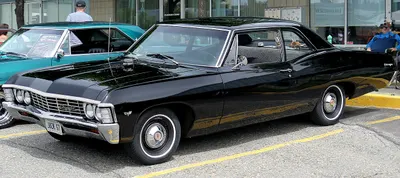
Chevrolet built the Biscayne as its cheapest, most stripped full-size model — which didn’t stop a Long Island dealer from turning a 1968 coupe into a 427-powered drag racer.
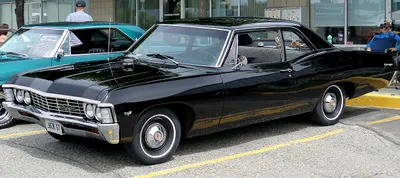
Chevy's cheapest full-size car hid a secret weapon: a handful of 1961 Biscaynes got the brand-new, 142-built 409 V8 — dropped into the bargain-basement trim purely to go drag racing.
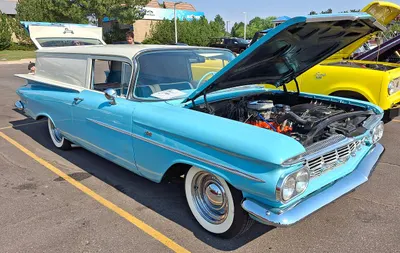
Chevy sold a Biscayne with no back seat at all in 1959 — a two-door 'Utility Sedan' built as a disguised delivery van for fleet buyers, not families.
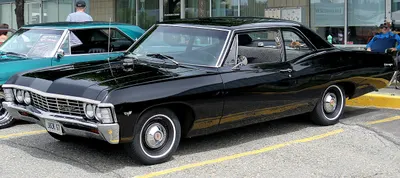
GM's small-block V8 debuted in the 1955 Bel Air, an engine still in production decades later in wildly different displacements.
Rivals
Same body, same money, other badges — tap any card to flip.

It briefly served as senior sibling to Marquette, a GM companion brand cancelled after just one year.

Nissan hired former BMW engineers to help develop the 510's suspension, which is why period reviewers frequently compared its handling to the BMW 1600/2002.

A Trabant 601 won its class at the 1970 Monte Carlo Rally, with a second 601 right behind it in second.

The 600 was a stopgap: the P50's body over the 601's mechanicals, and for a while its estate was built alongside the new 601 saloon.

The G80 Sport brought a 370 PS twin-turbo 3.3 V6, a mesh grille and copper-tinted chrome with copper stitching to match.

The Vigor was sold only with a five-cylinder engine, an unusual configuration Honda used to fit a longer engine transversely under a short hood.

The GS/E coupe earned the nickname "German Charger" for its long hood, short deck stance borrowed from Detroit muscle cars.

This DeVille/Fleetwood was the first production car anywhere to mount its V8 sideways, Cadillac's front-drive gamble on the new C-body.