Its aluminum 215 V8, built for a compact Buick, went on to power the Rover P6 and the Range Rover.
Lead trim: Special 198 cu in Fireball V6 (135 hp gross at 4600 rpm, 205 lb-ft, 1962) · up to 200 hp
Buick Special1961–1963
- 0spots by members
- Unclaimednobody has spotted one yet
- 0sets it belongs to
Nobody in Burbles has spotted a Buick Special yet. See one on the street, point the app at it, and the first card is yours — with your @handle permanently credited on this page.
FactIts aluminum 215 V8, built for a compact Buick, went on to power the Rover P6 and the Range Rover.
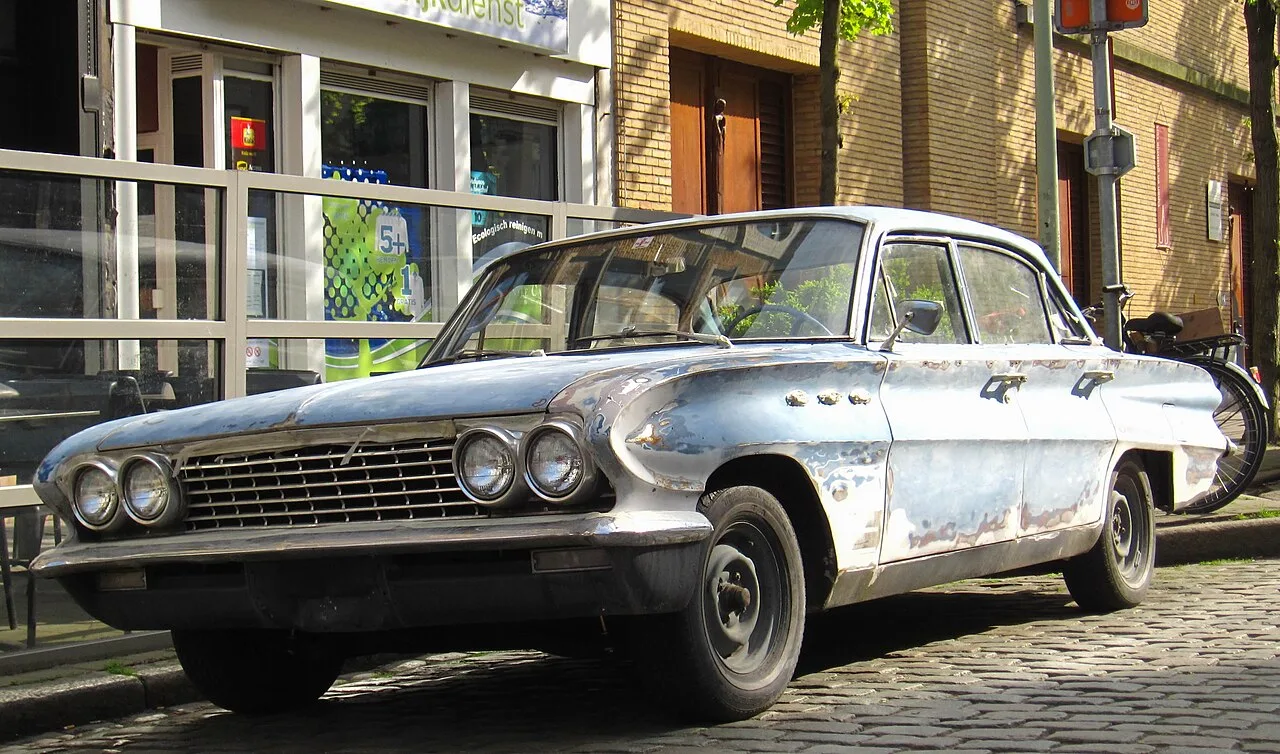
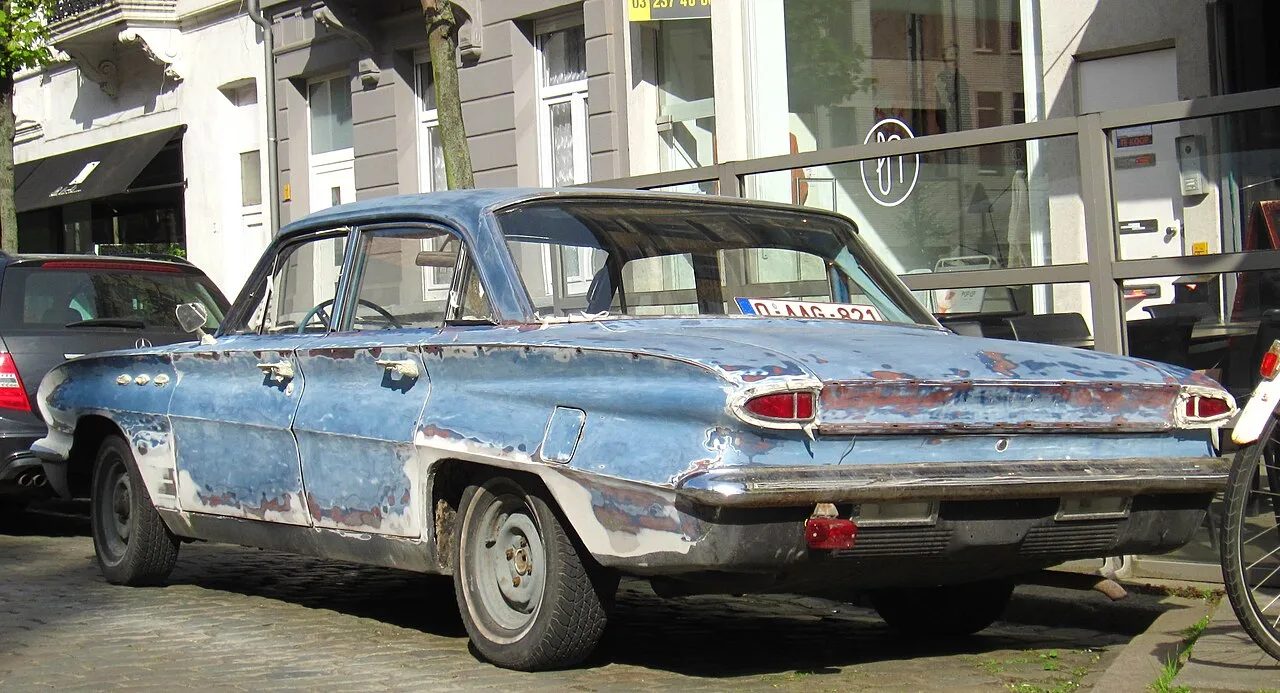
The Special returned in 1961 after a two-year absence as a compact on the brand-new unibody GM Y platform (112 in wheelbase, 193 in long, 70.2 in wide), powered by a 155 hp innovative aluminum-block 215 cubic-inch V8 with Dual Path transmission and power steering; in mid-year a Skylark option was released with special trim, optional bucket seats and a four-barrel 215 making 185 hp. In 1962 the Special was the first American car to use a V6 in volume production (the page adds that it earned Motor Trend's Car of the Year for 1962): the 198 cid Fireball, engineered down from the 215 but cast in iron, produced 135 hp (gross) at 4600 rpm and 205 lb-ft at 2400 rpm, and Road & Track called it "practical". For 1963 the body was restyled with minor interior changes but mechanically identical to 1962; the 1963 Special was available as a 2-door pillared hardtop coupe, four-door sedan, convertible and station wagon, with a standard 198 V6 and an optional 215 V8 with 155 hp (two-barrel) or a four-barrel with 190 hp in 1962 and 200 hp in 1963. The 1962 model sold 153,763 (including 42,973 Skylarks) and the 1963 148,750 (including 42,321 Skylarks); the 215 went on to power the Rover P6 3500S, Range Rover and other British cars.
Collectors Spotted in the Buick Special Lineage
No member has published a public street spot of the Buick Special yet — the First · Worldwide stamp is wide open.
Trims & Figures
4 published trims in the catalogue. A blank is a figure not recorded, not zero.
| Trim | Years | Engine | Power | Torque | 0–60 | Drive | Gearbox | MSRP |
|---|---|---|---|---|---|---|---|---|
| Special 198 cu in Fireball V6 (135 hp gross at 4600 rpm, 205 lb-ft, 1962) | 1962–1962 | 3.2 L V6 | 135 hp | 205 lb-ft | — | RWD | — | — |
| Special 215 cu in aluminum V8 (155 hp, 1961) | 1961–1961 | 3.5 L V8 | 155 hp | 220 lb-ft | — | RWD | — | — |
| Special 215 cu in aluminum V8 four-barrel (190 hp, 1962) | 1962–1962 | 3.5 L V8 | 190 hp | 235 lb-ft | — | RWD | — | — |
| Special 215 cu in aluminum V8 four-barrel (200 hp, 1963) | 1963–1963 | 3.5 L V8 | 200 hp | 240 lb-ft | — | RWD | — | — |
Owning one
We don’t estimate running costs for a car like this. What it costs depends on its condition, its specialist and how it is driven, and an average would mislead.
Owners’ builds
Nobody has claimed one yet.
Photographs
Buick sold its discontinued V6 tooling to Kaiser Industries, where it went on to power Jeeps.
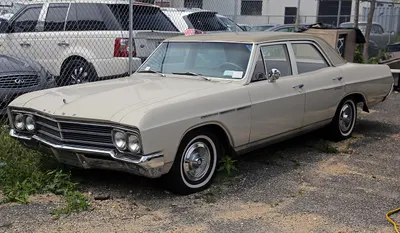
Buick's original aluminum 215 V8 was swapped for a new cast-iron 300 after the earlier engine proved troublesome.
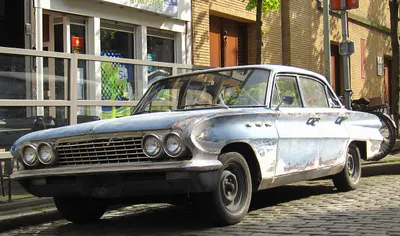
Its aluminum 215 V8, built for a compact Buick, went on to power the Rover P6 and the Range Rover.
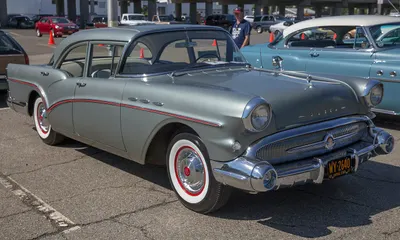
The 1949 Special's nine-bar grille doubled as the bumper guards.
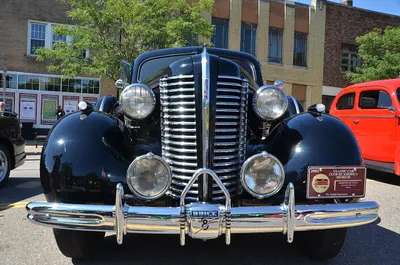
1940 was the only year Buick built a four-door convertible Special, the Sport Phaeton, with 552 made.
A dashboard handle let drivers manually retard spark timing to run cheap low-grade gasoline.
Rivals
Same body, same money, other badges — tap any card to flip.

It briefly served as senior sibling to Marquette, a GM companion brand cancelled after just one year.

Nissan hired former BMW engineers to help develop the 510's suspension, which is why period reviewers frequently compared its handling to the BMW 1600/2002.

A Trabant 601 won its class at the 1970 Monte Carlo Rally, with a second 601 right behind it in second.

The 600 was a stopgap: the P50's body over the 601's mechanicals, and for a while its estate was built alongside the new 601 saloon.

The G80 Sport brought a 370 PS twin-turbo 3.3 V6, a mesh grille and copper-tinted chrome with copper stitching to match.

The Vigor was sold only with a five-cylinder engine, an unusual configuration Honda used to fit a longer engine transversely under a short hood.

The GS/E coupe earned the nickname "German Charger" for its long hood, short deck stance borrowed from Detroit muscle cars.

This DeVille/Fleetwood was the first production car anywhere to mount its V8 sideways, Cadillac's front-drive gamble on the new C-body.