Auto Union's 1961 "Lubrimat" oil injection system was meant to stop the 1000's two-stroke engine smoking blue — instead, the brutal winter of 1962-63 thickened the oil until it couldn't flow through the feeder pipe, and crankshafts started failing.
Lead trim: 1000 (981 cc two-stroke I3, 44 PS) · up to 49 hp
Auto Union 1000 and 1000SAU1000 · 1958–1963
- 0spots by members
- Unclaimednobody has spotted one yet
- 0sets it belongs to
Nobody in Burbles has spotted a Auto Union 1000 and 1000S yet. See one on the street, point the app at it, and the first card is yours — with your @handle permanently credited on this page.
FactAuto Union's 1961 "Lubrimat" oil injection system was meant to stop the 1000's two-stroke engine smoking blue — instead, the brutal winter of 1962-63 thickened the oil until it couldn't flow through the feeder pipe, and crankshafts started failing.
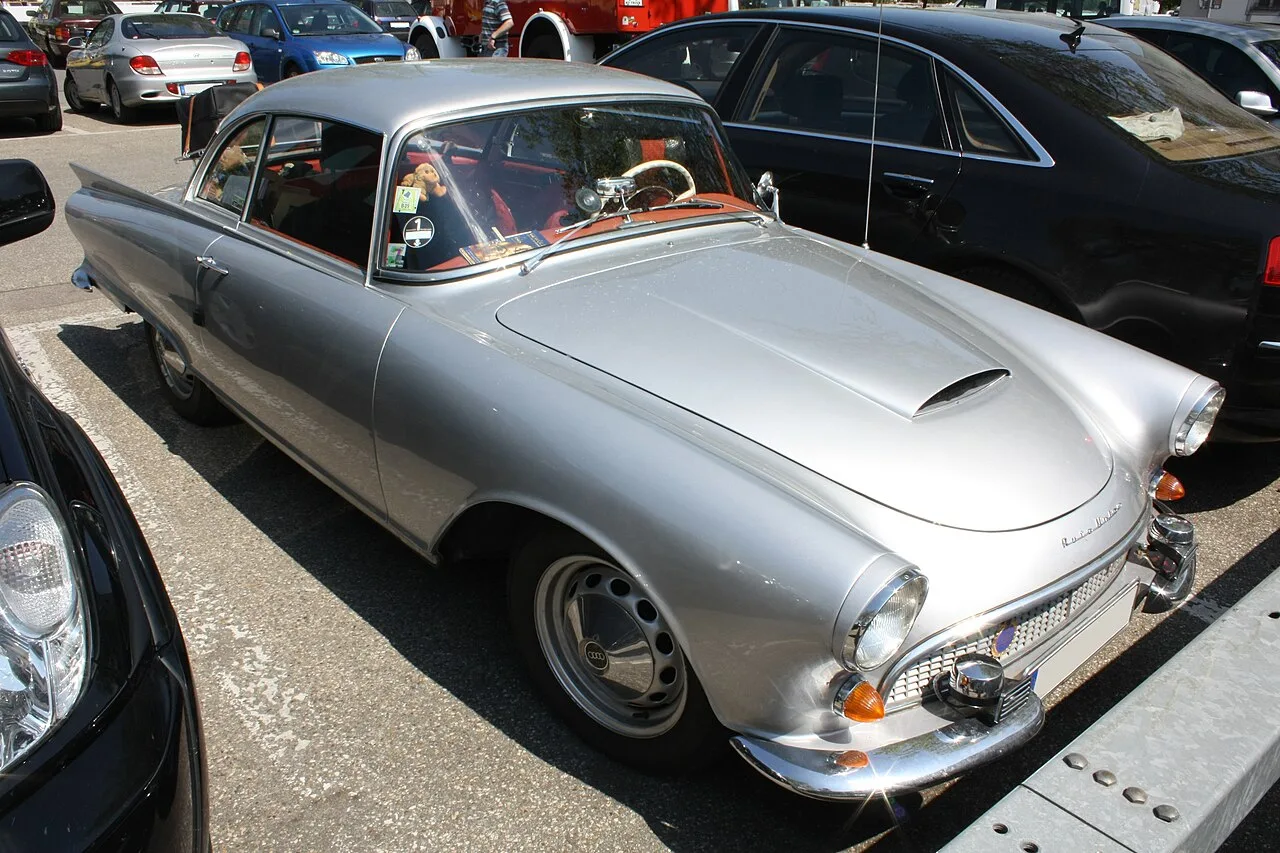
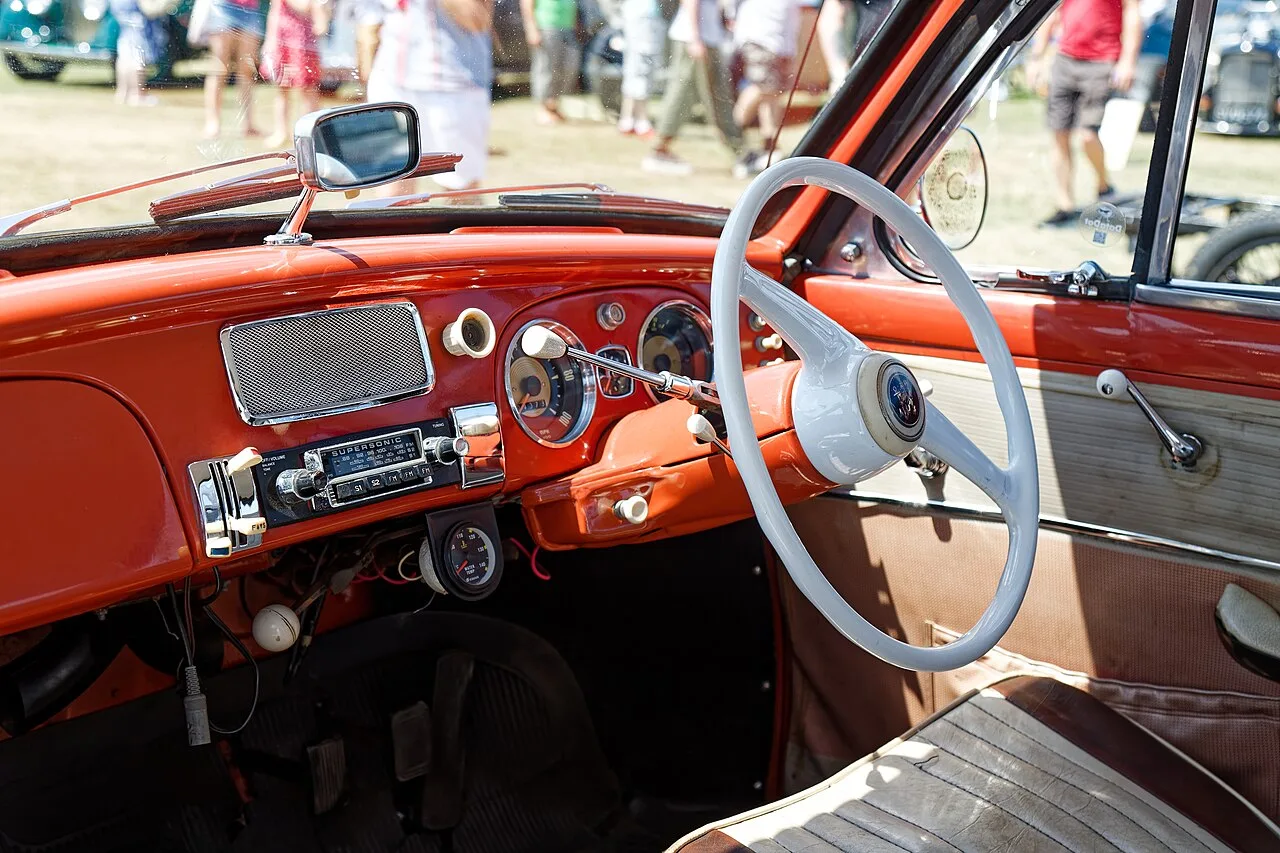
The Auto Union 1000 is a luxury compact front-wheel drive automobile manufactured by Auto Union GmbH between 1958 and 1965: the first (and in many markets the last) model branded as an Auto Union since the 1930s, replacing the DKW 3=6 (which continued until the end of 1959) with the two-stroke engine enlarged to 981 cc, a 10% to 37% power increase depending on the model. It was an evolution of the F93, F94 and F94U with 44 PS (32 kW; 43 hp) in the base model, the old four-ring Auto Union badge on the grille and a smooth boot lid. There were three European series: the "model 58" (1000 Coupe de luxe only, 44 PS, 1958/59, released in late 1957), the "model 60" (from July 1959, the first to feature the "panoramic" windscreen on two-door models) and the "model 62" (front disc brakes, Lubrimat, a wider-track rear axle and a larger boot, replacing the model 60 on 29 September 1961). Body options were two- and four-door saloons, a "pillarless" Coupé and, from 1959 to 1962, a three-door 1000 Universal estate; for 1960 the coupé and four-door were renamed 1000S. For 1960 the 1000S had 50 PS (37 kW; 49 hp) against 44 PS for the 1000 and 55 PS for the 1000SP; The Motor tested a 1000S Coupé in 1960 at 80.9 mph and 0–60 mph in 23.6 seconds, at £1259 including taxes. The final 1000 Universal was completed on 31 October 1962 and the final 1000S four-door on 13 November at Ingolstadt. Motorsport successes included the 1959 Acropolis Rally, the South African championship in 1961–1963 and class wins such as the 1960 Monte Carlo Rally; it was built under licence in Argentina by IASF at Sauce Viejo from 1960 to 1969 (with a Fissore coupé and spyder). Width 1,727 mm (68.0 in), height 1,486 mm (58.5 in).
Collectors Spotted in the Auto Union 1000 Lineage
No member has published a public street spot of the Auto Union 1000 yet — the First · Worldwide stamp is wide open.
Trims & Figures
2 published trims in the catalogue. A blank is a figure not recorded, not zero.
| Trim | Years | Engine | Power | Torque | 0–60 | Drive | Gearbox | MSRP |
|---|---|---|---|---|---|---|---|---|
| 1000 (981 cc two-stroke I3, 44 PS) | 1958–1963 | 1.0 L Inline-3 | 43 hp | — | — | FWD | — | — |
| 1000S (981 cc two-stroke I3, 50 PS) | 1960–1963 | 1.0 L Inline-3 | 49 hp | — | 23.6 s | FWD | — | — |
Owning one
We don’t estimate running costs for a car like this. What it costs depends on its condition, its specialist and how it is driven, and an average would mislead.
Owners’ builds
Nobody has claimed one yet.
Photographs
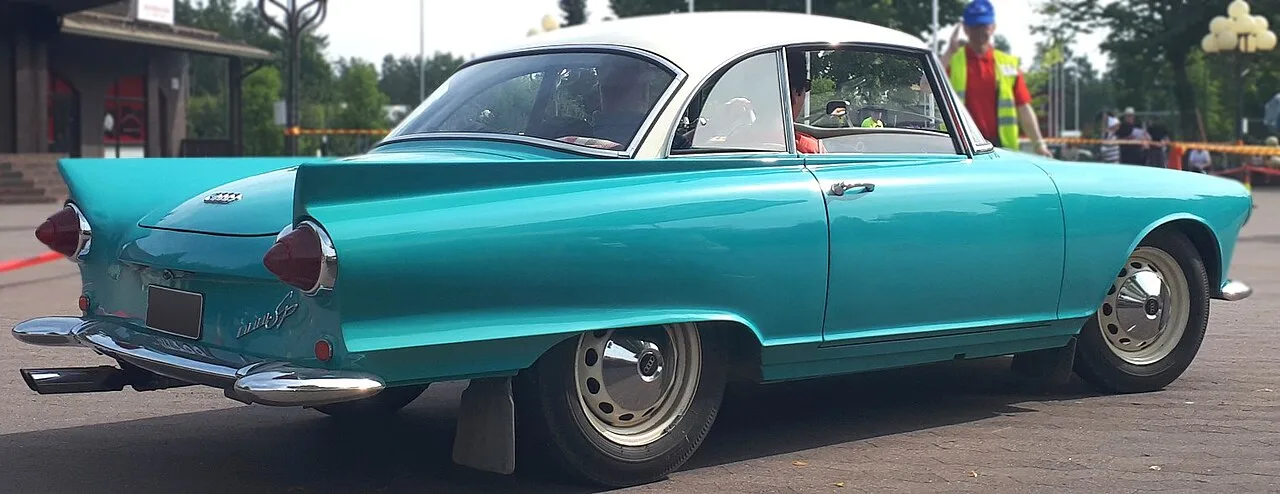
When the last 1000 Sp cabriolet rolled off the line in 1965, Auto Union's successors didn't build another open-top car for nearly 30 years — not until the Audi 80 Cabriolet in 1994.
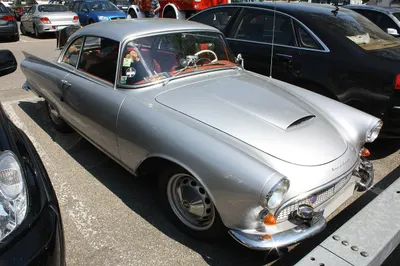
Auto Union's 1961 "Lubrimat" oil injection system was meant to stop the 1000's two-stroke engine smoking blue — instead, the brutal winter of 1962-63 thickened the oil until it couldn't flow through the feeder pipe, and crankshafts started failing.
Rivals
Same body, same money, other badges — tap any card to flip.

It briefly served as senior sibling to Marquette, a GM companion brand cancelled after just one year.

Nissan hired former BMW engineers to help develop the 510's suspension, which is why period reviewers frequently compared its handling to the BMW 1600/2002.

A Trabant 601 won its class at the 1970 Monte Carlo Rally, with a second 601 right behind it in second.

The 600 was a stopgap: the P50's body over the 601's mechanicals, and for a while its estate was built alongside the new 601 saloon.

The G80 Sport brought a 370 PS twin-turbo 3.3 V6, a mesh grille and copper-tinted chrome with copper stitching to match.

The Vigor was sold only with a five-cylinder engine, an unusual configuration Honda used to fit a longer engine transversely under a short hood.

The GS/E coupe earned the nickname "German Charger" for its long hood, short deck stance borrowed from Detroit muscle cars.

This DeVille/Fleetwood was the first production car anywhere to mount its V8 sideways, Cadillac's front-drive gamble on the new C-body.