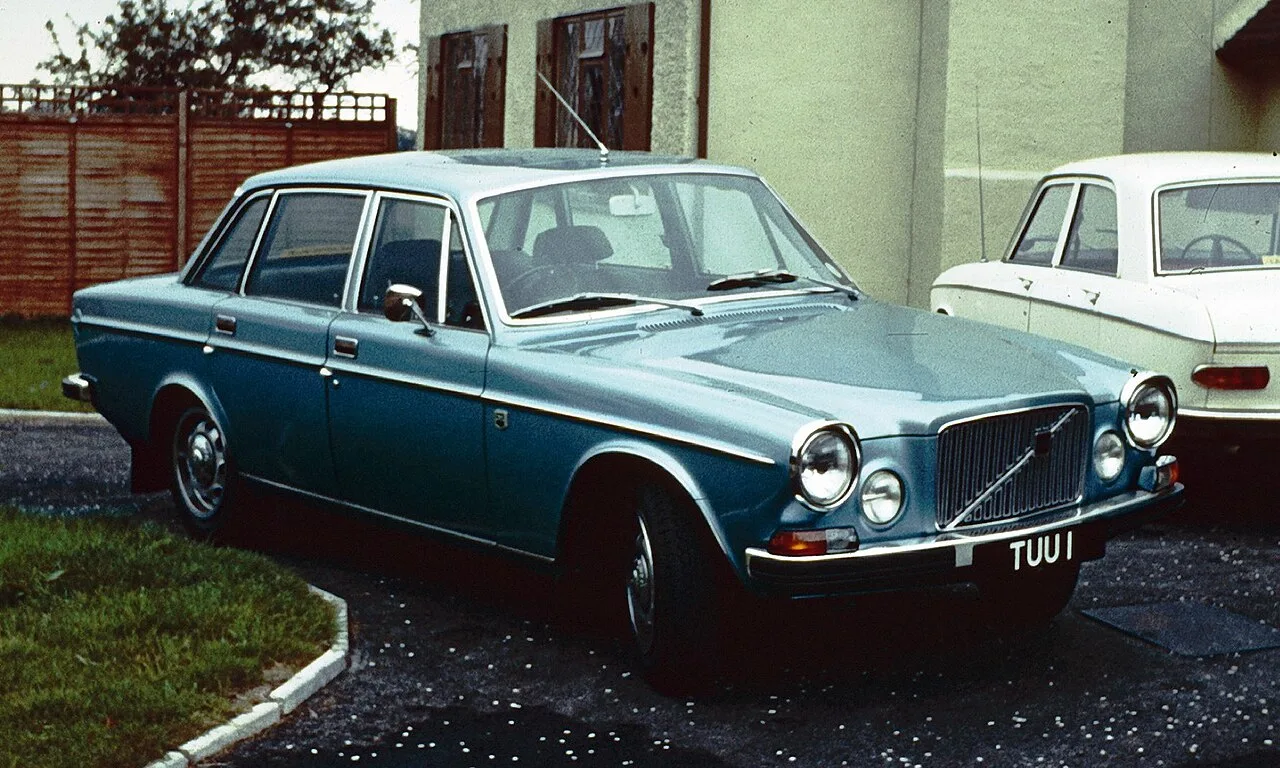
This 164 was Volvo's first six-cylinder car since 1958 and its first real attempt at a luxury saloon since the PV60.
Lead trim: 164 3.0 B30 twin-carburettor I6 · up to 158 hp
Volvo 164164 · 1969–1975
- 0spots by members
- Unclaimednobody has spotted one yet
- 0sets it belongs to
Nobody in Burbles has spotted a Volvo 164 yet. See one on the street, point the app at it, and the first card is yours — with your @handle permanently credited on this page.
FactThis 164 was Volvo's first six-cylinder car since 1958 and its first real attempt at a luxury saloon since the PV60.
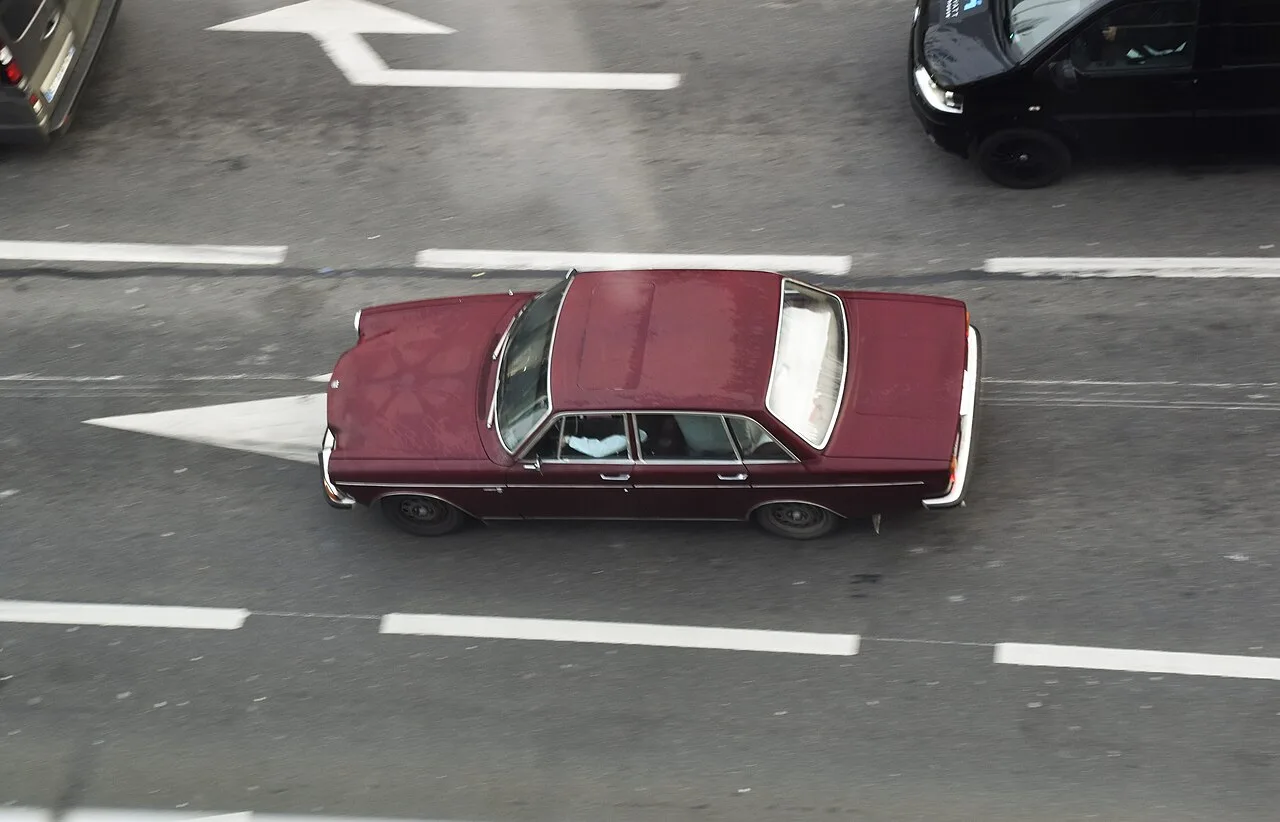
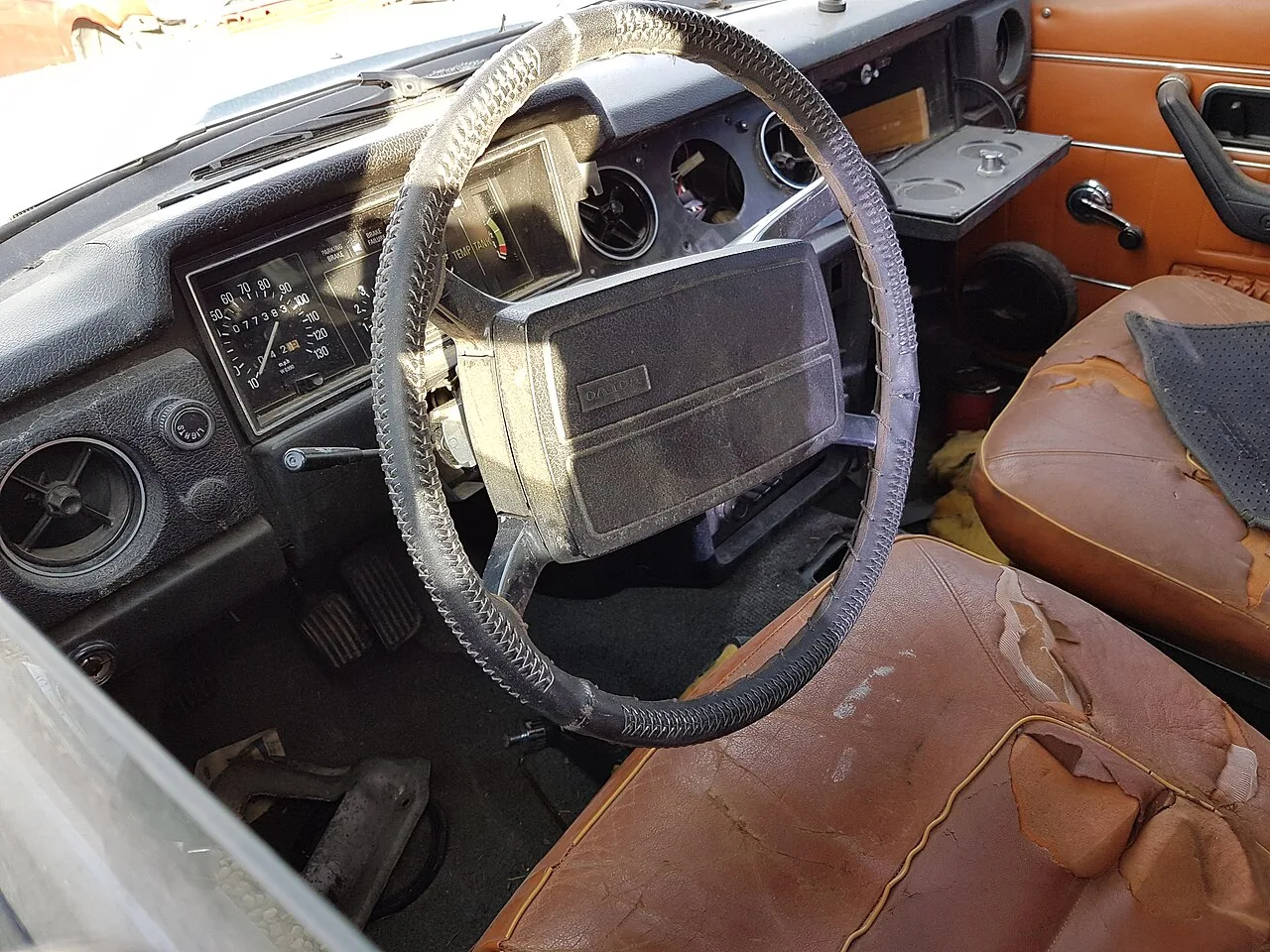
The Volvo 164 is a 4-door six-cylinder luxury saloon unveiled at the Paris Motor Show in early October 1968 and first sold as a 1969 model; 146,008 were built (some sources say 153,179) before the 264 succeeded it in 1975. It was Volvo's first venture into the luxury segment since PV 60 production ended in 1950 and its first six-cylinder car since the last PV800 in 1958, designed by Jan Wilsgaard (who had drawn a concept called the P358 with a V8 in the late 1950s), and built at Torslanda and Kalmar in Sweden and in Australia, South Africa and Malaysia. It was the luxury version of the 140 series, with unique wings, grille, front bumper, bonnet, headlamp bezels and front indicators, a wheelbase 10 cm and a nose 6 cm longer for the long inline six, a simulated woodgrain dashboard and leather seats; Volvo's answer to the Mercedes-Benz 250 and Jaguar XJ6, introduced the same year as the BMW E3. The 3-litre B30 six is a derivative of the B20 four; 1969 to 1971 cars all had dual Zenith Stromberg 175CD2SE carburettors, Bosch D-Jetronic fuel injection was optional from 1972 (B30E high-compression and B30F low-compression, badged 164E, the E from "einspritzung") and standard for 1974, when carburettors were dropped. The 164E is quoted at 160 PS DIN with 0–100 km/h in 8.7 s and a top speed of 193.5 km/h (188 km/h and 11.9 s for the automatic), from Autozeitung in 1972 and 1973. Transmissions were the 4-speed M400, the M410 with electrically operated overdrive and the 3-speed Borg-Warner 35 automatic. 1972 brought a revised dash with centre console, 1973 a major facelift and 1974 large safety bumpers, strengthened doors, heated seats and a relocated fuel tank; the 164TE of 1974 was built only for Great Britain, Germany and Australia with air conditioning and other extras as standard, and the 164 stayed in limited production for 1976 in America and Japan because the PRV V6 of its 264 successor could not yet meet Federal emissions rules. Wheelbase 106.3 in, length 185.6 in, width 68.1 in, height 56.7 in, curb weight 3,199 lb. The page gives no power for the carburetted cars and calls the valvetrain "overhead-valve", so it is not entered.
Collectors Spotted in the Volvo 164 Lineage
No member has published a public street spot of the Volvo 164 yet — the First · Worldwide stamp is wide open.
Trims & Figures
2 published trims in the catalogue. A blank is a figure not recorded, not zero.
| Trim | Years | Engine | Power | Torque | 0–60 | Drive | Gearbox | MSRP |
|---|---|---|---|---|---|---|---|---|
| 164 3.0 B30 twin-carburettor I6 | 1969–1973 | 3.0 L Inline-6 | 145 hp | 163 lb-ft | — | RWD | — | — |
| 164E 3.0 B30E/B30F D-Jetronic I6 (160 PS) | 1972–1975 | 3.0 L Inline-6 | 158 hp | 178 lb-ft | — | RWD | — | — |
Owning one
We don’t estimate running costs for a car like this. What it costs depends on its condition, its specialist and how it is driven, and an average would mislead.
Owners’ builds
Nobody has claimed one yet.
Photographs
Rivals
Same body, same money, other badges — tap any card to flip.

It briefly served as senior sibling to Marquette, a GM companion brand cancelled after just one year.

Nissan hired former BMW engineers to help develop the 510's suspension, which is why period reviewers frequently compared its handling to the BMW 1600/2002.

A Trabant 601 won its class at the 1970 Monte Carlo Rally, with a second 601 right behind it in second.

The 600 was a stopgap: the P50's body over the 601's mechanicals, and for a while its estate was built alongside the new 601 saloon.

The G80 Sport brought a 370 PS twin-turbo 3.3 V6, a mesh grille and copper-tinted chrome with copper stitching to match.

The Vigor was sold only with a five-cylinder engine, an unusual configuration Honda used to fit a longer engine transversely under a short hood.

The GS/E coupe earned the nickname "German Charger" for its long hood, short deck stance borrowed from Detroit muscle cars.

This DeVille/Fleetwood was the first production car anywhere to mount its V8 sideways, Cadillac's front-drive gamble on the new C-body.