VerifiedFIRST · WORLDWIDEFIRST PRINTPROSold worldwide as the Bora, this Jetta had a signature party trick: a "Whiptenna" roof antenna shaped and angled specifically to cut aerodynamic drag versus a standard mast.

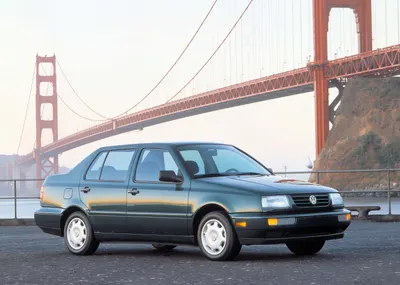
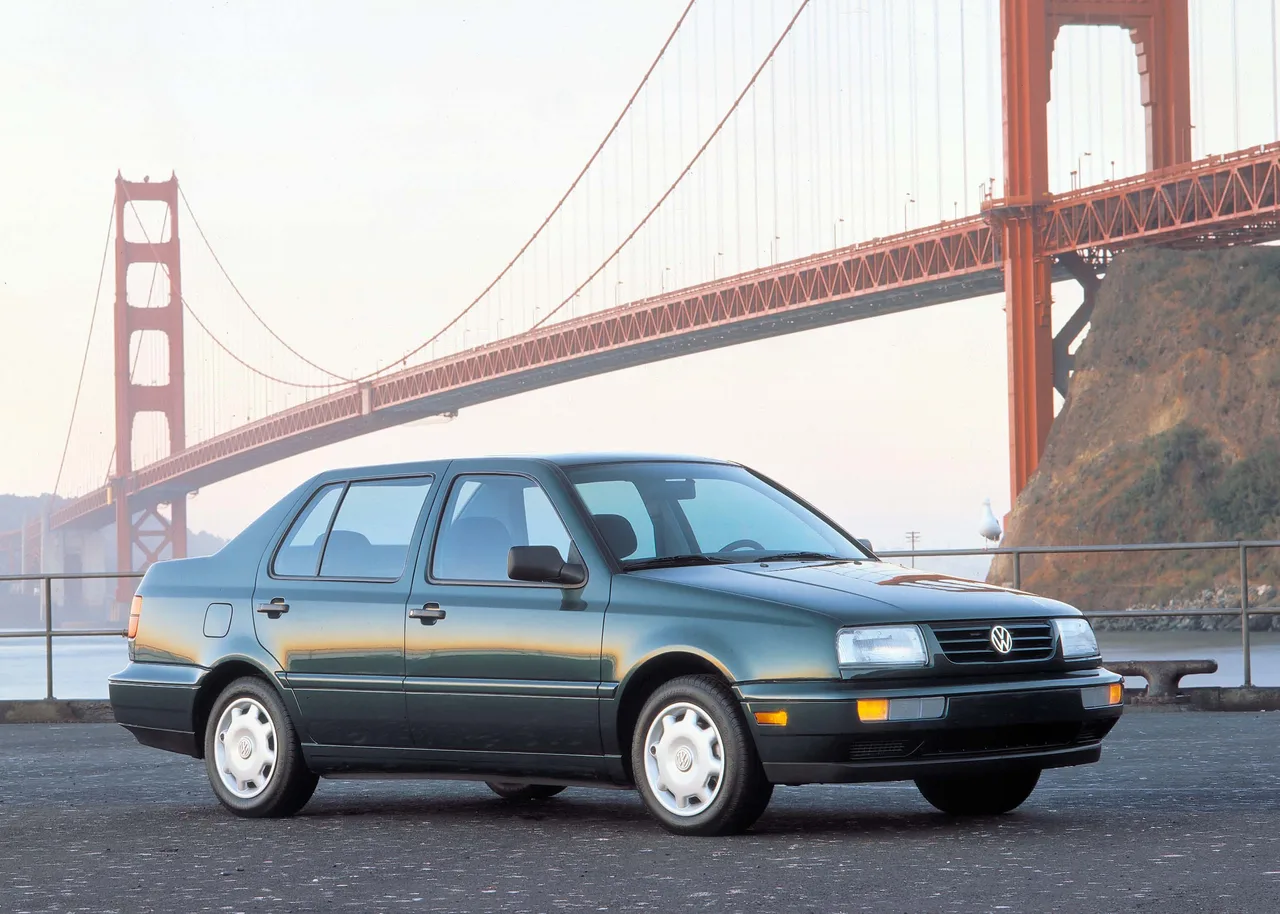
This Jetta almost didn't make it to the US on schedule — quality problems at VW's Puebla, Mexico plant delayed its 1993 North American launch a full year after Europe got it.
Lead trim: Base · 4-spd auto · 2.0L · FWD · up to 172 hp
Nobody in Burbles has spotted a Volkswagen Jetta yet. See one on the street, point the app at it, and the first card is yours — with your @handle permanently credited on this page.
FactThis Jetta almost didn't make it to the US on schedule — quality problems at VW's Puebla, Mexico plant delayed its 1993 North American launch a full year after Europe got it.
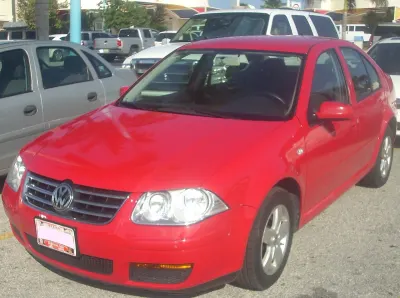
Debuted in Europe in 1992 and North America in 1993.
Real Volkswagen Jetta cards spotted on the street by Burbles collectors. Tap any card to flip it over, inspect the collector’s binder, or follow them.
VerifiedFIRST · WORLDWIDEFIRST PRINTPROSold worldwide as the Bora, this Jetta had a signature party trick: a "Whiptenna" roof antenna shaped and angled specifically to cut aerodynamic drag versus a standard mast.
9 published trims in the catalogue. A blank is a figure not recorded, not zero.
| Trim | Years | Engine | Power | Torque | 0–60 | Drive | Gearbox | MSRP |
|---|---|---|---|---|---|---|---|---|
| Base · 4-spd auto · 2.0L · FWD | 1996–2005 | 2.0 L 4-cyl | 114 hp | 122 lb-ft | — | FWD | Automatic 4-spd | — |
| Base · 5-spd manual · 1.9L · FWD | 1996–2006 | 1.9 L 4-cyl | 63 hp | 91 lb-ft | — | FWD | Manual 5-spd | — |
| Base · 5-spd manual · 2.0L · FWD | 1996–2015 | 2.0 L 4-cyl | 114 hp | 122 lb-ft | — | FWD | Manual 5-spd | — |
| GLX · 4-spd auto | 1996–1998 | 2.8 L 6-cyl | 172 hp | 173 lb-ft | — | FWD | Automatic 4-spd | — |
| GLX · 5-spd manual | 1996–1998 | 2.8 L 6-cyl | 172 hp | 173 lb-ft | — | FWD | Manual 5-spd | — |
| III GLX · 4-spd auto | 1994–1995 | 2.8 L 6-cyl | 172 hp | 173 lb-ft | — | FWD | Automatic 4-spd | — |
| III GLX · 5-spd manual | 1994–1995 | 2.8 L 6-cyl | 172 hp | 173 lb-ft | — | FWD | Manual 5-spd | — |
| III · 4-spd auto | 1993–1995 | 2.0 L Inline-4 | 114 hp | 122 lb-ft | — | FWD | Automatic 4-spd | — |
| III · 5-spd manual | 1993–1995 | 2.0 L Inline-4 | 115 hp | 122 lb-ft | — | FWD | Manual 5-spd | — |
An estimate, for the III · 4-spd auto trim: fuel on its EPA figure and a dated national price, upkeep on a per-mile average for the kind of car it is.
Nobody has claimed one yet.


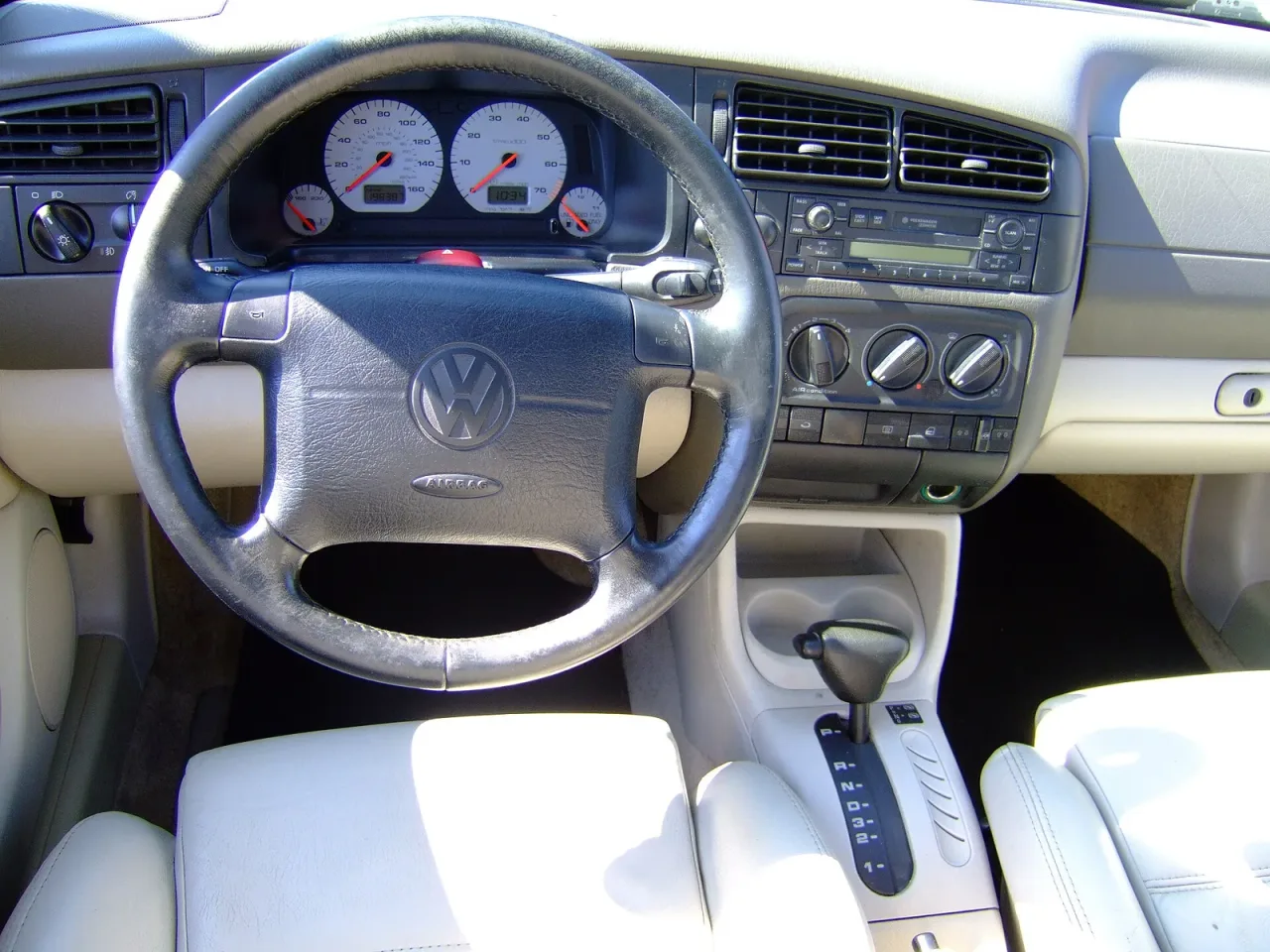
The A7 Jetta's ambient lighting isn't just one strip — it spans the dash, all four doors, the footwells, and even the rings of the optional digital gauge cluster, in ten selectable colors.

This was the first Jetta that wasn't just a three-box Golf — VW gave it dedicated bodywork instead of building it as a sedan derivative.

This Jetta's multi-link rear suspension looks a lot like the Ford Focus's — because Volkswagen reportedly hired the Ford engineers who designed it.

Sold worldwide as the Bora, this Jetta had a signature party trick: a "Whiptenna" roof antenna shaped and angled specifically to cut aerodynamic drag versus a standard mast.

This Jetta almost didn't make it to the US on schedule — quality problems at VW's Puebla, Mexico plant delayed its 1993 North American launch a full year after Europe got it.

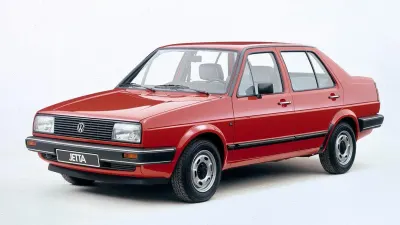
A 1986 Jetta Turbodiesel won a VW mileage contest with 562,000 miles on its original engine — in a state where road salt usually finishes off the exhaust long before that.

Volkswagen nearly built this first Jetta on American soil — a Michigan plant was lined up before falling North American sales killed the plan in 1982, and the site went to Chrysler instead.
Same body, same money, other badges — tap any card to flip.

It briefly served as senior sibling to Marquette, a GM companion brand cancelled after just one year.

Nissan hired former BMW engineers to help develop the 510's suspension, which is why period reviewers frequently compared its handling to the BMW 1600/2002.

A Trabant 601 won its class at the 1970 Monte Carlo Rally, with a second 601 right behind it in second.

The 600 was a stopgap: the P50's body over the 601's mechanicals, and for a while its estate was built alongside the new 601 saloon.

The G80 Sport brought a 370 PS twin-turbo 3.3 V6, a mesh grille and copper-tinted chrome with copper stitching to match.

The Vigor was sold only with a five-cylinder engine, an unusual configuration Honda used to fit a longer engine transversely under a short hood.

The GS/E coupe earned the nickname "German Charger" for its long hood, short deck stance borrowed from Detroit muscle cars.

This DeVille/Fleetwood was the first production car anywhere to mount its V8 sideways, Cadillac's front-drive gamble on the new C-body.